ByJennifer M Wood|Sep 18, 2019, 6:00 AM EDT
 Add us as a preferred source

Though he’s widely considered one of the most iconic musicians of the 20th century, Jimi Hendrix passed away as his career was really just getting started. Still, he managed to accomplish a lot in the approximately four years he spent in the spotlight, and leave this world a legend when he died on September 18, 1970, at the age of 27. Here are 10 things you might not have known about the musical legend.
1. Jimi Hendrix didn’t become “Jimi” until 1966.
Jimi Hendrix was born in Seattle on November 27, 1942 as John Allen Hendrix. He was initially raised by his mother while his father, James “Al” Hendrix, was in Europe fighting in World War II. When Al returned to the United States in 1945, he collected his son and renamed him James Marshall Hendrix.
In 1966, Chas Chandler—the bassist for The Animals, who would go on to become Jimi’s manager—saw the musician playing at Cafe Wha? in New York City. “This guy didn’t seem anything special, then all of a sudden he started playing with his teeth,” roadie James “Tappy” Wright, who was there, told the BBC in 2016. “People were saying, ‘What the hell?’ and Chas thought, ‘I could do something with this kid.’”
Though Hendrix was performing as Jimmy James at the time, it was Chandler who suggested he use the name “Jimi.”
2. Muddy Waters turned Jimi Hendrix on to the guitar—and scared the hell out of him.
When asked about the guitarists who inspired him, Hendrix cited Buddy Holly, Eddie Cochran, Elmore James, and B.B. King. But Muddy Waters was the first musician who truly made him aware of the instrument. “The first guitarist I was aware of was Muddy Waters,” Hendrix said. “I heard one of his old records when I was a little boy and it scared me to death because I heard all these sounds.”
3. Jimi Hendrix could not read music.

In 1969, Dick Cavett asked the musician whether he could read music: “No, not at all,” the self-taught musician replied. He learned to play by ear and would often use words or colors to express what he wanted to communicate. “[S]ome feelings make you think of different colors,” he said in an interview with Crawdaddy! magazine. “Jealousy is purple—‘I’m purple with rage’ or purple with anger—and green is envy, and all this.”
4. Jimi Hendrix used his dreams as inspiration for his songwriting.
Hendrix drew inspiration for his music from a lot of places, including his dreams. “I dreamt a lot and I put a lot of my dreams down as songs,” he explained in a 1967 interview with New Musical Express. “I wrote one called ‘First Look’ and another called ‘The Purple Haze,’ which was all about a dream I had that I was walking under the sea.” (In another interview, he said the idea for “Purple Haze” came to him in a dream after reading a sci-fi novel, believed to be Philip José Farmer’s Night of Light.)
5. “Purple Haze” features one of music’s most famous mondegreens.
In the same interview with New Musical Express, it’s noted that the “Purple Haze” lyric “‘scuse me while I kiss the sky” was in reference to a drowning man Hendrix saw in his dream. Which makes the fact that many fans often mishear the line as “‘Scuse me, while I kiss this guy” even more appropriate. It was such a common mistake that Hendrix himself was known to have some fun with it, often singing the incorrect lyrics on stage—occasionally even accompanied by a mock make-out session. There’s even a Website, KissThisGuy.com, dedicated to collecting user-generated stories of misheard lyrics.
6. Jimi Hendrix played his guitar upside-down.
Ever the showman, Hendrix’s many guitar-playing quirks became part of his legend: In addition to playing with his teeth, behind his back, or without touching the instrument’s strings, he also played his guitar upside-down—though there was a very simple reason for that. He was left-handed. (His father tried to get him to play right-handed, as he considered left-handed playing a sign of the devil.)
7. Jimi Hendrix played backup for a number of big names.
Though Hendrix’s name would eventually eclipse most of those he played with in his early days, he played backup guitar for a number of big names under the name Jimmy James, including Sam Cooke, Little Richard, Wilson Pickett, Ike and Tina Turner, and The Isley Brothers.
In addition to the aforementioned musical legends, Hendrix also helped actress Jayne Mansfield in her musical career. In 1965, he played lead and bass guitar on “Suey,” the B-side to her single “As The Clouds Drift By.”
8. Jimi Hendrix was once kidnapped after a show.
Though the details surrounding Hendrix’s kidnapping are a bit sketchy, in Room Full of Mirrors: A Biography of Jimi Hendrix, Charles R. Cross wrote about how the musician was kidnapped following a show at The Salvation, a club in Greenwich Village:
“He left with a stranger to score cocaine, but was instead held hostage at an apartment in Manhattan. The kidnappers demanded that [Hendrix’s manager] Michael Jeffrey turn over Jimi’s contract in exchange for his release. Rather than agree to the ransom demand, Jeffrey hired his own goons to search out the extorters. Mysteriously, Jeffrey’s thugs found Jimi two days later … unharmed. “It was such a strange incident that Noel Redding suspected that Jeffrey had arranged the kidnapping to discourage Hendrix from seeking other managers; others … argued the kidnapping was authentic.”
9. Jimi Hendrix opened for The Monkees.
Though it’s funny to imagine such a pairing today, Hendrix warming up The Monkees’s crowd of teenybopper fans actually made sense for both acts back in 1967. For the band, having a serious talent like Hendrix open for them would help lend them some credibility among serious music fans and critics. Though Hendrix thought The Monkees’s music was “dishwater,” he wasn’t well known in America and his manager convinced him that partnering with the band would help raise his profile. One thing they didn’t take into account: the young girls who were in the midst of Monkeemania.
The Monkees’s tween fans were confused by Hendrix’s overtly sexual stage antics. On July 16, 1967, after playing just eight of their 29 scheduled tour dates, Hendrix flipped off an audience in Queens, New York, threw down his guitar, and walked off the stage.
10. You can visit Jimi Hendrix’s London apartment.
In 2016, the London flat where Hendrix really began his career was restored to what it would have looked like when Jimi lived there from 1968 to 1969 and reopened as a museum. The living room that doubled as his bedroom is decked out in bohemian décor, and a pack of Benson & Hedges cigarettes sits on the bedside table. There’s also space dedicated to his record collection.
Amazingly, the same apartment building—which is located in the city’s Mayfair neighborhood—was also home to George Handel from 1723 until his death in 1759; the rest of the building serves as a museum to the famed composer’s life and work.
The Real-Life Serial Killer That Might’ve Inspired ‘Dexter’s Dark Passenger
Brazil’s most notorious killer of killers has been called the real Dexter for years, but ‘Dexter’s’ creator tells a different origin story.
ByMatt Hoffman|Oct 30, 2026, 9:00 PM EDT
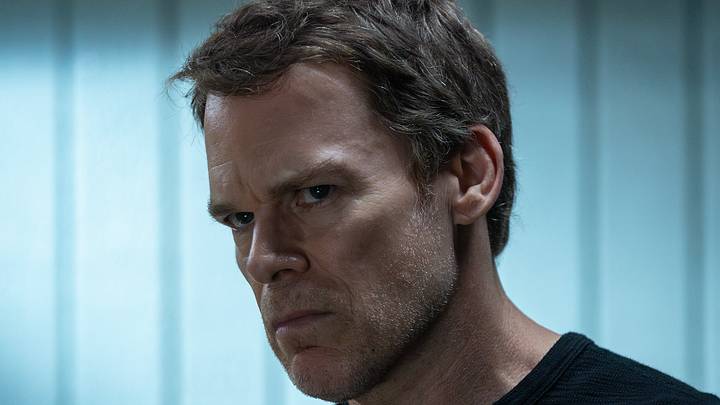
Back in July 2004, Jeff Lindsay introduced readers to Dexter Morgan, a Miami police blood-spatter analyst who kills only people who deserve it, egged on by a voice in his head he calls the “Dark Passenger.” Two years later, Showtime turned Darkly Dreaming Dexter into a hit series with Michael C. Hall.
Somewhere along the way, the internet decided Dexter had a real-life model: Pedro Rodrigues Filho, a Brazilian who claimed to have killed more than 100 people, most of them criminals. Entertainment sites now call him “the Brazilian Dexter,” and ScreenRant describes the show as loosely based on his crimes. No quote from Lindsay or the show’s producers backs that up, but the similarities are hard to miss.
The Boy Who Settled Scores
Filho was born in 1954 on a farm in Santa Rita do Sapucaí, in the Brazilian state of Minas Gerais, with an injured skull: his father, he said, had kicked his pregnant mother during a fight. He told the magazine Época in 2003 that he first wanted to kill at 13, when he shoved an older cousin into a sugarcane press. A year later, after his father lost his job as a school guard over accusations that he was stealing school lunches, Filho shot the official who had fired him, then shot the guard he believed was the real thief. (Accounts disagree on who that first victim was: some Brazilian outlets say the mayor of his hometown, others the deputy mayor of Alfenas, also in Minas Gerais.)
He fled to Mogi das Cruzes, outside São Paulo, where he robbed drug dens, killed traffickers, and took over a dead drug boss’s business. When his pregnant girlfriend was shot dead, he went looking for the man who ordered it and, with four friends, hit a wedding party, leaving seven dead and 16 wounded, according to Época. He was arrested shortly after turning 18 and entered prison on May 24, 1973; in the van on the way there, he killed a fellow prisoner he said was a rapist.
Where the Comparison Holds
Like Dexter, Filho had a code, or said he did. He told Época he killed only people who were no good, and that he never killed children, women, or family men. He also had a father story to rival Harry Morgan’s, though a much darker one: Filho claimed he killed his own father in prison, in revenge for his mother’s stabbing, and chewed a piece of his heart. (Época noted that he gave a psychiatrist a completely different account of how his father died.)
The resemblance mostly ends there. Dexter’s code, as Mental Floss has laid out before, includes “don’t get caught,” and Filho spent roughly four decades behind bars, much of it bragging. He had “Mato por prazer” (“I kill for pleasure”) tattooed on his left arm. He claimed 47 victims inside prison alone, though Época found just 18 charges against him on file in 2003; by his death, Brazilian outlets counted 71 homicides on his record.
What Dexter’s Creator Actually Said
Lindsay has told his origin story many times, and it starts nowhere near Brazil: at a Kiwanis Club lunch where he sat at the head table waiting to speak and, as he told BookPage in 2005, “the idea just popped into my head that sometimes serial murder isn’t a bad thing.” He then built the character out of research: he collected books on sociopaths and murderers, interviewed psychologists and crime scene investigators, and got cop friends to turn him loose in their dead-files room. He also rejects the very label that made Filho famous: “Dexter’s not a vigilante,” he told Middlebury Magazine in 2011. “Vigilantes are trying to perform an act of justice. Dexter just likes to kill people.”
The Ending Dexter Survived
Filho walked out of prison in 2007, went back in 2011 for crimes committed during his sentence, and was released for good in 2018. Within months, he had reinvented himself as a YouTube personality who commented on crimes in the news and lectured about his past. On the morning of March 5, 2023, he was on a sidewalk in Mogi das Cruzes holding a small child when men in a black car opened fire, according to the news site G1. The child was unhurt, but according to the police report, one of the attackers stabbed Filho in the throat as he lay on the ground. He was 68.
Read More:
•
•