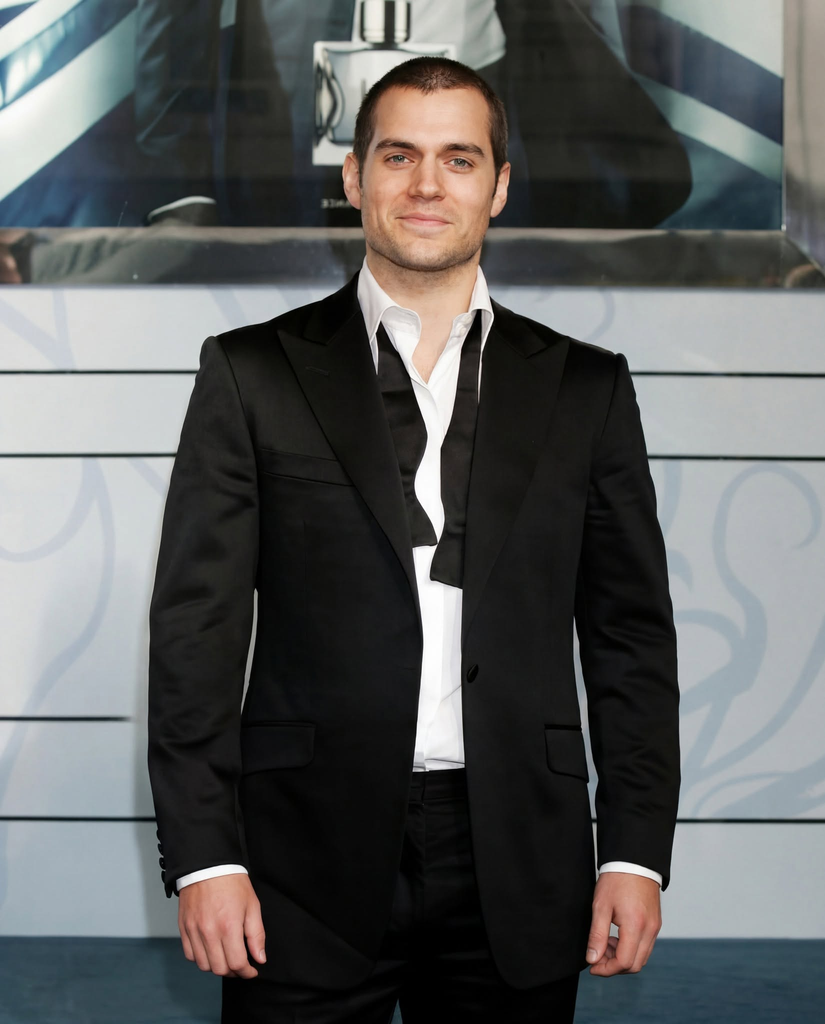

The Witcher—the Netflix series based on Andrzej Sapkowski’s fantasy book series, which spawned a popular video game franchise—became an immediate pop culture phenomenon when it debuted in December 2019 thanks to its pulpy monster-killing and dark fantasy setting. Also: Its meme-ified dedication to showing off a shirtless Henry Cavill’s bathtub routine.
The show follows the witcher Geralt of Rivia (Cavill), a magical hunter of grotesque monsters whose destiny is tied to Princess Ciri (Freya Allen) but who keeps regularly running into sorceress Yennefer of Vengerberg (Anya Chalotra) because of a spell. It all adds up to a TV series that is both schlocky and intense and the kind of show one might call a “guilty pleasure” (if anything pleasurable could be considered guilty anymore). Plus, as the worm in your ear probably knows, it comes with a killer soundtrack. Here are 10 facts about the Netflix hit.
1. Anya Chalotra was cast in The Witcher before Henry Cavill.
While it’s more common to secure a star for a series and then begin building a cast around them, The Witcher didn’t work that way. Casting director Sophie Holland knew that, despite being an unknown, Anya Chalotra was the perfect actor to play Yennefer. “I had met Anya on her first-ever professional audition for another project,” Holland told Metro UK. “I just knew immediately that we would work together.”
2. Henry Cavill had to fight pretty hard for his part in The Witcher.

You wouldn’t think that Superman would need to audition for a part in a TV series. But despite being a massive gamer and Witcher fanatic, Cavill had his work cut out for him in attempting to secure the leading role in The Witcher. He started campaigning for the part before showrunner Lauren Schimdt Hissrich had even written the pilot script. Though Schmidt Hissrich admitted that Cavill was “annoying,” she met with him anyway and couldn’t get his voice out of her head as she was writing. They ended up auditioning 206 actors before circling back to the annoying superhero who already knew he was perfect for the part.
3. Henry Cavill had three swords at home and four at work.
Cavill trained intensively for the role, both at the gym and with swords in hand. In the summer of 2019, he told the Comic-Con audience, “I spent all of my free time when I wasn’t on set—and even when I was on set—with a sword in my hand.” To that end, he kept three swords at home and four at work so there was never a weapon far from his grasp.
4. The Witcher also used half-swords.
It might be more accurate to say that Cavill had four-and-a-half swords at work. If you’re wondering how the production pulled off fight scenes involving heavy metal swinging at people’s heads, throats, and other sensitive bits, there are three answers: They used swords made of lighter metal for fight sequences, so that “if I put a foot wrong, or a strike wrong, no one gets injured,” Cavill explained. “It’s more of a bruise rather than a broken limb or cut skin.” Anything near a person’s face required using rubber swords, and for the seriously close killing shots, they used a half-sword that was later completed using CGI.
5. MyAnna Buring had a history with The Witcher.
MyAnna Buring, who portrays Yennefer’s obsessive mentor Tissaia de Vries in the series, has a lengthy filmography, but she’s only performed for one video game: 2015’s The Witcher 3: Wild Hunt — Blood and Wine. She voiced the ruthless Duchess Anna Henrietta, who hires Geralt to solve the murder of two knights in Toussaint. That probably wasn’t a bad thing to mention when she auditioned.
6. The Witcher’s story dates back to the 1980s.
Just as Game of Thrones became a televised hit years after its source material was first published in 1996, The Witcher was birthed from a short story that won third place in 1986. Author Andrzej Sapkowski wrote “Wiedźmin” (“The Witcher”) as an entry for speculative fiction magazine Fantastyka‘s annual contest, wrote three more stories ultimately published as a collection in 1990, and released two more collections in 1992 and 1993. The first novel was released in 1994, and the video game adaptation didn’t hit the scene until 2007. It’s been a long road with a big return.
7. Anya Chalotra got ulcers from her mouth guard in The Witcher.
Yennefer is a quarter-elf woman with spinal and jaw deformities, so part of the make-up process for bringing her character to life involved Chalotra wearing a brace and a mouth guard that caused considerable pain. Beyond complaining of ulcers caused by the mouth guard, Chalotra told Decider that, “It really did help. It changed my physicality. I looked at the floor more, and I became more insecure as a result.”
8. The Witcher’s producers knew they’d need a bathtub.
OK, about that bathtub: It’s not like The Witcher‘s producers needed a ton of coaxing or incentive to include a scene showing off Cavill’s pecs. But they might have actually had a rebellion on their hands had they not filmed one. Geralt, neutral face framed by spread legs, wet feet sticking out of the tub right at our face, may be the most iconic visual from the video game series. At least it’s the goofiest. Including that shot was a way of nodding to both the video games and the short stories.
9. Netflix released an official timeline for The Witcher.
If you’re wondering how confusing the non-linear series gets, Netflix felt compelled to release an explanatory timeline. To see it in as straight a line as possible, watch episode 2, 3, 1, 2 again, 4, 3 again, 5, 6, 7, 1 again, 7, maybe 1 again, and then 8. Super easy.
10. The Witcher had an anti-Ed Sheeran bias.
At least they really didn’t want a cameo from him. The producers took more than a few occasions to position the show as not being another Game of Thrones clone, including a comment from Sapkowski at the Warsaw Comic-Con that mocked a particularly disastrous moment in Game of Thrones‘s run. “I believe that my job as a creative consultant for [The Witcher] is to make sure that at no point in the show [will] Ed Sheeran sing,” Sapkowski said. Fortunately, The Witcher came up with its own viral hit, a jaunty little tune called “Toss a Coin to Your Witcher.”
“It’s a catchy song, but if you step back and listen to the lyrics, it’s horrific,” Hissrich told Business Insider. “What it’s saying is: I’m going to change how history sees this entire event just because I’ve written a catchy song.”
Home/ENTERTAINMENT
The Extreme Measures Authorities Took to Keep Kids From Seeing ‘The Exorcist’
The ratings board said children could see it with a parent, but the police in Washington had other ideas.
ByMatt Hoffman|Oct 21, 2026, 1:00 PM EDT
 Add us as a preferred source
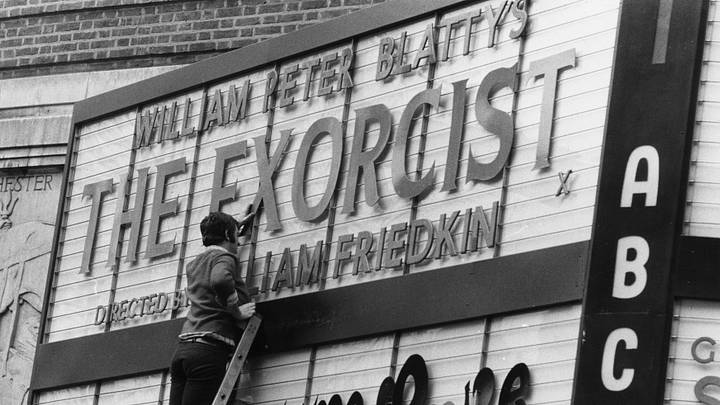
Back in October 1973, the Motion Picture Association of America gave The Exorcist an R rating, which meant anyone under 17 could get in as long as a parent or guardian came along. When the movie opened in Washington, D.C., the day after Christmas, parents took that literally: Roy Meacham, the arts critic for the local Metromedia TV station, later wrote in The New York Times that parents brought children as young as 6 and 8, that one woman herded 10 kids into a showing, and that he watched a boy slip $3 to an adult in line to buy him a ticket. Within hours of the opening, Meacham’s co-workers “watched as a girl was removed from a showing at the Cinema theater and placed in an ambulance.”
A First for Washington
On New Year’s Eve, MPAA president Jack Valenti phoned the ratings board, and the board kept the R, reasoning that the movie had no nudity and no overt sexuality. Only the studio could ask for a stricter rating, and its chief, Ted Ashley, declined to request an X, a rating that would have kept the film out of many theaters and, in some cities, out of the newspaper ads.
So Washington acted on its own. “Early in the morning on New Year’s Day, Washington became the first city ever to bar children from a film the review board said they could see,” Meacham wrote. After consulting the US Attorney’s Office, officers from the police department’s morals division warned the management of the Cinema Theater that arrests would be made if any more tickets were sold for use by minors. A sign went up at the box office: “No one under the age of 17 will be admitted,” parent or not.
The police didn’t move on the movie’s violence or its scares: they used a provision of the District’s code that barred minors from seeing scenes of certain sexual conduct, “even when the actors are fully clothed,” and the scene in question was the two-minute crucifix sequence. Meacham admitted he had personally urged the police to see the movie, and that sex wasn’t what bothered him: “The film’s violence was.”
Mississippi Went After Everyone
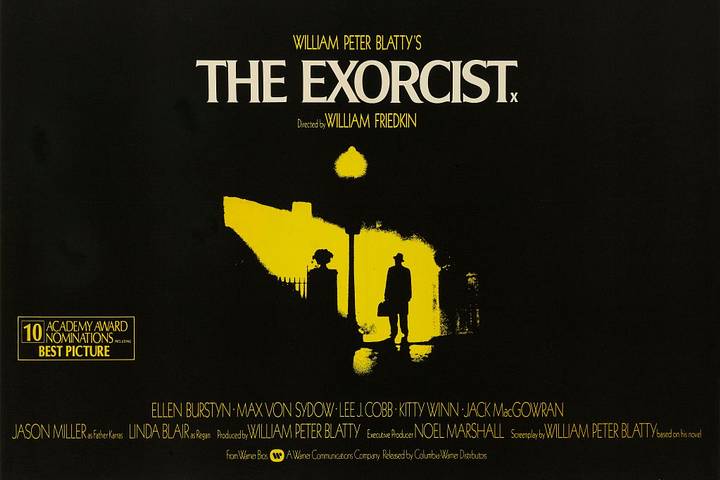
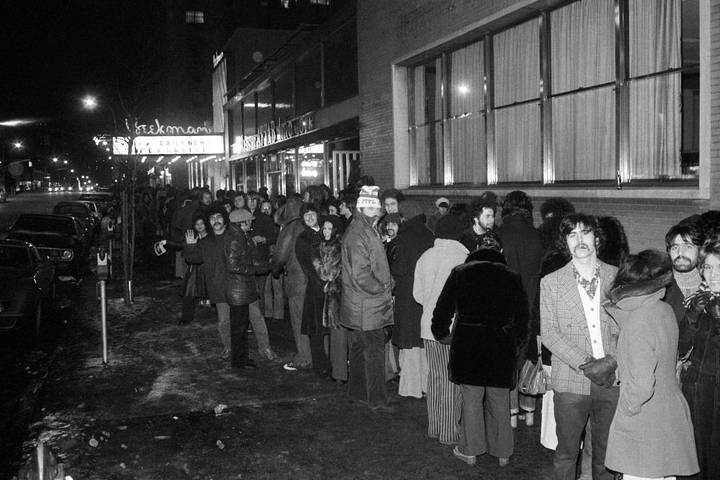
Other places didn’t stop at children. In April 1974, several police officers and a justice of the peace went with the district attorney to the Saenger Theatre in Hattiesburg, Mississippi, to watch The Exorcist. Afterward, the print was seized, and the theater’s manager and projectionist were arrested. Their charges were dropped, but the company that owned the theater was convicted under a state law against “obscene, indecent, or immoral” pictures. The Mississippi Supreme Court threw out the conviction in January 1976, ruling the law too broad, over a dissent from a justice who wrote, “I have neither read ‘The Exorcist’ nor seen the movie,” before concluding, from the briefs alone, that it was obscene anyway. In Boston, where 5,000 people a day lined up at the Sack 57 Cinema, according to TIME, an attempt to ban the movie reportedly ended when a judge dismissed the case.
Britain’s Long Wait
The British Board of Film Classification passed The Exorcist uncut in 1974 with an X certificate, which already kept out everyone under 18. Secretary Stephen Murphy’s verdict: “It is a powerful horror movie. Some people may dislike it, but that is not a sufficient reason for refusing certification.” That didn’t satisfy everyone. The Christian campaign group the Festival of Light protested, a small number of local councils banned the film outright, and in Tunbridge Wells, 15 people fainted during its first week at the Classic Cinema, so the St John Ambulance service was put on call.
The measure aimed squarely at kids came later, on home video. The movie went out on tape in 1981, and when a 1984 law required videos to be certified, the BBFC balked. Its concern, in its own words: “the protagonist of the film was aged 12, and the film might therefore have appeal to underage viewers.” The tape was pulled at the beginning of 1988, and The Exorcist didn’t come back on video in Britain until after its 25th-anniversary re-release, when the board passed it with an 18 certificate, uncut.
Read More:
•
26 Fascinating Facts About The Exorcist
•
The Story of ‘The Exorcist’s Cursed Set Is Way Scarier Than the Movie
•
The Terrifying Subliminal Image Hidden in The Exorcist
Home/ENTERTAINMENT