ByScott Beggs|Jan 11, 2022, 5:10 AM EST
 Add us as a preferred source

Douglas Colvin, John Cummings, Thomas Erdelyi, and Jeffrey Hyman aren’t famous names, but everyone in the world knows the Ramones. Dee Dee. Johnny. Tommy. Joey. These four men came together to change the face of music forever, ushering in an era of fast, no-frills songs that were punk before anything was called punk. Through personal trials and difficult upbringings, they played sardonic songs about sniffing glue, wanting to be sedated, and getting shock treatment. Here are 11 facts about the Ramones.
1. The Ramones got their name from Paul McCartney’s fake hotel check-in name.
There used to be a rumor that the punk band got their name by throwing a dart at a phone book, but the truth is far more romantic. Bassist Dee Dee Ramone was a huge Beatles fan and had heard that Paul McCartney would check into hotels as “Paul Ramon” during the early Silver Beatles days to score a sliver of anonymity. Dee Dee took “Ramone” as his nom du guerre and the punchy band name was born.
2. The Ramones rarely found success on the Billboard charts.
With their black leather jackets and scuffed jeans, the Ramones would never be mistaken for a novelty surf act, but it was the sunny “Rockaway Beach” from the 1977 album Rocket to Russia that made it higher than any other single they produced—all the way to No. 66 on the Billboard Hot 100. As for albums, 1980’s End of the Century was the band’s best, coming in at No. 44 on the Billboard 200. If you’re looking for more chart success, you won’t find much: Only four Ramones albums ever cracked the top 100, with some leaving the top 200 after less than a month on shelves.
3. The first Ramones show was exactly five years after Woodstock.
Sometimes history has a way of rhyming, and so it was that the Ramones took the stage at the legendary CBGB bar in New York’s East Village on August 16, 1974, to announce a stripped-down, ultra-noisy style on the fifth anniversary of Woodstock. Theirs was a rebuke of the free love sound as well as the corporate rock from major labels that dominated airwaves. They played around half a dozen songs and were done in about 17 minutes.
4. The Ramones logo showcased how “all-American” they were.
The iconic Ramones logo was crafted by artist Arturo Vega, an early friend of the band who let them practice in his loft space. “I saw them as the ultimate all-American band. To me, they reflected the American character in general—an almost childish innocent aggression,” Vega told The Guardian. So it’s no surprise that the logo is a riff on the presidential seal, complete with the eagle holding a baseball bat instead of arrows (owing to Johnny Ramone’s love of baseball), and the individual band members’ names encircling it in bold letters.
5. Dee Dee Ramone wrote “Pet Sematary” in Stephen King’s basement.
Author Stephen King and the Ramones were mutual admirers, so the horror icon invited the group to his house in Maine when they were touring through New England in the ’80s. They had dinner and marveled at King’s horror memorabilia collection, before Dee Dee went off by himself holding a copy of Pet Sematary (as Marky Ramone later remarked, that usually meant trouble). An hour later, he returned from King’s basement with the completed lyrics and melody for a song that was eventually used for the movie version of the book.
6. Dee Dee kept writing for the Ramones even after leaving the band.
Dee Dee was the creative engine for the Ramones, writing the lion’s share of their songs over the decades. He also suffered from mental illness and addiction, and he left the band after growing weary of touring. Despite quitting, though, he continued writing new material for their later albums like Mondo Bizarro and ¡Adios Amigos!, which was the group’s final studio recording. Dee Dee would later join the spin-off band, The Ramainz, alongside replacement/former Ramones members Marky and C.J.
7. Elvis Ramone only lasted two shows.
The band’s lineup shuffled enough for there to be a total of eight Ramones throughout the years. The shortest-lived was Elvis Ramone, a.k.a. Clem Burke, who was the longtime drummer for Blondie. He played two shows with the Ramones in 1987 after Richie Ramone (Richard Reinhardt) quit. Unfortunately for Elvis, he couldn’t keep up with the band’s breakneck pace and was soon replaced by the rehired Marky Ramone.
8. Phil Spector pulled a gun on them during a recording session.
In 1979, the band starred in the Roger Corman-produced musical comedy Rock & Roll High School, which came complete with a new single based on the movie. Both projects underperformed, leading the band’s label to pair them up with legendary producer Phil Spector for their next album, End of the Century, hoping that a more commercially successful sound would come of it. It was a disaster. Spector was a loose cannon, profoundly controlling, and pulled a gun on Dee Dee (though some versions say Johnny) when he tried to leave Spector’s house one night.
9. Johnny and Joey Ramone hated each other.
Guitarist Johnny Ramone and frontman Joey were the only Ramones to be a part of the band from the very beginning all the way to the bitter end—they also absolutely despised each other. According to Rolling Stone, they barely spoke during much of the group’s 22-year run and traveled the world together in virtual silence for decades. Johnny didn’t even visit Joey in the hospital while he was sick and refused to attend his funeral when he died in 2001, stating plainly that they weren’t friends and he wouldn’t have expected Joey at his funeral.
What came between the two? The age-old answer of love and politics: Joey was a liberal, Johnny was a conservative, but they found common ground by falling in love with the same woman, Linda Danielle. Linda and Johnny eventually married, and while the music survived the personal drama, the group died with Joey.
“[It] was never officially over until Joey died,” Johnny wrote in his autobiography. “There was no more Ramones without Joey. He was irreplaceable, no matter what a pain he was. He was actually the most difficult person I have ever dealt with in my life. I didn’t want him to die, though. I wouldn’t have wanted to play without him no matter how I felt about him; we were in it together…”
10. The Ramones played 2263 shows in 22 years.
That’s essentially one show every three days for more than two decades. They were a jobbing band, putting in the work and wearing the mantle of punk rock’s progenitors despite personal infighting, lineup changes, and the unforgiving gaze of America’s rock critics.
11. The Ramones were inducted into the Rock and Roll Hall of Fame their first year of eligibility.
In an act of vindication that mirrored their true contribution and influence on the soundscape, the Ramones crashed into the Rock and Roll Hall of Fame on March 18, 2002, in their very first year of eligibility. Johnny, Tommy, Marky, and Dee Dee accepted the honor as the major living members, with a fifth award on the podium for Joey, who died the previous April. Johnny blessed George W. Bush. Dee Dee thanked himself.
The Real-Life Serial Killer That Might’ve Inspired ‘Dexter’s Dark Passenger
Brazil’s most notorious killer of killers has been called the real Dexter for years, but ‘Dexter’s’ creator tells a different origin story.
ByMatt Hoffman|Oct 30, 2026, 9:00 PM EDT

Back in July 2004, Jeff Lindsay introduced readers to Dexter Morgan, a Miami police blood-spatter analyst who kills only people who deserve it, egged on by a voice in his head he calls the “Dark Passenger.” Two years later, Showtime turned Darkly Dreaming Dexter into a hit series with Michael C. Hall.
Somewhere along the way, the internet decided Dexter had a real-life model: Pedro Rodrigues Filho, a Brazilian who claimed to have killed more than 100 people, most of them criminals. Entertainment sites now call him “the Brazilian Dexter,” and ScreenRant describes the show as loosely based on his crimes. No quote from Lindsay or the show’s producers backs that up, but the similarities are hard to miss.
The Boy Who Settled Scores
Filho was born in 1954 on a farm in Santa Rita do Sapucaí, in the Brazilian state of Minas Gerais, with an injured skull: his father, he said, had kicked his pregnant mother during a fight. He told the magazine Época in 2003 that he first wanted to kill at 13, when he shoved an older cousin into a sugarcane press. A year later, after his father lost his job as a school guard over accusations that he was stealing school lunches, Filho shot the official who had fired him, then shot the guard he believed was the real thief. (Accounts disagree on who that first victim was: some Brazilian outlets say the mayor of his hometown, others the deputy mayor of Alfenas, also in Minas Gerais.)
He fled to Mogi das Cruzes, outside São Paulo, where he robbed drug dens, killed traffickers, and took over a dead drug boss’s business. When his pregnant girlfriend was shot dead, he went looking for the man who ordered it and, with four friends, hit a wedding party, leaving seven dead and 16 wounded, according to Época. He was arrested shortly after turning 18 and entered prison on May 24, 1973; in the van on the way there, he killed a fellow prisoner he said was a rapist.
Where the Comparison Holds
Like Dexter, Filho had a code, or said he did. He told Época he killed only people who were no good, and that he never killed children, women, or family men. He also had a father story to rival Harry Morgan’s, though a much darker one: Filho claimed he killed his own father in prison, in revenge for his mother’s stabbing, and chewed a piece of his heart. (Época noted that he gave a psychiatrist a completely different account of how his father died.)
The resemblance mostly ends there. Dexter’s code, as Mental Floss has laid out before, includes “don’t get caught,” and Filho spent roughly four decades behind bars, much of it bragging. He had “Mato por prazer” (“I kill for pleasure”) tattooed on his left arm. He claimed 47 victims inside prison alone, though Época found just 18 charges against him on file in 2003; by his death, Brazilian outlets counted 71 homicides on his record.
What Dexter’s Creator Actually Said
Lindsay has told his origin story many times, and it starts nowhere near Brazil: at a Kiwanis Club lunch where he sat at the head table waiting to speak and, as he told BookPage in 2005, “the idea just popped into my head that sometimes serial murder isn’t a bad thing.” He then built the character out of research: he collected books on sociopaths and murderers, interviewed psychologists and crime scene investigators, and got cop friends to turn him loose in their dead-files room. He also rejects the very label that made Filho famous: “Dexter’s not a vigilante,” he told Middlebury Magazine in 2011. “Vigilantes are trying to perform an act of justice. Dexter just likes to kill people.”
The Ending Dexter Survived
Filho walked out of prison in 2007, went back in 2011 for crimes committed during his sentence, and was released for good in 2018. Within months, he had reinvented himself as a YouTube personality who commented on crimes in the news and lectured about his past. On the morning of March 5, 2023, he was on a sidewalk in Mogi das Cruzes holding a small child when men in a black car opened fire, according to the news site G1. The child was unhurt, but according to the police report, one of the attackers stabbed Filho in the throat as he lay on the ground. He was 68.
Read More:
•
•
Dexter: New Blood: 7 Things We Know
Why Do We Associate Ravens With Death?
“Quoth the Raven, ‘Nevermore!'”
ByChelsea Thatcher|Oct 31, 2026, 10:00 AM EDT
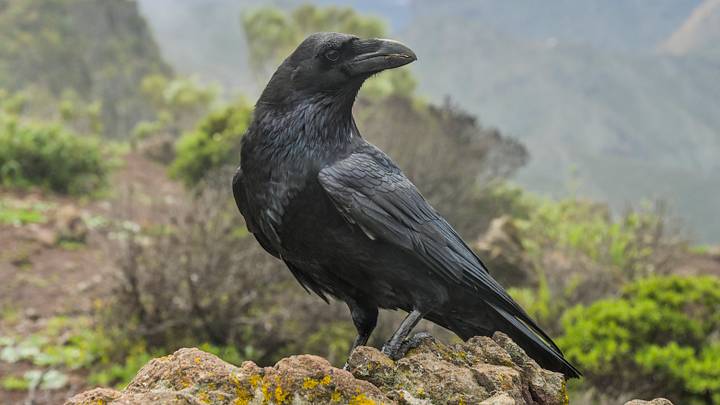
Ravens are incredibly intelligent birds able to mimic human speech, remember faces, and even hold grudges against those who’ve wronged them. And while they have been a symbol of wisdom and prophecy in different cultures, they’re most often thought of in relation to grief and death. But why?
In several mythologies from around the world, the raven is associated with death. Does that mean these birds are actually ill omens, or that there’s some truth to the folklore? How did so many different civilizations all come to believe similar things about the raven? It honestly has a lot to do with their main source of food.
Carrion Birds
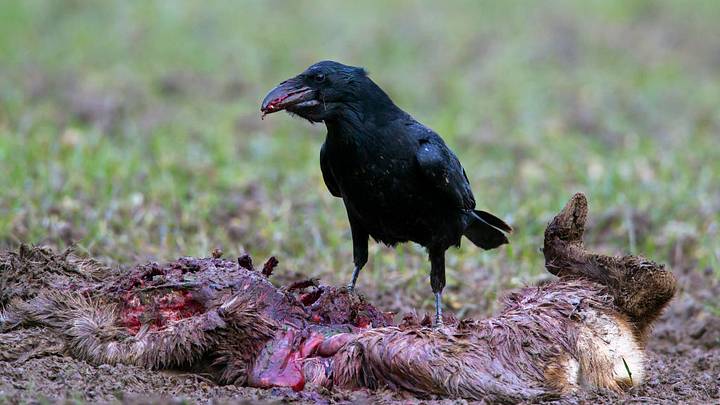
Ravens, along with crows, rooks, and magpies, are carrion birds. They are scavengers, eating the decaying flesh of dead bodies. Today, they commonly find their meals in roadkill and other dead animals, but in the past, they learned that there were absolute feasts on the world’s battlefields.
In war, there were many times that the number of dead was too great to bury all of them. Ancient peoples saw ravens flitting among the bodies of the slain at almost every battlefield, and the connection became ingrained in the collective conscience. Superstition then bled into the narrative, and people saw ravens as omens of death rather than the clean-up crew afterwards.
Ravens in Myth and Religion
Ravens appear in ancient myths and religious texts as symbols of fate and death. In several different cultures, ravens act as messengers between the worlds of the living and the dead. They might even work as Grim Reapers, collecting and transporting souls to the underworld. Swedish mythology claims that ravens are the souls of murder victims who didn’t receive a proper burial, and Germanic lore says they are the souls of the damned.
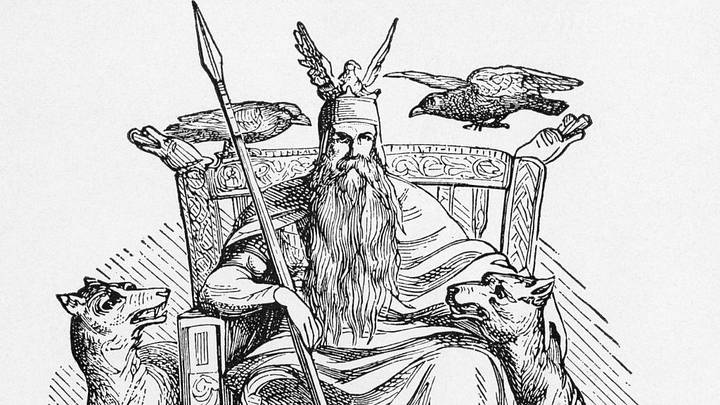
In Norse mythology, Odin, the god of war and death, had two ravens, Huginn (thought) and Muninn (memory), who acted as his eyes and ears in battle. The Norse people believed that if a raven appeared on the battlefield with them, it meant that Odin was watching. In Celtic lore, ravens were also linked to the Mórrígan, goddess of death, war, and fate.
The Bible and the Quran also feature ravens in stories that deal with death. In the biblical tale of the Flood, Noah first releases a raven to see if the waters still cover the land. The raven never returns, presumably because it has found food in the number of wicked flood victims. And in the Quran, a raven is the one to teach Cain how to bury his murdered brother’s body.
Poe’s “The Raven”
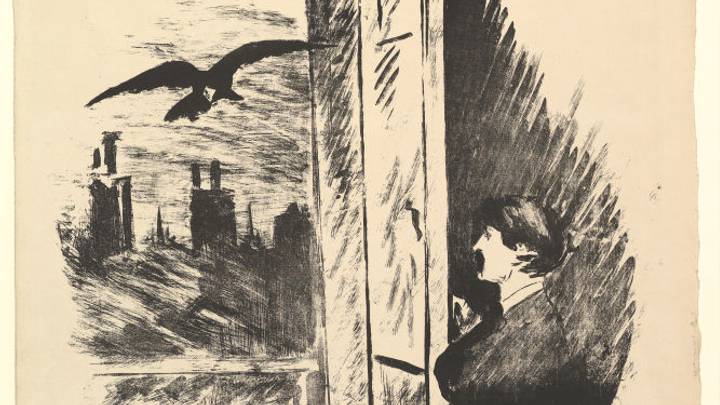
While ravens had been connected with death for centuries, it wasn’t until Edgar Allan Poe popularized the bird in his Gothic poem that they became symbols of horror and misery as well. Poe published “The Raven” in January of 1845, telling the sad tale of a man haunted by the loss of his love and the beginnings of madness. He wants to know if he will ever see his love again, or if the pain of loss will ever subside, and the raven drowns him in despair when it cries out: “Nevermore!”
Ravens were no longer mere omens of death, but an integral part of the horror genre. Alfred Hitchcock would later capitalize on this connection in his 1963 horror film, The Birds. If you weren’t scared of ravens and their association with death before, you were certainly wary of them after that film. And it’s probably a good idea to remain wary of ravens, or at least remember to treat them kindly. Otherwise, they may work together to cause you misery as vengeance.
Read More:
•
Why Do We Associate Ravens With Death?
•
5 Common Misconceptions About Día de los Muertos
•
The Medium Who Wants You to Be Nicer to Ghosts
•
The Personal Tragedy Behind Picasso’s Blue Period
•