
ByJake Rossen|Jan 10, 2021, 9:10 PM EST
 Add us as a preferred source

A hit song can be a career-making achievement for recording artists, who can sometimes dine out on just a handful of popular singles for decades. But for some musicians, being expected to play the same tune during tours or public appearances leads to exasperation—and sometimes even outright refusal. Take a look at 11 hit songs that were never guaranteed to make it to a concert.
1. “Smells Like Teen Spirit” // Nirvana
The grunge era of the 1990s was encapsulated—and often rejected—by Nirvana, the Seattle-based rock group led by Kurt Cobain. In 1991, the group exploded with their Nevermind album and “Smells Like Teen Spirit,” a wildly popular anthem that was so commercially successful that it seemed counter to the group’s counter-culture approach. Not long after the group performed the song on Saturday Night Live, Cobain began refusing to play it during live shows. Cobain’s apathy seemed to hit a crescendo in Buenos Aires in 1992, when a raucous crowd booed Nirvana’s opening act, the all-female group Calamity Jane. Cobain was so incensed by the audience’s disrespect that he taunted them by continually playing the opening notes to “Smells Like Teen Spirit” without ever actually launching into it.
“Before every song, I’d play the intro to ‘Smells Like Teen Spirit’ and then stop,” Cobain later said. “They didn’t realize that we were protesting against what they’d done. We played for about forty minutes, and most of the songs were off Incesticide, so they didn’t recognize anything. We wound up playing the secret noise song [‘Endless, Nameless’] that’s at the end of Nevermind, and because we were so in a rage and were just so pissed off about this whole situation, that song and whole set were one of the greatest experiences I’ve ever had.”
2. “(You Gotta) Fight For Your Right (to Party!)” // Beastie Boys
The unlikely rap group broke big in the 1980s with this single from their 1986 Licensed to Ill album that was intended to satirize frat boy and jock culture. When actual frat boys started enjoying it unironically, the group became reluctant to repeat it in concert. When the Boys released a best-of compilation album, the liner notes referred to “Fight For Your Right” as “sh*t.”
“I don’t think we realized that it was going to be the sort of main focus of the album,” the late Adam Yauch told NPR in 2011. “I think the way we were looking at it, we were just kind of making this dumb song that would sit somewhere on the album. But I think that CBS and [producer] Rick [Rubin] saw it as being able to be something much larger than what we imagined, and they kind of made it the main focus of the album.”
3. “Big Me” // Foo Fighters
This 1996 hit from the Foo Fighters’s self-titled 1995 debut album didn’t quite land the way frontman Dave Grohl and the band intended. After filming a successful music video for the single that cast the group in a parody of the kitschy Mentos commercials of the era, fans began throwing candy at them during live shows. Grohl later estimated they stopped playing the song for six or seven years afterward and didn’t return to it until Weezer began playing it in tribute.
“And they played it every … night,” Grohl said in 2006. “And we actually started to miss it. So once that tour ended and we went back out on our own, we kinda threw it back into the set list. But we did stop playing that song for a while because, honestly, it’s like being stoned. Those little … things are like pebbles—they hurt.”
4. “Stairway to Heaven” // Robert Plant
The iconic rock anthem was a signature of Led Zeppelin since its release in 1971, but when lead singer Robert Plant went out on his own, he largely ignored the audience pleas to play it for the next 40 years, succumbing only when the group performed reunions in 1985, 1988, and 2007. (“Stairway to Heaven” was also the subject of a 2014 copyright case in which a trustee suing on behalf of music group Spirit claimed the song drew heavily from a 1968 track, “Taurus.” Led Zeppelin won a trial in 2016.)
5. “Nothing Compares 2 U” // Sinéad O’Connor
This slow, sad, beautiful ballad helped make Sinéad O’Connor a star in 1990 and moved millions of copies of her debut album, I Do Not Want What I Haven’t Got. By 2015, O’Connor announced that the song about love and loss, which was written by Prince, was something she could no longer personally identify with.
“I don’t want audiences to be disappointed coming along to a show and then not hearing it, so I am letting you know here that you won’t,” O’Connor wrote on Facebook. “If I were to sing it just to please people, I wouldn’t be doing my job right, because my job is to be emotionally available. I’d be lying. You’d be getting a lie. My job is to give you honesty. I’m trained in honesty. I can’t act. It just isn’t in my training. I have ceased singing other songs over the years for the same reason.”
O’Connor reconnected to the song in 2016, performing it as a tribute to Prince shortly after the musician’s death that year.
6. “Mr. Roboto” // Styx
Fans said “domo arigato” to this silly synth song off the band’s Kilroy Was Here album in 1983, but the cheerfully broad tune created a division in the group. Members James Young and Dennis DeYoung disagreed on the creative direction sparked by “Mr. Roboto,” with Young feeling like it disenfranchised a portion of their audience and DeYoung looking to expand their horizons. DeYoung split from the group in 1984; the remaining members felt it was his song and that they had no reason to perform it live. The group didn’t change course until 2018, when encouragement from their merchandising department and fan requests led them to performing it for what Young dubbed the first time. DeYoung, he said, had only sung it to tape in 1983.
“For the most part, it gets a huge response,” Young told AZCentral.com in 2019. “I mean, we’ve had a few people giving us the finger in the first row but not many.”
7. “Don’t Worry, Be Happy” // Bobby McFerrin
Whether you listened to “Don’t Worry, Be Happy” when it was originally released in 1988 or caught it on YouTube later, you might have been shocked to learn the a cappella track is undiluted Bobby McFerrin. The singer recorded six separate tracks and used no musical instruments in the song, an ironic ode to optimism that took its title from a phrase used by Indian guru Meher Baba. McFerrin, however, worried the song had become oversaturated, and he was not happy to be performing it. “I got tired of singing it,” he told USA Today in 2013. “I sang it millions and trillions of times.”
8. “Creep” // Radiohead
When Radiohead scored with “Creep” in 1992, elation gave way to disenchantment. The band reportedly stopped performing it live because it had become too popular and led the band into experiencing a kind of aural Groundhog Day moment. “We seemed to be living out the same four-and-a-half minutes of our lives over and over again,” band member Jonny Greenwood once said of performing the song live. “It was incredibly stultifying.” Greenwood added that some audience members would actually get up and leave after hearing “Creep.”
The prohibition lasted until the 2000s, when the band performed it at concerts and at Reading Festival in 2009. It surfaced again in 2017, when the band returned to it for the Glastonbury Festival. Lead singer Thom Yorke later said that performing it “can be cool sometimes” but that they might not always be in the mood.
9. “Shiny Happy People” // R.E.M.
R.E.M.’s “Shiny Happy People” was one of their biggest hits when it debuted in 1991 on their Out of Time album, but the infectiously, somewhat disingenuously upbeat song quickly became a source of contention for the group, which not only stopped playing it live but refused to allow it on their 2003 greatest hits album, In Time. Lead singer Michael Stipe said it had “limited appeal” for him.
10. “My Same” // Adele
“My Same” was a track on Adele’s debut 2008 album 19, and she was inspired to write the song based on a friendship that began at age 16. At some point, the two had a falling out, and Adele stopped performing “My Same” live on the premise she didn’t want her friend to know she was singing about her. After the two reconciled in 2011, Adele added it back to her set list.
11. “1999” // Prince
The artist—who would later adopt a symbol as his stage name—made a tremendous splash in 1982 with 1999 and singles like “Little Red Corvette.” The title track came from Prince and his entourage watching a special about the end of the century, which got him thinking about what that celebration might look like. Naturally, when the actual year 1999 rolled around, two things happened: Prince had a once-in-a-lifetime-opportunity to perform the song at peak relevance, which he did for a pay-per-view concert, Rave Un2 the Year 2000. He also knew it would immediately be dated by the following day.
“This is going to be the last time we play it,” Prince told The Early Show on CBS in 1999. “We’re going to retire it after this, and there won’t be [a] need to play it in the 00s.”
Dated or not, fans were still enamored with the song. Prince brought it back for a 2007 Super Bowl halftime show and performed it at concerts until his death in 2016.
David Lynch’s Extremely Reliable Daily Routine
The filmmaker’s work was anything but predictable—but his daily habits were the foundation of his frequent creative ventures beyond the edges of ordinary reality.
ByEden Gordon|Nov 3, 2026, 10:00 AM EST
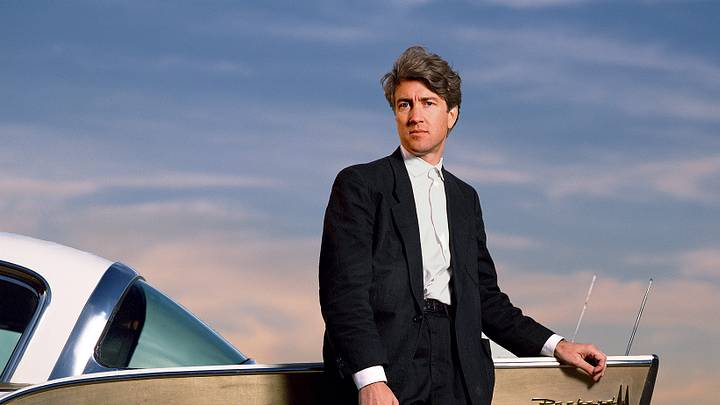
In his work, David Lynch plundered the depths of the bizarre, trawling the underbelly of the American psyche and translating it into dreamlike and disorienting cinema and television. But in his daily life, he made sure his days were as predictable as possible.
The filmmaker behind masterpieces like Twin Peaks and Mulholland Drive relied on daily routines, which allowed his limitless creativity to wander far beyond the edges of what most people could dream up. “If you have a habit pattern,” Lynch told The New Yorker in 2021, “the more conscious part of your mind can concentrate on your work, and you can get ideas and do those things, and the rest sort of takes care of itself in the background.”
David Lynch’s morning ritual: coffee and meditation
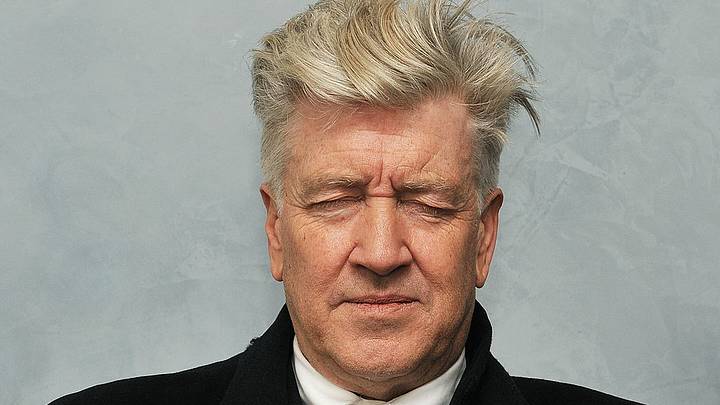
Lynch’s days always began with one thing: coffee. Like Dale Cooper in Twin Peaks, Lynch shared an unshakable love for the stuff, and typically started his days with a cappuccino. “I like to get going with the coffee right away. That’s just the way it is with me,” he shared with Vice in 2020. “You know how in a hospital they put an IV in your arm? I pretty much have a drip going all day long.”
After his first cup of joe, he would sit for meditation—a non-negotiable cornerstone of the filmmaker’s life for decades. Lynch began practicing Transcendental Meditation in 1973 and continued to do so daily until his death in 2025, claiming to have never missed a session. The practice involves sitting for 20 minutes twice a day and mentally reciting a mantra, which is provided by a certified teacher at an official Transcendental Meditation course and kept secret for life.
Lynch was a major advocate for the technique, which he often said was key to his happiness and creativity. The practice inspired his book Catching the Big Fish: Meditation, Consciousness, and Creativity, and in 2005, he established the David Lynch Foundation, which aimed to spread Transcendental Meditation around the world.
After Lynch finished his morning meditation, he’d head to work. That could look quite different each day, depending on whether he was searching for new ideas, filming on set, promoting a film, or something else. Still, no matter what, and even on set, he always made time for his afternoon meditation session.
David Lynch’s eating habits
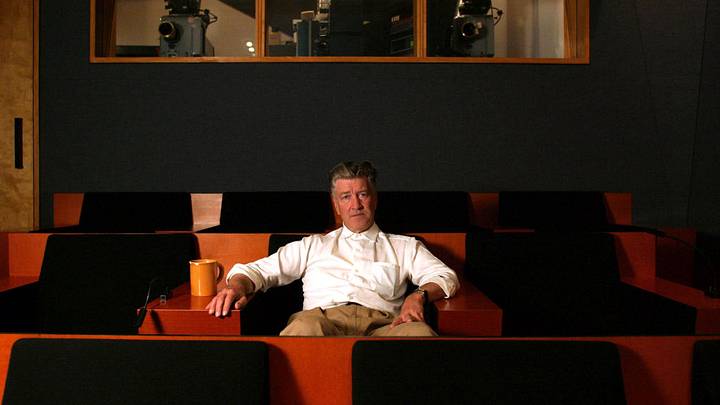
Lynch preferred to eat the same meals many times in a row, and sometimes stuck with one dish for months at a time. After meditating, he would typically have a small breakfast—“either some amrit nectar or a small smoothie with protein powder and blueberries and peaches,” he once shared. In a 1997 interview with Marie Claire, he said that at the time, his favored lunch meal consisted of tomatoes, tuna, feta cheese, and olive oil. For dinner, he cited a preference for chicken and broccoli with soy sauce.
Some food habits endured longer than others. His longest-lasting daily meal, he said, was a Bob’s Big Boy chocolate milkshake, which he had at 2:30 p.m. every day for seven years. He also aimed to eat at the same times every single day, no matter what.
Lynch preferred not to cook at home, however. “I don’t allow cooking in my house. The smell. The smell of cooking—when you have drawings, or even writings— that smell would go all over my work,” he said in a 1990 interview with Time. “So I eat things that you don’t have to light a fire for. Or else I order a pizza. The speed at which I eat it, it doesn’t smell up the place too bad. The smell doesn’t last too long.”
For the filmmaker, routine was the foundation that allowed his creativity to fly as freely as it did. “When there’s some sort of order there, then you’re free to mentally go off any place,” he said in a 2000 interview with the journalist Charlie Rose. “You’ve got a safe sort of foundation and a place to spring off from. It is very important for me [in the creative process]…The purer the environment, the more fantastic the interior world can be, it seems to me.”
Read More:
•
David Lynch’s Three Strange Ideas That Eventually Became ‘Blue Velvet’
•
10 Damn Fine Facts About David Lynch
•
The Literary Influence Hiding Inside David Lynch’s ‘Blue Velvet’
•
Hear David Lynch Explain How He Comes Up With His Ideas
•
Quiz: Can You Identify the David Lynch Movie From One Character?
•
16 Things to Look for When ‘Mulholland Drive’ Melts Your Brain
•
16 Damn Fine Facts About Twin Peaks
The States Losing the Most Daylight Before Winter, Mapped
Some states will stay sunnier than others as the winter solstice approaches.
ByJenny Cohen|Nov 3, 2026, 4:00 PM EST
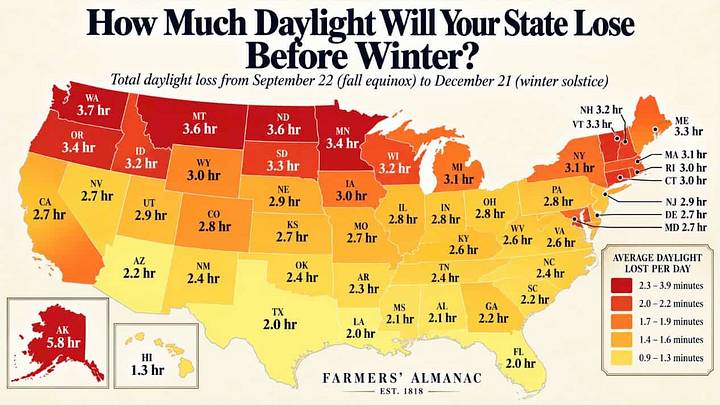
Autumn means beautiful fall leaves, festive holidays like Halloween and Thanksgiving, and a break from hot, muggy summer days. It also means less daylight as the winter solstice approaches on December 21.
But just how much daylight will be lost by the time we get there? That depends on where you live, with some states seeing more of an effect on their hours in the sun than others. The Farmers’ Almanac pulled together the data to help Americans figure out where they’ll be able to stay in the sun, and where things will be getting dark as winter approaches.
Northern states see the biggest drop
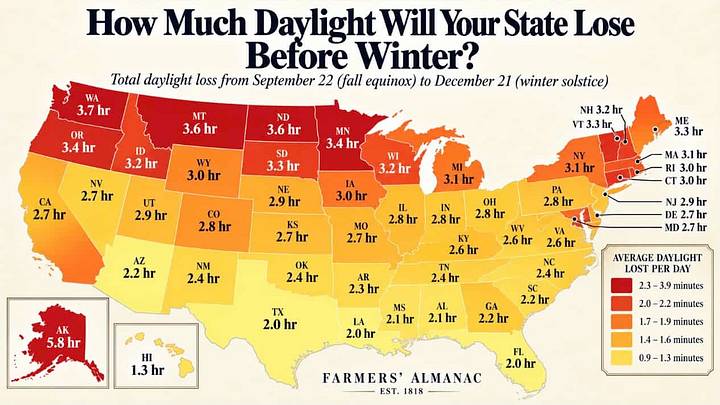
Living in a northern state means you see plenty of fall colors come out in October and November, but the beautiful changes mean you’ll pay for them with extra darkness. The Earth’s tilt is to blame, as it moves northern states away from the sun as winter sets in.
That’s why it’s the northernmost state in the U.S. that bears the biggest brunt of this change. Alaska loses the most sunlight between the autumn equinox on September 22 and the winter solstice on December 21, with 5.8 hours of daylight disappearing by the first day of winter in Juneau, Alaska. On December 21, the sun rises in Juneau, Alaska, at 8:40 a.m. and sets at 3:10 p.m.
While not as dramatic, other northern U.S. states also lose significant amounts of daylight as the winter solstice comes closer.
Washington comes in second place with a loss of 3.7 hours of daylight, with the sun setting on the state at earlier and earlier times as winter nears. In Seattle, for example, the sun sets at 7:06 p.m. on the autumn equinox on September 22, but goes down at 4:20 p.m. by the winter solstice on December 21.
Montana and North Dakota are tied for third place, with each state losing 3.6 hours of daylight by the time they reach the winter solstice.
The top 10 states that will lose the most daylight in autumn include:
1. Alaska
2. Washington
3. Montana
3 (tie). North Dakota
5. Minnesota
5 (tie). Oregon
7. Maine
7 (tie). South Dakota
7 (tie). Vermont
10. Idaho
10 (tie). New Hampshire
10 (tie). Wisconsin
Sunny days stay in the south
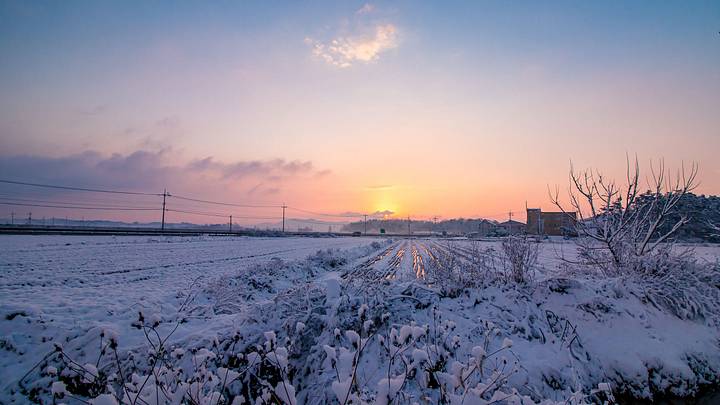
Just as the northernmost state in America loses the most amount of daylight in autumn, the southernmost state loses the least.
Hawaii will lose some daylight from the autumn equinox to the winter solstice, but only 1.3 hours. On the winter solstice in Honolulu, the sun will rise at 7:04 a.m. on December 21 and set at 5:54 p.m. that night. That’s more than two hours later than the official sunset in Anchorage, Alaska on the same date.
Three states will only lose around two hours of daylight by the time the winter solstice comes around: Texas, Louisiana, and Florida. Miami residents may not notice much of a change when it comes to the sunset in September compared to December. On September 22, the sun will set at 7:16 p.m., and it will set at 5:34 p.m. on December 21. That’s a difference of only 1 hour and 42 minutes.
On average, states in the South lose around 1.3 to 1.6 minutes of sunlight per day in autumn, while Hawaii loses less than a minute a day. That hardly compares with northern states, which lose more than two minutes a day on average between the autumn equinox and the winter solstice.
The top 10 states that lose the least amount of daylight include:
1. Hawaii
2. Texas
2 (tie). Louisiana
2 (tie). Florida
5. Mississippi
5 (tie). Alabama
7. South Carolina
7 (tie). Georgia
7 (tie). Arizona
10. Arkansas
Read More:
•
The States With the Most—And Least—Animal Collisions, Mapped
•
The Snowiest Month in Every State for 2026, Mapped
•
The Most (and Least) Expensive States for Groceries, Mapped
•
Quiz: Think You Know Europe? Let’s Test Your Capital City Knowledge