
Museums aren’t just staid institutions that chronicle the history of the world, or the development of arts and sciences; there are also plenty of venues that let you learn about your favorite musical acts. Take a look at 11 of our favorite museums devoted to rock groups, classical composers, and more.
1. ABBA the Museum
This museum follows Sweden’s most famous pop group from its early days to its “Dancing Queen” heyday and beyond. There are more glittery costumes and gold records than ABBA had pop hits, but you’ll also find interactive elements, including a disco-inspired dance floor and a red telephone that visitors can answer if it rings (apparently, only four people have the number—we’re betting we can guess who).
2. Graceland Mansion
Elvis Presley bought this property in Memphis in 1957 (buying price: $100,000), and called Graceland home until his death in 1977; it opened as a museum five years later. Visitors can see the King’s touring costumes, his car collection, and the “Jungle Room,” but not everything is open to the public: the mansion’s entire second floor, including Presley’s bedroom and the bathroom where he died, is completely off-limits.
3. The Beatles Story
Even superfans will find out something they didn’t know about the Fab Four by visiting this museum, located in the Beatles’ hometown of Liverpool, England. You’ll find items like Lennon’s glasses; one of George Harrison’s first guitars; a gallery of little-seen photos of the band by Paul Berriff (who rediscovered the collection in his attic in 2010); and a recreation of the Cavern Club, a basement bar where the band performed—and where Beatlemania began.
4. Chasing Rainbows Museum at Dollywood
This museum opened on the grounds of Dollywood in 2002, but recently closed to make way for the Dolly Parton Experience. It was filled with Dolly memorabilia, including stage costumes and outfits from movies like 9 to 5, and a plethora of awards the spunky performer has won throughout the years.
5. Anne Murray Centre
Canadian singer Anne Murray is so revered in her hometown of Springhill, Nova Scotia—known mostly for coal mining—that a museum devoted to her legacy opened there in 1989. The small institution operates from May to October, and visitors can check out artifacts from Murray’s life, including outfits, gold records and instruments. There’s also a teeny recording studio where superfans can lay down a virtual duet with the songstress.
6. Mozarthaus
Vienna’s most famous export (no, not chocolate) is the subject of this museum, located in an apartment that Mozart occupied from 1784 to 1787. (The composer was born in Salzburg, but wrote his most famous works, including The Marriage of Figaro and The Magic Flute, in Vienna.) Much of the museum is about Mozart’s music, but you can also get a glimpse at how he spent his free time—there’s an entire room devoted to games, a particular passion.
7. The Allman Brothers Museum at the Big House
The members of the Southern rock band used this Macon, Georgia, residence as a home base during their earliest years, and it reopened as a museum in 2009. Visitors can explore the sprawling home’s rooms—including ones decorated to look as they did when Duane and Gregg Allman lived there in the early ’70s—and see the band’s old instruments, clothes, photos and more.
8. Ramones Museum & Bar
A museum about New York’s most famous punk rockers is in … Berlin? Yup: Die-hard Ramones fan Flo Hayler opened the venue after his collection of memorabilia grew too large to keep in his apartment. Now, those items—along with T-shirts, photos, band members’ leather jackets, and much more—are on display; the venue also occasionally hosts punk-rock concerts.
9. Bob Marley Museum
Five years after Bob Marley’s death in 1981, his wife Rita turned their Kingston, Jamaica home into an institution focused on his life and legacy. The house, shaded by palm trees, showcases Marley’s personal artifacts, such as his awards and gold records, and clothes he wore while performing. The museum also holds a weeklong celebration of Marley’s birthday each February.
10. Willie Nelson and Friends Museum and General Store
This shrine to the country legend is just one of several famous music museums in Nashville—it’s across the street from the Grand Ole Opry House. The institution holds many artifacts from Nelson’s lengthy career, including the guitar he used for his debut at that famed neighbor in 1963. (Some were even purchased during auctions held by the IRS in the early ’90s, when Nelson owed the government upwards of $16 million.)
11. The Kalakuta Republic Museum
Afrobeat musician Fela Kuti’s onetime home in Lagos, Nigeria, reopened as a museum celebrating his life and activism in late 2012. Some of the items on view are normal day-to-day pieces—including the performer’s flamboyant clothing and shoes—while others, such as newspaper clippings and Kuti’s writings, honor his legacy as a political firebrand.
Related Tags
- MUSEUMS
- HOME
- PHOTOS
- DEATH
- MUSIC
- CULTURE
- ART
- TRAVEL
- Pop Culture
- MOVIES
What Did People Eat for Breakfast in Colonial Williamsburg?
Long before Biscoff-stuffed flapjacks were on the menu, colonists fueled up on molasses-drenched hoecakes in the future Pancake Capital of the World.
ByNitya Rao|Oct 19, 2026, 8:00 PM EDT
 Add us as a preferred source
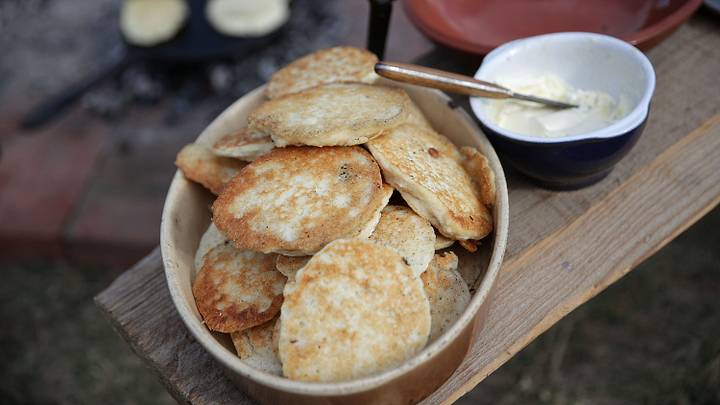
George Washington’s original vision for America included peace, prosperity—and possibly, pancakes—for all. The latter is arguably the most successful of the three to come to fruition in modern-day ‘Murica. At least, that’s the feeling if you make your way to one of the places it all started: Williamsburg, the historic colonial capital of Virginia and the current Pancake Capital of the World.
If the almost comically packed row of pancake houses along Richmond Road misses you on your way into Williamsburg, the smell of warm maple syrup and sizzling griddle batter is sure to stop you in your tracks. That’s especially true during the Williamsburg Pancake Festival, where frenzied pancake-eating contests and all-you-can-eat flapjack feasts paint the town golden brown each fall. But step off the main strip and onto the cobblestones of Colonial Williamsburg, and you quickly learn that 250 years ago, mornings looked—and tasted—drastically different.
To understand how Jamestown’s neighbor turned into IHOP’s rival, you have to look at what was actually cooking over 18th-century hearths. Mental Floss got a taste of Williamsburg’s current food scene while attending the second annual Williamsburg Pancake Festival, along with a whiff of what fed some of colonial America’s earliest residents, courtesy of local historian Trish Thomas, owner of Williamsburg Walking Tours.
According to Trish, the country’s current breakfast hyperfixation isn’t a departure from history—it’s an evolution. “We’ve always had something like pancakes in this country,” Trish explains, describing the cornmeal cakes settlers once started the day with.
“They are pancakes, except they’re using corn because wheat flour was expensive,” she says. “As wheat becomes less expensive, people move to wheat because it’s finer—it makes you feel a little more elite. But poor people will always use the corn.”
The Colonial Breakfast Class Divide
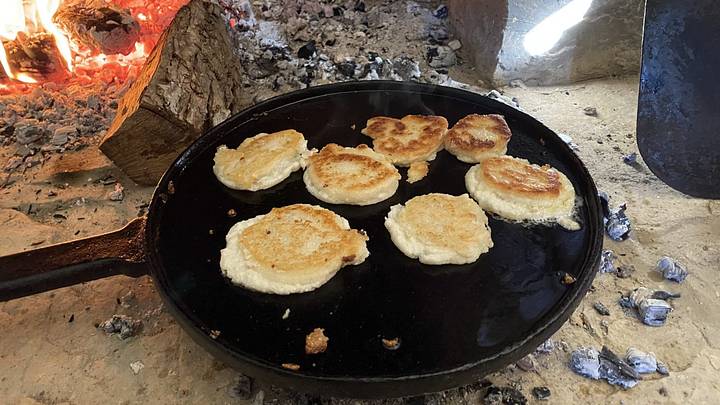
For enslaved laborers and working-class settlers in colonial Virginia, breakfast was a quick, no-frills affair. Think coarse cornmeal simmered into porridge, or mixed with water, a pinch of salt, and cooked with lard on whatever metal tool was on hand—often a garden hoe or shovel. These hearth-cooked hoecakes were adapted from Native American ash-cooked cornmeal cakes and were often topped with thick, nutrient-dense molasses rather than maple syrup.
More realistically, though, the most important meal of the day was often built on leftovers from the day before. The people’s breakfast was a practical mix of “something new, something from last night,” Trish says, where fresh hoecakes were paired with whatever survived from yesterday’s dinner. Of course, this was all contingent on the rare occurrence of having time to eat before the workday began.
For the Virginia elite, the morning meal was far more refined—and took its time. Wealthy aristocrats like William Byrd II often eased into the day with plain or boiled milk mixed with seasonal fruit before having a larger meal later on. But when upper-class Virginians did crave cakes for breakfast, they pulled out all the stops.
“George Washington used a fine white cornmeal, and he liked his to rise, so it was mixed with yeast and set overnight,” Trish notes. “In the morning, they would cook his on a griddle, and he liked his with a bunch of butter and honey.”
How Williamsburg Became the Pancake Capital
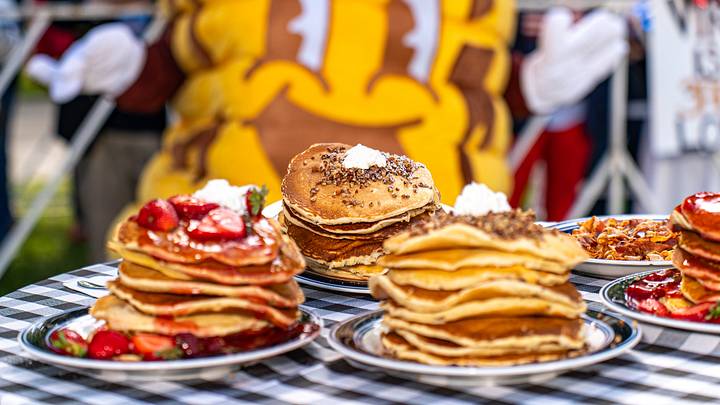
So, how did breakfast in Colonial Williamsburg go from the occasional hoecake to towering stacks of pancakes served with enough side dishes to feed the whole family?
It all goes back to the Greeks, who, coincidentally, are credited with writing the earliest recorded recipes for pancakes in ancient times. Closer to home, Williamsburg’s transformation began in the mid-20th century, when World War II brought military families to the area.
With local motels lacking built-in dining rooms, Greek-American restaurateurs from nearby Newport News stepped in to fill the void with diner fare that was “Quick, easy, inexpensive, and filling,” says Trish, a Virginia Beach native who has been studying the history of Southeastern Virginia for 30 years. “We kept them because we’re traditionalists here and we like them.”
Fluffy flapjacks kept sightseers full until an early dinner, saving families time and money while exploring the restored colonial capital and, by the mid-1970s, nearby Busch Gardens. Over the decades, generations of Greek-American families kept the griddles going to feed the tourism boom.
It started in 1956 with early local institutions like The Jefferson Restaurant, followed by Mama Steve’s House of Pancakes in 1968—now recognized as the town’s oldest continuously operating pancake house. The breakfast scene continued to boom with Capitol Pancake House in 1982, while the Prassus family helped feed the growing stream of Historic Triangle tourists by opening National Pancake House in 1986 and Colonial Pancake House in 1997.
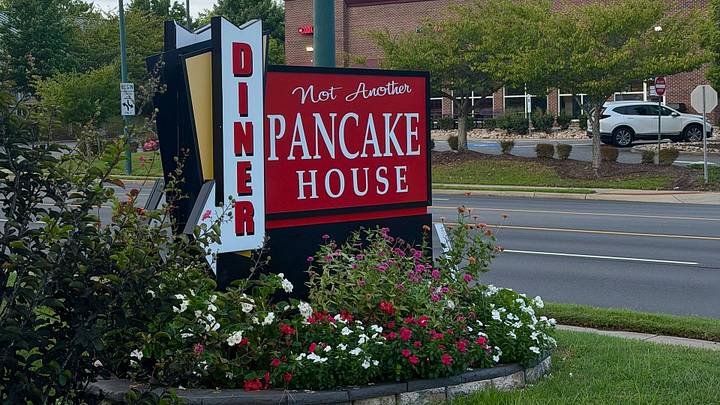
Today, this dense strip gives Williamsburg roughly one independent pancake house for every 1,450 residents—boasting the highest per capita ratio of pancake houses in the country and earning the city its official title as the “Pancake Capital of the World.”
These days, cinnamon bun pancake hybrids and trending toppings—from Biscoff cookies to pumpkin pie—have made their way onto breakfast menus across town, a far cry from the modest hoecakes of Washington’s heyday. And while the rush of the corporate American routine has made the sit-down morning meal feel increasingly rare, long, slow mornings at pancake houses still prevail in Williamsburg.
In fact, the tradition runs so deep that the town hosts an entire festival dedicated to the staple, complete with a jaw-dropping (or in Joey Chestnut’s case, jaw-unhinging) competitive eating competition, a pancake mascot named “Short Stack” roaming the grounds, and even a side of sausage—the “Sausage Sprint” dachshund race, that is.
No matter how you stack them, the sentiment stands strong. Two hundred fifty years later, Williamsburg is still doing what it has always done best: fueling the American morning, one flapjack at a time.
More Like This:
•
What Ancient Egyptians Really Ate for Breakfast
•
What Miners Really Ate During the California Gold Rush
•
6 Foods Families Really Ate in the Times of ‘Little House on the Prairie’
•
6 Foods Families Really Ate During the Middle Ages
Home/FOOD
The Elvis Presley Encounter That Changed Tom Petty’s Life
One handshake from the King of Rock and Roll turned a 10-year-old Florida kid into a future rock legend.
ByChris Wheatley|Oct 20, 2026, 6:00 PM EDT
Add us as a preferred source
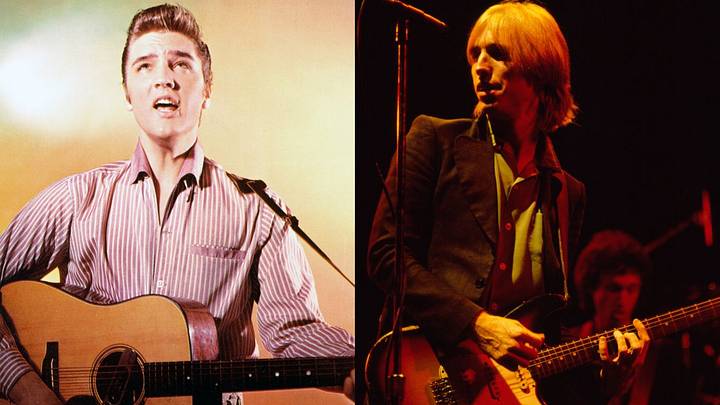
Singer Tom Petty has enjoyed an outstanding career, first leading his immensely popular band, the Heartbreakers, then scoring numerous solo hits, and, in later years, performing alongside George Harrison and Bob Dylan as part of the rock supergroup, The Traveling Wilburys. Fascinatingly, it was an incident that occurred when he was just ten years old that set him on the road to stardom.
When Tom Petty Met the King
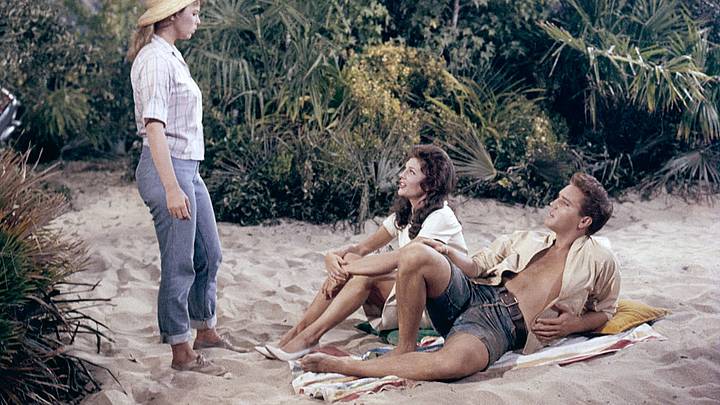
Speaking in an interview with the Independent newspaper, Petty revealed how this early encounter with no less than the king of rock and roll proved to be a pivotal moment in his life. The year was 1962, and Elvis Presley was at the height of his fame. Having returned from a stint in the army, based in Germany, Presley had roared back in the charts with the albums Elvis Is Back! and Something for Everybody. He was then in the process of making his ninth feature film, Follow That Dream.
As luck would have it, Tom Petty’s uncle was working on the crew for that movie. Petty’s aunt suggested they go to visit the set. As Petty recalls: “So we went and stood down behind this chain link fence. There were thousands of people on the street, mostly girls passing record sleeves up to be autographed. I didn’t have a sleeve, and when I got home it became my mission in life to get an Elvis Presley record.”
Before the day was over, Petty did actually get the chance to meet with Presley, albeit briefly. As he remembers: “We were in a little backstage area where they had the trailers, and he came in, and arrived in a line of white limos. And, you know, when he came by, stopped and said hello, my uncle introduced my cousins and me. It was very exciting. Changed my life, really, because after that I started collecting records and just went in that direction.”
Trading Toys for Vinyl
Back home, Petty traded his prized aluminum slingshot for a box of vinyl 45s: “My life was transformed from that moment on. I just didn’t do anything but play these records.”
Reflecting on Presley’s importance, Petty went on to explain how he’d attempted to inform his own daughters on that subject: “I was telling them how he’s such a part of the culture now that I’m not sure people think of him as a great artist, which he was for a long time.”
With today’s flood of readily available information, any modern kid who wanted to learn about Presley would have an easy time, but back then, Petty remembers, things weren’t so easy: “Eventually, I sent off to England for something called The Elvis Presley Handbook. I sent a dollar, I think. Months went by until one miraculous day it showed up, and in it was a discography and a chronology. That made it all start to fall into place.”
More Like This:
•
20 One-Hit Wonders From the 1980s You Still Know Every Word To
•
6 Classic Rock Hits That Almost Went to Different Artists
•
The Elvis Presley Encounter That Changed Tom Petty’s Life
•
Quiz: Can You Name the Tom Petty Song From One Lyric?
•
Quiz: Is This a Lyric From “Monster Mash” or “Spooky, Scary Skeletons”?
Home/MUSIC