
ByDavid W Brown|Aug 4, 2017, 12:00 PM EDT
 Add us as a preferred source

The U.S. Coast Guard has a unique job in the military, with a role in law enforcement and a role in war. Its 42,000 active duty members, as well as its 7500 reservists and 30,000 members of the auxiliary, are called guardians. Here are a few things you might not have known about them.
1. THE COAST GUARD HAS A REAL PROBLEM WITH AARON BURR.
Alexander Hamilton is the father of the Coast Guard. In Federalist No. 12, Hamilton posited that a “few armed vessels, judiciously stationed at the entrances of our ports, might at a small expense be made useful sentinels of the laws.” Their purpose would be to enforce maritime laws and to collect tariffs. In 1790, the United States was flat broke, and Hamilton, now Secretary of the Treasury, pushed hard for the creation of his fleet to help get the coffers filled. The result was the Revenue-Marine, later renamed the Revenue Cutter Service, and they eventually merged with the United States Life-Saving Service (which helped shipwrecked sailors) to form the Coast Guard.
2. FOR A WHILE, THE FORERUNNER TO THE COAST GUARD WAS THE ONLY NAVY OF THE UNITED STATES.
In 1790, the Continental Navy was disbanded, and the only navy at the disposal of the United States was Hamilton’s Revenue-Marine. At the time, the Barbary pirates posed a threat to the U.S. at sea, and the job of dealing with them fell to the Revenue-Marine. The first three warships of the U.S. Navy didn’t set sail until 1797.
3. THE COAST GUARD RAN THE DISTRICT OF ALASKA.
As part of an effort to lay telegraph cable from the United States to Russia, the U.S. Lighthouse Service, working subordinate to the Revenue Cutter Service, made first contact with Russia’s Alaskan coast. Later, the Revenue Cutter Service brought U.S. officials to and from the new Alaskan territory. During the 1870s, the service was charged with enforcing hunting and fishing laws in the territory (seals, especially, were valuable for their pelts and hunted to the point of near-extinction). They were also given responsibility for rescuing ships in the Bering Sea and along the Arctic coast. The upshot is that the massive role of the Coast Guard’s predecessor meant that it was the only game in town—it essentially was the government. It even maintained “court cruises,” whereby judicial officials were sailed in to try criminal cases. It also provided care and comfort in the forms of food, medicine, and supplies to villagers in the arctic.
4. ONE MEMBER OF THE COAST GUARD PICKED A HELL OF A WEEK TO QUIT DRINKING.
Lloyd Bridges, Beau Bridges, and Jeff Bridges (The Dude!) all served in the Coast Guard, as did “The King,” Arnold Palmer. The Joker’s shipmates probably got a few laughs in—Cesar Romero was a guardian. Maybe the most famous member of them all, though: Popeye.
5. THE COAST GUARD IS NOT PART OF THE DEPARTMENT OF DEFENSE.

The United States Coast Guard is the only branch of military service that doesn’t belong to the Defense Department. Rather, it is an arm of the Department of Homeland Security. Before the establishment of the DHS in 2002, it belonged to the Department of Transportation. Before that, it belonged to the Treasury Department. During a declared war, the Department of Defense can take operational control of the Coast Guard.
6. THE EXOSPHERE IS A KIND OF COAST.
Commander Bruce Melnick, the chief test pilot at the Coast Guard Aircraft Program Office, was the first guardian selected by NASA to serve as an astronaut. He flew on the Space Shuttle Discovery in 1990 and on the maiden voyage of the Space Shuttle Endeavour in 1992. He has logged over 300 hours of space flight.
7. ADMISSION TO THE COAST GUARD ACADEMY DOES NOT REQUIRE CONGRESSIONAL NOMINATION.
Every year, 300 cadets attend the U.S. Coast Guard Academy in New London, Connecticut. Cadets graduate as ensigns and have the option of attending flight school or graduate school. Unlike the other service schools, admission to the Coast Guard Academy does not require Congressional nomination. This is because the school’s first superintendent objected to the lousy quality of political appointments in general. Both Coast Guard astronauts are graduates of its academy.
8. IF THE DOGS ARE COMING AFTER YOU, IT’S GOING TO BE A BAD DAY.
Pirates seize your oil rig? You’re going to want to talk to the DOG. The Coast Guard command that handles counter-terrorism and high-threat situations is called the Deployable Operations Group. They’re a quick reaction force whose teams handle maritime interdiction, force protection, nuclear-biological-chemical threats, counter-piracy, counter-terrorism, and anti-terrorism. Because the U.S. Coast Guard does not belong to the Department of Defense, its units do not belong to Special Operations Command. That said, the Navy has opened up its Basic Underwater Demolition/SEAL course to guardians, and have graduated Coast Guard SEALs.
9. IT HAS A FRATERNAL ORDER KNOWN AS THE ANCIENT ORDER OF THE PTERODACTYL.
The Coast Guard Aviation Association is a fraternal organization of Coast Guard aviators. Its membership includes guardians and members of other military branches (of the United States and other countries) who have flown Coast Guard aircraft. Until 2007, it was known as the Ancient Order of the Pterodactyl.
10. THE LONGEST-SERVING COAST GUARD AVIATOR HOLDS A SPECIAL HONOR.
The longest-serving active Coast Guard aviator is designated as the Ancient Albatross. This pilot is bestowed traditional aviation gear of a leather coat, leather helmet, goggles, and white scarf, as well as the Royal Pterodactyl Egg. According to regulation, “Eligibility for the title of Ancient Albatross and entitlement to the award will be determined by ascertaining that aviator or aviation pilot on active duty whose date of designation as such precedes in point of time that of any other Coast Guard aviator or aviation pilot.”
11. THEIR AVERAGE DAY ISN’T SO AVERAGE.
According to the U.S. Coast Guard Boating Resource Center, on an average day, the Coast Guard conducts 109 searches and rescues, saves ten lives, seizes 169 pounds of marijuana and 306 pounds of cocaine worth $9,589,000.00, and investigates six vessel casualties.
20 Things Every ’70s Kid Remembers That Have Completely Disappeared
Before smartphones, streaming, and the internet took over, everyday life was filled with simple pleasures and technologies that have all but gone extinct.
ByPaul Anthony Jones|Nov 1, 2026, 8:00 PM EST
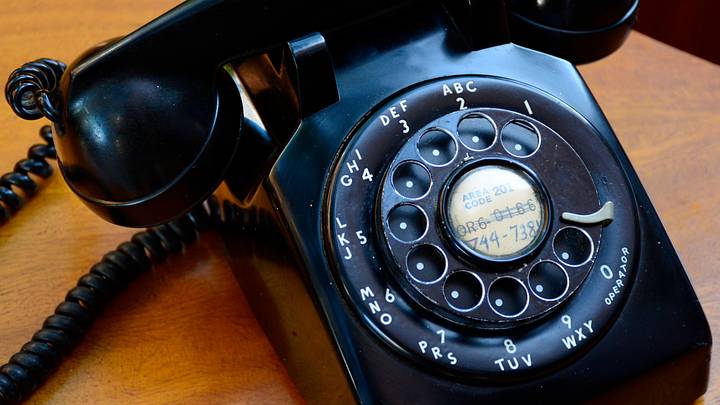
It’s only natural that things change over time, but the pace of change over the last few decades has been head-spinningly quick.
In many ways, that’s made the world easier; staying and getting in touch with people, finding your way around, learning and finding things out, and even shopping and ordering what you want are all now far simpler and more readily available than they were in the past.
But that has had the somewhat less pleasant and more jarring consequence of consigning many of the technologies and experiences of yesterday to history, especially those from the 1970s. Here are 20 that have all but disappeared.
LANDLINE TELEPHONE CORDS
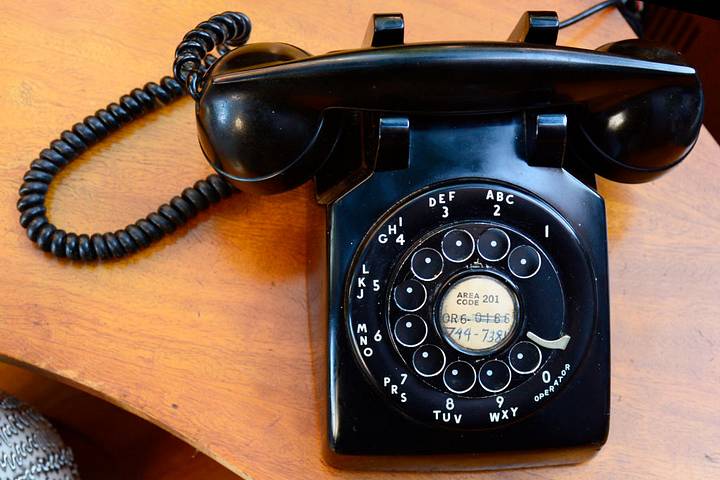
Long before cell phones became a thing, every house had a landline, which was really the only way of keeping in touch with friends and family. Thankfully, the cord on some landline telephones was so long that if you needed a quiet conversation away from your parents, you could take the handset in another room and close the door without stretching it too far.
CALLING THE HOUSE TO SPEAK TO ONE PERSON (WHO MIGHT NOT EVEN BE IN)
Unfortunately, having a landline meant you couldn’t get in touch with one person specifically, but had to call the entire house before narrowing it down to the one member of the household you wanted to reach. (Cue lots of awkward conversations between you and your best friends’ parents—especially if your friend didn’t happen to be in at the time…)
CALL CHARGES
One aspect of the telephones of the past that won’t be missed, however, is the often eye-watering difference between local and long-distance calls. Want to talk to your friend a few streets over? You could talk for hours for a pittance. Want to speak to your aunt or uncle two countries away? Give it ten seconds, tops.
KEEPING THE PHONE OFF THE HOOK
One more telephone-related aspect of the past that’s a little less simple these days? If you didn’t want to be disturbed, you could just take the phone off the hook and be uncontactable for however long you wanted. (These days, the best you can do is a do-not-disturb setting, or just turning your phone off altogether!)
RETURNING REUSABLES (IN EXCHANGE FOR HARD CASH)
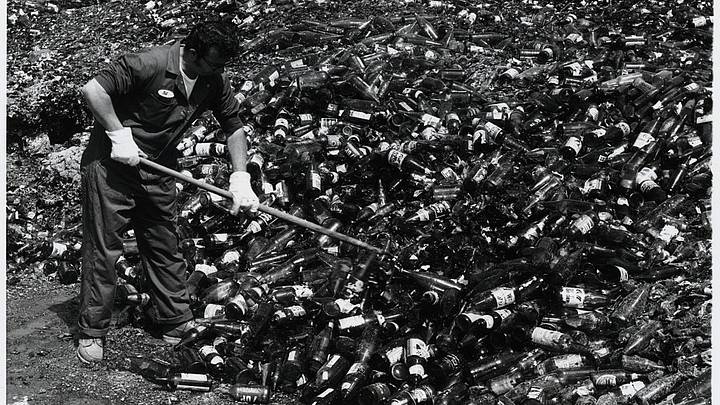
These days, we all have household trash cans for recyclables, and recycling centers will handle most of your reusables cleanly and easily. In the past, though, it wasn’t uncommon for stores and restaurants to have their own in-house schemes for reducing waste, with stores often holding a few cents’ deposit on glass bottles and glasses, or giving a few cents back for returned cans. Some states have taken over these measures themselves, of course, but the days of taking them back to the stores you bought them from are largely long gone.
LASERDISCS
Watching films on discs is by no means anything new—it’s just the DVDs and BluRays of the 21st century are a lot smaller than the LP-sized LaserDiscs of the late 1970s.
CB RADIO SLANG
There was a time when CB radio was so widely used (one in five Americans owned a short-distance radio in the mid 1970s) that the chatter and slang you’d hear over them began to slip into everyday parlance. Whether that’s a “10-4,” a “meat wagon,” or a “good buddy,” many of these snapping turns of phrase have sadly fallen by the wayside.
TV ANTENNAE
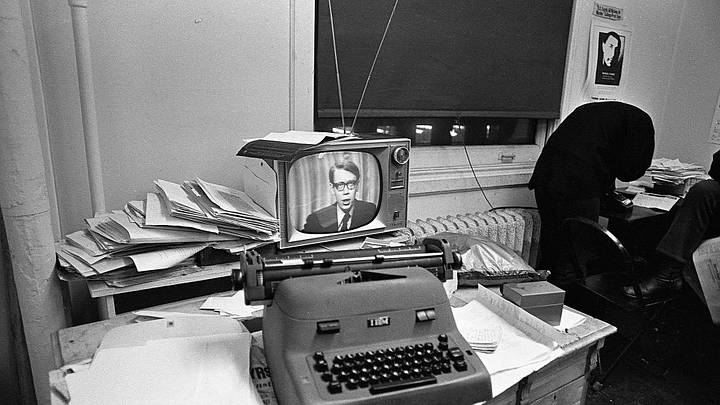
On the subject of sending messages over the airwaves, there was a time when television sets came with movable antennae, Simpsons-style. In the era of smart TVs, though, these have largely become a thing of the past (so no need to wrap your TV aerial in aluminum foil anymore to improve the signal…)
CHANGING TV CHANNELS AT THE SET
Speaking of TVs, although the first commercial television remote control was made available back in 1950, by the 1970s many homes’ television sets still required manual channel-changing—variously achieved by either pressing, turning, or switching a series of (often rather noisy) control buttons or dials on the set itself. The technology might have changed, but we still talk of “tuning in” to television shows today even in the digital age.
APPOINTMENT TV
Digital and cable television, as well as streaming and catch-up services, have also done away with the so-called “appointment TV” era of the past too. There was a time when missing your favorite show meant precisely that—you’d missed your one chance to watch it, and would be left scouring the TV guide for weeks to come hoping to catch a rerun.
TV GUIDE MAGAZINES
With that last one in mind, TV guides are gradually disappearing too. Why pick up a printed magazine listing each and every show when you can watch whatever you want, whenever you want it—or, failing that, just surf the in-build TV guide at the bottom of the screen until you come across something you want to watch.
TELEPHONE DIRECTORIES
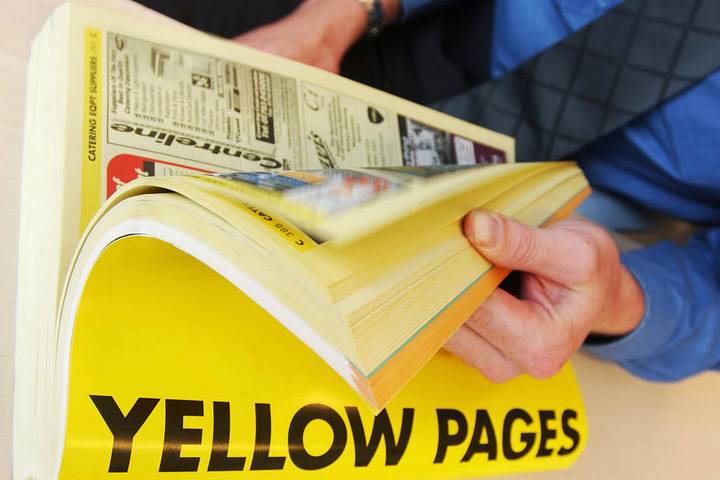
Not that TV shows were the only thing you had to browse by hand in weighty, information-heavy printed guides in the 70s, either. Business directories like the Yellow Pages listed every business in town across hundreds of pages, while the domestic phone directory did precisely that for home addresses. Want to know anything along those lines today, and it’s all online.
ROAD MAPS
Another printed resource that’s all but vanished today are road maps. Once the staple of every long-distance trip, and of every car glove compartment, these are becoming increasingly rare (outside of rural walks and hikes where mobile coverage and internet access might not be guaranteed!)
TRAVELER’S CHECKS
Another vacation staple of the 70s was the traveler’s check, which, unlike cash, had the added safety net of being reimbursable if lost or stolen. Ever more commonplace technologies like credit and debit cards, PIN numbers, and wireless payments have made these once widely used exchanges a thing of the past.
HITCHHIKING
Once a staple of many a cross-country trip (and many a movie based around it), hitchhiking reached peak popularity in the 1960s and 1970s, when someone thumbing a lift (or at least, trying to) was a common sight at practically every highway on-ramp.
SMOKING ON PLANES
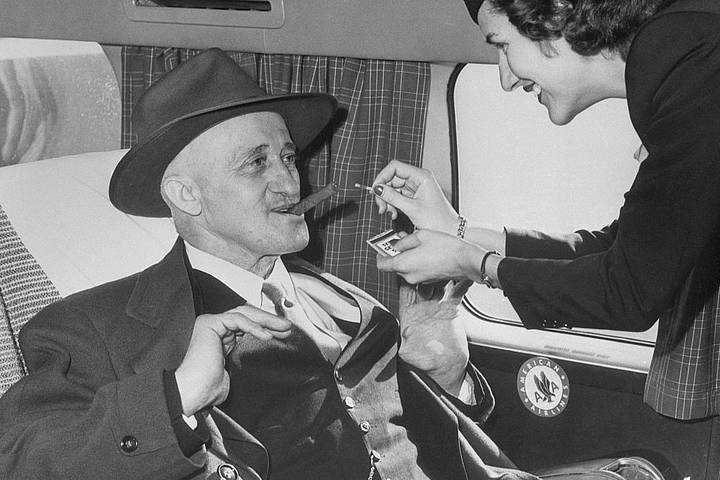
Going on an overseas vacation in the 1970s, meanwhile, often meant enduring the smell of cigarette smoke on the long plane journey too. Not that airplanes were the only place where smoking was once tolerated—back in the seventies, smoking was all but universal, and you’d see people lighting up everywhere from shopping malls to (ironically enough) hospitals.
CIGARETTE VENDING MACHINES
In fact, smoking was once so widespread that these were all but universal too.
CHRISTMAS CATALOG SURFING
Wintertime, of course, means Christmas—and there was a time when Christmas meant perusing department store catalogs and circling everything that you’d like Santa to bring you. (These days, you’re perhaps more likely to drop it all in an online shopping cart and sit back and wait for it to be delivered.)
SEASONAL FRUIT

At the slightly healthier end of the seventies scale, however, the seasonality of fruits, vegetables and other produce was once far more widely followed than it is today. Nowadays, with industrial greenhouses, climate-controlled polytunnels and GM foods engineering ever-hardier varieties, even the softest of summer berries are often still available in the depths of winter.
HAVING NOTHING TO DO (OR ANYTHING TO PLAY WITH)
One of the effects of all this click-and-buy consumerism, however, is that real, genuine downtime seems to be a thing of the past. In an era of endless scrolling, streaming, and messaging, few of us find ourselves without anything to do and end up having to make our own fun armed with whatever toys, paper, and coloring pens we might have once had at our disposal.
Read More:
•
4 Wild Misconceptions About the 1970s
•
The 21 Best Movies of the 1970s
•