BySuzanne Raga|Jul 24, 2017, 5:25 AM EDT
 Add us as a preferred source

Eggs are readily available, relatively cheap, and full of healthy protein and amino acids. Although it may seem easy and straightforward to cook eggs, trying out a few techniques from these chefs will turn your scrambled, hard-boiled, or fried eggs from just fine to flawless. Here are 11 tips from chefs for cooking perfect eggs.
1. CHECK THE CARTON’S JULIAN DATE.
No matter what type of egg dish you cook, fresh eggs taste better and are easier to work with than older ones. J. Kenji López-Alt, the Managing Culinary Director of Serious Eats, suggests checking the Julian date—the three digit number that appears on every carton of eggs packed in the U.S. Numbers range from 001 for January 1 to 365 for December 31, so you want to buy a carton with a number that’s as close to the current day as possible.
2. CRACK YOUR EGGS INTO A SEPARATE BOWL.
When you crack eggs directly into the pan, you risk getting shell fragments in your eggs. But two more reasons to always crack eggs into a ramekin or cup first, according to Alton Brown, are so your eggs cook evenly, and so that you can more precisely control exactly where in the pan you want your eggs to land.
3. ALTERNATE THE PAN BETWEEN HEAT AND NO HEAT.
Gordon Ramsay recommends cooking scrambled eggs on medium-low heat and moving the pan back and forth between the stove and off the stove. Alternating the eggs between heat and no heat, which Ramsay does three or four times during the course of cooking, makes for scrambled eggs that are creamy and rich.
4. SCRAMBLE THEM IN BUTTER FOR A LIGHT, AIRY TEXTURE.
According to Chef Evan Hanczor, scrambling eggs in butter instead of oil will make your eggs more light, fluffy, and tender. Because the heat releases moisture in the butter as steam, the steam increases the airiness of the eggs.
5. HEAT YOUR METAL SPATULA IN THE OIL.
If you’re using a metal spatula to flip your fried eggs, heat olive oil in the pan and then, before you add any eggs, heat your spatula in the oil. This tip, from Spanish-American chef José Andrés, ensures that your egg won’t stick to the spatula, potentially breaking the yolk and messing up your fried eggs.
6. DON’T STOP STIRRING.
When Bobby Flay makes scrambled eggs, he doesn’t take a moment to rest. Similar to risotto, scrambled eggs should be stirred continuously, as soon as the eggs go into the pan. Doing so will help to break down the egg curds, giving your eggs a softer and creamier consistency. Just don’t stir so vigorously that the eggs begin to foam.
7. HEAT YOUR SERVING PLATE WHILE YOU COOK.
Although you might overlook the serving plate as a trifling detail, Brown argues that even the plate you serve your eggs on is important. Because a cold plate will lower the temperature of your eggs too fast, he recommends heating the serving plate in hot water (or in an oven on low heat) while you cook. Doing so ensures that your eggs stay hot while you eat them.
8. BOIL FOR 10 SECONDS BEFORE POACHING.
Poached eggs are notoriously difficult to pull off, but Julia Child has a tip to make you a master of poached eggs. After you boil water, poke a small hole in the egg with a pin to release air inside the egg. Then drop the egg in the hot water for 10 seconds, which will greatly help it keep its shape and deter cloudy strands of egg white from forming when you poach it.
9. USE WATER BATHS TO QUICKLY COOL SOFT BOILED EGGS.
To make soft-boiled eggs, Wayt Gibbs, the editor of Modernist Cuisine, suggests using a bowl of ice water and a water bath. After boiling your eggs for 3 minutes and 30 seconds, put the eggs into ice water so they quickly cool down. Then, put the eggs in a water bath for 35 minutes at 147 degrees Fahrenheit. The temperature might seem extremely precise, but the yolks will come out perfectly gooey.
10. PUT THE PROPER AMOUNT OF DAIRY IN YOUR FRITTATA.
According to Dawn Perry, the digital food editor for Bon Appétit, full-fat dairy greatly improves the taste and texture of frittatas. But proportions matter: For every six eggs that go into the frittata, you should use a half-cup of dairy, whether it’s milk, yogurt, or crème fraîche.
11. SLIGHTLY UNDERCOOK YOUR EGGS.
Because eggs continue to cook a bit after they’re no longer on the stove, Jamie Oliver suggests that you turn off the stove (or move the pan away from the burner) just before your scrambled eggs look fully finished. By the time you sit down to eat, your eggs will be perfectly cooked.
All images via iStock.
Related Tags
Quiz: Can You Complete These Halloween Jokes Before Time Runs Out?
How quickly can you guess the punchlines to these popular Halloween jokes?
ByLogan DeLoye|Oct 20, 2026, 7:00 PM EDT
Sometimes all it takes is a funny joke to pull you out of a bad mood and into a better headspace, especially if that headspace is spooky season (and all the goblins and gore that go along with it). Halloween is creeping up on us, and there’s more to prepare for than just parties, costumes, and trick-or-treating.
Imagine how much more fun the holiday would be with a few jokes up your sleeve to lighten the mood and entertain friends, family, party guests, or excited trick-or-treaters.
Some are comical, some clever, some both; these jokes are guaranteed to make even the ghastliest ghouls giggle, the craziest clowns chuckle, and the spookiest skeletons smile. But can you complete them before time runs out?https://www.sporcle.com/framed/?v=10&pm&gid=3nfcbf6fye&fid=6ad678ffec1d6
Could you pick the punchline of these Halloween jokes before the clock ran out? Some were chilling common sense, while others were trickier (or treatier). Send this quiz to your friends to keep the spooky season festivities going all the way to Halloween!
THE HISTORY OF HUMOR AND WHY WE LAUGH
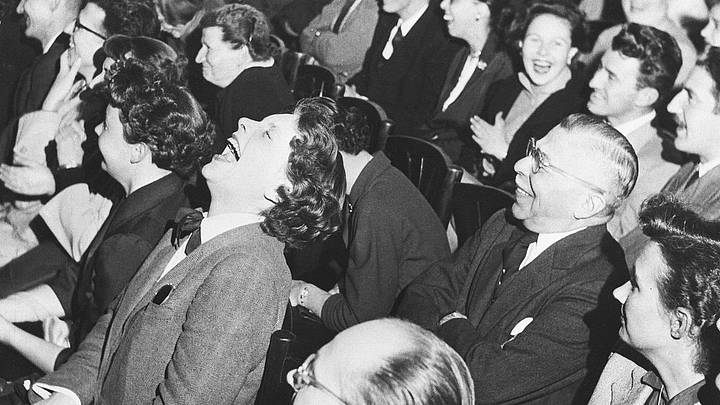
These Halloween jokes make us laugh, or at least smile. But why?
According to Scientific American, Greek intellectuals like Plato and other philosophers cracked jokes thousands of years ago, supposedly about “the misfortune of others” because it made them feel superior. In the 18th century, Sigmund Freud explained why we laugh at jokes, describing it as a release of “nervous energy.” Emotions we suppress build up over time, and laughter allows them to escape.
In 2011, Matthew M. Hurley, Daniel C. Dennett, and Reginald Adams, Jr. wrote Inside Jokes: Using Humor to Reverse-Engineer the Mind, suggesting we enjoy jokes about other people’s mistakes because “we enjoy weeding them out.”
Beyond analyzing others’ mistakes and releasing nervous energy, the “resolution of incongruity” helps explain why we laugh; it’s what happens when we finally recognize the joke’s underlying meaning.
Researchers Peter McGraw and Caleb Warren went further, arguing that humor comes about “when a person simultaneously recognizes both that an ethical, social, or physical norm has been violated and that this violation is not very offensive.” This is called the “Benign Violation Theory.” If you find the joke unethical or if it pertains to a situation you’re sensitive about, you’re less likely to laugh or find it funny.
McGraw and Warren also hypothesized that “distance from a situation,” how far removed you are from the subject, makes you more likely to laugh at a joke, especially if it’s absurd. Vocalizations, facial expressions, and noticeable conflict reduction are additional reasons we find things humorous.
The jokes in this quiz probably made you laugh because of their cleverness and absurdity, with a spooky twist, of course. Now you have plenty to bring as party favors while trick-or-treating or at your next Halloween bash.
The countdown to Halloween is on, and we’re challenging our readers here at Mental Floss with our Trick or Trivia quiz giveaway. For 13 nights between October 19-31, we’re putting your knowledge of all things spooky to the test. Think you know Halloween? Take at least one quiz and enter to be in the running to win a $200 Barnes & Noble gift card.
Read More:
•
The Real New Jersey History Behind ‘Friday the 13th’s Camp Crystal Lake
•
The Best Halloween Trivia Questions to Trick-or-Treat Your Brain
•
What Was Halloween Like 100 Years Ago?
Quiz: How Well Do You Know Halloween History?
October 31 has been marked by more unexpected events and mysterious traditions than you may know. How many can you get right?
ByNitya Rao|Oct 22, 2026, 7:00 PM EDT
Your personal Halloween history might revolve around the creative costumes you’ve worn and prized pieces of candy you’ve collected throughout the years, but the holiday’s actual history goes much deeper—and doesn’t always have to do with tricks or treats.
Whether you’re well-versed in Halloween pop culture or just happen to know a handful of the infamous events that fell on October 31 in years past, there’s no shortage of strange lore on the Halloween timeline. How well do you really know the stories behind spooky season?https://www.sporcle.com/framed/?v=10&pm&gid=6Z993d077l&fid=6ad8d196daa5a
Were you able to answer all 12 questions correctly before the clock ran out? Some covered classic Halloween lore, while others, focusing on historical events that coincided with the holiday, might have thrown you off. Add in the pressure of the five-minute timer, and it starts to feel like your time is running out in more ways than one! Whether your knowledge of October 31 occurrences is hyperspecific or hauntingly hollow, send this quiz to your friends to trick-or-treat them to a challenge ahead of Halloween.
More Halloween Quizzes:
•
Quiz: Is This a Lyric From “Monster Mash” or “Spooky, Scary Skeletons”?
•
Quiz: Can You Complete These Halloween Jokes Before Time Runs Out?
•
Quiz: Can You Match the Halloween-Themed Song to the Artist Who Wrote It?
•
Quiz: Can You Guess the 10 Most Hated (and 10 Most Popular) Halloween Candies?
•
Quiz: Can You Match the Monster to Its Wikipedia Description?
Haunting Moments in Halloween History
Some historical happenings from Halloween’s past are fairly mundane—like Mount Rushmore being completed on October 31, 1941—but others are so freaky that they might make you wonder if dark magic was involved. From infamous radio scares to toxic fog far from the kind that comes from a machine, these harrowing Halloween moments prove that real history can be stranger than fiction.
A century ago, on a night when magic is supposed to be most alive, the world’s most famous magician took his final bow. Harry Houdini passed away on Halloween 1926 after suffering from a ruptured appendix—a tragic loss that prompted generations of fans to hold annual séances to contact his spirit.https://www.youtube.com/embed/Xs0K4ApWl4g?feature=oembed
Just twelve years after Houdini’s passing, another otherworldly occurrence marked Mischief Night in 1938. The mass hysteria was sparked by Orson Welles’s radio adaptation of H.G. Wells’s War of the Worlds. Structured as a series of breaking news bulletins, the realistic performance convinced hordes of impressionable listeners that Martians were actively invading New Jersey. Think emergency calls, getaway cars, and widespread public panic.
A decade later, Halloween brought a very real disaster to a tiny industrial town in Pennsylvania. Halloween weekend in 1948 was defined by death—and not the stylized kind that typically defines the holiday. From October 27 to October 31, a wall of yellow smog carrying hydrogen fluoride and sulfur dioxide rolled over Donora, where a weather inversion trapped the toxic gases in the valley below. When Halloween came to a close, so did the lives of 20 locals. The Donora Death Fog became immortalized as one of the worst environmental disasters in U.S. history—and one of the most horrifying Halloweens on record.
When it comes to Halloween history, there’s a little something for everyone. Bookmark the Mental Floss quiz page for new daily challenges!
The countdown to Halloween is on, and we’re challenging our readers here at Mental Floss with our Trick or Trivia quiz giveaway. For 13 nights between October 19-31, we’re putting your knowledge of all things spooky to the test. Think you know Halloween? Take at least one quiz and enter to be in the running to win a $200 Barnes & Noble gift card.
More Halloween Reads:
•
The Most Popular Pet Halloween Costumes of 2026
•
The Most Popular Halloween Decoration in Every State
•
The Scariest Movie the Year You Were Born
•
7 Things That Made Halloween Different Before Smartphones
•
Why Are Skeletons Associated With Halloween?
Quiz: How Many Classic Horror Movies Can You Identify From Their Monsters?
If you can get a perfect score, you can consider yourself a classic horror expert.
ByAlexandria Ingham|Oct 24, 2026, 7:00 PM EDT
Add us as a preferred source
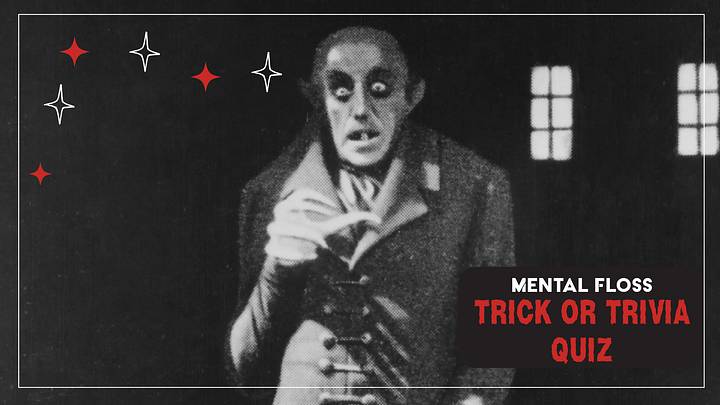
When it comes to horror movies, the classics brought the monsters we all know to life. Whether it was a creature made from people’s body parts or the undead walking among us, these monsters had us checking under the bed every night. Can you match the monster to its movie? We’ve got a quiz for you to test your knowledge just in time for Halloween.
If you got 8/8 on this quiz, then you’re a certified horror movie expert. Share with your friends to see how well they do, and why not make it a classic horror movie marathon night as your reward?
More Horror Quizzes:
•
Quiz: Think You Know ’80s Horror? Identify the Movie From Three Actors
•
Quiz: Can You Name These Disney Movies From Their Horror-Style Descriptions?
•
Quiz: If You Can Name All 10 Stephen King Adaptations, You’re a True Horror Fan
•
Quiz: How Well Do You Know These Classic ‘80s Horror Movies?
•
Quiz: Can You Match the Fictional Place to the Horror Movie?
•
Quiz: Can You Match the Opening Line to the Horror Novel?
The Best Classic Horror Monsters
Long before CGI created realistic and terrifying creatures, horror relied on theatrical makeup, practical effects, and haunting scores to deliver the atmosphere. It led to some of the most iconic horror monsters of all time, and there are some that will stand out for the scares and heartfelt stories they brought.
In 1931, Dracula brought Bela Lugosi’s legendary role to life. With slicked-back hair and piercing stares, he created the seductive creature of the night. Bram Stoker’s literary character was a suave aristocrat with a sinister charm that made it clear we should always watch for what goes bump in the night.https://www.youtube.com/embed/4qvdH9SdG8k?feature=oembed
In that same year, another monster was brought to life. Frankenstein is often considered the name of the creature, but that isn’t the case. The movie is named for the doctor, and his creation is known as the Monster or the Creature. Boris Karloff knocked the performance out of the park, adding heartfelt, innocent layers to a character that didn’t even need to speak a word for us to feel for him.
Then a year later, The Mummy brought another creature to life, also played by Boris Karloff. Imhotep was an ancient Egyptian priest resurrected thousands of years later, bringing chaos, curses, and supernatural romance to our screens.
If you’re more into werewolves, The Wolf Man delivered an intensely tragic story. Lawrence Talbot was a man cursed to transform into a beast every full moon. The idea of losing control of your life and becoming a horrifying monster shocked audiences, and werewolves have become a favorite in horror movies ever since.
Don’t forget to bookmark the Mental Floss quiz page for more challenges to put your movie knowledge to the test.
The countdown to Halloween is on, and we’re challenging our readers here at Mental Floss with our Trick or Trivia quiz giveaway. For 13 nights between October 19-31, we’re putting your knowledge of all things spooky to the test. Think you know Halloween? Take at least one quiz and enter to be in the running to win a $200 Barnes & Noble gift card.
More Halloween:
•
Quiz: Can You Match These TV Witches to Their Shows Without Getting Hexed?
•
50 Simple DIY Halloween Costumes For Last-Minute Planners
•
Why Does Baba Yaga Fly in a Mortar Instead of on a Broomstick?
•
2026’s Most Spine-Tingling Tourist Destinations for Halloween, Ranked
•
Sylvia Plath’s Fascination With the Occult Included a Homemade Ouija Board
Home/Movie and TV Quizzes