
Sometimes it’s quality over quantity when it comes to nabbing that Oscar gold.
ByRudie Obias|Mar 11, 2024, 12:01 PM EDT
 Add us as a preferred source

You don’t have to log hours of screen time to make a big impression on an audience. Here are a dozen actors who received Academy Award nominations for less than 20 minutes of time in a motion picture.
1. Anthony Hopkins // The Silence of the Lambs (1991)
Screen time: 16 minutes
Though the final tally varies as to exactly how much time Sir Anthony Hopkins spent on screen as Dr. Hannibal Lecter—some reports put it at 12 minutes, others say it’s just under 16 minutes—what’s not in dispute is the fact that Hopkins won the Academy Award for Best Actor in 1992.
2. Anne Hathaway // Les Misérables (2012)
Screen time: 15 minutes
In 2013, Anne Hathaway won the Academy Award for Best Supporting Actress for Les Misérables. Though she only appeared in a fraction of the film’s 158-minute running time, Hathaway truly committed to the role, losing 25 pounds and cutting off all of her hair to play the doomed Fantine. Her shining moment came with her show-stopping rendition of “I Dreamed a Dream” (above).
3. David Niven // Separate Tables (1958)
Screen time: 15 minutes, 38 seconds
David Niven won his first and only Oscar for Delbert Mann’s Separate Tables, in which he plays Major Pollock, a war veteran whose hidden past comes to light when several tenants and guests converge on a seaside hotel in the off-season.
4. Ingrid Bergman // Murder on the Orient Express (1974)
Screen time: 14 minutes, 18 seconds
In 1975, Ingrid Bergman won the only Oscar (out of six nominations) for Sidney Lumet’s adaptation of Agatha Christie’s Murder on the Orient Express. More than five minutes of her brief appearance took place in one scene, an interrogation that was shot in one continuous take.
5. Ruby Dee // American Gangster (2007)
Screen time: 10 minutes
In an illustrious career that spanned nearly 70 years, Ruby Dee made an indelible mark on Hollywood. And in 2008, she was rewarded for her years of powerful performances with her first (and only) Oscar nomination for her brief yet memorable role playing Denzel Washington’s mother in Ridley Scott’s crime epic, American Gangster.
6. Gloria Grahame // The Bad and the Beautiful (1952)
Screen time: 9 minutes, 32 seconds
With a performance that clocks in at just under 10 minutes, Gloria Grahame was at one time the record-holder for Oscar-winner with the shortest amount of screen time. She won the Best Supporting Actress Oscar for her brief performance as Rosemary in The Bad and the Beautiful. Grahame would hold the record for almost 25 years until Beatrice Straight came along (more on that later).
7. Judi Dench // Shakespeare in Love (1998)
Screen time: 8 minutes
During the 71st Academy Awards, Dame Judi Dench won the Oscar for Best Supporting Actress for playing Queen Elizabeth I in Shakespeare in Love. Dench acknowledged the brevity of her role while accepting the statuette, joking that, “I feel for eight minutes on the screen, I should only get a little bit of him.”
Fun Fact: That same year, Cate Blanchett was nominated for Best Actress for playing the same character in Elizabeth. (Blanchett lost the award to Dench’s Shakespeare in Love co-star, Gwyneth Paltrow.)
8. Viola Davis // Doubt (2008)
Screen time: 8 minutes
Again, accounts vary on the actual amount of screen time Viola Davis had in the big-screen adaptation of John Patrick Shanley’s Doubt; estimates range from five to eight minutes, but Davis made the most of every second, decimating the screen as the mother of a young boy who may or may not have been molested. She managed to hold her own opposite Meryl Streep (who earned a Best Actress nod for the role) and competed against her Doubt co-star Amy Adams for Best Supporting Actress in 2009. Ultimately, the award went to Penélope Cruz for Vicky Cristina Barcelona.
9. Anthony Quinn // Lust for Life (1956)
Screen time: 8 minutes
Though it’s Kirk Douglas who got top billing in Lust for Life, Vincente Minnelli’s Vincent Van Gogh biopic, it’s Anthony Quinn who stole the screen—and won the 1957 Best Supporting Actor Oscar—for the eight minutes he spent playing Paul Gauguin.
10. Ned Beatty // Network (1976)
Screen time: 5 minutes, 53 seconds
Ned Beatty’s one electrifying scene as corporate chairman Arthur Jensen in Network lasted less than six minutes, which was plenty of time to earn the actor his first (and so far only) Oscar nomination, for Best Supporting Actor. Beatty, in defending his position that no actor should ever turn down a role, joked that, “I worked a day on Network and got an Oscar nomination for it.”
11. Beatrice Straight // Network (1976)
Screen time: 5 minutes, 40 seconds
In 1977, Beatrice Straight snatched the record from Gloria Grahame to become the Oscar winner with the shortest amount of screen time. During the 49th Academy Awards, Straight was named Best Supporting Actress for her brief-yet-powerful performance as Louise Schumacher, the jilted wife of William Holden’s character in Network.
12. Hermione Baddeley // Room at the Top (1959)
Screen time: 2 minutes, 20 seconds
Had Hermione Baddeley won the Oscar for her performance in Jack Clayton’s Room at the Top, she would have blown away every record; she earned a Best Supporting Actress nod in 1960 with just over two minutes of screen time.
Related Tags
David Lynch’s Extremely Reliable Daily Routine
The filmmaker’s work was anything but predictable—but his daily habits were the foundation of his frequent creative ventures beyond the edges of ordinary reality.
ByEden Gordon|Nov 3, 2026, 10:00 AM EST
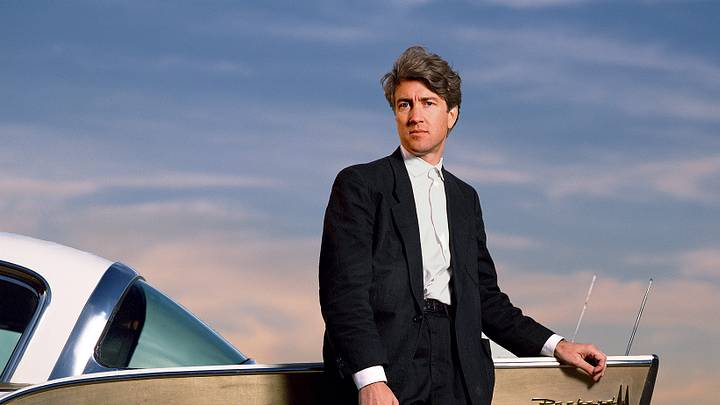
In his work, David Lynch plundered the depths of the bizarre, trawling the underbelly of the American psyche and translating it into dreamlike and disorienting cinema and television. But in his daily life, he made sure his days were as predictable as possible.
The filmmaker behind masterpieces like Twin Peaks and Mulholland Drive relied on daily routines, which allowed his limitless creativity to wander far beyond the edges of what most people could dream up. “If you have a habit pattern,” Lynch told The New Yorker in 2021, “the more conscious part of your mind can concentrate on your work, and you can get ideas and do those things, and the rest sort of takes care of itself in the background.”
David Lynch’s morning ritual: coffee and meditation
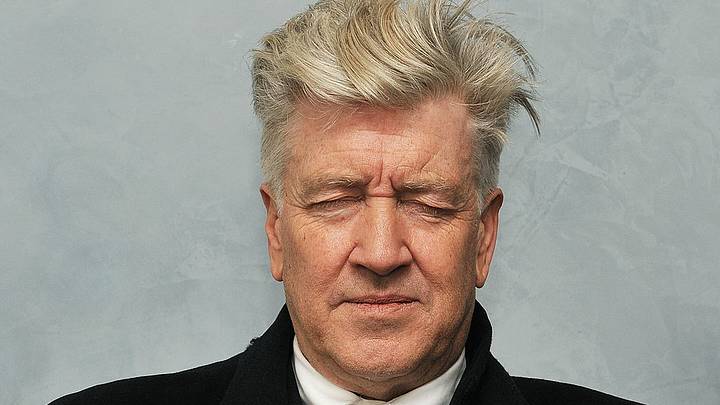
Lynch’s days always began with one thing: coffee. Like Dale Cooper in Twin Peaks, Lynch shared an unshakable love for the stuff, and typically started his days with a cappuccino. “I like to get going with the coffee right away. That’s just the way it is with me,” he shared with Vice in 2020. “You know how in a hospital they put an IV in your arm? I pretty much have a drip going all day long.”
After his first cup of joe, he would sit for meditation—a non-negotiable cornerstone of the filmmaker’s life for decades. Lynch began practicing Transcendental Meditation in 1973 and continued to do so daily until his death in 2025, claiming to have never missed a session. The practice involves sitting for 20 minutes twice a day and mentally reciting a mantra, which is provided by a certified teacher at an official Transcendental Meditation course and kept secret for life.
Lynch was a major advocate for the technique, which he often said was key to his happiness and creativity. The practice inspired his book Catching the Big Fish: Meditation, Consciousness, and Creativity, and in 2005, he established the David Lynch Foundation, which aimed to spread Transcendental Meditation around the world.
After Lynch finished his morning meditation, he’d head to work. That could look quite different each day, depending on whether he was searching for new ideas, filming on set, promoting a film, or something else. Still, no matter what, and even on set, he always made time for his afternoon meditation session.
David Lynch’s eating habits
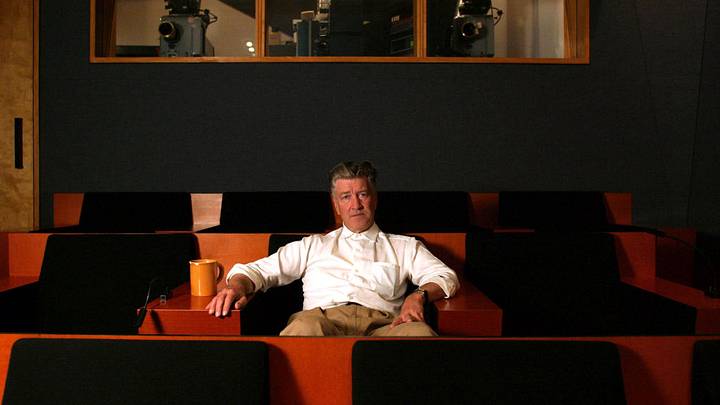
Lynch preferred to eat the same meals many times in a row, and sometimes stuck with one dish for months at a time. After meditating, he would typically have a small breakfast—“either some amrit nectar or a small smoothie with protein powder and blueberries and peaches,” he once shared. In a 1997 interview with Marie Claire, he said that at the time, his favored lunch meal consisted of tomatoes, tuna, feta cheese, and olive oil. For dinner, he cited a preference for chicken and broccoli with soy sauce.
Some food habits endured longer than others. His longest-lasting daily meal, he said, was a Bob’s Big Boy chocolate milkshake, which he had at 2:30 p.m. every day for seven years. He also aimed to eat at the same times every single day, no matter what.
Lynch preferred not to cook at home, however. “I don’t allow cooking in my house. The smell. The smell of cooking—when you have drawings, or even writings— that smell would go all over my work,” he said in a 1990 interview with Time. “So I eat things that you don’t have to light a fire for. Or else I order a pizza. The speed at which I eat it, it doesn’t smell up the place too bad. The smell doesn’t last too long.”
For the filmmaker, routine was the foundation that allowed his creativity to fly as freely as it did. “When there’s some sort of order there, then you’re free to mentally go off any place,” he said in a 2000 interview with the journalist Charlie Rose. “You’ve got a safe sort of foundation and a place to spring off from. It is very important for me [in the creative process]…The purer the environment, the more fantastic the interior world can be, it seems to me.”