BySarene Leeds|Sep 20, 2018, 6:00 AM EDT
 Add us as a preferred source
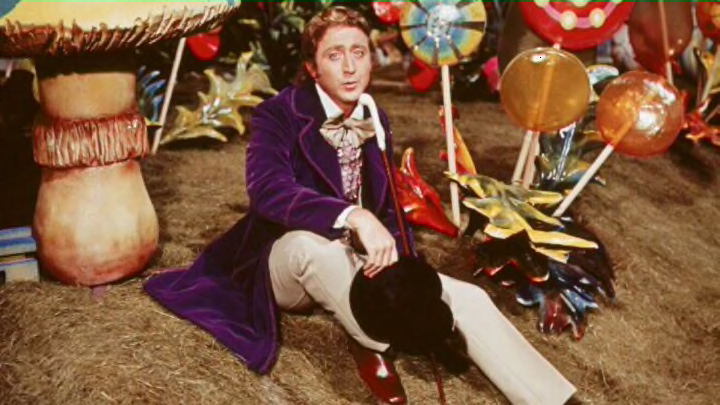
It’s a movie that’s nearly 50 years old, but Willy Wonka & the Chocolate Factory is nowhere near showing its age. A cinematic classic for generations of children, the 1971 film adaptation of Roald Dahl’s 1964 book Charlie and the Chocolate Factory told the fantastical tale of what happens when four spoiled kids (and one good, sweet little child) visit a delectable candy-making factory. The film also turned star Gene Wilder into a cultural icon, thanks to his inimitable portrayal of chocolatier extraordinaire Willy Wonka. Whether you’ve seen Wonka 200 times—or, to quote poor Charlie Bucket, “just two”—we’ve got some sweet facts about the movie that are sure to taste better than an Everlasting Gobstopper.
1. GENE WILDER INSISTED ON DOING WILLY WONKA’S NOW-SIGNATURE LIMP-INTO-A-FORWARD-ROLL—OR ELSE HE WOULDN’T TAKE THE PART.
Gene Wilder, who died in 2016, knew exactly how he wanted to play Willy Wonka from the get-go. As he recounted to Larry King on CNN in 2002, Wilder told Wonka director Mel Stuart he wanted to introduce the character as walking slowly with a cane, then conclude the ruse with an expert somersault. When Stuart asked why Wilder wanted to take this approach, the Young Frankenstein star responded, “Because no one will know from that point on, whether I’m lying or telling the truth,” thus adding the necessary element of mystery to the character. Wilder also told King he wouldn’t accept the role unless this demand was met. Needless to say, Stuart made the right decision.
2. THAT WONKA INTRODUCTION BECAME SO SYNONYMOUS WITH WILDER THAT KATE MCKINNON REENACTED IT AS A TRIBUTE TO THE ACTOR ON SATURDAY NIGHT LIVE.
The 42nd season of Saturday Night Live didn’t premiere until about a month after Gene Wilder’s August 2016 death, but the news was still timely enough for cast member Kate McKinnon to pay a fitting tribute. During the episode’s cold open, McKinnon, playing a pneumonia-battling Hillary Clinton, limped slowly—cane in hand—onto the faux presidential debate stage. But before she could fall over from fatigue, McKinnon then executed a flawless somersault. Both Wonka and Wilder would’ve been proud.
3. DENISE NICKERSON’S FACE WAS STILL TURNING PURPLE EVEN AFTER SHOOTING ENDED.
It’s commonplace for actors to hear some of the most famous lines from their movie repeated back to them via devoted fans. But when it happened to 13-year-old Denise Nickerson, Willy Wonka & the Chocolate Factory hadn’t even hit theaters yet. According to People Magazine, two days after Nickerson, who played gum-chewing brat Violet Beauregarde in the movie, had shot the famous scene in which Violet turns into a blueberry, her face started reverting back to that now-familiar shade of purple. As luck would have it, this embarrassing moment happened when Nickerson was back at school and trying to be a normal kid again. But since the makeup needed another 36 hours to disappear, she ended up hearing friends of hers (unwittingly) paraphrase one of Sam Beauregarde’s lines from the movie: “You’re turning blue!” At least it wasn’t, “Violet! You’re turning violet, Violet!”
4. PARIS THEMMEN LIT UP TWITTER AS A JEOPARDY! CONTESTANT.
Back in March 2018, a gentleman by the name of Paris Themmen competed on the long-running game show Jeopardy!, finishing in second place. Describing himself as an “avid backpacker,” Themmen seemed like another run-of-the-mill trivia expert passing through the Alex Trebek-hosted set. But it wasn’t long before fans took to Twitter in their realization that Themmen had neglected to reveal a tiny detail from his childhood: He portrayed pint-size binge-watcher Mike Teavee in Willy Wonka & the Chocolate Factory when he was 11.
5. PETER OSTRUM BECAME A DAIRY CATTLE VETERINARIAN.

He’ll forever be immortalized as the good-natured blond moppet who won a golden ticket—and an entire chocolate factory—but Hollywood was never in the cards for former child actor Peter Ostrum. Despite Charlie Bucket’s central role to the story, Willy Wonka & the Chocolate Factory was the only movie Ostrum ever made. Although he’ll appear occasionally for Wonka anniversary interviews (he also spoke extensively about Gene Wilder following the actor’s death), Ostrum chose a quiet life for himself, working as a dairy cattle veterinarian in upstate New York.
6. JULIE DAWN COLE AND DENISE NICKERSON WERE RIVALS FOR OSTRUM’S HEART.
That fierce elbowing between Veruca Salt and Violet Beauregarde during the “Pure Imagination” scene (see above clip) may not have been acting after all. Both Julie Dawn Cole—who played the petulant Veruca—and Denise Nickerson have since copped to a crush on co-star Peter Ostrum. “Peter was a hot patootie,” Nickerson told People in 2001. Cole admitted that she and “Denise were competing for [Ostrum’s] attention” in a 2011 interview.
7. WILLY WONKA DOESN’T SHOW UP UNTIL NEARLY 45 MINUTES INTO THE MOVIE.
It’s a rare breed of actor who can completely encapsulate one’s memory of a particular film, especially when it’s almost half over by the time his character appears. Viewers tend to forget that we first have to endure a good 43 minutes of Charlie Bucket character development (and Grandpa Joe’s whining) before Gene Wilder’s Willy Wonka finally tumbles into our hearts. Wilder’s belated entrance also reminds audiences that good things really do come to those who wait.
8. THE FILM’S FIRST SONG, “THE CANDY MAN,” GAVE SAMMY DAVIS, JR. HIS ONLY NUMBER ONE HIT.
But this famously upbeat tune wasn’t without its problems: Actor Aubrey Woods, who played the candy store owner, originally sang “The Candy Man” in the movie’s opening scene. Leslie Bricusse, who co-wrote the song with Anthony Newley, was horrified by this version, telling the New York Post in 2016, “The song was diabolically performed by an actor who couldn’t sing.” Enter Sammy Davis, Jr., whose manager was seeking a song that the Rat Packer could perform for children. Even though Davis wasn’t a fan of the treacly tune, he couldn’t argue with its success; his “Candy Man” cover garnered him his only number one hit back in 1972.
9. GENE WILDER HATED THE CHARLIE AND THE CHOCOLATE FACTORY REMAKE.
Wilder did not mince words when he spoke with Robert Osborne in 2013 about the Tim Burton-directed Charlie and the Chocolate Factory, which was released in 2005. “I think it’s an insult,” Wilder told Osborne, “to do that with Johnny Depp [who played Willy Wonka in this version], who I think is a good actor, and I like him.” But Wilder’s real rancor was reserved for Burton: “I don’t care for that director, and he’s a talented man, but I don’t care for him doing stuff like he did.”
10. THERE IS A LARGE ANTI-GRANDPA JOE MOVEMENT ON THE INTERNET.
In 2004, ostensibly in response to the upcoming Charlie and the Chocolate Factory movie, a website called Say No to Grandpa Joe appeared. It proceeded to underline every single solitary reason why Charlie Bucket’s initially bedridden Grandpa Joe (played by Jack Albertson in the 1971 film) is the absolute worst. A quick refresher: Grandpa Joe spends 20 years refusing to get out of bed while the Bucket family nearly starves to death (and don’t get me started on how Charlie gives his hard-earned cash to Joe so the guy can buy friggin’ tobacco). Then, the second Charlie comes home with a golden ticket in his hand, Joe springs out of bed, does a dance of joy and declares that he’s the lucky winner, not his pitiful grandson. Cut to 2018, and not only is the Say No to Grandpa Joe site still around, but there’s now a nearly 20,000-person strong Facebook group called “The I Hate Grandpa Joe From Willy Wonka and the Chocolate Factory Page.”
11. DIRECTOR MEL STUART’S DAUGHTER PERSUADED HIM TO MAKE WILLY WONKA.
Never ignore the bit players in a film, because they might just be the reason you’re watching it in the first place. Madeline Stuart, whose father, Mel Stuart, directed Willy Wonka & the Chocolate Factory, was the mastermind behind getting the movie made. “[Charlie and the Chocolate Factory] was my favorite book at the time, and I told him this would make a great movie,” Madeline told the Los Angeles Times in 2012. Madeline’s “finder’s fee” came in the form of a small role in Wonka: She played “Madeline Durkin” in the schoolroom scene where Charlie’s obnoxious teacher was conducting the percentages lesson. “Madeline” answered that she opened “about a hundred” Wonka bars during the golden ticket contest.
12. THE MOVIE TITLE WAS CHANGED TO WILLY WONKA & THE CHOCOLATE FACTORY BECAUSE OF A MARKETING STRATEGY.
You thought it was because of Wilder’s sardonic portrayal, didn’t you? Nope. The reason was far more prosaic: The film was financed by Quaker Oats, who, naturally, wanted to use Wonka to advertise their forthcoming line of chocolate bars. The simplest way to forge a tie-in was to change the movie’s title from that of the book (Charlie and the Chocolate Factory) to one that included the name of the product. Since the chocolate bars were named for Willy Wonka—and not Charlie Bucket—the decision was easy.
Why Do We Associate Ravens With Death?
“Quoth the Raven, ‘Nevermore!'”
ByChelsea Thatcher|Oct 31, 2026, 10:00 AM EDT
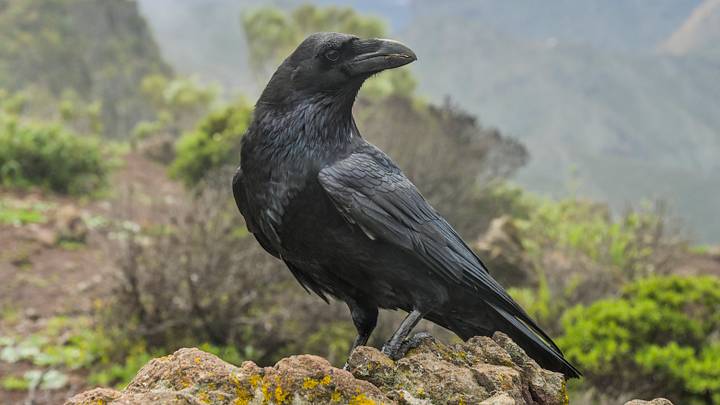
Ravens are incredibly intelligent birds able to mimic human speech, remember faces, and even hold grudges against those who’ve wronged them. And while they have been a symbol of wisdom and prophecy in different cultures, they’re most often thought of in relation to grief and death. But why?
In several mythologies from around the world, the raven is associated with death. Does that mean these birds are actually ill omens, or that there’s some truth to the folklore? How did so many different civilizations all come to believe similar things about the raven? It honestly has a lot to do with their main source of food.
Carrion Birds
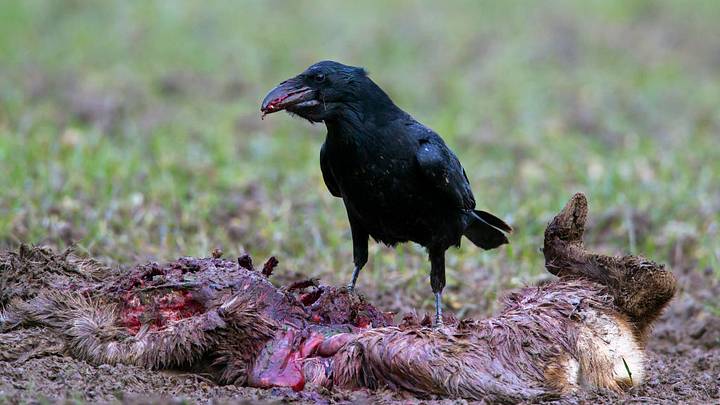
Ravens, along with crows, rooks, and magpies, are carrion birds. They are scavengers, eating the decaying flesh of dead bodies. Today, they commonly find their meals in roadkill and other dead animals, but in the past, they learned that there were absolute feasts on the world’s battlefields.
In war, there were many times that the number of dead was too great to bury all of them. Ancient peoples saw ravens flitting among the bodies of the slain at almost every battlefield, and the connection became ingrained in the collective conscience. Superstition then bled into the narrative, and people saw ravens as omens of death rather than the clean-up crew afterwards.
Ravens in Myth and Religion
Ravens appear in ancient myths and religious texts as symbols of fate and death. In several different cultures, ravens act as messengers between the worlds of the living and the dead. They might even work as Grim Reapers, collecting and transporting souls to the underworld. Swedish mythology claims that ravens are the souls of murder victims who didn’t receive a proper burial, and Germanic lore says they are the souls of the damned.
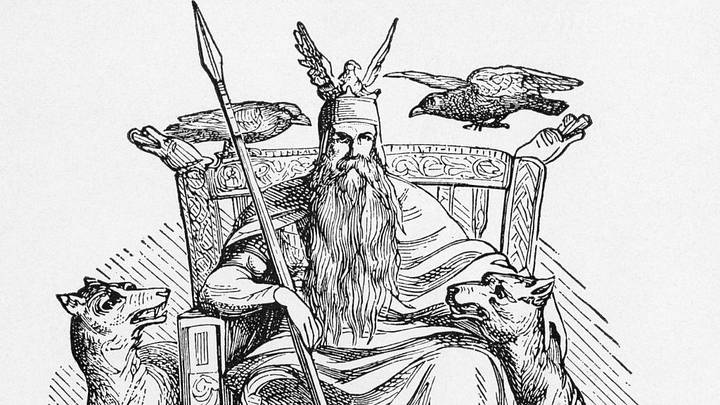
In Norse mythology, Odin, the god of war and death, had two ravens, Huginn (thought) and Muninn (memory), who acted as his eyes and ears in battle. The Norse people believed that if a raven appeared on the battlefield with them, it meant that Odin was watching. In Celtic lore, ravens were also linked to the Mórrígan, goddess of death, war, and fate.
The Bible and the Quran also feature ravens in stories that deal with death. In the biblical tale of the Flood, Noah first releases a raven to see if the waters still cover the land. The raven never returns, presumably because it has found food in the number of wicked flood victims. And in the Quran, a raven is the one to teach Cain how to bury his murdered brother’s body.
Poe’s “The Raven”
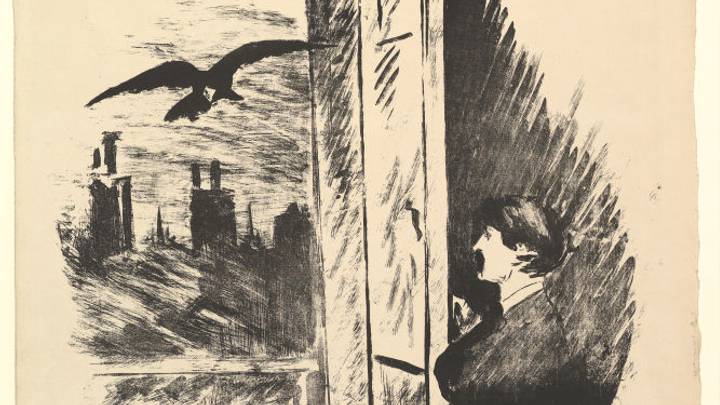
While ravens had been connected with death for centuries, it wasn’t until Edgar Allan Poe popularized the bird in his Gothic poem that they became symbols of horror and misery as well. Poe published “The Raven” in January of 1845, telling the sad tale of a man haunted by the loss of his love and the beginnings of madness. He wants to know if he will ever see his love again, or if the pain of loss will ever subside, and the raven drowns him in despair when it cries out: “Nevermore!”
Ravens were no longer mere omens of death, but an integral part of the horror genre. Alfred Hitchcock would later capitalize on this connection in his 1963 horror film, The Birds. If you weren’t scared of ravens and their association with death before, you were certainly wary of them after that film. And it’s probably a good idea to remain wary of ravens, or at least remember to treat them kindly. Otherwise, they may work together to cause you misery as vengeance.
Read More:
•
Why Do We Associate Ravens With Death?
•
5 Common Misconceptions About Día de los Muertos
•
The Medium Who Wants You to Be Nicer to Ghosts
•
The Personal Tragedy Behind Picasso’s Blue Period
•
Why Baba Yaga Lives in a House With Chicken Legs
The Real-Life Serial Killer That Might’ve Inspired ‘Dexter’s Dark Passenger
Brazil’s most notorious killer of killers has been called the real Dexter for years, but ‘Dexter’s’ creator tells a different origin story.
ByMatt Hoffman|Oct 30, 2026, 9:00 PM EDT
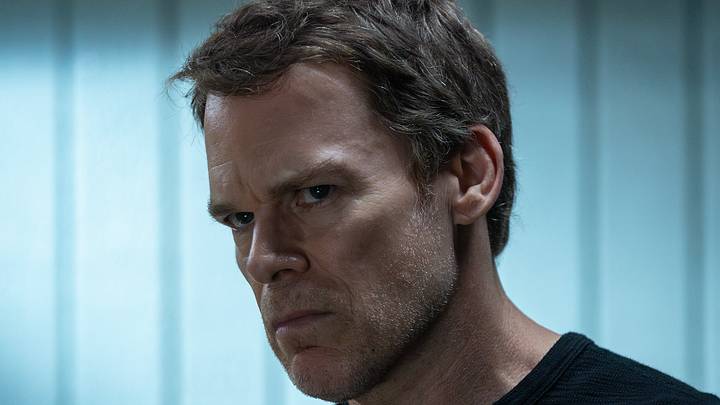
Back in July 2004, Jeff Lindsay introduced readers to Dexter Morgan, a Miami police blood-spatter analyst who kills only people who deserve it, egged on by a voice in his head he calls the “Dark Passenger.” Two years later, Showtime turned Darkly Dreaming Dexter into a hit series with Michael C. Hall.
Somewhere along the way, the internet decided Dexter had a real-life model: Pedro Rodrigues Filho, a Brazilian who claimed to have killed more than 100 people, most of them criminals. Entertainment sites now call him “the Brazilian Dexter,” and ScreenRant describes the show as loosely based on his crimes. No quote from Lindsay or the show’s producers backs that up, but the similarities are hard to miss.
The Boy Who Settled Scores
Filho was born in 1954 on a farm in Santa Rita do Sapucaí, in the Brazilian state of Minas Gerais, with an injured skull: his father, he said, had kicked his pregnant mother during a fight. He told the magazine Época in 2003 that he first wanted to kill at 13, when he shoved an older cousin into a sugarcane press. A year later, after his father lost his job as a school guard over accusations that he was stealing school lunches, Filho shot the official who had fired him, then shot the guard he believed was the real thief. (Accounts disagree on who that first victim was: some Brazilian outlets say the mayor of his hometown, others the deputy mayor of Alfenas, also in Minas Gerais.)
He fled to Mogi das Cruzes, outside São Paulo, where he robbed drug dens, killed traffickers, and took over a dead drug boss’s business. When his pregnant girlfriend was shot dead, he went looking for the man who ordered it and, with four friends, hit a wedding party, leaving seven dead and 16 wounded, according to Época. He was arrested shortly after turning 18 and entered prison on May 24, 1973; in the van on the way there, he killed a fellow prisoner he said was a rapist.
Where the Comparison Holds
Like Dexter, Filho had a code, or said he did. He told Época he killed only people who were no good, and that he never killed children, women, or family men. He also had a father story to rival Harry Morgan’s, though a much darker one: Filho claimed he killed his own father in prison, in revenge for his mother’s stabbing, and chewed a piece of his heart. (Época noted that he gave a psychiatrist a completely different account of how his father died.)
The resemblance mostly ends there. Dexter’s code, as Mental Floss has laid out before, includes “don’t get caught,” and Filho spent roughly four decades behind bars, much of it bragging. He had “Mato por prazer” (“I kill for pleasure”) tattooed on his left arm. He claimed 47 victims inside prison alone, though Época found just 18 charges against him on file in 2003; by his death, Brazilian outlets counted 71 homicides on his record.
What Dexter’s Creator Actually Said
Lindsay has told his origin story many times, and it starts nowhere near Brazil: at a Kiwanis Club lunch where he sat at the head table waiting to speak and, as he told BookPage in 2005, “the idea just popped into my head that sometimes serial murder isn’t a bad thing.” He then built the character out of research: he collected books on sociopaths and murderers, interviewed psychologists and crime scene investigators, and got cop friends to turn him loose in their dead-files room. He also rejects the very label that made Filho famous: “Dexter’s not a vigilante,” he told Middlebury Magazine in 2011. “Vigilantes are trying to perform an act of justice. Dexter just likes to kill people.”
The Ending Dexter Survived
Filho walked out of prison in 2007, went back in 2011 for crimes committed during his sentence, and was released for good in 2018. Within months, he had reinvented himself as a YouTube personality who commented on crimes in the news and lectured about his past. On the morning of March 5, 2023, he was on a sidewalk in Mogi das Cruzes holding a small child when men in a black car opened fire, according to the news site G1. The child was unhurt, but according to the police report, one of the attackers stabbed Filho in the throat as he lay on the ground. He was 68.
Read More:
•
•