
Many people consider Mel Brooks’s ‘Blazing Saddles’ to be one of the greatest comedies of all-time—and with very good reason.
ByMark Mancini|Feb 7, 2024, 3:18 PM EST
 Add us as a preferred source

Mel Brooks’s beloved Blazing Saddles, about the rise of a Black sheriff in the American west of 1874, is widely regarded as the most audacious comedy of the legendary director’s career. A subversive, fearless satire bent on tackling the ever-present absurdity of prejudice, it has maintained an impressive and growing fan base for half a century. On the 50th anniversary of the movie’s release, here are some remarkable tidbits about one of the greatest spoofs ever made.
1. Blazing Saddles could have starred Richard Pryor.
Richard Pryor and Gene Wilder were frequent collaborators over the year, having co-starred in four films together between 1976 and 1991 (Silver Streak; Stir Crazy; See No Evil, Hear No Evil; and Another You). Had things worked out differently, Blazing Saddles could have been their first big-screen co-venture. For a time, Pryor—who did secure a writing credit on the film—was going to play Sheriff Bart. In 2013, during a conversation at the 92nd Street Y in New York City, Wilder explained that Pryor’s addiction issues caused him to lose the part to Cleavon Little.
2. It was originally going to be titled Tex X: An Homage to Malcolm X.
Other rejected titles include Black Bart and The Purple Sage. Brooks struggled to find a better name after he signed on to direct. Eventually, he came up with Blazing Saddles; like so many other great ideas throughout history, the eventual title came to Brooks while he was taking a shower.
3. John Wayne politely declined an offer to appear in Blazing Saddles.
As Brooks was really hoping to include the Western genre’s most recognizable star in Blazing Saddles, he asked John Wayne to read the script. Although the Duke apparently found it hilarious, he chose not to join the cast, fearing for his career. However, Wayne reportedly declared, “I’ll be the first one in line to see it!”
4. Blazing Saddles was the first movie to incorporate audible flatulence.
“Blazing Saddles, for me, was a film that truly broke ground. It also broke wind … and maybe that’s why it broke ground,” Brooks once said. Having noticed that that cowboys in traditional westerns generally subsisted on a diet of canned beans, Brooks argued that, “you can only eat so many beans without some noise happening there.” (He had a point.)
The resulting fart scene, in which a gang of thugs pass gas around a campfire, made movie history. Brooks knew this gag would get a big reaction, so he deliberately “made the farts louder” to prevent the audience’s laughter from drowning them out. However, despite his foresight, the offending noises were muted in the Blazing Saddles TV release.
Read About More Comedy Movies Here:
•
The 30 Best Comedy Movies of All Time
•
The Funniest Movie the Year You Were Born
•
Minions, Murphy, and More: The 25 Highest-Grossing Comedies of All Time
•
How the 1980s Became the Golden Age of Spoof Movies (And Why It Couldn’t Last)
•
10 Great ’80s Comedies You Can Stream Right Now
•
How Buster Keaton Revolutionized Film Comedy
•
The 25 Greatest Horror Comedies of All Time
5. The hulking henchman “Mongo” was portrayed by a former NFL player.
Alex Karras was a defensive tackle for the Detroit Lions who began appearing in films during the early 1960s. (The scene in which Mongo punches out a horse was inspired by Brooks’s former boss, comedian Sid Caesar, who supposedly knocked one unconscious in real life.) Karras would later begin acting on the small screen and is perhaps best known for playing George Papadapolis in the 1980s sitcom Webster.
6. Slim Pickens slept outside with a Winchester rifle to get a feel for his character.
To get into the mind of Taggart, his cowboy character, Slim Pickens chose to spend most nights sleeping outdoors, with his rifle in hand. If you want to see Taggart’s noggin meet the business end of a shovel, check out the hilarious—and definitely NSFW—clip above.
7. Gene Wilder was far from Brooks’s first choice to play “The Waco Kid.”
“He was magnificent!” Brooks said of Wilder in the 2004 Blazing Saddles DVD documentary Back in the Saddle. Multiple actors, including Johnny Carson, turned down the part before screen veteran Gig Young was hired for the role. At first Young seemed perfect for the boozy character … until it became painfully clear that he struggled with alcohol in real life. During the first day of shooting, the actor—who was reportedly going through alcohol withdrawals—became violently ill and had to be rushed to a nearby hospital.
“We draped Gig Young’s legs over and hung him upside down. And he started to talk and he started shaking,” Brooks recalled of shooting the scene. “I said, ‘This guy’s giving me a lot. He is giving plenty. He’s giving me the old alky shake. Great.’ And then it got serious, because the shaking never stopped, and green stuff started spewing out of his mouth and nose, and he started screaming. And, I said, ‘That’s the last time I’ll ever cast anybody who really is that person.’ If you want an alcoholic, don’t cast an alcoholic … Anyway, poor Gig Young, it was the first shot on Friday, nine in the morning, and an ambulance came and took him away. I had no movie.”
Fortunately, Wilder knew most of “the Kid’s” lines and was able to take over the part almost immediately.
8. Wilder pitched the premise of Young Frankenstein to Brooks on the set of Blazing Saddles.
Young Frankenstein, the movie that would become Brooks’s next directorial project, began with an idea Wilder approached him about while filming Saddles. “His idea was very simple,” Brooks said. “What if the grandson of Dr. Frankenstein wanted nothing to do with the family whatsoever? He was ashamed of those wackos. I said, ‘That’s funny.’”
Young Frankenstein was released in December 1974, the same year Blazing Saddles arrived in theaters.
9. Max Brooks was born during the movie’s lengthy writing process.
Max Brooks—the son of Mel Brooks and Anne Bancroft—was born while his dad was busy writing the film. Max has gone on to have an impressive writing career of his own, focusing largely on zombie stories like World War Z. (You can check out his official site here.)
10. Madeline Kahn earned an Oscar nomination for her portrayal of saloon singer Lili von Shtupp.
After being fired from the cast of Mame (1974), Madeline Kahn took the part of a saloon singer in Blazing Saddles and earned a Best Supporting Actress Oscar nomination for the role. The film marked the first of several collaborations with Brooks (including Young Frankenstein).
11. Blazing Saddles almost spawned a TV series.
The pilot for a spinoff TV series called Black Bart was filmed in 1975. Unfortunately, it never got picked up.
12. Many people consider Blazing Saddles one of the greatest comedies ever made.

The American Film Institute ranked Blazing Saddles No. 6 on its list of the 100 Funniest Movies of All Time. In 2006, it was deemed “culturally, historically, or aesthetically significant” enough to be selected for preservation by the National Film Registry. Additionally, former New York City mayor Mike Bloomberg cited Blazing Saddles as his all-time favorite film, and the late Roger Ebert gave it a perfect four-star rating, describing it as “a crazed grab bag of a movie that does everything to keep us laughing except hit us over the head with a rubber chicken … It’s an audience picture; it doesn’t have a lot of classy polish and its structure is a total mess. But of course! What does that matter when Alex Karras is knocking a horse cold with a right sock to the jaw?”
A version of this story ran in 2015; it has been updated for 2024.
Related Tags
The Real-Life Serial Killer That Might’ve Inspired ‘Dexter’s Dark Passenger
Brazil’s most notorious killer of killers has been called the real Dexter for years, but ‘Dexter’s’ creator tells a different origin story.
ByMatt Hoffman|Oct 30, 2026, 9:00 PM EDT
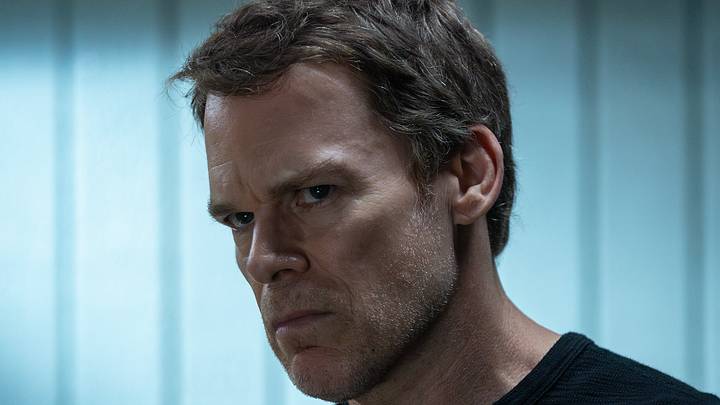
Back in July 2004, Jeff Lindsay introduced readers to Dexter Morgan, a Miami police blood-spatter analyst who kills only people who deserve it, egged on by a voice in his head he calls the “Dark Passenger.” Two years later, Showtime turned Darkly Dreaming Dexter into a hit series with Michael C. Hall.
Somewhere along the way, the internet decided Dexter had a real-life model: Pedro Rodrigues Filho, a Brazilian who claimed to have killed more than 100 people, most of them criminals. Entertainment sites now call him “the Brazilian Dexter,” and ScreenRant describes the show as loosely based on his crimes. No quote from Lindsay or the show’s producers backs that up, but the similarities are hard to miss.
The Boy Who Settled Scores
Filho was born in 1954 on a farm in Santa Rita do Sapucaí, in the Brazilian state of Minas Gerais, with an injured skull: his father, he said, had kicked his pregnant mother during a fight. He told the magazine Época in 2003 that he first wanted to kill at 13, when he shoved an older cousin into a sugarcane press. A year later, after his father lost his job as a school guard over accusations that he was stealing school lunches, Filho shot the official who had fired him, then shot the guard he believed was the real thief. (Accounts disagree on who that first victim was: some Brazilian outlets say the mayor of his hometown, others the deputy mayor of Alfenas, also in Minas Gerais.)
He fled to Mogi das Cruzes, outside São Paulo, where he robbed drug dens, killed traffickers, and took over a dead drug boss’s business. When his pregnant girlfriend was shot dead, he went looking for the man who ordered it and, with four friends, hit a wedding party, leaving seven dead and 16 wounded, according to Época. He was arrested shortly after turning 18 and entered prison on May 24, 1973; in the van on the way there, he killed a fellow prisoner he said was a rapist.
Where the Comparison Holds
Like Dexter, Filho had a code, or said he did. He told Época he killed only people who were no good, and that he never killed children, women, or family men. He also had a father story to rival Harry Morgan’s, though a much darker one: Filho claimed he killed his own father in prison, in revenge for his mother’s stabbing, and chewed a piece of his heart. (Época noted that he gave a psychiatrist a completely different account of how his father died.)
The resemblance mostly ends there. Dexter’s code, as Mental Floss has laid out before, includes “don’t get caught,” and Filho spent roughly four decades behind bars, much of it bragging. He had “Mato por prazer” (“I kill for pleasure”) tattooed on his left arm. He claimed 47 victims inside prison alone, though Época found just 18 charges against him on file in 2003; by his death, Brazilian outlets counted 71 homicides on his record.
What Dexter’s Creator Actually Said
Lindsay has told his origin story many times, and it starts nowhere near Brazil: at a Kiwanis Club lunch where he sat at the head table waiting to speak and, as he told BookPage in 2005, “the idea just popped into my head that sometimes serial murder isn’t a bad thing.” He then built the character out of research: he collected books on sociopaths and murderers, interviewed psychologists and crime scene investigators, and got cop friends to turn him loose in their dead-files room. He also rejects the very label that made Filho famous: “Dexter’s not a vigilante,” he told Middlebury Magazine in 2011. “Vigilantes are trying to perform an act of justice. Dexter just likes to kill people.”
The Ending Dexter Survived
Filho walked out of prison in 2007, went back in 2011 for crimes committed during his sentence, and was released for good in 2018. Within months, he had reinvented himself as a YouTube personality who commented on crimes in the news and lectured about his past. On the morning of March 5, 2023, he was on a sidewalk in Mogi das Cruzes holding a small child when men in a black car opened fire, according to the news site G1. The child was unhurt, but according to the police report, one of the attackers stabbed Filho in the throat as he lay on the ground. He was 68.
Read More:
•
•
Dexter: New Blood: 7 Things We Know
The Trendiest Food the Year You Were Born
From mid-century Spam creations to the 2000s cupcake craze, here’s the trending dish everyone was obsessed with the year you joined the table.
ByNitya Rao|Nov 1, 2026, 5:00 PM EST
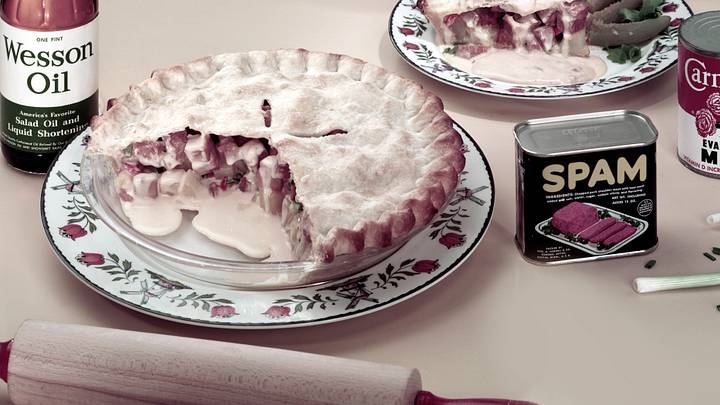
Some foods, like Spam and ranch dressing, are an acquired taste. Others, like Jell-O molds stuffed with hard-boiled eggs, would require you to acquire an actual time machine to find a time and place where people willingly tucked in.
We are what we eat in more ways than one. Much like TV, fashion, and slang, food trends are true signs of the times, painting a vivid, if sometimes unappetizing, picture of pop culture’s past. Just as high hair marked the 1980s, what was baking in the oven—from tuna casserole in the 1950s to molten lava cake in the ’90s—shows just how fast trends come and go.
The TikTok era has made it so that there’s a new viral dish and restaurant for every day of the week. But for most of the 20th century, food trends took a bit longer to cook. Nonetheless, even grandma had her version of the Dubai chocolate obsession back in the day—though it was probably much more likely to involve mayonnaise.
Peruse the aisles of grocery store staples and dishes of decades past from each year from 1950 to 2005. Here’s a taste of the trendiest food (and sometimes drink) from the year you were born, according to So Yummy!
1950
Tuna Casserole
1951
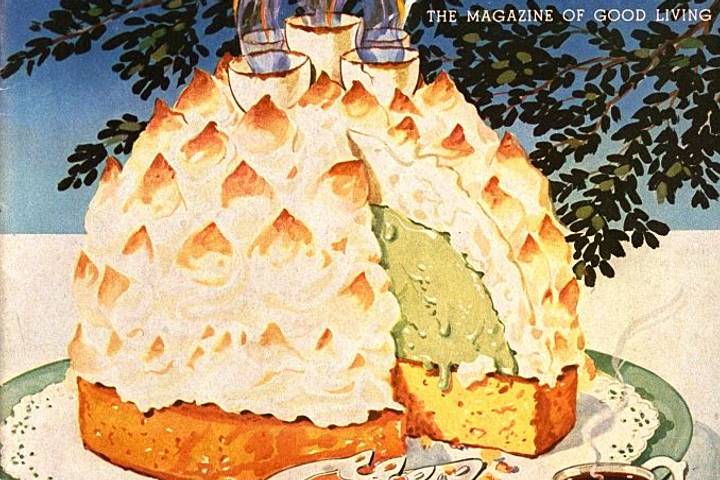
Baked Alaska
1952
Spam
1953
Deviled Eggs
1954
Chicken Tetrazzini
1955
Green Bean Casserole
1956
Banana Cream Pie
1957
Barbecue
1958
Pancakes
1959
Cheese Ball
1960
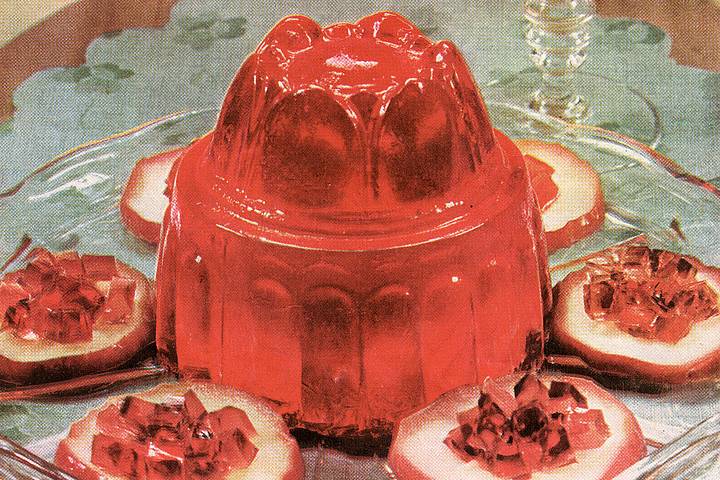
Gelatin Molds
1961
Pineapple Upside Down Cake
1962
Chicken Cacciatore
1963
Beef Bourguignon
1964
Swedish Meatballs
1965
Onion Dip
1966
Tunnel of Fudge Cake
1967
Surf & Turf
1968
Carrot Cake
1969
Tang
1970
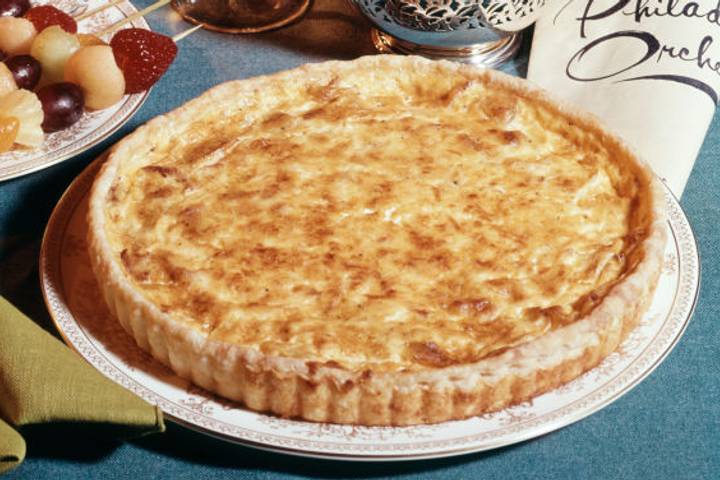
Quiche
1971
Eggs Benedict
1972
Tequila Sunrise
1973
Granola
1974
Cheese Fondue
1975
Watergate Salad
1976
General Tso’s Chicken
1977
Buffalo Wings
1978
Pasta Primavera
1979
Goat Cheese Salad
1980
Ranch Dressing
1981
Baked Brie
1982
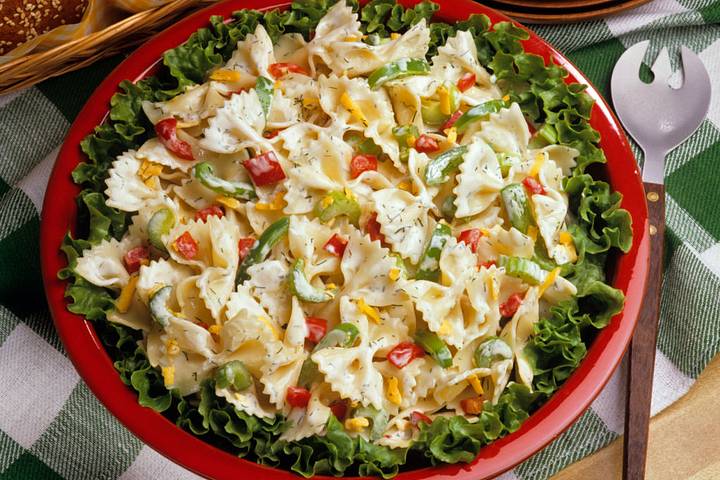
Pasta Salad
1983
Bloody Mary
1984
Cajun Blackened Fish
1985
Fajitas
1986
Monkey Bread
1987
Chocolate Truffles
1988
Sushi
1989
Veggie Burgers
1990
Gourmet Pizza
1991
Chinese Chicken Salad
1992

Starbucks Coffee
1993
Sun-Dried Tomatoes
1994
Caesar Salad
1995
Tall Foods
1996
Fried Calamari
1997
Molten Lava Cake
1998
Cosmopolitain
1999
Crab Cakes
2000
Smoothies
2001
Vodka Red Bull
2002
Organic Produce
2003
Lattes
2004

Greek Yogurt
2005
Gourmet Cupcakes
Read More:
•
The Most Popular Halloween Costume the Year You Were Born
•
The Most Popular Baby Names the Year You Were Born
•
How Much Did a Gallon of Gas Cost the Year You Were Born?
•