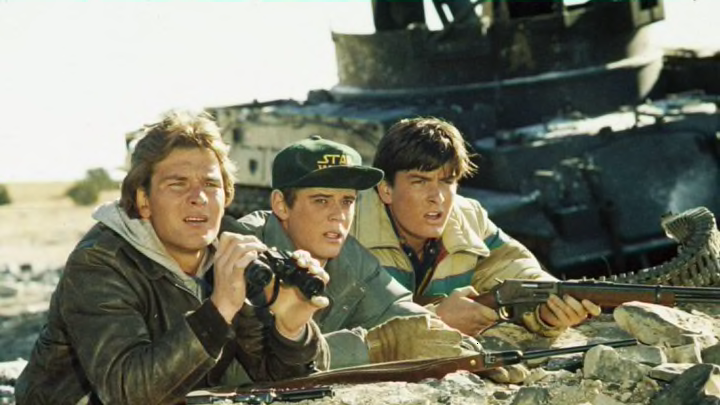
On August 10, 1984, Red Dawn stormed into theaters. The Cold War-era film envisioned a WWIII-like scenario of what it would look like if Communist Soviets and Cubans invaded a small Colorado town, and what might happen if a group of teenagers fought back with heavy artillery. The cast included then-unknowns Jennifer Grey, Lea Thompson, and Charlie Sheen, plus rising stars Patrick Swayze and C. Thomas Howell (who had co-starred in 1983’s The Outsiders), plus veteran actors Powers Boothe and Harry Dean “Avenge Me!” Stanton.
John Milius, who had been nominated for an Oscar for co-writing Apocalypse Now and who had co-written and directed 1982’s Conan the Barbarian, directed Red Dawn from a script—originally named Ten Soldiers—written by future Waterworld director Kevin Reynolds. With a budget of $17 million, the film—the first to be distributed with the newly formed PG-13 rating—grossed $38.3 million. Here are some things you might not know about Red Dawn.
1. John Milius rewrote the script of Red Dawn.
Kevin Reynolds wrote Red Dawn while still a student at USC film school. MGM optioned the script and asked Milius to direct it. “I brought the writer in and said, ‘This isn’t going to be easy for you to take because, you know, you’re kind of full of yourself, but I’m going to take this and I’m going to make it into my movie, and you’re just going to have to sit back and watch, and it may not be too pleasant,” Milius told Creative Screenwriting. “My advice is to take the money you have and spend it on a young girl. Enjoy getting laid and write another script. Because this isn’t going to be fun to watch.’”
Milius said Reynolds’s script was similar to Lord of the Flies. “I kept some of that, but my script was about the resistance. And my script was tinged by the time, too. We made it really outrageous, infinitely more outrageous than his vision. And to this day, it holds up, because people ask, ‘What’s that movie about?’ And I say that movie’s not about the Russians; it’s about the federal government.”
2. Milus had a very unique way of auditioning actresses for the film.
Red Dawn co-casting director Jane Jenkins explained that Milius would ask each auditioning actress “What would happen if you were in the wilderness and you were starving? Could you kill a bunny?” “And he’d always say a bunny, not a rabbit,” Jenkins said. “And he’d say, ‘Could you kill a bunny and skin it, and eat it?’ And the girls were horrified at that suggestion, and needless to say didn’t go any further. The girls who said, ‘Well, if it were life or death …’ got to go on and read for the parts they eventually were going to play.”
3. Red Dawn was described as “the most violent movie ever made.”
After the movie was released in 1984, The National Coalition on Television Violence deemed Red Dawn “the most violent movie ever made.” They said it contained 134 acts of violence an hour, and they rated it X. “This summer’s releases are the most violent in the history of the industry, averaging 28.5 violent acts an hour,” the Coalition said. They also gave X ratings to Gremlins and Indiana Jones and the Temple of Doom.
4. Milius put Patrick Swayze in charge of Red Dawn‘s cast.

Because Patrick Swayze was older than most of the actors, and because he had more acting experience than them, Milius trusted Swayze to control his co-stars. “Milius is a very intense director,” Swayze said in the Red Dawn commentary. “He’s a very wonderful director, but we had to call him the General and he called me, he says, ‘Swayze, you’re my lieutenant of the art. I’m directing these little suckers through you.’ He put a lot of responsibility on my shoulders, and I took it really seriously.”
5. The U.S. military named an operation after Red Dawn.
In 2003, when U.S. troops invaded Iraq, Army Capt. Geoffrey McMurray named the mission Operation Red Dawn. “Operation Red Dawn was so fitting because it was a patriotic, pro-American movie,” McMurray told USA Today. A commander in the 1st Brigade, 4th Infantry Division had already named the target farmhouses Wolverine 1 and Wolverine 2, so McMurray said the name made sense.
6. Milius knew Hollywood would “condemn” him for making the film.
“I knew that Hollywood would condemn me for it,” Milius said in the Red Dawn commentary. “That I’d be regarded as a right wing warmonger from then on, uncontrollable and un-housebroken.” Milius supposedly left one of his guns on his desk while journalists interviewed him, so he demonstrated his ideals well.
“I was the only person in Hollywood who would dare do this movie,” he said. “Hollywood was very left-wing. But I have a lot of contractions. I’m a militarist and an extreme patriot at times, so I believe in all of that rugged individualism hogwash.”
7. Patrick Swayze and Jennifer Grey did not get along.
Not all the actors were thrilled with Milius’s decision to put Swayze in charge of the cast. Swayze told Daily Mail that he butted heads with Jennifer Grey in particular, who disliked how he ordered her around. “At the end of Red Dawn, however, when we shot her character’s death scene, she seemed to warm to me,” he said. “It’s a tender scene and, as I stroked her hair, it was truly emotional. I think it endeared me to her, and it was clear she and I had chemistry together.” Almost exactly three years later, the pair’s chemistry would ignite the dance floor in Dirty Dancing.
8. Patrick Swayze got frostbite.
Filming in Las Vegas, New Mexico, sometimes meant extremely cold conditions. So cold, in fact, that Swayze ended up with frostbite. “I got frostbite so bad in my hands and my toes, that now if my hands and fingers get the slightest bit cold it feels like someone’s shoving toothpicks under my fingernails,” he said in the Red Dawn commentary.
C. Thomas Howell had a different perspective on the cold temperatures. “You know it’s cold when you’re forced to spoon Charlie Sheen,” he said. “That’s what we were forced to do: to huddle together and pretend we liked each other.”
9. William Smith frightened Charlie Sheen.
William Smith played the Russian Colonel Strelnikov, but in real life he had been a Russian Intercept Interrogator for the CIA. “He was terrifying,” Sheen said in the Red Dawn commentary. “I don’t know if he was in character the whole time, but you couldn’t talk to him on the set. You just kept your distance. But it worked in the movie—look how brilliant he is in the film. He’s an imposing force.”
10. Milius thought Red Dawn was a “zombie movie with Russians.”
In the ‘80s, the Cold War was in full swing, and the world lived in fear of a nuclear attack. (Not totally unlike today.) “Red Dawn the film was about the impending possible reality, which at that time was an actual fear of the Soviet Union invading this country,” Milius told Mandatory. “People actually thought that way. That’s why I made that movie, that’s why people liked it. The fear was real and it played on that. That’s what made it an exciting movie.”
Milius compared the film to Close Encounters of the Third Kind. “In this case, I made a movie of the same vein but with Russians. It’s like a zombie movie with Russians. That’s what it was like at the time. People were paranoid about aliens and people were paranoid about Russians. It was Close Encounters with Cold War Russians.”
11. The studio cut a love scene between Lea Thompson and Powers Boothe.
In the Red Dawn commentary, Thompson described a “beautiful love scene” between her and co-star Powers Boothe, who was 13 years older than her. “I say, ‘I’m going to die before having made love. Will you please make love with me?’ We said okay, and disappeared out of frame. And they took the scene out of the movie, which was sad because it explained my character. It was a nice scene.”
12. Fans still yell “Wolverines!” at C. Thomas Howell.

One of the most iconic lines in the movie comes from C. Thomas Howell’s character, Robert. From a mountaintop he shouts “Wolverines!” which is the name the guerilla group gives themselves. It’s also the name of their high school mascot.
“I get that about twice a week in real life,” Howell told USA Today in 2012. “And about 40 times a day through Twitter.” He said in real life he doesn’t shout back, “but on Twitter, I cannot help typing a ‘Wolverine’ with a few exclamation points on it.”
Home/ENTERTAINMENT
Quiz: Can You Name the Jeff Goldblum Movie From His Character?
We’re celebrating Goldblum’s 74th birthday with some trivia.
ByAlexandria Ingham|Oct 22, 2026, 8:00 AM EDT
 Add us as a preferred source
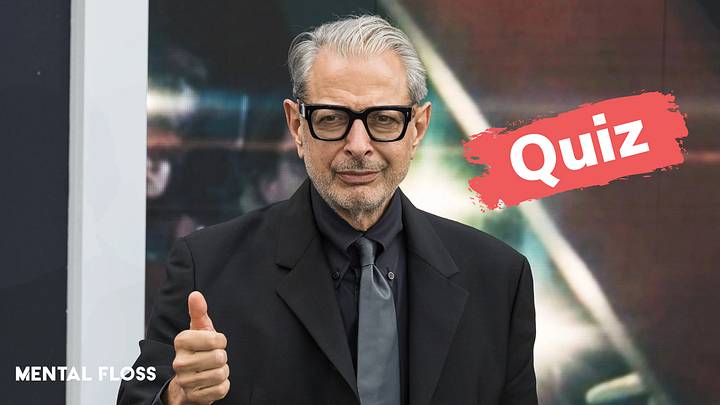
Jeff Goldblum is one of the world’s most beloved actors, and he’s taken on a variety of roles—both good and evil. How well can you remember the names of each one? Can you match the characters to their movies? We’ve got a quiz that will give you a chance to try!
So, did you get 8/8? You’re a true Goldblum fan if you did, and if you didn’t, don’t panic! This is the perfect excuse to rewatch the movies and remember your love for them. Get the popcorn and gather your friends for a Jeff Goldblum marathon.
More Movie & TV Quizzes:
•
Quiz: Can You Name the Jeff Goldblum Movie From His Character?
•
Quiz: How Fast Can You Name the Horror Movie From the Love Interest?
•
Quiz: Only True Horror Fans Can Match These Creepy Locations to Their Movies
•
Quiz: Can You Name the ‘I Love Lucy’ Episode From One Famous Moment?
•
Quiz: Who Said It? ‘Gilmore Girls’ Edition
Most Memorable Jeff Goldblum Characters
Few actors possess a persona as recognizable and eccentric as Jeff Goldblum. It’s hard to believe he’s had a career that spans five decades, making it clear that he is one to watch, as he brings some of the most unforgettable performances to our screens. There are a few characters that stand out more than others, and they’re likely your gateway into his suave charisma and wild ways.
Millennials grew up with Jurassic Park, and it’s Dr. Ian Malcolm who stands out. Goldblum even returned for some of the sequels, bringing sharp intelligence to the movie. He transformed what could have been a chaos-theory-loving nerd into an unforgettable and charismatic mathematician. Although there are some situations he should probably stay away from!
Of course, we also have to mention The Fly. While many view his ‘90s roles as some of his best and his earliest, he showcased his dramatic depth in the 1986 sci-fi horror by playing Seth Brundle.
Like Dr. Malcolm, he was a bit of a nerd in this flick, but he didn’t have as much charisma. Seth was a socially awkward scientist who created havoc with a teleportation experiment that went horribly wrong. Goldblum brought a heartbreaking performance, as he transformed into a human-insect hybrid that terrified everyone.https://www.youtube.com/embed/7VIzpeVgcDI?feature=oembed
If you’re a Will Smith fan, you’ll remember Goldblum in Independence Day. In this 1996 movie, he played the brilliant satellite technician, David Levinson, who offered the down-to-earth brains to counter Smith’s action-hero antics. If you don’t remember the name, you likely remember his own heroic efforts by developing a computer virus that could be planted into the alien mothership to save humanity.
Does it feel like Goldblum always plays scientists? Some of his most memorable roles have certainly involved his brains, but there is one that stands out for being completely different. In 2017, he appeared in the MCU in Thor: Ragnarok as The Grandmaster, bringing multiple elements of himself to the eccentric and charming character. It was also fun to see him play a villain rather than the sidekick saving the Earth.
Don’t forget to check in with the Mental Floss quiz page on a regular basis to continue testing your movie knowledge.
Next: Join Our Halloween Trivia Giveaway
Home/Movie and TV Quizzes
How Bruce Springsteen Turned One of America’s Darkest Crimes Into a Haunting Classic
Springsteen composed and recorded his celebrated “Nebraska” by himself, in his bedroom.
ByTim Brinkhof|Jul 24, 2026, 7:00 PM EDT
Add us as a preferred source

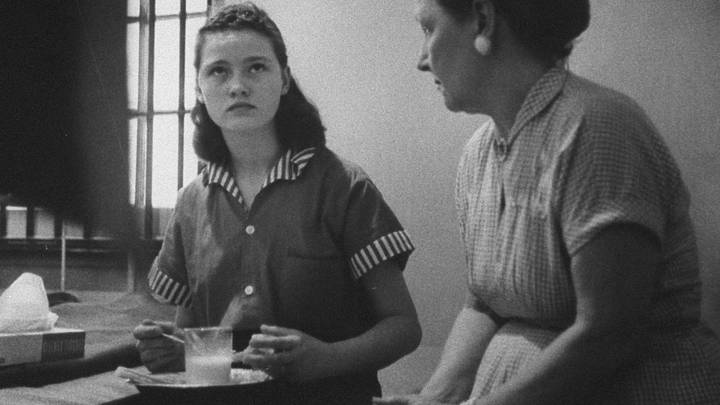
Between January 21 and 29, 1958, a 19-year-old garbageman from Lincoln, Nebraska, called Charles Starkweather went on a killing spree with his 14-year-old girlfriend, Caril Ann Fugate.
Described as a “swaggering good-for-nothing in blue jeans and a black motorcycle jacket” known to yell “go to hell” at strangers, Starkweather killed 11 people—including Fugate’s mother, stepfather, and half-sister—before he was caught and sent to the electric chair.
News of the seemingly random serial killings—a prelude to the likes of Ted Bundy, John Wayne Gacy, and Jeffrey Dahmer—shocked many Americans, including singer-songwriter Bruce Springsteen.
Today, the event is best remembered through the song “Nebraska,” the first in Springsteen’s album of the same name. Though told from Starkweather’s own perspective, it never properly explains his motives—and that’s precisely the point.
How a Murder Spree Inspired a Musical Masterpiece
Though widely regarded as the best album in Springsteen’s long and industrious career—including by Springsteen himself—the singer-songwriter didn’t know if any of its songs would resonate with people. His doubts weren’t unreasonable. Contrary to his previous albums, which were recorded in a studio alongside his E Street band, the songs on “Nebraska” Springsteen recorded by himself, in his bedroom.
Springsteen had tried recording them with his band, but felt that the high production quality didn’t suit their dark, intimate nature. Ultimately, he decided that his own recording—originally intended to be little more than a demo—was superior.
“Nebraska” marked an important turning point in Springsteen’s career. Although dashed dreams and harsh realities had always been a prominent part of his repertoire, this new album sounded much more hopeless.
Unlike with many of the songs on “The River,” Springsteen’s focus was less on celebrating man’s resilience in the face of unyielding hardship, and more on bemoaning the seemingly cruel nature of the universe.
As he sings in the opening song, which is best listened to with the knowledge that Starkweather never gave a proper confession of his crimes: “They wanted to know why I did what I did / Well sir I guess there’s just a meanness in this world.”
Springsteen later claimed that he did not create “Nebraska” with a political agenda in mind, concentrating instead on achieving a particular sound. True or not, his music is often placed in a political context—one that continues to resonate today.
Donald Trump frequently plays Springsteen’s music at his rallies, particularly “Born in the USA.” This he does to the great chagrin of Springsteen himself, who knows better than anyone that his songs do not applaud or criticize American nationalism.
The Album That Almost Stayed a Demo
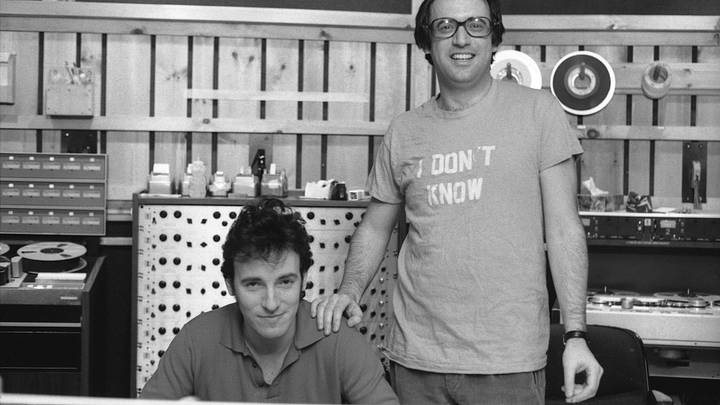
Though certainly a response to current events, “Nebraska” also came into existence because of developments in Springsteen’s own career. Having become a superstar, he wanted to close the gap between him and his fans, and avoid turning into a sellout.
“All popular artists,” Springsteen wrote in his 2016 memoir Born to Run, “get caught between making records and making music.” Once he found himself in this very spot, he chose to make music.
Despite Springsteen’s doubts, “Nebraska” became both a critical and commercial success, topping U.S. and U.K. charts and selling millions of copies. Ultimately, though, it’s remembered for closing that aforementioned gap.
As E Street guitarist Steve van Zandt later said: “An artist could never get closer to his audience than this. Not because it was done with an acoustic guitar, but because he was literally singing for himself.”
More Like This:
•
20 One-Hit Wonders From the 1980s You Still Know Every Word To
•
6 Classic Rock Hits That Almost Went to Different Artists
•
The Elvis Presley Encounter That Changed Tom Petty’s Life
•
Quiz: Can You Name the Tom Petty Song From One Lyric?
•
Quiz: Is This a Lyric From “Monster Mash” or “Spooky, Scary Skeletons”?
Home/MUSIC