
ByEthan Trex|Jan 18, 2024, 9:59 AM EST
 Add us as a preferred source
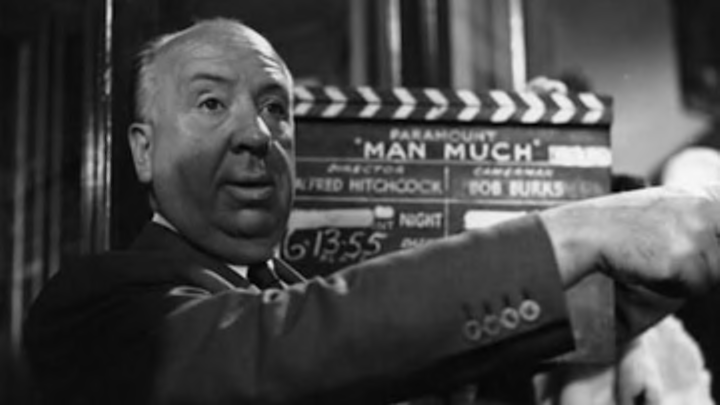
Even legendary directors like Alfred Hitchcock don’t always get their way. Over the course of his illustrious career, Hitchcock had to abandon quite a few projects due to budgetary concerns, issues with stars, the whims of studio heads or, in some cases, his own instincts that the film wasn’t going to turn out the way he had envisioned it.
On what would have been The Master of Suspense’s 117th birthday, let’s take a look at a few of the legendary auteur’s unproduced projects, including the one that studio execs hated so much, they made Hitch sign a contract promising he wouldn’t make it.
1. NUMBER 13
This silent 1922 feature for Gainsborough Pictures was set to be Hitchcock’s directorial debut. The film was to star Clare Greet and Ernest Thesiger in a script written by “a woman working at the studio who had worked with (Charlie) Chaplin.” Hitchcock only filmed a few scenes before the budget fell through, and the script is now lost. The film of the few completed scenes is also lost, possibly because the studio melted it down to recycle the film’s silver nitrate. Don’t worry too much about missing out on this one, though; Hitchcock later admitted, “It wasn’t very good, really.”
2. NO BAIL FOR THE JUDGE
Hitchcock spent the early part of 1959 preparing to adapt Henry Cecil’s novel of the same name into a film starring Audrey Hepburn. On May 19th of that year, though, Hepburn dropped out of the project, with some sources saying she was reluctant to do a film so soon after delivering a child, and others claiming she refused the part when she found out her character was involved in a rape scene. The project died when Hepburn backed out, and although Hitchcock was privately livid, he regrouped nicely by making Psycho instead.
3. THE BLIND MAN
In 1960 Hitchcock and legendary screenwriter Ernest Lehman began to work on a script called The Blind Man about a blind pianist who regains his sight after receiving an eye transplant from a murder victim. Hitchcock envisioned Jimmy Stewart in the lead role, and one of the film’s main scenes was to be set in Disneyland. That’s where the trouble started; Walt Disney had seen Psycho and truly hated it. Disney reportedly wouldn’t let Hitchcock shoot in his park, so the project died.
4. HAMLET
In the late 1940s, Hitchcock hit on an odd idea: He wanted to produce a modernized version of Hamlet set in England with Cary Grant in the title role. According to Hitchcock, the project “would be presented as a psychological melodrama.” The idea hit the rocks after Hitchcock’s studio, Transatlantic, announced the project and a professor who had written a modernized version of Shakespeare’s tale threatened a lawsuit.
5. FLAMINGO FEATHER
In 1956, Hitchcock bought a story called Flamingo Feather from South African author and diplomat Laurens van der Post. The plot involved a Russian scheme to train South Africans for nefarious Communist purposes. When Hitchcock went to South Africa to scout shooting locations, though, the project quickly fell apart. The director wanted Jimmy Stewart and Grace Kelly as the leads, which would be pricey, and he felt he needed 50,000 African extras. Hitchcock didn’t love the look of the country’s terrain, and it became apparent that even in South Africa it would be tough to get together 50,000 extras when most of the country’s population worked long hours at farming jobs. Hitchcock later said, “It was all so confusing that I dropped the whole idea.”
6. MARY ROSE
Toward the end of his career, Hitchcock frequently mentioned an unproduced 1964 film called Mary Rose whenever he was asked about his professional regrets. In Hitchcock’s amazing book-length interview with François Truffaut, he describes the project as “a little like a science fiction story” and details the plot, which involves a woman who hears celestial voices and mysteriously vanishes at odd intervals.
Hitchcock put a lot of thought into this project—he even explained to Truffaut exactly how he would light certain scenes and tried to talk the French director into making the film—but the ghostly supernatural elements of the film were a non-starter for studio execs. Hitchcock revealed in another late-career interview, “Do you know, it’s written specifically into my present contract that I cannot do Mary Rose?” Hitch could allegedly make any film he wanted as long as he kept the budget under $3 million—and didn’t make Mary Rose.
7. R.R.R.R.
In 1965, Hitchcock hired the Italian writing duo Age and Scarpelli—perhaps best known in America for their screenplay for The Good, the Bad, and the Ugly—to pen a script about an Italian immigrant to America who rises in the hotel world, then sends for his Sicilian family. Unbeknownst to the hotelier, his relatives are a pack of thieves. Eventually the sticky-fingered family tries to swipe a valuable coin collection from the hotel; the title comes from numismatic jargon. Hitchcock told Truffaut, “I dropped the project because it seemed to be shapeless. Aside from that, you know that Italians are very slipshod in matters of story construction. They just ramble on.”
8. THE THREE HOSTAGES
The Three Hostages is another of the unsuccessful projects at which Hitchcock took a crack after making Marnie. The film was an adaptation of John Buchan’s 1924 novel of the same name in which a government plans to crack down on a criminal gang on a certain date. The gang catches wind of the plan and kidnaps three children to regain some leverage against the government.
Hitchcock announced the project, but he ended up eventually abandoning it over difficulties in obtaining the screen rights and concerns over the script’s reliance on hypnotism as a plot device. He later said, “I feel you cannot put hypnotism on the screen and expect it to hold water. It is a condition too remote from the audience’s own experiences.”
9. KALEIDOSCOPE/FRENZY
In 1969, Hitchcock planned to make a triumphant comeback after a string of films that received middling commercial and critical reactions by making Kaleidoscope (also referred to as Frenzy), a grisly tale of a serial rapist and murderer. The film was set to feature a handsome young killer who lured women to their death; Hitchcock considered it a prequel to his 1943 tour de force Shadow of a Doubt. The script included some elements—including necrophilia and the use of acid baths to dispose of bodies—that Hitchcock had pulled from newspaper reports about notorious British criminals.
Hitchcock actually shot an hour or so of silent test footage, but Universal nixed the film as it didn’t think audiences would warm to a sex- and murder-filled flick that featured a serial killer as its protagonist. Hitchcock was irritated about having to abandon the project, but he revived a few plot points and one of the working titles when he made 1972’s Frenzy, a serial killer tale that may have been the director’s last great film in spite of a decidedly mediocre cast.
10. THE SHORT NIGHT
Hitchcock’s final project before his death in 1980 was The Short Night, an espionage picture based on a Ronald Kirkbride novel and set in Finland. Hitchcock made it as far as considering Walter Matthau, Clint Eastwood, Sean Connery, Catherine Deneuve, and Liv Ullmann for the lead roles, but Universal squashed the project in 1979 due to the director’s failing health.
11. GREENMANTLE
Hitchcock had such great luck with his adaptation of John Buchan’s novel The Thirty-Nine Steps that when it came time to direct a follow-up, he decided to go back to the well with an adaptation of Buchan’s novel Greenmantle. Hitchcock wanted to pair Cary Grant and Ingrid Bergman in the lead roles, but Buchan’s estate wanted too much money for the screen rights. Hitchcock eventually realized his dream pairing of Grant and Bergman with the 1946 classic Notorious.
12. THE BRAMBLE BUSH
Hitchcock spent part of 1951 adapting David Duncan’s novel into a screenplay. The story involved a Communist agitator on the run from the authorities who steals another man’s passport, only to learn that the man is wanted for murder. Hitchcock eventually decided “it wasn’t any good,” and he abandoned the idea to work on a project to which Warner Bros. had just purchased the rights: the Broadway hit Dial M for Murder.
13. THE WRECK OF THE MARY DEARE
Hitchcock always wanted to do a movie with Gary Cooper. He offered Cooper the lead role in Foreign Correspondent only to have the star turn it down because it was a thriller; Joel McCrea ended up memorably playing the part instead. In 1959, though, Hitchcock had another shot when MGM optioned the rights to the novel The Wreck of the Mary Deare for a Hitchcock-Cooper collaboration.
Hitchcock and Ernest Lehman spent weeks working on the script, but they eventually decided that the story really became a snooze of a courtroom drama and shifted their focus to the early planning for North by Northwest instead.
Related Tags
Did Ernest Hemingway Really Say “Write Drunk, Edit Sober”? Uncorking the Truth
Papa loved his rum, but his writing routine was strictly dry. Here’s the real, surprisingly sober story behind the famous quote.
ByNitya Rao|Jul 20, 2026, 2:57 PM EDT

Casual penman or professional wordsmith, just about everyone has heard the wacky piece of writing advice, “write drunk, edit sober.” Widely believed to be a way of life for American writer Ernest Hemingway, this famous phrase has served as a green light for wetting your whistle before the ink dries on the page for decades.
The idea is intuitive—loosen your inhibitions to let the words flow, then clean it up once the spins stop. But the backstory is anything but, especially regarding who—or even if someone—actually said it in the first place.
Hemingway’s Real-Life Writing Routine
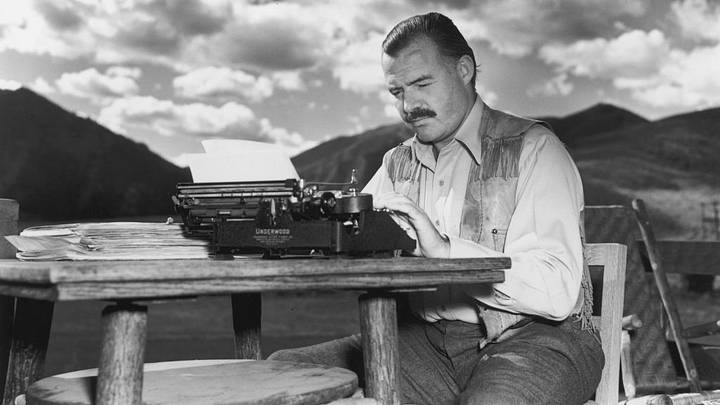
There’s no doubt that Hemingway enjoyed downing a daiquiri or two (or, according to legend, 17 in one sitting). Just as well-known as his works such as The Old Man and the Sea and The Sun Also Rises are his drinking habits, which only got worse after a series of plane and car crashes during his travels. But despite his penchant for adventure and alcohol, Papa was a staunch believer in separating the pen from the pint.
The idea that Hemingway wrote while intoxicated doesn’t hold up to the reality of his actual process. He was undeniably disciplined, waking up before dawn to write while his mind was sharp and, more importantly, sober. He saw writing as a craft that commanded all of his attention, saving his drinking for later on in the day. For Hemingway, a Papa Doble or dry martini was merely a reward once his word count for the morning was met.
His granddaughter, Mariel Hemingway, attests: “He never wrote drunk, he never wrote beyond early, early morning,” she said in an interview. If this is true, then, just how did the edgy quote get attached to his name?
The Faulkner Factor
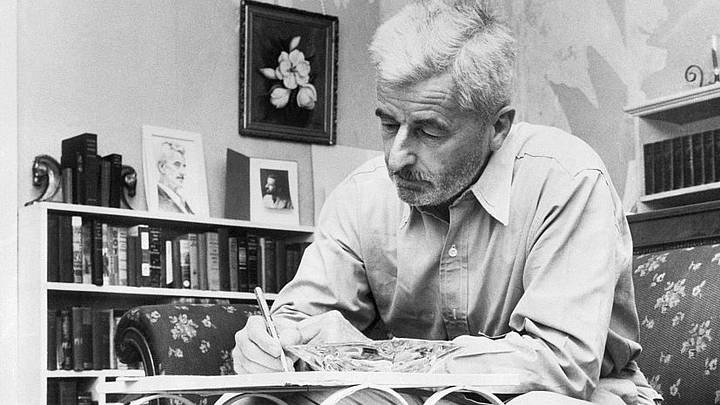
Rivalries didn’t solely reside within Hemingway’s works, but in his real life as well. Throughout his career, the Nobel Prize-winning novelist was pitted against his famous contemporary William Faulkner. The two men critiqued everything about each other, from their contrasting writing styles to their comparable heavy drinking habits.
Not only did Hemingway deny drinking and drafting, but he went so far as to deflect the blame onto his rival. In a Writer’s Digest interview published shortly after his death, Hemingway set the record straight with a sharp retort:
“You’re thinking of Faulkner. He does sometimes—and I can tell right in the middle of a page when he’s had his first one.”
Peter De Vries’ Part
Whether you’re Team Hemingway or Team Faulkner, there’s still no evidence that “write drunk, edit sober” came from either of them. The phrase’s actual roots are entirely fictional.
The quote traces back to a line of dialogue from the 1964 novel Reuben, Reuben by American author Peter De Vries. In the book, a character casually admits: “Sometimes I write drunk and revise sober, and sometimes I write sober and revise drunk.”
Stripped of its backstory, it’s not hard to see why pop culture pins these four words on the talented, albeit tipsy, literary great.
The second half of the quote lends more context to its true meaning: “But you have to have both elements in creation — the Apollonian and the Dionysian, or spontaneity and restraint, emotion and discipline.” Altogether, it’s less of a suggestion and more of an observation on how multifaceted the creative process can be.
Still, Hemingway would agree to disagree. When it came to his typewriter, he knew better than to mix business with booze. Sometimes, a saying survives not because it’s true, but because it’s simply too good a legend to let go.
Next: Join Mental Floss’s Geography Quiz Competition
More Historical Misconceptions:
•
Did Astronaut Jim Lovell Really Say “Houston, We Have a Problem?” Decoding the Real History
•
Did Marie-Antoinette Shout ”Let Them Eat Cake” During the French Revolution? (The Real Story)
•
5 Popular Quotes Commonly Misattributed to Henry David Thoreau
•