ByGarin Pirnia|May 12, 2019, 6:00 AM EDT
 Add us as a preferred source
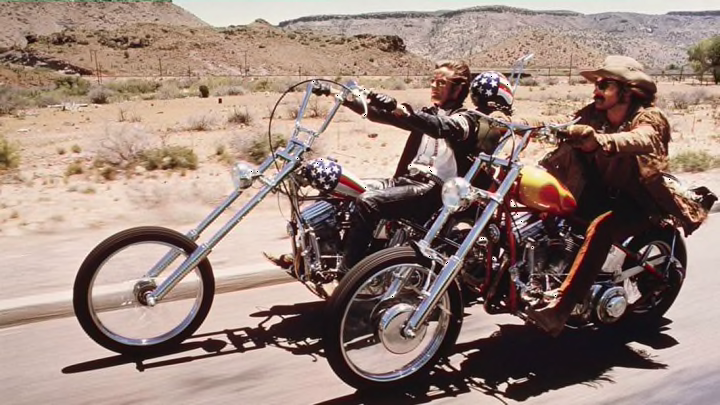
Easy Rider’s tagline of “A man went looking for America and couldn’t find it anywhere” transcended moviedom. Once called The Loners, Dennis Hopper co-wrote, directed, and starred in the Oscar-nominated biker flick about two men riding motorcycles from Los Angeles to New Orleans to Florida during the tumult of the Vietnam-era ’60s. Peter Fonda and Jack Nicholson also starred, and Fonda co-wrote the script with Terry Southern and Hopper, and produced it.
Shot on a budget of well under $1 million, the 1969 guerilla film went on to gross more than $60 million worldwide; the Criterion Collection referred to the movie as “the definitive counterculture blockbuster.” After filming finished in 1968, it took Hopper one year to edit 80 hours of footage—which included scenes of real drug use and a jaw-dropping conclusion—into a 95-minute feature that premiered at Cannes on May 12, 1969. Despite a difficult shoot, it launched the prosperous New Hollywood period of moviemaking, and ignited a revolution in cinema that we haven’t recaptured since.
1. Easy Rider was made for the youth of the time.
Before Easy Rider, Hollywood was churning out happier films starring the effervescent Doris Day, but Dennis Hopper’s film changed that. “They were making films like Pillow Talk and The Glass Bottom Boat. Gidget? That’s not a kids’ film. Beach Blanket Bingo? C’mon,” Fonda told The Hollywood Reporter in 2015. “Those were not really films of the youth that I had grown into and up with, shutting away the establishment, going on their own. We made a movie for these people that didn’t have their own movie.”
Karen Black, who co-starred in the film, agreed with Fonda’s sentiment. “When you went to see a movie like Easy Rider and when you saw these guys really smoking grass by the fire, and really the camaraderie was warm, real, and rare, you went, ‘What the hell am I looking at? This has value! This has a completely different kind of value than Pillow Talk,” she said in the documentary Easy Riders, Raging Bulls. “This is something extraordinary. I want more of that. And then I think it went a bit far, because I kept seeing movie people vomit.”
2. The film’s original ending involved Bill and Wyatt sailing into the sunset.
One of the most shocking things about Easy Rider is its ending, where both of the leads violently perish. “The initial idea had to do with a couple of young guys who are fed up with the system, want to make one big score, and split,” Terry Southern told Creative Screenwriting. “Use the money to buy a boat in Key West and sail into the sunset was the general notion, and that was slated to be the film’s final poetic sequence. It wasn’t until the end that it took on a genuinely artistic dimension—when it suddenly evolved into an indictment of the American redneck, and his hatred and intolerance for anything remotely different from himself—somewhat to the surprise of Den Hopper: ‘You mean kill ‘em both? Hey, man, are you outta your gourd?!?’ I think for a minute he was still hoping they would somehow beat the system and sail into the sunset with a lot of loot and freedom. But of course, he was hip enough to realize, a minute later, that their death was more or less mandatory.”
3. It was one of the first films to integrate found music.
Instead of hiring a musician to compose a score for the film, Hopper decided to use pre-recorded music from Bob Dylan, The Band, Steppenwolf, and Jimi Hendrix on the soundtrack. “No one had really used found music in a movie before, except to play on radios or when someone was singing in a scene,” Hopper told Interview Magazine. “But I wanted Easy Rider to be kind of a time capsule for that period, so while I was editing the film I would listen to the radio. That’s where I got ‘Born to Be Wild’ and ‘The Pusher’ and all those songs.”
The filmmakers had to show the movie to the different bands involved in order to get licensing approval, and each band received $1000. They showed it to Dylan, whose song “It’s Alright, Ma (I’m Only Bleeding)” was in two scenes, but Dylan said they couldn’t use it. “He said, ‘Have [Roger] McGuinn do this first part, but you can’t do it after that,’” Fonda told Daily Camera. “I said, ‘But, Bob, any good fight’s a combination of punches.” McGuinn covered Dylan’s song, and Dylan and McGuinn wrote the closing credit song, “The Ballad of Easy Rider,” which was sung by McGuinn, and didn’t have Dylan’s name on it.
4. Dennis Hopper claimed Terry Southern’s only contribution to the film was the title.
“Terry Southern never wrote one f***ing word of Easy Rider. Only the title Easy Rider came from him,” Hopper told The Guardian in 2001. “He broke his hip; he couldn’t write. I used his office and I dictated the whole f***ing thing in 10 days.”
But Southern saw it in another way. “Peter was to be the actor/producer, Dennis the actor/director, and a certain yours truly, the writer,” Southern told Creative Screenwriting. “After they had seen a couple of screenings of it on the coast, I got a call from Peter. He said that he and Dennis liked the film so much they wanted to be in on the screenplay credits. Well, one of them was the producer and other was the director so there was no way the Writers Guild was going to allow them to take a screenplay credit unless I insisted.” Not listening to the WGA, Southern allowed them to have their credits on the film, which was largely improvised.
However, Fonda had more positive things to say about Southern’s contributions: “He gave us dark humor and a literary panache that Dennis and I did not have,” Fonda told The A.V. Club. “Having him with us as a writer on the script put it above periscope depth. People would say, ‘Wow, Terry Southern co-wrote that. I wonder what that’s about?’” All three of them received Oscar nominations for the film’s screenplay.
5. Rip Torn sued Hopper over the Jack Nicholson role.
As the story goes, in 1967, Rip Torn had dinner with Fonda and Hopper, who were considering casting him in the role of lawyer George Hanson. Hopper went on The Tonight Show in 1994 and recounted how Torn pulled a knife on Hopper during the dinner, thus losing the gig. But Torn said it was the other way around: Hopper pulled the knife on him. (It was supposedly a butter knife.) “Dennis jumped back and knocked Peter on the floor, and I said, ‘There goes the job,’” Torn told The New York Times. Fed up with Hopper ruining his career, Torn sued Hopper for defamation and won almost $1 million.
Bert Schneider, one of film’s executive producers and financiers, then suggested Hopper cast Jack Nicholson as Hanson—as long as he agreed to work for scale, which was $392 per week. “I’ll tell you one thing mister, it was the best $392 I ever spent,” Fonda said at the AFI Life Achievement Award: A Tribute To Jack Nicholson banquet.
6. Nicholson knew the movie would be a hit.

In an interview with Film Comment, the interviewer asked Nicholson if he knew the film would be a hit, and he said yes. “Bob [Rafelson] and I were involved in writing Head when Dennis and Peter brought in a 12-page treatment,” Nicholson said. “I felt it would be a successful movie right then. Because of my background with Roger Corman, I knew that my last motorcycle movie had done $6 to $8 million from a budget of less than half-a-million. I thought the moment for the biker film had come, especially if the genre was moved one step away from exploitation toward some kind of literary quality.”
Before Easy Rider, Hopper had starred in a biker movie called The Glory Stompers, Fonda did the Corman movie The Wild Angels, and Nicholson acted in Hells Angels on Wheels.
7. Fonda tried to get Hopper fired before the movie was even written.
Schneider and Rafelson created The Monkees and used that money to fund the film. They gave Hopper $20,000 to do some preliminary shooting in New Orleans, and if they liked what they saw, they would give him more money to shoot the entire thing. Hopper filmed the NOLA scenes using Bolex 16mm cameras, which gave the movie a psychedelic sheen. “Peter and Bill Hayward are recording me,” Hopper told Interview Magazine. “Every time I turn around they’re filming me—and I’m not sure why—but I’m saying things like, ‘We’re going to win Cannes, man! We’re young! We’re going to take our energy and our strength and we’re going to take this thing all the way! Just trust me and do what I’m saying! Nobody shoot any film until I tell them to!’ I mean, we were all in open fights with one another at the time. I didn’t find this out until Bert called me into his office after the movie was released, but Peter and Bill apparently wanted to pay him back the money he’d given us for Easy Rider and fire me. This is Peter and my brother-in-law, okay? This is before we’ve written a screenplay.”
Schneider didn’t care about the footage and told the guys, “Well, Hopper sounds really excited. He says he’s going to win Cannes. That sounds like a hell of an idea.” And of course the movie ended up winning a Best First Work award at the 1969 Cannes Film Festival, where it was also nominated for the Palme d’Or.
8. Fonda and Hopper had a falling out over money.
Fonda and Hopper clashed over writing credits and how Southern’s money should be split between the men. When Southern left the project, Fonda gave a percentage of Southern’s money to the production company and Hopper’s brother-in-law, Bill Hayward, who was an associate producer on the film. This made Hopper feel like Fonda cheated him. “I just think that [Hopper] was so caught up in his own megalomania and his own bitterness that he couldn’t see that I treated him quite fairly and that I respected his genius and his work,” Fonda told The Independent.
Unfortunately, Hopper held a grudge until the day he died, in 2010. “Well, I knew that Dennis was dying and I made many attempts to see Dennis as did Bert Schneider,” Fonda said. “But he refused to see us. The funeral service was in a chapel in Taos, New Mexico. I rented a private jet and flew in, but I was not allowed in the chapel. So as much as I wanted to pay my respects, to Dennis and his family, I was not allowed to be a part of it.”
9. The “We blew it” line was filmed after the movie wrapped.
Near the end of the film, Wyatt and Billy sit around a campfire, and Wyatt’s excited about how rich they are. Wyatt looks into the fire and utters, “You know Billy, we blew it,” which foreshadows the ending, though is also open to interpretation. “It was two weeks after we wrapped the movie, we realized we didn’t have the last campfire scene,” Fonda told Daily Camera. “So we assembled the crew and went into the Santa Monica Mountains—if you don’t light it, you can’t see the difference—and we said we’re in Florida.”
Hopper and Fonda argued about the dialogue. “He wanted me to say all this stuff about how we blew our inheritance, we messed up our heritage … We were elevating the level of our conversation.” Fonda wanted to mumble his line in a Warren Beatty way, and Hopper was at first against the idea, but once they filmed the scene Hopper was amenable.
“Lots of people have asked me over the years, ‘What did you mean by ‘we blew it’?’” Fonda said. “And I say, ‘Look out the window. If you don’t think we’ve blown it, you’ve got to take a closer look.’”
10. Fonda’s famous dad didn’t understand the movie.
The esteemed Henry Fonda saw a screening of his son’s film. “I had him come down and look at an early cut,” the younger Fonda told Daily Camera. “We had to get Dennis out of the room to get it below four hours. My dad watched it and then I went over the next day to his house. He was very serious. He said, ‘Look son, I know you have all your eggs in this basket. And I’m worried about it because the film is inaccessible. We don’t see where you’re going and why? I just don’t think many people will get it.’ Even after [it was successful] he thought I was just a loose cannon, until he worked for me for one day.”
11. You can pay to take the Easy Rider motorcycle tour.
If you like riding motorcycles, have 15 days to spare, and about $4300 to $7700 burning a hole in your pocket, you can sign up for the 50th Anniversary Easy Rider Movie Tour. The 2589-mile path ventures to some of the movie’s real filming locations, from L.A. to Death Valley to Colorado to New Orleans. According to the tour’s website, they’ve worked with Sony Pictures in authenticating the locales.
12. An original Captain America motorcycle sold for $1.35 million.
There’s been much dispute over who designed and built the four Harley-Davidson motorcycles, a.k.a. choppers, used in the movie. Cliff Vaughs said he did it, but Peter Fonda said he designed the sketches and built them: “I built the motorcycles that I rode and Dennis rode. I bought four of them from Los Angeles Police Department.” Vaughs worked on the movie for about a month before being fired, therefore his name doesn’t appear in the credits. Three of the bikes were stolen, and the final one was destroyed in the film’s finale but was later restored. Fonda gave the bike to actor Dan Haggerty, who eventually sold it to a collector named Michael Eisenberg. In October 2014, Profiles in History auctioned off the bike; the bike sold to an anonymous winner for $1.35 million and became the most expensive motorcycle in the world.
13. In 2012, an Easy Rider sequel was made.
Phil Pitzer, an Ohio lawyer and producer, realized the sequel rights to Easy Rider were available, so in 2007 he sued Bob Rafelson and Bert Schneider to prevent them from claiming they owned the rights. Pitzer won the case and moved forward with the sequel. The original title was Easy Rider: Scarlet Cross, but he changed the title to Easy Rider: The Ride Back. Unlike the first film, the sequel went straight to DVD and didn’t make a dent in American culture.
This story has been updated for 2019.
Quiz: Can You Name the Halloween Costume From These Three Clues?
See how many classic costumes you can construct before the clock runs out.
ByNitya Rao|Oct 28, 2026, 7:00 PM EDT
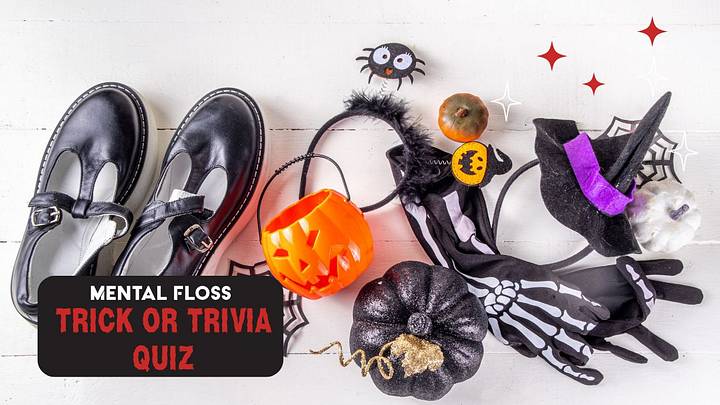
Anyone can copy a Halloween costume with the right reference photo, but can you assemble one in reverse from just a handful of random accessories? From wand-wielding wizards to iconic movie monsters, someone, somewhere, has worn it all. Now it’s your turn to put your costume designer hat on and see how quickly you can build a costume from three key components and sheer creativity. Put your pop culture memory and Halloween fashion sense to the test below.https://www.sporcle.com/framed/?v=10&pm&gid=41faab33X4&fid=6ae23fc6d6f32
More Halloween Quizzes:
•
Quiz: Is This a Lyric From “Monster Mash” or “Spooky, Scary Skeletons”?
•
Quiz: Can You Name the ’90s Horror Movie From Its Final Girl?
•
Quiz: Can You Match These TV Witches to Their Shows Without Getting Hexed?
•
Quiz: Can You Finish These Spine-Chilling Literary Titles?
How did your styling session go? Are you ready to open your Spirit Halloween franchise, or did some of those clues leave you (or at least your hypothetical Halloween Sim) naked and afraid? Whether you nailed every look on the first try or had to call it quits after the third ambiguous cape, challenge a fellow Halloween fanatic to see if they can beat your score!
The Most Popular Halloween Costumes Through the Decades
If piecing together costumes from random props made you realize just how deeply pop culture is embedded in our October traditions, take a look at how Halloween fashion has evolved over the last century (according to The Daily Meal):
1920s: Clowns, Witches & Farmers
As trick-or-treating started gaining traction, homemade costumes like witches, farmers, and the Pierrot clown—complete with iconic black-and-white face paint—became instant classics.
1930s: Mickey & Minnie Mouse
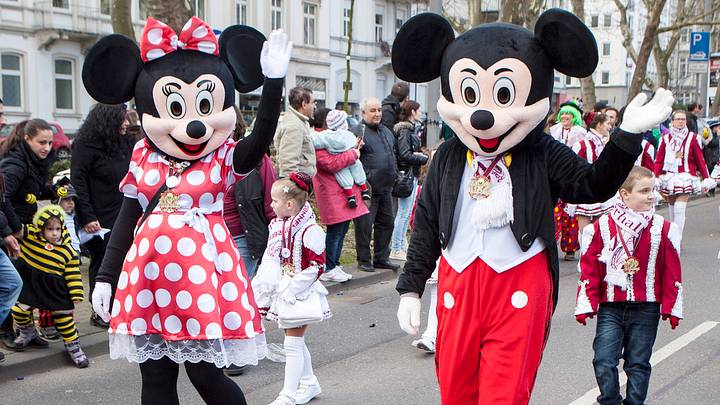
Mass-produced costumes hit the scene thanks to Ben Cooper after landing a major Disney license. Kids could easily transform into Mickey, Minnie, and Snow White in simple slip dresses and rubber masks right alongside traditional ghosts and goblins.
1940s: Witches & Cats
With the rise of pinup culture, classic costumes like witches and cats got a flirty makeover featuring things like fishnet stockings, dark makeup, and shorter hemlines.
1950s: Hula Dancers & Cowboys

Years before Hawaii officially became a U.S. state in 1959, a postwar hyperfixation on all things tiki and luau took over the country. Combined with the massive popularity of Western films, this inspired hibiscus prints, grass skirts, and cowboy hats to join the mix of spookier characters on Halloween night.
1960s: Superheroes
Comic book icons like Superman, Batman, and Catwoman surveyed the streets as rubber masks and capes made cosplaying your favorite crime-fighter easy.
1970s: Peanuts & Star Wars
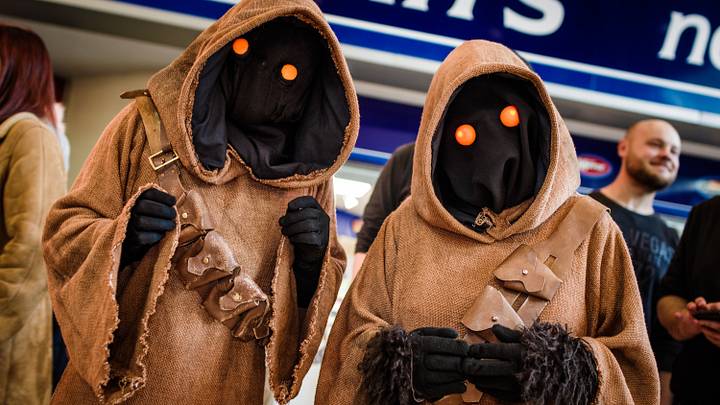
TV, cartoons, and pop culture ruled the decade, with trick-or-treaters sporting plastic masks and ’70s staples to emulate the Peanuts gang, Star Wars characters, and Charlie’s Angels.
1980s: Elvira & Hulk Hogan
Higher-budget costumes let fans lean hard into pop culture on Halloween, whether channeling vampy Elvira hairdos, Hulk Hogan onesies, or slasher villains like Freddy Krueger and Michael Myers.
1990s: Power Rangers & The Simpsons
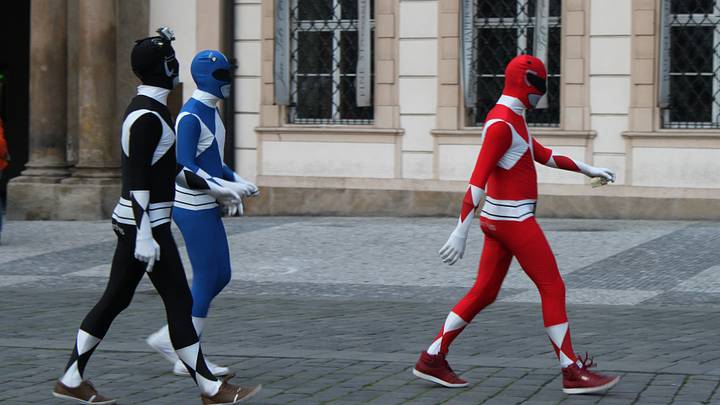
The Mighty Morphin Power Rangers, Teenage Mutant Ninja Turtles, and The Simpsons were the easy answers to the group costume dilemma. Think colorful nylon onesies, yellow face paint, and many, many masks.
2000s: Y2K Stars & Harry Potter
Halloween costume inspiration shifted toward real-life Y2K icons like Britney Spears and Michael Jackson, with just as many fantasy favorites like Harry Potter and SpongeBob SquarePants down the block.
2010s: Frozen & Pop Culture

Elsa, Anna, and Marvel heroes reigned supreme amongst the new generation of trick-or-treaters. The digital era also saw the rise of meme costumes and political election outfits featuring even more uncanny valley face masks.
If you love testing your pop culture trivia and Halloween knowledge, check out the Mental Floss quiz page daily for more spooky challenges.
The countdown to Halloween is on, and we’re challenging our readers here at Mental Floss with our Trick or Trivia quiz giveaway. For 13 nights between October 19-31, we’re putting your knowledge of all things spooky to the test. Think you know Halloween? Take at least one quiz and enter to be in the running to win a $200 Barnes & Noble gift card.
More Halloween Reads:
•
7 Forgotten Mischief Night Pranks You Used to See Every Year
•
Quiz: Can You Name the ‘Nightmare Before Christmas’ Character From One Clue?
•
•
What Was Trick-or-Treating Like in the 1950s?
•
What the Night Before Halloween Is Called Across America, Mapped
The Artist Who Taught Bob Ross His Famous Painting Technique
Before Bob Ross painted happy little trees, he learned his famous wet-on-wet technique from a German art master.
ByChris Wheatley|Oct 28, 2026, 2:00 PM EDT
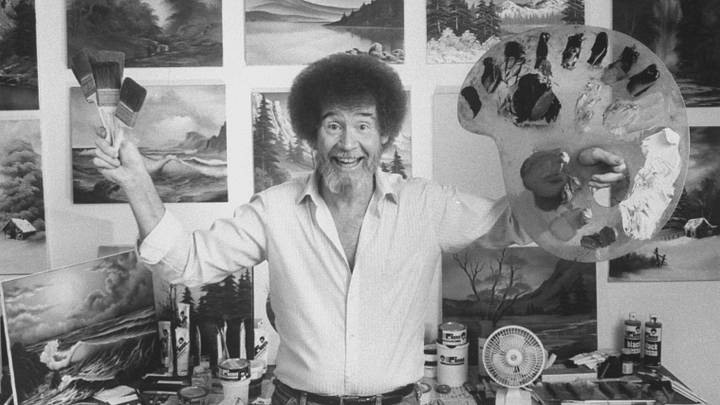
One of the undeniably positive effects of the TikTok era is that, through the vague mysteries of the “algorithm,” fresh generations have been introduced to the soothing talents of painter Bob Ross. Born in 1942 in Daytona Beach, Florida, Ross served as a master sergeant in the United States Air Force, but it was later, when he began working as an art tutor, that his passion for painting propelled him to modest fame.
Becoming Bob Ross
It was one of his pupils, a lady named Annette Kowalski, who first saw possibilities for Ross beyond the classroom. Together with her husband, Walt, Ross, and Ross’ wife, a new company, Bob Ross Inc., was created with Bob as the star. In 1982, Ross taped a pilot for a simple show—just him in front of the camera, painting a landscape whilst offering advice. Broadcast on the tiny station, WNVC, in Falls Church, Virginia, dozens of PBS stations were soon eager to sign him up.
Ross eventually went with WIPB in Muncie, Indiana, where his show, The Joy of Painting, ran from 1983 to 1994. With his distinctive permed hairstyle and soft, welcoming voice, Ross was able to create a warm, comforting atmosphere that appealed even to non-artists.
The Original Master
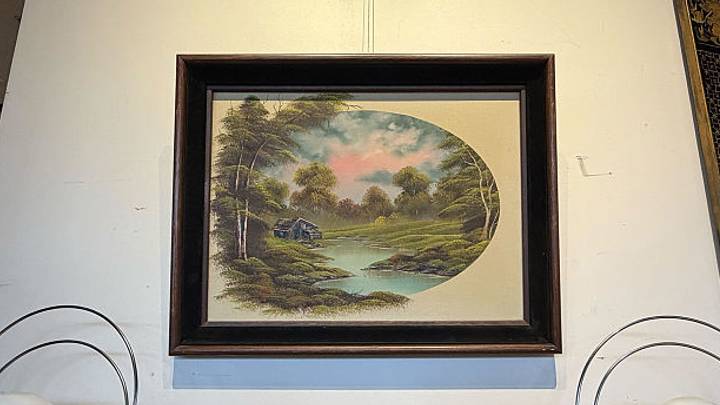
What many people don’t know is that Ross’ techniques and style were not wholly original. Ross had been working as a bartender when he happened upon a television show titled The Magic of Oil Painting, which was hosted by the German painter, William “Bill'” Alexander. Born in Berlin in 1915, Alexander later emigrated to America, where he began hosting shows and writing books on art. He specialized in the alla prima or wet-on-wet technique. Dating back to the 15th century, this approach allowed for a single canvas to be finished in less than half an hour.
Following his retirement from the Air Force, Ross sought out Alexander and studied under him. He even joined Alexander’s company—Alexander Magic Art Supplies—and was acting as a travelling instructor and salesman for this establishment when he first met Annette Kowalski.
A Bitter Rift
Although in the very first episode of The Joy of Painting, Ross fully acknowledged Alexander’s teaching, his rising fame evidently caused friction between the two men. Alexander felt that Ross had leaped to success on the back of his own career. In a 1991 interview, he said of Ross: “He betrayed me.”
Whilst the truth is that neither man can fairly lay claim to have invented the wet-on-wet technique, it’s sad to think that they ended up in animosity. Ross sadly passed in 1995, a year after the final episode of The Joy of Painting was aired.
Read More:
•
The Artist Who Taught Bob Ross His Famous Painting Technique
•
The 10 Most Expensive Picasso Paintings Ever Sold, Ranked
•
The Personal Tragedy Behind Picasso’s Blue Period
•
The Best Indigenous Peoples’ Day Trivia Questions to Reframe How You See American History
•