
ByJake Rossen|Jan 21, 2024, 10:10 PM EST
 Add us as a preferred source

Nearly 50 years after its debut, there’s still never been a television series quite like Dark Shadows. The ABC daytime soap opera, which aired from 1966 to 1971, was a charmingly under-budgeted Gothic melodrama about a spooky seaside town in Maine that blended the supernatural (werewolves, witchcraft, and zombies) with parallel universes and time travel; angst-ridden vampire Barnabas Collins (Jonathan Frid) emerged as the show’s breakout star. General Hospital it wasn’t.
Usually airing in late afternoons, Dark Shadows acquired a large teenage fanbase, with some of its frilly-collared actors appearing in the pages of Tiger Beat, and an even larger cult following. If this all sounds peculiar, you don’t know the half of it. Take a look at the show’s humble special effects attempts, Frid’s forced dates, and how Joseph Gordon-Levitt figures into all of this.
1. BARNABAS COLLINS WAS AN AFTERTHOUGHT.
Creator Dan Curtis—who would later conceive of The X-Files predecessor Kolchak: The Night Stalker and the classic TV movie Trilogy of Terror—originally had in mind a dramatic series about the strange residents of Collinsport, Maine, as viewed from the perspective of newly-arrived governess Victoria Winters. Though mystical elements—like ghosts—were present, they were subtle and slow to materialize. When the show premiered June 27, 1966, viewers found its characters as impenetrable as Winters did; Variety called it a “yawn.”
Hoping to improve ratings with a classic horror movie trope—a vampire—Curtis introduced Collins, a brooding bloodsucker tortured by his condition. Originally intended to be a fleeting character who would be staked in the heart after a three-week run, he became so popular with viewers (ratings saw a 62 percent increase) that the show was saved from the guillotine.
2. THE SPECIAL EFFECTS CONSISTED OF SARAN WRAP AND VASELINE.
With a roughly $70,000 budget to shoot its five weekly episodes, Dark Shadows had to approach its special effects conservatively. Camera operator Stuart Goodman found that covering his lens with plastic wrap and then dabbing Vaseline at the edges to create a hazy, dreamlike visual was surprisingly effective. To emulate actors being trapped in a blaze, Goodman would simply put a bucket in front of himself and light it on fire.
3. THERE WAS NO TIME TO GO BACK AND FIX MISTAKES.
Despite its lofty ambitions, sprawling stories and camera tricks, Dark Shadows had to maintain a standard soap schedule that allowed episodes to air daily. Because of the compressed production, actor flubs, focus mistakes, and other gaffes that would normally be re-shot had to remain in the show. Viewers would occasionally see performers read the wrong lines or see a crew member wander into shots. Actress Kate Jackson was wearing a dress that caught fire by accident: She finished her scene before being put out. Most notably, Frid was caught picking his nose when he thought he was off-camera.
4. VIEWERS COULD WIN A DATE WITH JONATHAN FRID.
Despite his questionable manners, Frid quickly became the Robert Pattinson of his day. (In his early 40s and uncomfortable in front of cameras, Frid never expected to find himself the subject of viewer crushes. Too bad a tragic vampire is irresistible.) He was bombarded with requests for personal appearances. He was once invited to a Halloween party at the White House (in character) and judged a Miss American Vampire beauty contest, with the winner earning a small role in the show. Poor Frid was also subject to promotional stunts like magazines promising a date with him. “Yes, ladies,” read TV Radio Talk copy, “finally, your fondest nightmares can come true … you will indulge in a long, eerie candlelit dinner at one of the city’s finer haunts, escorted by none other than … that delicious vampire.”
5. FRID KNEW THE WHOLE THING WAS A LITTLE DUBIOUS.
No one on Dark Shadows had any illusions that the show’s camp nature, on-the-nose dialogue, and suspect production values were elevating television. Frid was especially candid about its shortcomings. “It’s the worst acting I’ve ever done,” he told The Montreal Gazette in 1969. “I blink too much, I’m not sharp or fast enough, I don’t have enough time to learn my lines … I can’t get angry with people who find the whole thing ridiculous because the scripts are ridiculous, the dialogue is absurd.”
6. BARNABAS DIDN’T TALK MUCH WHILE FANGED.
Dampened vocally by the fangs he had to wear, Frid also told the Gazette of some production trickery: Collins was rarely filmed talking in them. “My words come out slushy when I wear them, so they have to cut away from me when I talk,” he said. Frid would spit out the fangs, deliver the dialogue, then stuff them back in when the camera returned to him.
7. IT WAS ABC’S FIRST COLOR SOAP.
Though soaps had experimented with color before, Dark Shadows became the first daytime serial on ABC to switch to the format in 1967. (It had spent its first year in black and white.)
8. THERE’S A MISSING EPISODE.
With an unforgiving daily schedule, Dark Shadows produced 1225 episodes during its five-year run. Incredibly, 1224 of them survived. Episode 1219 was discovered to be “missing” when a home video release was being put together. To reconstruct it, an audio recording from a fan was used along with production stills.
9. IT WAS REPLACED BY PASSWORD.
The daily percussion of intricate stories involving monsters and alternate universes eventually wore on both audiences and creators: Curtis wished to move on from the show and was unwilling to cede control to another producer, and ABC was less than satisfied with declining ratings. Dark Shadows ended on April 2, 1971, and was replaced with a new version of the game show Password.
10. IT’S THE ONLY SOAP TO SPAWN THREE FEATURE FILMS.
It’s a testament to Dark Shadows‘ rabid following that the series birthed two feature films with the original cast—virtually unheard of for a soap opera of any era. Curtis directed 1970’s House of Dark Shadows, which covered much of the same ground as the series but morphed Collins into more of an antagonist. While a feature budget meant actors actually had the privilege of doing more than one take, reviews were mixed.
After the series ended in 1971, Curtis wanted to continue the story with another film. Night of Dark Shadows was released that same year, but Frid declined to participate. Curtis opted for more of a haunted house theme instead, with the show’s cast popping up in different roles. It’s been alleged MGM cut 30 minutes from the finished film, obliterating some plot and character details. In its released form, reviewers found it “dull,” “monotonous,” and “a bore.” (Tim Burton’s 2012 feature, starring Johnny Depp as Collins, didn’t fare much better.)
11. JOSEPH GORDON-LEVITT APPEARED IN THE REVIVAL.
Having been largely dormant since going off the air, Dark Shadows was reintroduced to a contemporary audience in 1991. NBC ordered 13 episodes of the series that revived Barnabas (now portrayed by Ben Cross) and rebooted the spooky history of Collinwood Mansion. Joseph Gordon-Levitt, all of 10 years old, played David Collins. Ratings were modest, and the intensifying Gulf War only worsened viewership. The WB tried again in 2004, but the pilot never made it to air. It’s sometimes screened at fan conventions.
12. THERE WAS A COMIC STRIP.
Unlike most daytime soaps, the genre elements of Dark Shadows lent themselves to a variety of merchandising opportunities. Model kits, novels, and toys were in abundance. The series was also adapted into another serialized format: a comic strip ran from 1971 to 1972. Though it effectively picked up the property after the show had ended, it bore little relation. Of the characters, only Frid’s Barnabas was recognizable.
13. BARNABAS MET KOLCHAK.
In a nod to Curtis’s two most popular fantasy series, Moonstone Publishing issued a Dark Shadows/Kolchak crossover comic book in 2009. Kolchak—a newspaper reporter with an affinity for supernatural cases—receives a letter from Barnabas inviting him to the opulent Collinwood Mansion. After Kolchak tries to murder him, the two have a friendly chat. Fans hoping for more of a confrontation were slightly disappointed.
14. FANS CAN OWN ALL 1225 EPISODES—ON VHS.
VCR enthusiasts of the 1980s will recall that Time-Life, Columbia House, and other videotape distributors would offer television series in their entirety, provided collectors had the money and shelf space to accommodate them. While this was a tricky enterprise even with a short-lived series like 1966’s Star Trek, it was almost unfathomable for Dark Shadows. Airing every weekday for five seasons, the series amassed 1225 half-hour episodes, which meant the entire library from video rights holder MPI needed a staggering 254 cassettes. In 2012, the company released it on DVD in a coffin-shaped collector’s case. It was a paltry 131 discs.
Related Tags
20 Things Every ’70s Kid Remembers That Have Completely Disappeared
Before smartphones, streaming, and the internet took over, everyday life was filled with simple pleasures and technologies that have all but gone extinct.
ByPaul Anthony Jones|Nov 1, 2026, 8:00 PM EST
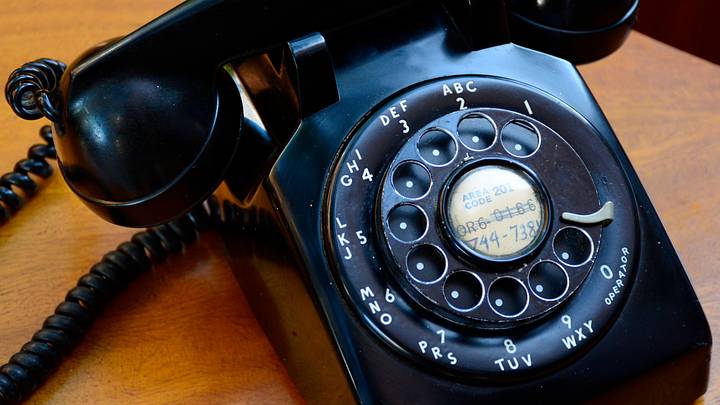
It’s only natural that things change over time, but the pace of change over the last few decades has been head-spinningly quick.
In many ways, that’s made the world easier; staying and getting in touch with people, finding your way around, learning and finding things out, and even shopping and ordering what you want are all now far simpler and more readily available than they were in the past.
But that has had the somewhat less pleasant and more jarring consequence of consigning many of the technologies and experiences of yesterday to history, especially those from the 1970s. Here are 20 that have all but disappeared.
LANDLINE TELEPHONE CORDS
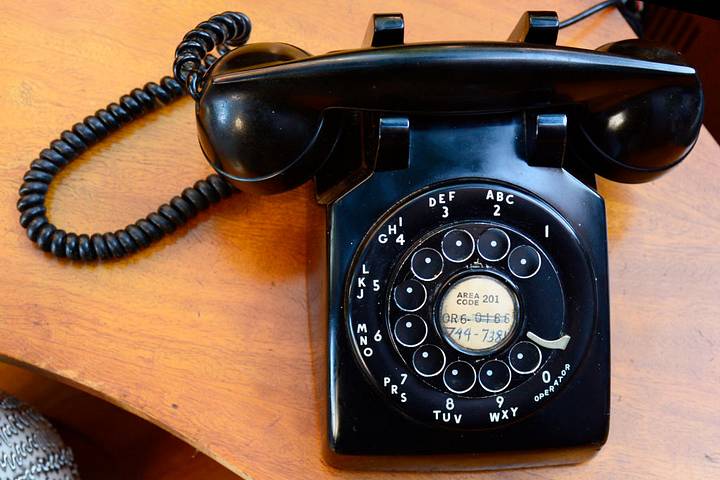
Long before cell phones became a thing, every house had a landline, which was really the only way of keeping in touch with friends and family. Thankfully, the cord on some landline telephones was so long that if you needed a quiet conversation away from your parents, you could take the handset in another room and close the door without stretching it too far.
CALLING THE HOUSE TO SPEAK TO ONE PERSON (WHO MIGHT NOT EVEN BE IN)
Unfortunately, having a landline meant you couldn’t get in touch with one person specifically, but had to call the entire house before narrowing it down to the one member of the household you wanted to reach. (Cue lots of awkward conversations between you and your best friends’ parents—especially if your friend didn’t happen to be in at the time…)
CALL CHARGES
One aspect of the telephones of the past that won’t be missed, however, is the often eye-watering difference between local and long-distance calls. Want to talk to your friend a few streets over? You could talk for hours for a pittance. Want to speak to your aunt or uncle two countries away? Give it ten seconds, tops.
KEEPING THE PHONE OFF THE HOOK
One more telephone-related aspect of the past that’s a little less simple these days? If you didn’t want to be disturbed, you could just take the phone off the hook and be uncontactable for however long you wanted. (These days, the best you can do is a do-not-disturb setting, or just turning your phone off altogether!)
RETURNING REUSABLES (IN EXCHANGE FOR HARD CASH)
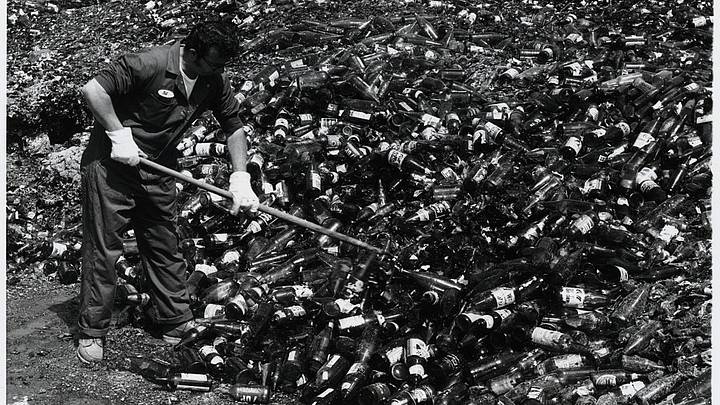
These days, we all have household trash cans for recyclables, and recycling centers will handle most of your reusables cleanly and easily. In the past, though, it wasn’t uncommon for stores and restaurants to have their own in-house schemes for reducing waste, with stores often holding a few cents’ deposit on glass bottles and glasses, or giving a few cents back for returned cans. Some states have taken over these measures themselves, of course, but the days of taking them back to the stores you bought them from are largely long gone.
LASERDISCS
Watching films on discs is by no means anything new—it’s just the DVDs and BluRays of the 21st century are a lot smaller than the LP-sized LaserDiscs of the late 1970s.
CB RADIO SLANG
There was a time when CB radio was so widely used (one in five Americans owned a short-distance radio in the mid 1970s) that the chatter and slang you’d hear over them began to slip into everyday parlance. Whether that’s a “10-4,” a “meat wagon,” or a “good buddy,” many of these snapping turns of phrase have sadly fallen by the wayside.
TV ANTENNAE
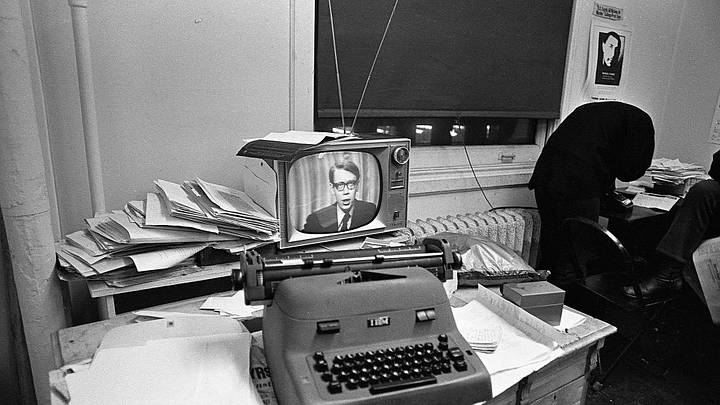
On the subject of sending messages over the airwaves, there was a time when television sets came with movable antennae, Simpsons-style. In the era of smart TVs, though, these have largely become a thing of the past (so no need to wrap your TV aerial in aluminum foil anymore to improve the signal…)
CHANGING TV CHANNELS AT THE SET
Speaking of TVs, although the first commercial television remote control was made available back in 1950, by the 1970s many homes’ television sets still required manual channel-changing—variously achieved by either pressing, turning, or switching a series of (often rather noisy) control buttons or dials on the set itself. The technology might have changed, but we still talk of “tuning in” to television shows today even in the digital age.
APPOINTMENT TV
Digital and cable television, as well as streaming and catch-up services, have also done away with the so-called “appointment TV” era of the past too. There was a time when missing your favorite show meant precisely that—you’d missed your one chance to watch it, and would be left scouring the TV guide for weeks to come hoping to catch a rerun.
TV GUIDE MAGAZINES
With that last one in mind, TV guides are gradually disappearing too. Why pick up a printed magazine listing each and every show when you can watch whatever you want, whenever you want it—or, failing that, just surf the in-build TV guide at the bottom of the screen until you come across something you want to watch.
TELEPHONE DIRECTORIES
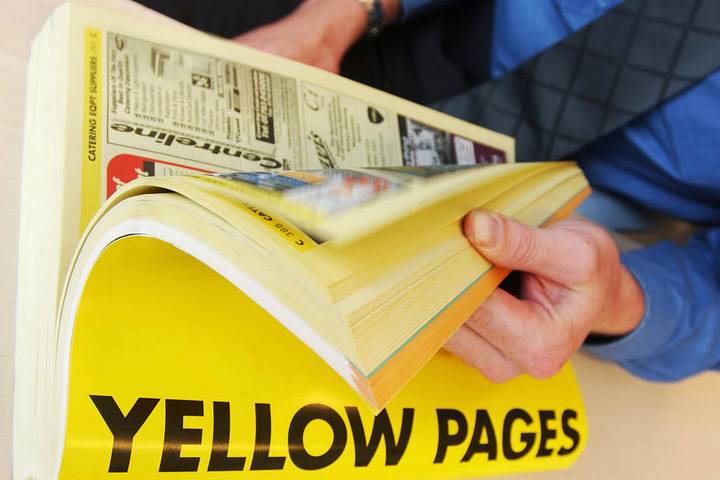
Not that TV shows were the only thing you had to browse by hand in weighty, information-heavy printed guides in the 70s, either. Business directories like the Yellow Pages listed every business in town across hundreds of pages, while the domestic phone directory did precisely that for home addresses. Want to know anything along those lines today, and it’s all online.
ROAD MAPS
Another printed resource that’s all but vanished today are road maps. Once the staple of every long-distance trip, and of every car glove compartment, these are becoming increasingly rare (outside of rural walks and hikes where mobile coverage and internet access might not be guaranteed!)
TRAVELER’S CHECKS
Another vacation staple of the 70s was the traveler’s check, which, unlike cash, had the added safety net of being reimbursable if lost or stolen. Ever more commonplace technologies like credit and debit cards, PIN numbers, and wireless payments have made these once widely used exchanges a thing of the past.
HITCHHIKING
Once a staple of many a cross-country trip (and many a movie based around it), hitchhiking reached peak popularity in the 1960s and 1970s, when someone thumbing a lift (or at least, trying to) was a common sight at practically every highway on-ramp.
SMOKING ON PLANES
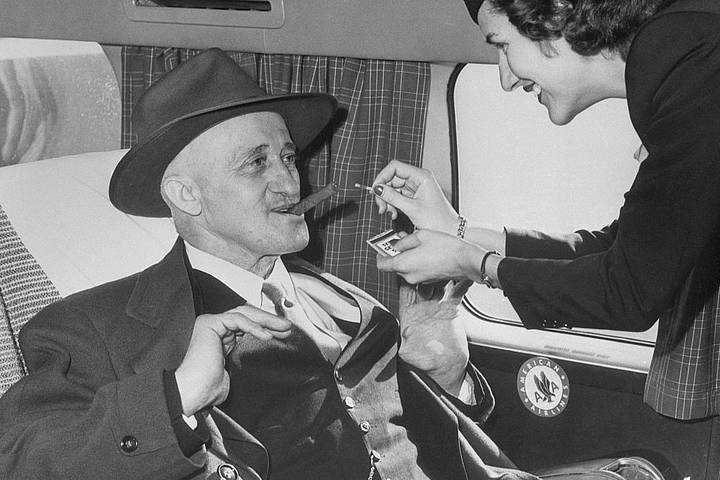
Going on an overseas vacation in the 1970s, meanwhile, often meant enduring the smell of cigarette smoke on the long plane journey too. Not that airplanes were the only place where smoking was once tolerated—back in the seventies, smoking was all but universal, and you’d see people lighting up everywhere from shopping malls to (ironically enough) hospitals.
CIGARETTE VENDING MACHINES
In fact, smoking was once so widespread that these were all but universal too.
CHRISTMAS CATALOG SURFING
Wintertime, of course, means Christmas—and there was a time when Christmas meant perusing department store catalogs and circling everything that you’d like Santa to bring you. (These days, you’re perhaps more likely to drop it all in an online shopping cart and sit back and wait for it to be delivered.)
SEASONAL FRUIT

At the slightly healthier end of the seventies scale, however, the seasonality of fruits, vegetables and other produce was once far more widely followed than it is today. Nowadays, with industrial greenhouses, climate-controlled polytunnels and GM foods engineering ever-hardier varieties, even the softest of summer berries are often still available in the depths of winter.
HAVING NOTHING TO DO (OR ANYTHING TO PLAY WITH)
One of the effects of all this click-and-buy consumerism, however, is that real, genuine downtime seems to be a thing of the past. In an era of endless scrolling, streaming, and messaging, few of us find ourselves without anything to do and end up having to make our own fun armed with whatever toys, paper, and coloring pens we might have once had at our disposal.
Read More:
manual.