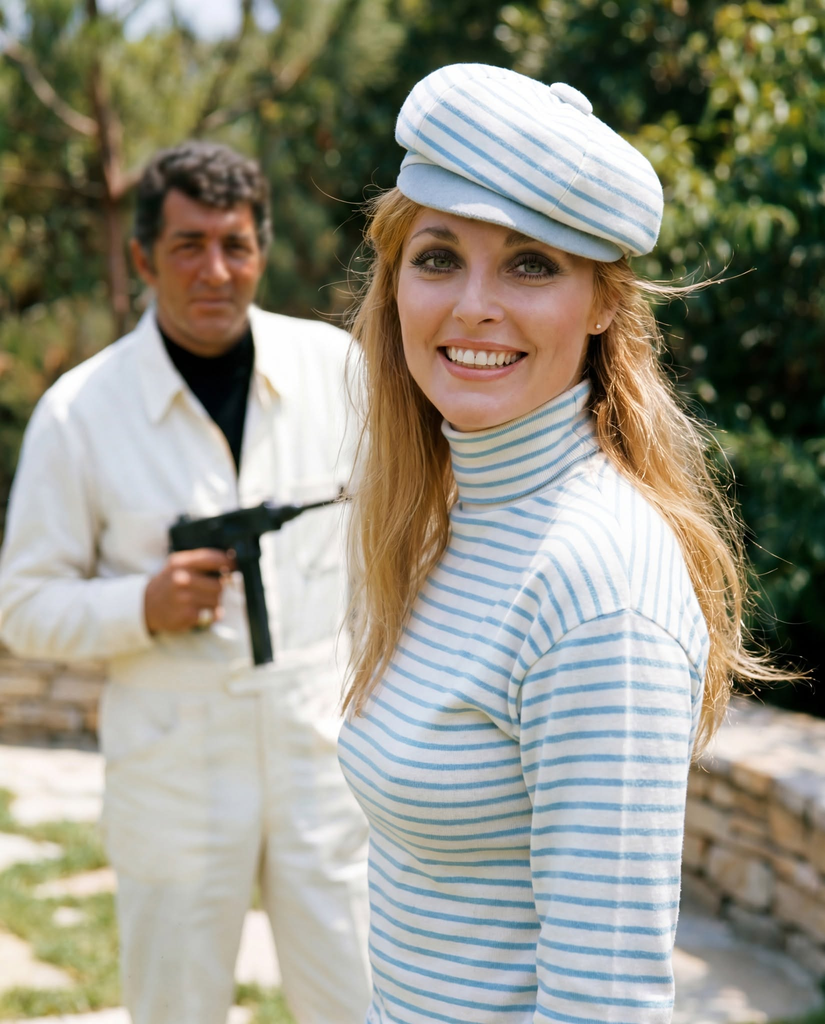

Based on Jacqueline Susann’s best-selling 1966 novel (which sold more than 30 million copies), Valley of the Dolls was a critically maligned film that somehow managed to gross $50 million when it was released 50 years ago, on December 15, 1967. Both the film and the novel focus on three young women—Neely O’Hara (Patty Duke), Jennifer North (Sharon Tate), and Anne Welles (Barbara Parkins)—who navigate the entertainment industry in both New York City and L.A., but end up getting addicted to barbiturates, a.k.a. “dolls.”
Years after its original release, the film became a so-bad-it’s-good classic about the perils of fame. John Williams received his first of 50 Oscar nominations for composing the score. Mark Robson directed it, and he notoriously fired the booze- and drug-addled Judy Garland, who was cast to play aging actress Helen Lawson (Susan Hayward took over), who was supposedly based on Garland. (Garland died on June 22, 1969 from a barbituate overdose.) Two months after Garland’s sudden demise, the Manson Family murdered the very pregnant Tate in August 1969.
Despite all of the glamour depicted in the movie and novel, Susann said, “Valley of the Dolls showed that a woman in a ranch house with three kids had a better life than what happened up there at the top.” A loose sequel, Beyond the Valley of the Dolls—which was written by Roger Ebert—was released in 1970, but it had little to do with the original. In 1981, a TV movie updated the Dolls. Here are 14 deep facts about the iconic guilty pleasure.
1. JACQUELINE SUSANN DIDN’T LIKE THE MOVIE.

To promote the film, the studio hosted a month-long premiere party on a luxury liner. At a screening in Venice, Susann said the film “appalled” her, according to Parkins. She also thought Hollywood “had ruined her book,” and Susann asked to be taken off the boat. At one point she reportedly told Robson directly that she thought the film was “a piece of sh*t.”
2. BARBARA PARKINS WAS “NERVOUS” TO WORK WITH JUDY GARLAND.
Barbara Parkins had only been working with Judy Garland for two days when the legendary actress was fired for not coming out of her dressing room (and possibly being drunk). “I called up Jackie Susann, who I had become close to—I didn’t call up the director strangely enough—and I said, ‘What do I do? I’m nervous about going on the set with Judy Garland and I might get lost in this scene because she knows how to chew up the screen,’” Parkins told Windy City Times. “She said, ‘Honey, just go in there and enjoy her.’ So I went onto the set and Judy came up to me and wrapped her arms around me and said, ‘Oh, baby, let’s just do this scene,’ and she was wonderful.”
3. WILLIAM TRAVILLA BASED THE FILM’S COSTUMES ON THE WOMEN’S LIKES.
Costume designer William Travilla had to assemble 134 outfits for the four leading actresses. “I didn’t have a script so I read the book and then the script once I got one,” he explained of his approach to the film. “I met with the director and producer and asked how they felt about each character and then I met with the girls and asked them what they liked and didn’t like and how they were feeling. Then I sat down with my feelings and captured their feelings, too.”
4. SUSANN THOUGHT GARLAND “GOT RATTLED.”
In an interview with Roger Ebert, Susann offered her thoughts on why Garland was let go. “Everybody keeps asking me why she was fired from the movie, as if it was my fault or something,” she said. “You know what I think went wrong? Here she was, raised in the great tradition of the studio stars, where they make 30 takes of every scene to get it right, and the other girls in the picture were all raised as television actresses. So they’re used to doing it right the first time. Judy just got rattled, that’s all.”
5. PATTY DUKE PARTIALLY BLAMES THE DIRECTOR’S BEHAVIOR FOR GARLAND’S EXIT.
During an event at the Castro Theatre, Duke discussed working with Garland. “The director, who was the meanest son of a bitch I ever met in my life … the director, he kept this icon, this sparrow, waiting and waiting,” Duke said. “She had to come in at 6:30 in the morning and he wouldn’t even plan to get to her until four in the afternoon. She was very down to earth, so she didn’t mind waiting. The director decided that some guy from some delicatessen on 33rd Street should talk to her, and she crumbled. And she was fired. She shouldn’t have been hired in the first place, in my opinion.”
6. DUKE DIDN’T SING NEELY’S SONGS.
All of Neely’s songs in the movie were dubbed, which disappointed Duke. “I knew I couldn’t sing like a trained singer,” she said. “But I thought it was important for Neely maybe to be pretty good in the beginning but the deterioration should be that raw, nerve-ending kind of the thing. And I couldn’t convince the director. They wanted to do a blanket dubbing. It just doesn’t have the passion I wanted it to have.”
7. GARLAND STOLE ONE OF THE MOVIE’S COSTUMES.
Garland got revenge in “taking” the beaded pantsuit she was supposed to wear in the movie, and she was unabashed about it. “Well, about six months later, Judy’s going to open at the Palace,” Duke said. “I went to opening night at the Palace and out she came in her suit from Valley of the Dolls.”
8. A SNEAK PREVIEW OF THE FILM HID THE TITLE.
Fox held a preview screening of the film at San Francisco’s Orpheum Theatre, but the marquee only read “The Biggest Book of the Year.” “And the film was so campy, everyone roared with laughter,” producer David Brown told Vanity Fair. “One patron was so irate he poured his Coke all over Fox president Dick Zanuck in the lobby. And we knew we had a hit. Why? Because of the size of the audience—the book would bring them in.”
9. IT MARKED RICHARD DREYFUSS’S FILM DEBUT.

Richard Dreyfuss made his big-screen debut near the end of Valley of the Dolls, playing an assistant stage manager who knocks on Neely’s door to find her intoxicated. After appearing on several TV shows, this was his first role in a movie, but it was uncredited. That same year, he also had a small role in The Graduate. Dreyfuss told The A.V. Club he was in the best film of 1967 (The Graduate) and the worst (Valley of the Dolls). “But then one day I realized that I had never actually seen Valley of the Dolls all the way through, so I finally did it,” he said. “And I realized that I was in the last 45 seconds of the worst film ever made. And I watched from the beginning with a growing sense of horror. And then I finally heard my line. And I thought, ‘I’ll never work again.’ But I used to make money by betting people about being in the best and worst films of 1967: No one would ever come up with the answer, so I’d make 20 bucks!”
10. THE DIRECTOR DIDN’T DIG TOO DEEP.
In the 2006 documentary Gotta Get Off This Merry Go Round: Sex, Dolls & Showtunes, Barbara Parkins scolded the director for keeping the film’s pill addiction on the surface. “The director never took us aside and said, look this is the effect,” she said. “We didn’t go into depth about it. Now, if you would’ve had a Martin Scorsese come in and direct this film, he would’ve sat you down, he would’ve put you through the whole emotional, physical, mental feeling of what that drug was doing to you. This would’ve been a whole different film. He took us to one, maybe two levels of what it’s like to take pills. The whole thing was to show the bottle and to show the jelly beans kinda going back. That was the important thing for him, not the emotional part.”
11. A STAGE ADAPTATION MADE IT TO OFF-BROADWAY.
In 1995, Los Angeles theater troupe Theatre-A-Go-Go! adapted the movie into a stage play. Kate Flannery, who’d go on to play Meredith Palmer on The Office, portrayed Neely. “Best thing about Valley of the Dolls to make fun of it is to actually just do it,” Flannery said in the Dolls doc. “You don’t need to change anything.” Parkins came to a production and approved of it. Eventually, the play headed to New York in an Off-Broadway version, with Illeana Douglas playing the Jackie Susann reporter role.
12. JACKIE SUSANN BARELY ESCAPED THE MANSON FAMILY.

The night the Manson Family murdered Tate, the actress had invited Susann to her home for a dinner party. According to Vanity Fair, Rex Reed came by The Beverly Hills Hotel, where Susann was staying, and they decided to stay in instead of going to Tate’s. The next day Susann heard about the murder, and cried by the pool. A few years later, when Susann was diagnosed with cancer for the second time, she joked her death would’ve been quicker if she had gone to Tate’s that night.
13. PATTY DUKE LEARNED TO EMBRACE THE FILM.
Of all of the characters in the movie, Duke’s Neely is the most over-the-top. “I used to be embarrassed by it,” Duke said in a 2003 interview. “I used to say very unkind things about it, and through the years there are so many people who have come to me, or written me, or emailed who love it so, that I figured they all can’t be wrong.” She eventually appreciated the camp factor. “I can have fun with that,” she said. “And sometimes when I’m on location, there will be a few people who bring it up, and then we order pizza and rent a VCR and have a Valley night, and it is fabulous.”
14. LEE GRANT DOESN’T THINK IT’S THE WORST MOVIE EVER MADE.
In 2000, Grant, Duke, and Parkins reunited on The View. “It’s the best, funniest, worst movie ever made,” Grant stated. She then mentioned how she and Duke made a movie about killer bees called The Swarm. “Valley of the Dolls was like genius compared to it,” Grant said.
Home/ENTERTAINMENT
Tom Petty’s Favorite (and Least Favorite) Tom Petty Songs
The legend’s top pick from his catalog was not one of his biggest hits.
ByLogan DeLoye|Oct 18, 2026, 2:00 PM EDT
 Add us as a preferred source
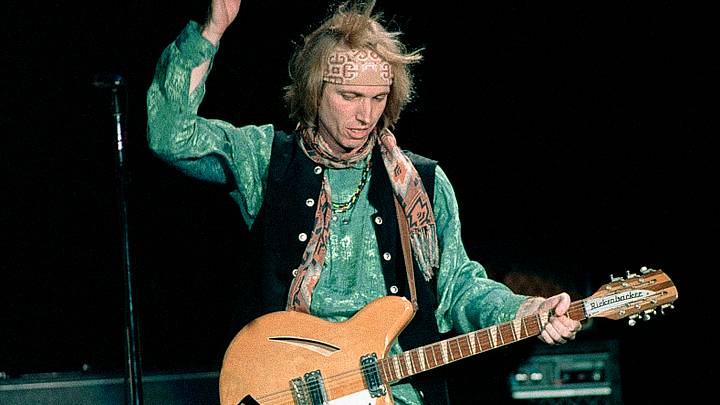
Tom Petty met Elvis Presley when he was just 10 years old, got his first guitar two years later, and the rest is (music) history.
His songwriting was so prolific that millions of listeners found themselves free fallin’, wandering through wildflowers, and dancing with Mary Jane across his catalog. Generations of fans admire the rock ‘n’ roll icon for his talent, collaborative spirit, and his undeniably chill approach to stardom.
Petty rose to fame in 1976 with his debut album, Tom Petty and the Heartbreakers. Throughout his career, he gifted the world 16 studio albums, 13 with his band and three solo projects. His 1981 collaboration with Stevie Nicks landed them near the top of the Billboard charts with “Stop Draggin’ My Heart Around,” four years after his first top 10 hit, “Don’t Do Me Like That.” “Free Fallin’” was the band’s last top 10 hit in 1989.
In the late 1980s, Petty joined the supergroup The Traveling Wilburys alongside Bob Dylan, George Harrison, Jeff Lynne, and Roy Orbison, penning classics like “Handle With Care,” “End of the Line,” “Last Night,” and “Congratulations.”
He was inducted into the Rock and Roll Hall of Fame in 2002 and passed away in 2017 at 66.
The world loves his music, but what were Tom Petty’s favorite (and least favorite) Tom Petty tracks?
“Southern Accents”
In 2002, Petty spoke with the Los Angeles Times about his catalog and named “Southern Accents,” the title track from his 1985 album, as his favorite, citing its connection to his southern roots.
“That may be my favorite among my songs, just in terms of a piece of pure writing. I remember writing it very vividly. It was in the middle of the night, and I was playing it on the piano at home in Encino. I was just singing into my cassette recorder, and suddenly these words came out. I was at the point in my career where I was very much trying to find some new ground. I thought I had used up what I had started with, and I wanted a new direction.”
He also explained how the song tied into his childhood and family life.
“We had lived in California for about 10 years at that point, and I started thinking about growing up in northern Florida, which is a lot different from Miami Beach. It’s close to Georgia, and I came from a real Southern family, and I wanted to address that world. Once I came up with this song, I decided to write an entire album about the theme.”
“Make It Better (Forget About Me)”
Before his passing, Petty sat down with author Paul Zollo for a series of in-depth conversations published in Conversations With Tom Petty in 2020. In one of those chats, Petty was very honest about a song he “hated,” calling it “trash.”
“I hate that song; it’s just trash,” he said, referring to “Make It Better (Forget About Me).” “It was Dave just trying to get me to knock a song out—just write a song for the sake of writing one—and I think that’s what it sounds like to me.”
The track, written in the ‘80s and featured on Southern Accents, only reached number 54 on the Billboard Hot 100.
Read More:
•
8 Hit Songs You Might Not Know Tom Petty Wrote
•
11 Wild Urban Legends Surrounding Popular Songs
Home/ENTERTAINMENT
Quiz: Which ‘Little House on the Prairie’ Character Are You?
Find out which pioneer best matches your personality with this eight-question quiz!
ByNitya Rao|Jul 18, 2026, 8:00 PM EDT
Add us as a preferred source

Before we had the “tradwife” trend, we had Little House on the Prairie, where living off the land was the norm rather than the niche lifestyle it is today. The sweeping plains of Independence, Kansas, from Laura Ingalls Wilder’s original novel to the 2026 Netflix adaptation, remain the same. Yet, somehow, the world was an entirely different place. It was a world where survival required just as much pluck as it did positivity.
In the series premiere, Pa tells Laura that “hope is everything,” a profound sentiment she eventually echoes back to him by the season finale. And while the unpredictability of life on the prairie probably calls for a prayer or two, Ma reminds us that it isn’t always a bad thing. In Episode 4, she insists that “an uncertain life is full of possibilities.”
Maybe you relate to Ma’s realism, or perhaps you’re more like Pa, rose-colored glasses and all. Then there are the Lauras of the world who would rather be traipsing through the tallgrass than thinking about the perplexities of pioneering. Dr. George Tann’s charisma, Mary’s perfectionism, and John Edwards’ mysteriousness fill in the blanks. We may have evolved from bonnets to baseball caps, but each of us has an inner pioneer personality that persists.
Are you ready to find your place within the covered wagon? Take this quiz to discover which Little House on the Prairie character captures your true colors.
Which pioneer mirrors your personality the most? Each and every member of the community is resilient, passionate, and inspiring in their own way. Share this personality quiz with your family and friends to find out if you’re the same Little House on the Prairie character, or if you have the perfect balance of traits to brave the frontier together!
The Evolution of the Little House Legacy
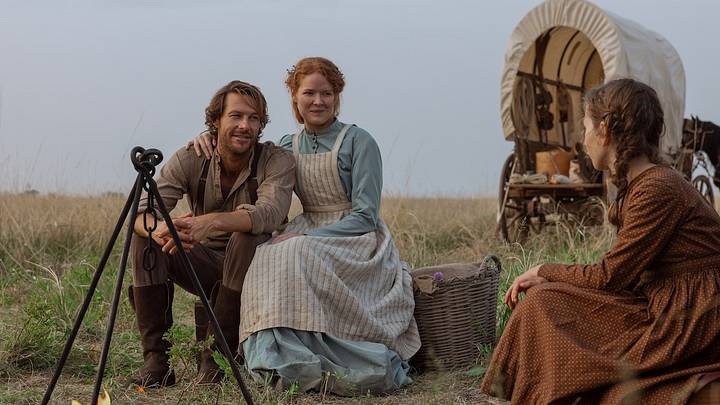
If you were raised on Little House reruns, odds are you have a favorite memory of life on the prairie. But before it became the next big thing to stream, Little House on the Prairie was a product of pen, paper, and fuzzy frontier flashbacks. That was roughly the recipe that Laura Ingalls Wilder used to craft the autobiographical book Little House in the Big Woods in 1932.
It was this coming-of-age tale that gave readers a tiny taste of the family’s cozy yet chaotic world of handcrafted log cabins and homemade maple sugar. Much like the staple pioneer sweet, one bite—and book—simply wasn’t enough. Over nearly a century, that opening chapter spawned eight more original novels, a 1970s TV series, and, most recently, a Netflix series offering a visually richer, realistic take on frontier life.
Along the way, generations of fans hitched their wagons to Laura’s fiery spirit and Mary’s quiet strength, while looking to Ma and Pa as the blueprint for making a house a home. From the page to the screen, this timeline traces the Little House on the Prairie legacy, showing how each installment puts its own spin on the Ingalls saga:
The Original Book Series
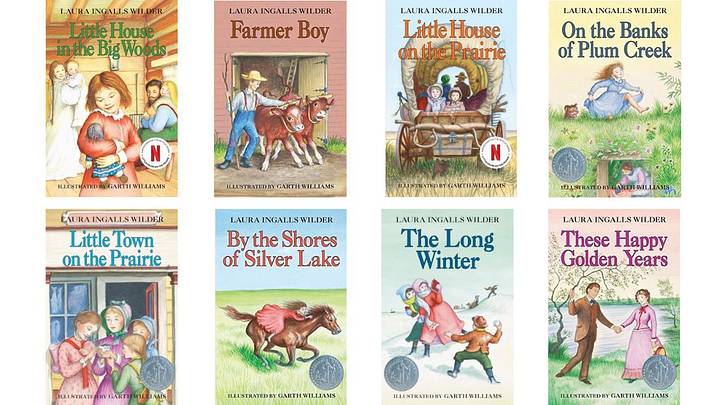
Little House in the Big Woods (1932)
Farmer Boy (1933)
Little House on the Prairie (1935)
On the Banks of Plum Creek (1937)
By the Shores of Silver Lake (1939)
The Long Winter (1940)
Little Town on the Prairie (1941)
These Happy Golden Years (1943)
The First Four Years (1971)
The Screen Adaptations
Little House on the Prairie, NBC Series (1974–1983)
Beyond the Prairie: The True Story of Laura Ingalls Wilder, CBS Movies (2000-2002)
Little House on the Prairie, Disney Miniseries (2005)
Little House on the Prairie, Netflix Series (2026)
We might swap out the actors or change the cinematography, but the heart of the Ingalls family never fails. We keep coming back to them because watchable resilience is rare, whether they’re braving a brutal blizzard or just fighting to keep a roof over their heads. Every reimagining reflects the respective era it was made in, but the overarching theme of holding onto hope through hardship is timeless.
Next: Join Mental Floss’s Geography Quiz Competition
More Personality Quizzes:
•
Quiz: Which ‘Sex and the City’ Character Are You?
•
Quiz: Which Beatles Band Member Are You?
•
Quiz: Which Disney Princess Are You?
•
Quiz: Which Disney Prince Is Your Fairytale Match?
Home/Movie and TV Quizzes
Did Ernest Hemingway Really Say “Write Drunk, Edit Sober”? Uncorking the Truth
Papa loved his rum, but his writing routine was strictly dry. Here’s the real, surprisingly sober story behind the famous quote.
ByNitya Rao|Jul 20, 2026, 2:57 PM EDT
Add us as a preferred source

Casual penman or professional wordsmith, just about everyone has heard the wacky piece of writing advice, “write drunk, edit sober.” Widely believed to be a way of life for American writer Ernest Hemingway, this famous phrase has served as a green light for wetting your whistle before the ink dries on the page for decades.
The idea is intuitive—loosen your inhibitions to let the words flow, then clean it up once the spins stop. But the backstory is anything but, especially regarding who—or even if someone—actually said it in the first place.
Hemingway’s Real-Life Writing Routine
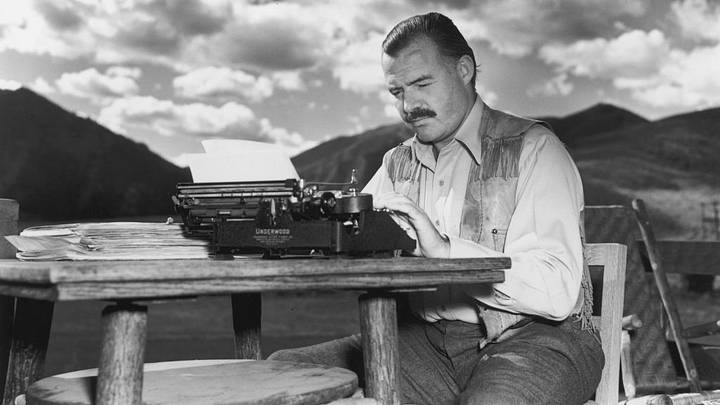
There’s no doubt that Hemingway enjoyed downing a daiquiri or two (or, according to legend, 17 in one sitting). Just as well-known as his works such as The Old Man and the Sea and The Sun Also Rises are his drinking habits, which only got worse after a series of plane and car crashes during his travels. But despite his penchant for adventure and alcohol, Papa was a staunch believer in separating the pen from the pint.
The idea that Hemingway wrote while intoxicated doesn’t hold up to the reality of his actual process. He was undeniably disciplined, waking up before dawn to write while his mind was sharp and, more importantly, sober. He saw writing as a craft that commanded all of his attention, saving his drinking for later on in the day. For Hemingway, a Papa Doble or dry martini was merely a reward once his word count for the morning was met.
His granddaughter, Mariel Hemingway, attests: “He never wrote drunk, he never wrote beyond early, early morning,” she said in an interview. If this is true, then, just how did the edgy quote get attached to his name?
The Faulkner Factor
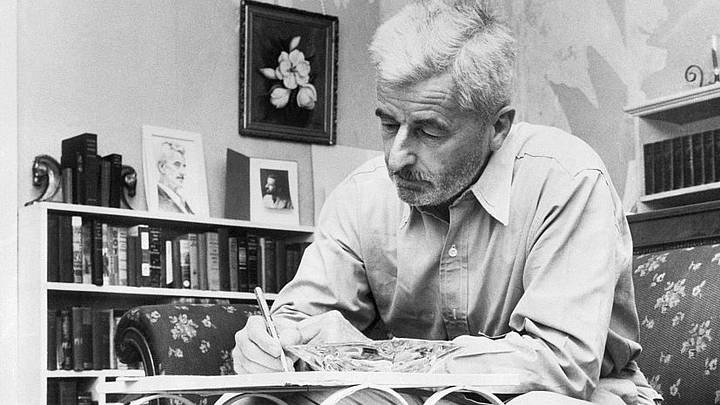
Rivalries didn’t solely reside within Hemingway’s works, but in his real life as well. Throughout his career, the Nobel Prize-winning novelist was pitted against his famous contemporary William Faulkner. The two men critiqued everything about each other, from their contrasting writing styles to their comparable heavy drinking habits.
Not only did Hemingway deny drinking and drafting, but he went so far as to deflect the blame onto his rival. In a Writer’s Digest interview published shortly after his death, Hemingway set the record straight with a sharp retort:
“You’re thinking of Faulkner. He does sometimes—and I can tell right in the middle of a page when he’s had his first one.”
Peter De Vries’ Part
Whether you’re Team Hemingway or Team Faulkner, there’s still no evidence that “write drunk, edit sober” came from either of them. The phrase’s actual roots are entirely fictional.
The quote traces back to a line of dialogue from the 1964 novel Reuben, Reuben by American author Peter De Vries. In the book, a character casually admits: “Sometimes I write drunk and revise sober, and sometimes I write sober and revise drunk.”
Stripped of its backstory, it’s not hard to see why pop culture pins these four words on the talented, albeit tipsy, literary great.
The second half of the quote lends more context to its true meaning: “But you have to have both elements in creation — the Apollonian and the Dionysian, or spontaneity and restraint, emotion and discipline.” Altogether, it’s less of a suggestion and more of an observation on how multifaceted the creative process can be.
Still, Hemingway would agree to disagree. When it came to his typewriter, he knew better than to mix business with booze. Sometimes, a saying survives not because it’s true, but because it’s simply too good a legend to let go.
Next: Join Mental Floss’s Geography Quiz Competition
More Historical Misconceptions:
•
Did Astronaut Jim Lovell Really Say “Houston, We Have a Problem?” Decoding the Real History
•
Did Marie-Antoinette Shout ”Let Them Eat Cake” During the French Revolution? (The Real Story)
•
5 Popular Quotes Commonly Misattributed to Henry David Thoreau
•
4 Popular Quotes Commonly Misattributed to Frida Kahlo
Home/MISCONCEPTIONS
7 Songs You May Not Know Smokey Robinson Wrote
The “King of Motown” was behind major hits by The Supremes, The Temptations, and the Jackson 5.
ByEden Gordon|Jul 28, 2026, 4:00 PM EDT
Add us as a preferred source

Smokey Robinson is one of the best-known figures in R&B. Often referred to as the “King of Motown,” Robinson was the founder and frontman of the group The Miracles. He also served as the vice president of Motown Records for years, and went on to launch a legendary solo music career.
Along the way, Robinson has penned a huge number of major hits for other artists. The artist, who once called songwriting his “gift from God,” has written over 4,000 songs, dozens of which have reached the Billboard Top 40. A member of both the Songwriters Hall of Fame and the Rock ‘n’ Roll Hall of Fame, he has a knack for getting to the heart of the human experience with his songcraft.
“What makes a song is a timeless thing,” Robinson once said. “That’s why I very seldom write songs about dances, cars, or political stuff because all that stuff is passé. What’s here today, politically or with cars or dances may be gone tomorrow. I basically write about love and live things because they are always current.”
Here are seven hit songs you may not know Robinson penned.
- “My Girl” // The Temptations
- “Since I Lost My Baby” // The Temptations
- “Ain’t That Peculiar” // Marvin Gaye
- “Who’s Lovin’ You” // The Jackson 5
- “My Guy” // Mary Wells
- “Don’t Mess With Bill” // The Marvelettes
- “Your Heart Belongs to Me” // The Supremes
“My Girl” // The Temptations
This beloved soul classic has soundtracked countless first dances and sweet moments ever since it was released in 1965. It was written by Smokey Robinson and Ronnie White of The Miracles, and helped The Temptations ascend to pop stardom.
For Robinson, the song was a chance to pay tribute to his wife, Claudette. It was also a response of sorts to “My Guy,” the hit song he had written for Mary Wells.
“We were at the Apollo in New York and Smokey came and ran the track down and we rehearsed it,” Temptations member Otis Williams recalled. ‟At the time when he ran the track down, I said, ‘That sounds like it might be something.’ But it really didn’t hit me until we came all the way home [to Detroit], recorded it, and then Smokey put the strings on it. We sat there listening to the playback, and it really sounded like a No. 1. But, you know, it’s very seldom that you can predict a No.1 tune. But at that time, we really felt it would be more of a record that would be a No. 1 than the songs we had recorded before then. And luckily enough, it was.”
The song was The Temptations’ first single with David Ruffin as lead vocalist, and his tender vocals helped give the song some of its signature warmth. Billboard called the song the 10th biggest hit of the year it came out, and the song has remained in regular rotation ever since.
“Since I Lost My Baby” // The Temptations
Another hit that Robinson wrote for The Temptations was “Since I Lost My Baby,” which was a collaboration between Robinson and Miracles member Pete Moore. The song was the third Temptations track to feature Ruffin on lead vocals.
It was also one of Robinson’s personal favorites. “There’s something about that tune that I just set it aside. It wasn’t the biggest commercially, and I can’t put my finger on what I love about it,” Robinson told Loraine Alterman of the Detroit Free Press after the song’s release. Of course, the song did make some waves on the charts, hitting the Top 20 on the Billboard Hot 100 in 1965.
“Ain’t That Peculiar” // Marvin Gaye
In 1965, Marvin Gaye—himself a consummate songwriter—recorded two songs by Robinson: “I’ll Be Doggone” and “Ain’t That Peculiar.” The latter was written with Pete Moore, Bobby Rogers, and Marv Tarplin, and it tells the story of a heartbreaking relationship seemingly built on more lies than truth. It became a huge hit for Gaye, following in the footsteps of the similarly successful “I’ll Be Doggone” and hitting No. 1 on the Billboard Hot R&B Singles chart that year.
“Who’s Lovin’ You” // The Jackson 5
This song was originally recorded by The Miracles in 1960, but it was famously covered by the Jackson 5 in 1969. In a speech at Michael Jackson’s memorial service in 2009, Robinson recalled the first time he heard the cover.
“Berry (Gordy) had this gathering at his house. He said, ‘Come here, I want you to see somebody very special,’” Robinson recalled. “I went over and these five young guys were there, and they sang and danced up a storm. A couple weeks later they recorded my song. I thought to myself: Now they have pulled a fast one on us, because this boy cannot possibly be 10 years old…I quickly went over to him because I wanted to see his birth certificate. I could not believe that someone that young could have that much feeling and soul. He had to know something to sing a song like that. It was wonderful—as a songwriter that’s a dream come true to have someone sing one of your songs like that.”
“My Guy” // Mary Wells
Just weeks after turning 21 in 1964, Mary Wells’ “My Guy” hit No. 1 on the Billboard Hot 100. The Robinson-penned tune became her biggest hit and cemented Wells’ position as one of Motown’s brightest early stars. The song, which was also produced by Robinson, displaced Louis Armstrong’s “Hello, Dolly!” at the top of the charts, and was replaced two weeks after it hit the top by The Beatles’ “Love Me Do.” The Beatles, as it turned out, were major fans of Wells, and she would later go on to tour with them in the UK.
“My Guy” incorporates a calypso rhythm and also drew melodic inspiration from Eddie Heywood’s 1956 instrumental track “Canadian Sunset.” It also became Motown’s first major hit in England. Wells would go on to leave the Motown label, and her career never quite reached the heights of “My Guy” again, but the song remains a shining achievement.
“Don’t Mess With Bill” // The Marvelettes
The Marvelettes were Motown’s first successful female group, thanks to their 1961 single “Please, Mr. Postman.” But by 1965, they needed another hit—and that came in the form of “Don’t Mess With Bill,” which Robinson wrote for the group. The song rose to No. 7 on the Billboard Hot 100, and featured Wanda Young on lead vocals. Robinson also penned and produced several other songs for the group, including “The Hunter Gets Captured By the Game” and “As Long As I Know He’s Mine.”
“Your Heart Belongs to Me” // The Supremes
The Supremes were Motown’s biggest act of all, and Robinson was key to the group’s rise from the very start, helping them land their first audition for Motown Records while they were still a high school singing group.
Robinson also wrote some big hits for the band, including their very first single, “Your Heart Belongs to Me.” The song hit No. 95 on the pop chart and marked the start of the Supremes’ ascension into the stratosphere. Robinson was also behind some of their other triumphs, including 1971’s “Floy Joy” and “I’ll Try Something New,” which was originally recorded by the Miracles and was later recorded by Diana Ross & The Supremes and The Temptations.
Next: Join Mental Floss’s Geography Quiz Competition
Read More:
•
Frank Sinatra’s Least Favorite Frank Sinatra Songs
•
Quiz: How Many Prince Songs Can You Name From a Single Lyric?
•
Whitney Houston’s Favorite Whitney Houston Song
•
Quiz: Can You Name the Song From Its Opening Lyrics? (1950s Edition)
Home/MUSIC