
ByKathy Benjamin|Apr 6, 2020, 4:00 PM EDT
 Add us as a preferred source

Over a century ago, a deadly flu pandemic swept across the globe. The first cases of the so-called Spanish Flu—named because that’s where early news reports of the disease originated, though research has put its actual origin anywhere from China to Kansas to France—are traditionally dated to Kansas in March 1918. The disease ultimately infected some 500 million people, and estimates put the death toll anywhere from 20 to 50 million. The people on this list contracted the deadly flu and lived to tell the tale.
1. Walt Disney

If Walt Disney hadn’t contracted the flu, we might never have had Mickey Mouse. Even though he was only 16 at the time, Disney lied about his birth year to sign up for the Red Cross Ambulance Corps at the tail end of WWI. Then he got sick. By the time he was ready to ship out, the war was over.
2. Mary Pickford

The silent film star was at the height of her fame when she fell ill; thankfully, Pickford’s bout with the flu was uneventful, but as the disease spread, many movie theaters were forced to close. Irritated theater owners in Los Angeles, claiming they had been singled out, petitioned for all other places that people gathered together (except for grocery stores, meat markets, and drug stores) to be forced to close as well. While stores were not forced to close, schools were and public gatherings were banned.
3. David Lloyd George

Weeks before the end of World War I, Lloyd, Prime Minister of the UK at the time, came very close to dying of the flu. He was confined to his bed for nine days, had to wear a respirator, and was accompanied by a doctor for over a month. Because it was thought that news of the Prime Minister’s illness would hurt the morale of the British people and “encourage the enemy,” his condition was kept mostly hidden from the press.
4. Franklin D. Roosevelt

In 1918, Franklin D. Roosevelt was the Assistant Secretary of the Navy, and had been in Europe for two months before contracting the flu on the boat home. The New York Times described his illness as “a slight attack of pneumonia caused by Spanish influenza.” Roosevelt convalesced at his mother’s New York City home until he was well enough to head back to Washington, D.C.
5. Woodrow Wilson

Considering Woodrow Wilson was president of the United States and he was dealing with the end of WWI, early 1919 was a seriously inconvenient time to get sick. Not only did he get the flu, but he fell ill so violently and so quickly that his doctors were sure he had been poisoned. When Wilson was well enough to rejoin the “Big Three” negotiations a few days later, people commented on how weak and out of it he seemed.
6. Wilhelm II

While the German Kaiser was undoubtedly upset to get sick himself, he had reason to be happy about the flu epidemic, or so he thought. One of his military generals insisted—despite the fact that the surgeon general disagreed—that the illness would decimate the French troops, while leaving the Germans mostly unharmed. Since Germany needed a miracle to win the war, the flu must have seemed like a godsend. In the end, it ravaged all armies pretty much equally, and Germany surrendered.
7. John J. Pershing

While the great American general got sick himself, the flu gave him a much larger problem. His troops were dying at a faster rate from illness than from bullets. Soon there were more than 16,000 cases among U.S. troops in Europe alone. Pershing was forced to ask the government for more than 30 mobile hospitals and 1500 nurses in just over a week.
8. Haile Selassie I

The future emperor of Ethiopia was one of the first Ethiopians to contract the disease. His country was woefully unprepared for the epidemic: There were only four doctors in the capital available to treat patients. Selassie survived, but it’s unknown how many people the flu killed in Ethiopia; it killed 7 percent of the population of neighboring British Somaliland.
9. Leo Szilard

You may not have heard of him, but the atomic scientist Leo Szilard might have saved the world. While he survived the flu during WWI (he was supposedly cured by spending time in a humid room, the standard treatment for respiratory illness at the time), what he should be remembered for is his foresight before WWII. When he and other physicists were discovering different aspects of nuclear fission, he persuaded his colleagues to keep quiet about it, so that the Nazis wouldn’t get any closer to making an atomic bomb.
10. Katherine Anne Porter

The author turned her experience with sickness in 1918 into a short novel called Pale Horse, Pale Rider. The story is told by a woman with the flu who is tended to by a young soldier. While she recovers, he contracts the disease and dies.
11. Alfonso XIII

Alfonso was the King of Spain when the “Spanish” flu hit, and he was not immune to its outbreak. The flu was no worse in Spain than anywhere else, but unlike most journalists in other countries—who were under wartime censorship—the Spanish media actually covered the pandemic, leading to an unfair association that persists to this day.
12. Edvard Munch

Munch, the artist behind The Scream, had an apparent obsession with sickness and death long before he came down with the flu—he painted many works on the subject. But the flu obviously affected him especially: He painted a few self-portraits of both his illness and shortly after his recovery.
13. Lillian Gish

The silent film star started feeling sick during a costume fitting and collapsed with a 104-degree fever when she got home. Fortunately, she could afford a doctor and two nurses to attend to her around the clock. While she recovered, it wasn’t all good news. Gish complained later, “The only disagreeable thing was that it left me with flannel nightgowns—have to wear them all winter—horrible things.”
14. Clementine Churchill

While Winston was in France in 1919, the Churchill household—including his wife Clementine and their nanny Isabelle, who was looking after their young daughter Marigold—contracted the flu. According to Churchill’s daughter Mary Soames, Isabelle grew delirious and took Marigold from her cot despite being sick herself. Clementine grabbed the child and was anxious for days about Marigold’s condition. Isabelle died of the flu, but Clementine and Marigold survived. (Sadly, Marigold would die from a bacterial infection that developed into sepsis in 1921.)
During World War II, Clementine served as a close adviser to Winston. She was also the “Chairman” of the Red Cross Aid to Russia Fund, which raised 8 million pounds during WWII and resulted in her being awarded the Soviet Order of the Red Banner of Labor, being made a Dame, and being given a 19th century glass fruit bowl from Stalin. Churchill’s Chief Staff Officer, General Hastings “Pug” Ismay, would later comment that without Clementine the “history of Winston Churchill and of the world would have been a very different story.”
20 Things Every ’70s Kid Remembers That Have Completely Disappeared
Before smartphones, streaming, and the internet took over, everyday life was filled with simple pleasures and technologies that have all but gone extinct.
ByPaul Anthony Jones|Nov 1, 2026, 8:00 PM EST
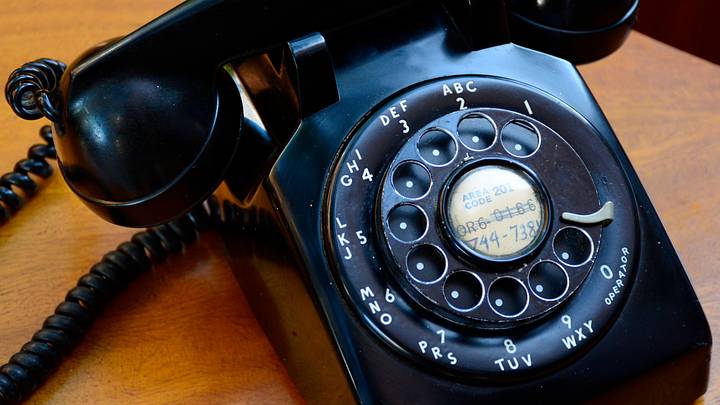
It’s only natural that things change over time, but the pace of change over the last few decades has been head-spinningly quick.
In many ways, that’s made the world easier; staying and getting in touch with people, finding your way around, learning and finding things out, and even shopping and ordering what you want are all now far simpler and more readily available than they were in the past.
But that has had the somewhat less pleasant and more jarring consequence of consigning many of the technologies and experiences of yesterday to history, especially those from the 1970s. Here are 20 that have all but disappeared.
LANDLINE TELEPHONE CORDS
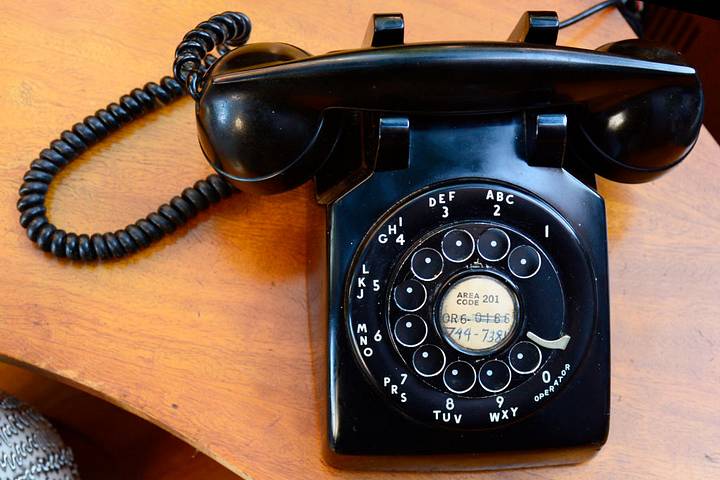
Long before cell phones became a thing, every house had a landline, which was really the only way of keeping in touch with friends and family. Thankfully, the cord on some landline telephones was so long that if you needed a quiet conversation away from your parents, you could take the handset in another room and close the door without stretching it too far.
CALLING THE HOUSE TO SPEAK TO ONE PERSON (WHO MIGHT NOT EVEN BE IN)
Unfortunately, having a landline meant you couldn’t get in touch with one person specifically, but had to call the entire house before narrowing it down to the one member of the household you wanted to reach. (Cue lots of awkward conversations between you and your best friends’ parents—especially if your friend didn’t happen to be in at the time…)
CALL CHARGES
One aspect of the telephones of the past that won’t be missed, however, is the often eye-watering difference between local and long-distance calls. Want to talk to your friend a few streets over? You could talk for hours for a pittance. Want to speak to your aunt or uncle two countries away? Give it ten seconds, tops.
KEEPING THE PHONE OFF THE HOOK
One more telephone-related aspect of the past that’s a little less simple these days? If you didn’t want to be disturbed, you could just take the phone off the hook and be uncontactable for however long you wanted. (These days, the best you can do is a do-not-disturb setting, or just turning your phone off altogether!)
RETURNING REUSABLES (IN EXCHANGE FOR HARD CASH)
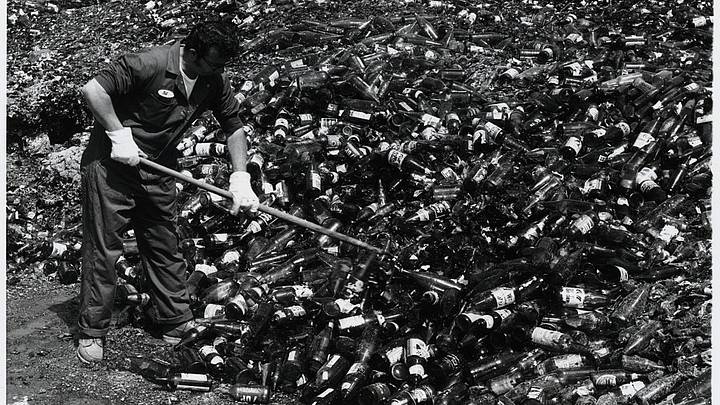
These days, we all have household trash cans for recyclables, and recycling centers will handle most of your reusables cleanly and easily. In the past, though, it wasn’t uncommon for stores and restaurants to have their own in-house schemes for reducing waste, with stores often holding a few cents’ deposit on glass bottles and glasses, or giving a few cents back for returned cans. Some states have taken over these measures themselves, of course, but the days of taking them back to the stores you bought them from are largely long gone.
LASERDISCS
Watching films on discs is by no means anything new—it’s just the DVDs and BluRays of the 21st century are a lot smaller than the LP-sized LaserDiscs of the late 1970s.
CB RADIO SLANG
There was a time when CB radio was so widely used (one in five Americans owned a short-distance radio in the mid 1970s) that the chatter and slang you’d hear over them began to slip into everyday parlance. Whether that’s a “10-4,” a “meat wagon,” or a “good buddy,” many of these snapping turns of phrase have sadly fallen by the wayside.
TV ANTENNAE
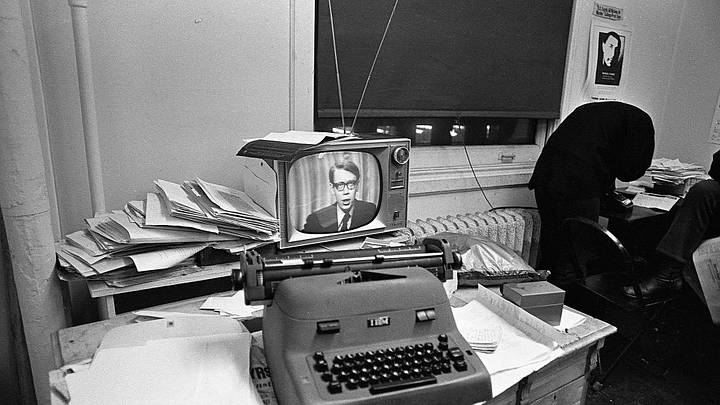
On the subject of sending messages over the airwaves, there was a time when television sets came with movable antennae, Simpsons-style. In the era of smart TVs, though, these have largely become a thing of the past (so no need to wrap your TV aerial in aluminum foil anymore to improve the signal…)
CHANGING TV CHANNELS AT THE SET
Speaking of TVs, although the first commercial television remote control was made available back in 1950, by the 1970s many homes’ television sets still required manual channel-changing—variously achieved by either pressing, turning, or switching a series of (often rather noisy) control buttons or dials on the set itself. The technology might have changed, but we still talk of “tuning in” to television shows today even in the digital age.
APPOINTMENT TV
Digital and cable television, as well as streaming and catch-up services, have also done away with the so-called “appointment TV” era of the past too. There was a time when missing your favorite show meant precisely that—you’d missed your one chance to watch it, and would be left scouring the TV guide for weeks to come hoping to catch a rerun.
TV GUIDE MAGAZINES
With that last one in mind, TV guides are gradually disappearing too. Why pick up a printed magazine listing each and every show when you can watch whatever you want, whenever you want it—or, failing that, just surf the in-build TV guide at the bottom of the screen until you come across something you want to watch.
TELEPHONE DIRECTORIES
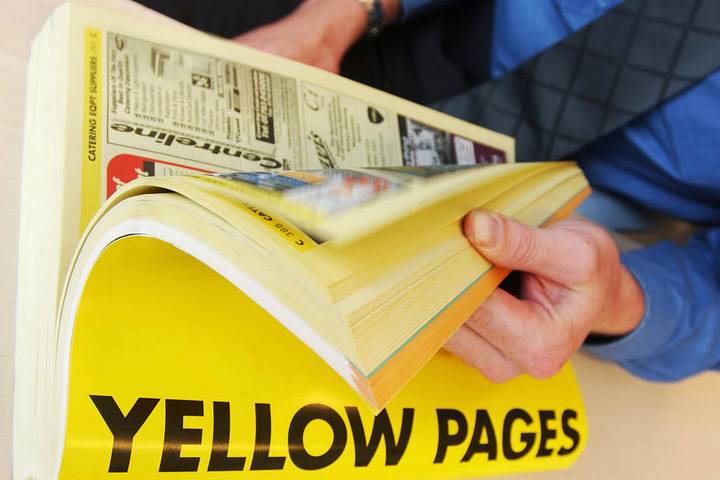
Not that TV shows were the only thing you had to browse by hand in weighty, information-heavy printed guides in the 70s, either. Business directories like the Yellow Pages listed every business in town across hundreds of pages, while the domestic phone directory did precisely that for home addresses. Want to know anything along those lines today, and it’s all online.
ROAD MAPS
Another printed resource that’s all but vanished today are road maps. Once the staple of every long-distance trip, and of every car glove compartment, these are becoming increasingly rare (outside of rural walks and hikes where mobile coverage and internet access might not be guaranteed!)
TRAVELER’S CHECKS
Another vacation staple of the 70s was the traveler’s check, which, unlike cash, had the added safety net of being reimbursable if lost or stolen. Ever more commonplace technologies like credit and debit cards, PIN numbers, and wireless payments have made these once widely used exchanges a thing of the past.
HITCHHIKING
Once a staple of many a cross-country trip (and many a movie based around it), hitchhiking reached peak popularity in the 1960s and 1970s, when someone thumbing a lift (or at least, trying to) was a common sight at practically every highway on-ramp.
SMOKING ON PLANES
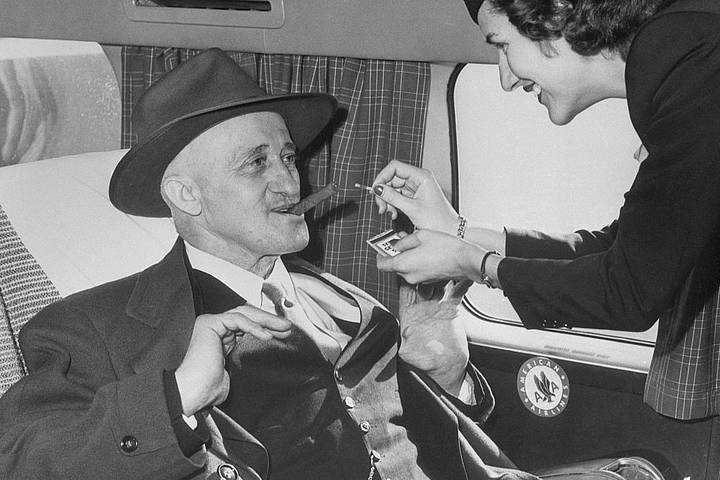
Going on an overseas vacation in the 1970s, meanwhile, often meant enduring the smell of cigarette smoke on the long plane journey too. Not that airplanes were the only place where smoking was once tolerated—back in the seventies, smoking was all but universal, and you’d see people lighting up everywhere from shopping malls to (ironically enough) hospitals.
CIGARETTE VENDING MACHINES
In fact, smoking was once so widespread that these were all but universal too.
CHRISTMAS CATALOG SURFING
Wintertime, of course, means Christmas—and there was a time when Christmas meant perusing department store catalogs and circling everything that you’d like Santa to bring you. (These days, you’re perhaps more likely to drop it all in an online shopping cart and sit back and wait for it to be delivered.)
SEASONAL FRUIT

At the slightly healthier end of the seventies scale, however, the seasonality of fruits, vegetables and other produce was once far more widely followed than it is today. Nowadays, with industrial greenhouses, climate-controlled polytunnels and GM foods engineering ever-hardier varieties, even the softest of summer berries are often still available in the depths of winter.
HAVING NOTHING TO DO (OR ANYTHING TO PLAY WITH)
One of the effects of all this click-and-buy consumerism, however, is that real, genuine downtime seems to be a thing of the past. In an era of endless scrolling, streaming, and messaging, few of us find ourselves without anything to do and end up having to make our own fun armed with whatever toys, paper, and coloring pens we might have once had at our disposal.
Read More:
•
4 Wild Misconceptions About the 1970s
•
The 21 Best Movies of the 1970s
•