
ByRoger Cormier|Mar 22, 2022, 7:50 PM EDT
 Add us as a preferred source
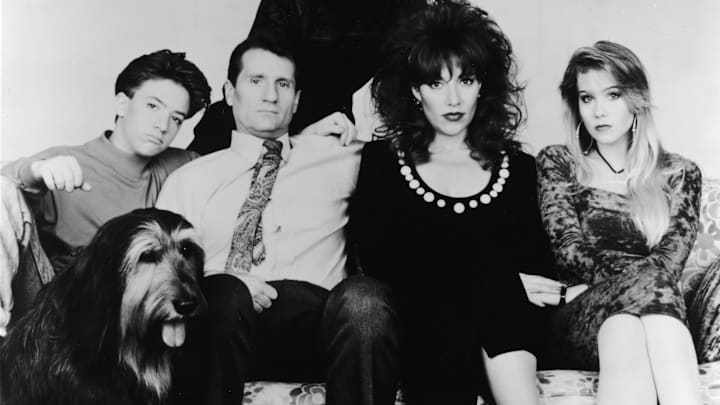
Former Laverne & Shirley and Diff’rent Strokes writers Michael G. Moye and Ron Leavitt were tired of the saccharine family sitcoms of the ’80s. So when given the opportunity to create a brand-new show for the then-brand-new Fox network, the two conceived of a series that went against everything they’d been working on up until then. What began with a working title of Not the Cosbys became Married… with Children. Here are 15 things you might not know about the classic dysfunctional family comedy
1. IT WAS FOX’S FIRST PRIME TIME SHOW.
On Sunday, April 5, 1987, Fox made its primetime debut at 7 p.m. EST with the pilot episode of Married… with Children, which was followed by the series premiere of The Tracey Ullman Show. At 8 p.m., the same two episodes repeated again. And then again at 9 p.m.
2. KELLY AND BUD WERE PLAYED BY DIFFERENT ACTORS IN THE PILOT.
Tina Caspary and Hunter Carson played Kelly and Bud Bundy, respectively, in the unaired pilot, but were replaced by Christina Applegate and David Faustino by the time the series went to air.
3. THE SHOW WAS PITCHED WITH SAM KINISON AS AL AND ROSEANNE BARR AS PEGGY.
Both Kinison and Barr’s managers told Moye, Leavitt, and the other producers that their clients were shooting for the movies, not television.
4. MICHAEL RICHARDS AUDITIONED TO PLAY AL.
Two years before he landed the career-making role of Kramer on Seinfeld, Michael Richards auditioned to play the Bundy family patriarch. Moye estimated that out of the many people who auditioned for the role, “80 percent” played Al like Jackie Gleason as Ralph Kramden and “five percent” went the Jack Nicholson in The Shining route.
5. ED O’NEILL GOT THE AUDITION FROM PLAYING LENNY IN OF MICE AND MEN.
A Fox executive happened to see Ed O’Neill play Lenny at a performance in Hartford, Connecticut and remembered it when they were casting for Al. He won the role at the audition simply by taking a deep breath and slumping his shoulders before he entered the front door, something nobody else did.
6. O’NEILL BASED AL ON SOME FRIENDS AND FAMILY MEMBERS.
Specifically, he based his performance on some uncles and a “crude high school pal.” None of those people were probably able to see his performance at first, because O’Neill’s hometown of Youngstown, Ohio didn’t get the Fox network when the show debuted.
7. THE SHOW BRIEFLY RUINED O’NEILL’S MOVIE CAREER.
O’Neill had to be recast long after the 1991 war film Flight of the Intruder had finished shooting because test audiences kept laughing whenever he appeared on screen, even though he was playing a Navy captain involved in a court-martial.
8. KATEY SAGAL CAME UP WITH PEGGY BUNDY’S STYLE ON HER OWN.
Katey Sagal came into her audition believing Peggy would dress like a former cocktail waitress.
9. THE BUDGET FOR THE FIRST FEW SEASONS WAS TINY.
The budget in the series’ early days was so small that when Buck the dog went on a credit card shopping spree, the big items he purchased were brought in from the homes of the show’s cast and crew. It wasn’t until season three that Katey Sagal got to wear a wig.
10. FOX REFUSED TO AIR ONE EPISODE, AND IT DIDN’T SHOW UP ON AMERICAN TELEVISION UNTIL 2002.
The season three episode “I’ll See You in Court” was deemed too racy to air by Fox in 1989, and it didn’t see the light of day until June 18, 2002 on FX (in edited form). The show was under scrutiny at the time after Michigan housewife (and Mitt Romney’s former sister-in-law) Terry Rakolta started a letter-writing campaign regarding television and decency that got some advertisers to pull their ads from the show.
11. THE WRITERS MADE JEFFERSON D’ARCY INTO A SECRET AGENT AFTER TED MCGINLEY COMPLAINED.
McGinley was upset that he was turned into “such a wuss.”
12. DAVID GARRISON LEFT THE SHOW AFTER SEASON 4 TO RETURN TO LIVE THEATER.
Garrison, who played neighbor Steve Rhoades, would pop up in the series four more times after his official departure, always in a different profession.
13. THERE WERE TWO FAILED SPINOFFS.
Garrison’s last appearance as Steve Rhoades was in the season nine finale “Radio Free Trumaine,” where Steve was suddenly a college dean who makes a mistake expelling some school DJs. It was shopped as a pilot but Fox didn’t pick up the series (despite it co-starring Keri Russell). The season 10 episode “Enemies,” featuring Nicole Eggert, was a low-brow version of Friends that Fox also declined to pick up to series. The spinoff Top of the Heap, starring Matt LeBlanc as one-time Kelly Bundy boyfriend Vinnie Verducci, lasted for six episodes on its own on Fox before being turned into Vinnie & Bobby, which ran for seven episodes in the summer of 1992.
14. ED O’NEILL’S STAR ON THE HOLLYWOOD WALK OF FAME IS IN FRONT OF A SHOE STORE.
He was honored on August 30, 2011 with a star in front of the DSW shoe store on Hollywood Boulevard.
Related Tags
What Is Effective Altruism? The Philosophy That Shaped FTX’s Founder, Explained
The Netflix series ‘The Altruists’ explores how Sam Bankman-Fried, once the poster child for a movement focused on doing good, wound up losing billions of dollars.
ByEden Gordon|Nov 19, 2026, 7:00 PM EST
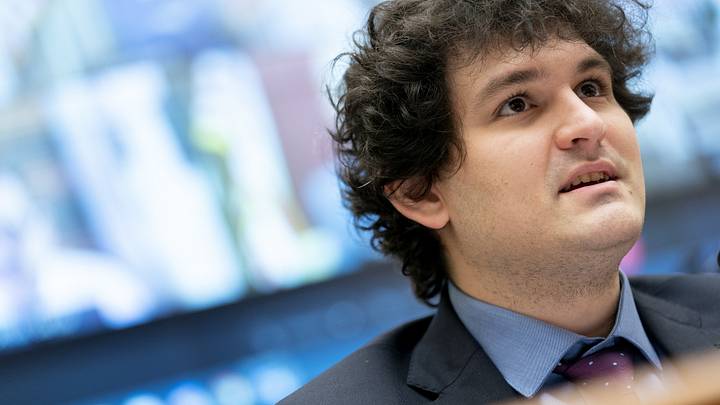
How did an organization whose founder followed a philosophy based on doing the greatest amount of good possible for the world end up in prison for misappropriating billions of dollars of customer funds?
That’s the central question at the heart of The Altruists, the Netflix series that explores the rise and fall of the cryptocurrency exchange company FTX. Before FTX’s collapse, its founder, Sam Bankman-Fried, was a poster child for effective altruism, a philosophy that uses research and evidence to identify the world’s biggest problems and find strategies to solve them.
He openly cited effective altruism as the reason he entered the crypto industry, and had vowed to eventually give away most of his wealth to charity. Yet Bankman-Fried is currently serving a 25-year prison sentence. So how did this all play out, and how did effective altruism influence Bankman-Fried’s actions?
What is effective altruism?

Effective altruism is both a philosophy and social movement. It is based on using reason and logic to identify major global problems and solutions, and helping people to figure out how they can do the most good possible with their lives.
“Effective altruism is about using scientific evidence and careful reasoning to find the best ways to help others, and putting those findings into practice,” reads the program’s website. “It’s both an ongoing research project and a global movement of people working to do good.”
The movement draws much of its inspiration from the philosopher Peter Singer, who has long argued that people have a moral obligation to help people in poverty. It has mobilized billions of dollars in donations over the years. The movement generally encourages people to either dedicate their time or careers to improving specific social issues, or to “earn to give”—making as much money as possible and donating it to charity.
What was Sam Bankman-Fried’s relationship to effective altruism?
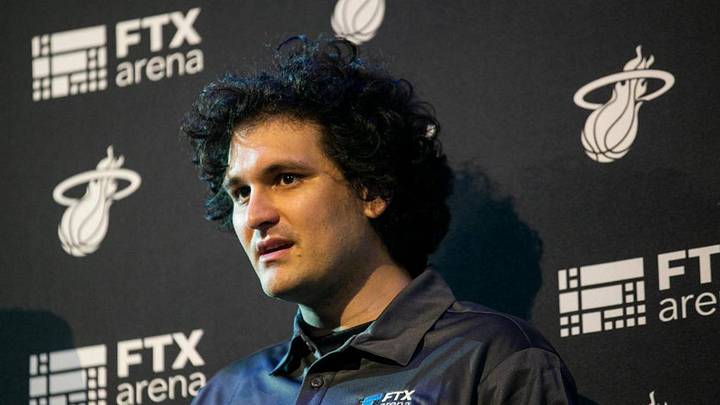
Bankman-Fried was first introduced to effective altruism after meeting William MacAskill, one of the movement’s founders, when he was an MIT undergraduate. Less than a decade later, he had promised to donate the entirety of his net worth—at one point some $26 billion—to charity. Bankman-Fried also publicly said his desire to help as many people as possible through donations drove his decision to take significant financial risks.
FTX’s collapse was devastating for effective altruism proponents and gleefully celebrated by many of its critics. “Bankman-Fried’s behavior went against values central to effective altruism, such as honesty, humility, integrity, and concern for other people,” reads a statement on the Centre for Effective Altruism’s website. “In the years since, leaders in the effective altruism movement have consistently condemned Bankman-Fried’s actions.”
It would be incorrect to say that effective altruism directly caused Bankman-Fried’s actions. Yet his connection to the movement certainly shows the potential pitfalls of fixating on a potential future outcome—no matter how beneficial for the world—while failing to act with integrity in the present.
manual. Read More:
Home/BIG QUESTIONS