The book was published when author Susie Hinton was just a teenager—and her first royalty check amounted to only $12.
ByAli Parr|Jan 26, 2024, 5:06 PM EST
 Add us as a preferred source

The Outsiders, S.E. Hinton’s 1967 coming-of-age novel, is a staple for young readers. Even if you’ve already delved into Ponyboy’s tumultuous adolescence, you can probably still learn something about the young adult classic.
1. S.E. Hinton wrote The Outsiders while she was still in high school
Susan Eloise Hinton was only 15 when she began writing the novel and was just 18 when it was first published. Hinton felt compelled to write after she became frustrated with the lack of relatable pop culture being produced for teenagers at the time. “I’d wanted to read books that showed teenagers outside the life of ‘Mary Jane went to the prom,’” Hinton explained a 1981 interview with Seventeen. “When I couldn’t find any, I decided to write one myself. I created a world with no adult authority figures, where kids lived by their own rules.”
2. Rival gangs at Hinton’s own high school inspired the Socs and the Greasers.
The tense divide between the upper class Socs (pronounced “soashes,” as in social) and the lower class “Greasers” at Hinton’s high school was so bitter that the gangs had to enter through separate doors. Although Hinton was neither a greaser nor a Soc, the book is written from the point of view of the greaser Ponyboy in an effort to humanize the gang. Hinton also refrains from vilifying the Socs, a choice that reflected her belief that things are “rough all over.”
3. It took Hinton a year and a half to write The Outsiders.
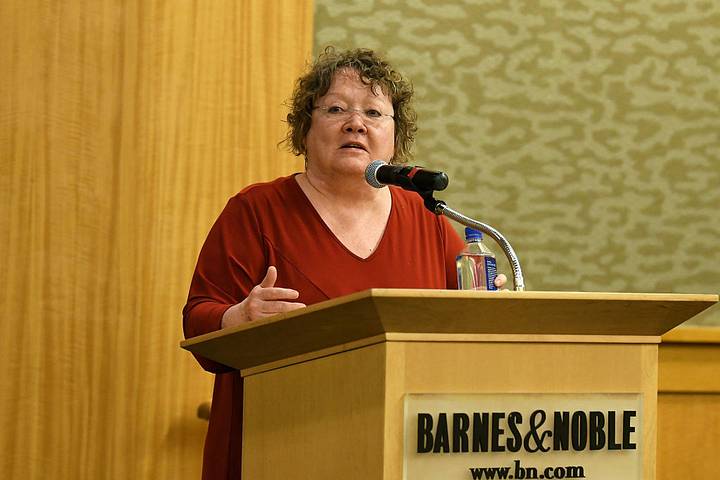
“During that time, I did four complete drafts,” the author said. “The first draft was forty pages; then I just kept rewriting and adding details.” She got a D in her creative writing class that year because she was focused on the novel.
4. Hinton didn’t plan to publish the novel.
Hinton originally wrote The Outsiders primarily for herself, but the mother of one of her friends read a draft and thought that the book deserved a wider audience. The friend’s mother contacted an agent in New York, and soon Viking Press signed Hinton for a $1000 advance.
5. Hinton and Ponyboy have a lot in common.
“Ponyboy Curtis is probably the closest I’ve ever come to putting myself in a book, even down to the physical description,” Hinton once said. “He had my ideas; he had my personality. And he and I both liked sunsets. My mother would yell, ‘Why are you taking so long to get the garbage can back in the house?’ It would be because I was standing outside watching the sun.” Different Sunsets was the original title of The Outsiders, “but I had a wonderful editor, Velma Varner, who thought that title would be too ‘soft’ for the story. I agreed. The Outsiders encompasses so many different levels. I’m glad I changed it.”
6. Hinton used her initials to avoid unfair gender bias.
Viking suggested that Hinton use her initials instead of her full name due to concerns that readers and reviewers alike would automatically dismiss a book about teenage boys written by a teenage girl. The strategy worked, and as Hinton explained on her website, “I found I liked the privacy of having a ‘public’ name and a private one, so it has worked out fine.”
7. There was a reason Hinton wrote for boys.
What drove Hinton to write from a male point of view in the first place? As she explained on her website, the initial choice reflected her own sensibility, but it was also strategic. “I started using male characters just because it was easiest. [I] was a tomboy, most of my close friends were boys, and I figured nobody would believe a girl would know anything about my subject matter. I have kept on using male characters because (1) boys have fewer books written for them, (2) girls will read boys’ books, boys usually won’t read girls’, and (3) it is still the easiest for me.”
8. Hinton’s first royalty check was for just $12.
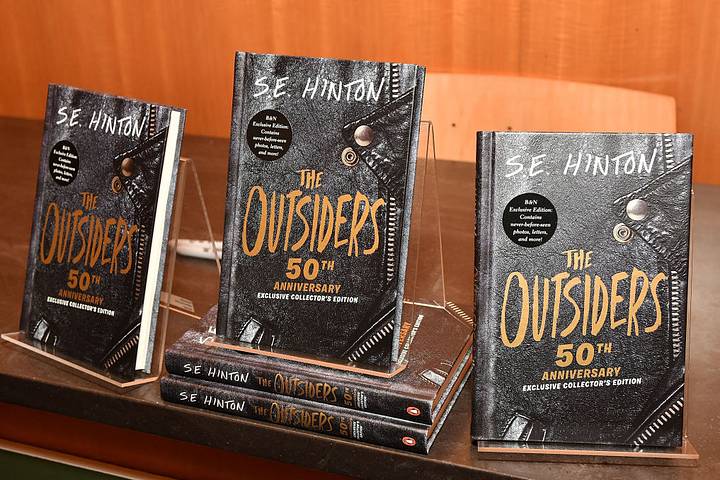
Although The Outsiders would eventually become a huge success, it didn’t fly out of the gate—in fact, Hinton’s first royalty check totaled just $12 (around $31 today). “Even in those days, $12 didn’t get you more than three tanks of gas,” she recalled. The book nearly went out of print before teachers and librarians recognized how much it resonated with young readers. To date, the book has sold more than 15 million copies and been translated into more then 30 languages.
9. The Outsiders helped change the way schools taught literature.
The emergence of an authentic, relatable novel helped teachers reach students who had grown bored with the use of traditional textbooks in English classes. “I remember going to American Library Association conferences and they were clamoring for something different. We realized there was a real market for books such as The Outsiders,” Hinton’s longtime friend Ron Beuhl told USA Today in 2007.
10. Following up such a hit was hard.
The success of The Outsiders put a lot of pressure on Hinton, and the stress initially inhibited her progress on a follow-up book. To combat this writer’s block, her then-boyfriend (and eventual husband) suggested that Hinton write just two pages a day. If she could show him that, he would take her out on a date that evening. It must have worked, because her next novel, That Was Then, This is Now, was released in 1971.
11. Hinton’s fans convinced Francis Ford Coppola to film the novel.
Francis Ford Coppola’s 1983 big screen adaptation of The Outsiders helped spark the “Brat Pack” genre of the 1980s and jumpstarted the careers of “up-and-comers” like C. Thomas Howell, Rob Lowe, Tom Cruise, Emilio Estevez, Matt Dillon, Patrick Swayze, and Diane Lane. But without Hinton’s passionate fans, the director might not have found the project at all. Coppola started considering filming The Outsiders after California high school students sent him a petition nominating him as the perfect director to adapt their favorite novel.
A meeting with Hinton sealed the deal for Coppola. ‘“When I met Susie it was confirmed to me that she was not just a young people’s novelist, but a real American novelist,” the director said in a 1983 interview.
12. Hinton makes a cameo in the film.
Although Hinton didn’t write the screenplay, she remained closely involved in the production by serving as a location scout and even making a small cameo as a nurse. Coppola was so taken with Hinton’s charming storytelling that during filming of The Outsiders he and Hinton collaborated on an adapted screenplay for one of her other books, Rumble Fish. In the aforementioned 1983 interview, Coppola praised the author’s involvement: “Susie was a permanent member of the company. My experience with her made me realize that the notion of having a writer on the set makes a lot of sense.’”
13. It was one of the most frequently challenged books of the 20th century.
Controversial at the time of its publication for its frank portrayal of gang violence, delinquency, underage drinking and smoking, and strong language, the book continues to be challenged. It was ranked no. 38 on the American Library Association’s “Top 100 Most Frequently Challenged Books of the ’90s,” and has even been banned in some schools. Thankfully, the book also has become a part of many schools’ curricula, ensuring that students will be staying gold with Ponyboy for years to come.
14. Hinton explained on Twitter why Johnny and Dally had to die.
The novel’s climax centers on the tragic deaths of Johnny and Dally, two sympathetic Greasers caught up in the gang drama. When asked by a fan on Twitter why they had to die, Hinton showed no mercy: “Because I am a stone cold bitch,” she responded.
15. Hinton is tired of talking about The Outsiders.
As she told Smithsonian.com in 2023, “I am very tired of talking about [it]. I don’t give speeches about it anymore. The thought of getting into it one more time is almost paralyzing. You’re lucky. This may be the last interview on The Outsiders I’ll ever give. … Oh god, for once, I’d like to discuss Rumble Fish.”
A version of this story was published in 2018; it has been updated for 2024.
Related Tags
David Lynch’s Extremely Reliable Daily Routine
The filmmaker’s work was anything but predictable—but his daily habits were the foundation of his frequent creative ventures beyond the edges of ordinary reality.
ByEden Gordon|Nov 3, 2026, 10:00 AM EST
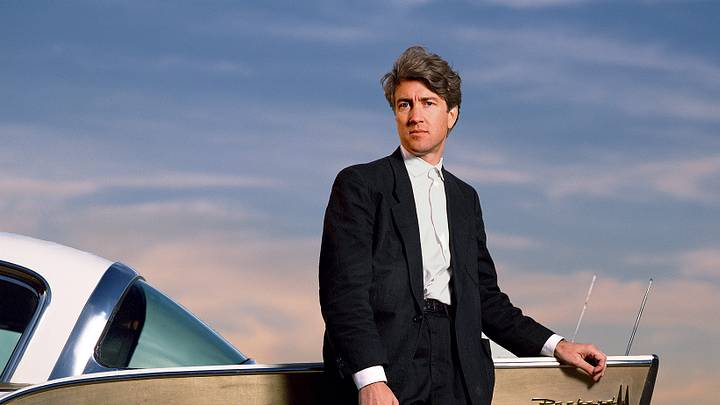
In his work, David Lynch plundered the depths of the bizarre, trawling the underbelly of the American psyche and translating it into dreamlike and disorienting cinema and television. But in his daily life, he made sure his days were as predictable as possible.
The filmmaker behind masterpieces like Twin Peaks and Mulholland Drive relied on daily routines, which allowed his limitless creativity to wander far beyond the edges of what most people could dream up. “If you have a habit pattern,” Lynch told The New Yorker in 2021, “the more conscious part of your mind can concentrate on your work, and you can get ideas and do those things, and the rest sort of takes care of itself in the background.”
David Lynch’s morning ritual: coffee and meditation
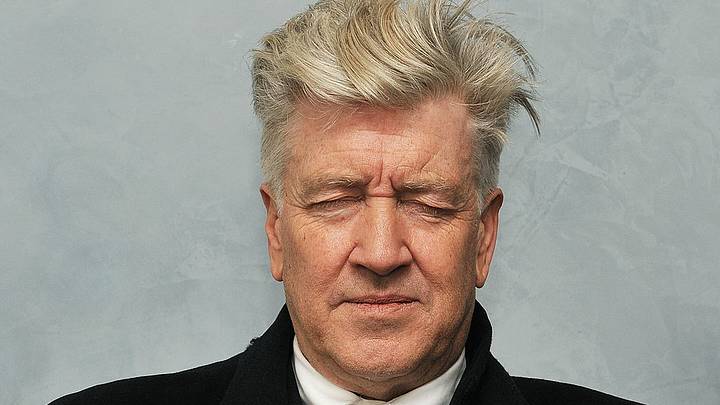
Lynch’s days always began with one thing: coffee. Like Dale Cooper in Twin Peaks, Lynch shared an unshakable love for the stuff, and typically started his days with a cappuccino. “I like to get going with the coffee right away. That’s just the way it is with me,” he shared with Vice in 2020. “You know how in a hospital they put an IV in your arm? I pretty much have a drip going all day long.”
After his first cup of joe, he would sit for meditation—a non-negotiable cornerstone of the filmmaker’s life for decades. Lynch began practicing Transcendental Meditation in 1973 and continued to do so daily until his death in 2025, claiming to have never missed a session. The practice involves sitting for 20 minutes twice a day and mentally reciting a mantra, which is provided by a certified teacher at an official Transcendental Meditation course and kept secret for life.
Lynch was a major advocate for the technique, which he often said was key to his happiness and creativity. The practice inspired his book Catching the Big Fish: Meditation, Consciousness, and Creativity, and in 2005, he established the David Lynch Foundation, which aimed to spread Transcendental Meditation around the world.
After Lynch finished his morning meditation, he’d head to work. That could look quite different each day, depending on whether he was searching for new ideas, filming on set, promoting a film, or something else. Still, no matter what, and even on set, he always made time for his afternoon meditation session.
David Lynch’s eating habits
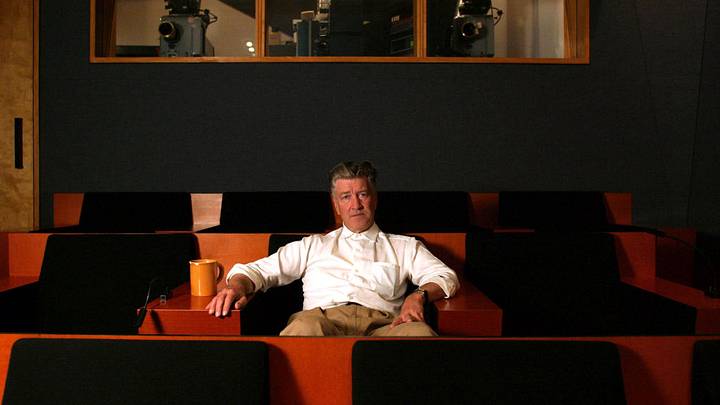
Lynch preferred to eat the same meals many times in a row, and sometimes stuck with one dish for months at a time. After meditating, he would typically have a small breakfast—“either some amrit nectar or a small smoothie with protein powder and blueberries and peaches,” he once shared. In a 1997 interview with Marie Claire, he said that at the time, his favored lunch meal consisted of tomatoes, tuna, feta cheese, and olive oil. For dinner, he cited a preference for chicken and broccoli with soy sauce.
Some food habits endured longer than others. His longest-lasting daily meal, he said, was a Bob’s Big Boy chocolate milkshake, which he had at 2:30 p.m. every day for seven years. He also aimed to eat at the same times every single day, no matter what.
Lynch preferred not to cook at home, however. “I don’t allow cooking in my house. The smell. The smell of cooking—when you have drawings, or even writings— that smell would go all over my work,” he said in a 1990 interview with Time. “So I eat things that you don’t have to light a fire for. Or else I order a pizza. The speed at which I eat it, it doesn’t smell up the place too bad. The smell doesn’t last too long.”
For the filmmaker, routine was the foundation that allowed his creativity to fly as freely as it did. “When there’s some sort of order there, then you’re free to mentally go off any place,” he said in a 2000 interview with the journalist Charlie Rose. “You’ve got a safe sort of foundation and a place to spring off from. It is very important for me [in the creative process]…The purer the environment, the more fantastic the interior world can be, it seems to me.”
manual. Read More: