In Trading Places, millionaires Randolph (Ralph Bellamy) and Mortimer (Don Ameche) Duke can’t agree on the whole nature versus nurture theory. So they decide to bet $1 on it and determine the winner by installing homeless con artist Billy Ray Valentine (Eddie Murphy) in the old job at their firm held by Louis Winthorpe III (Dan Aykroyd), who was set up to lose everything by the Duke brothers.
When the two find out about the bet, they seek revenge. In honor of its 40th anniversary, check out these fun facts about the 1983 comedy classic that helped turn its two lead stars into household names.
1. The idea was inspired by a tennis game.
“There were these two brothers who were both doctors who I would play tennis with on a fairly regular basis, and they were incredibly irritating to play with because they had a major sibling rivalry going, all the time about everything,” screenwriter Timothy Harris told Insider in 2013. He presented the idea of brothers arguing the nature versus nurture debate to his writing partner, Herschel Weingrod, and the two went to work.
2. The screenwriters hung out with drunk traders for research.
“The traders I met and hung out with here in L.A., because it was three hours behind New York, had their happy-hours very early in the day,” Weingrod told NPR in 2013. “You can imagine what they were like by, maybe, 2 p.m.”
3. It was originally a vehicle for Richard Pryor and Gene Wilder, titled Black and White.

Comedian Richard Pryor was originally attached to the project alongside Gene Wilder, but as director John Landis put it, he then “unfortunately set himself on fire.”
4. Landis didn’t know who Eddie Murphy was.

Murphy was still an up-and-coming star when the casting was underway. “48 Hrs. (1982) hadn’t come out yet, but they’d previewed it, and Eddie Murphy had previewed very well, and they thought, ‘Ah, this kid’s going to be a star,’” Landis recalled of his discussions with Paramount Pictures. “So they said, ‘What do you think about Eddie Murphy playing the Billy Ray Valentine part?’ And I of course said, ‘Who’s Eddie Murphy?’”
Bellamy, who played Randolph Duke, remembered a moment on set between himself, Ameche (who played his brother, Mortimer), and Murphy in the makeup trailer on the first morning of shooting. “I said, ‘Why, this is my 72nd movie.’ And Don answers, ‘Why, this is my 56th.’ And Eddie Murphy looks embarrassed and said, ‘Boys, this is my first. Ever.’ It broke everybody up, and the movie became my biggest hit.”
5. Landis also thought Ameche was dead.
Ray Milland (Dial M for Murder) was originally cast as Mortimer, but he didn’t pass the insurance physical. When Landis asked for Don Ameche, he was informed that he had not made a movie in 13 years and he couldn’t be found. “The horrible question was asked, ‘Did he die?’” Landis recalled. Ameche was later found, and held off on agreeing to return to movies until he was paid what Milland had been promised. Two years after Trading Places, Ameche starred in Cocoon (1985) and won an Oscar for his efforts.
6. The co-stars weren’t familiar with each others’ work.

Bellamy and Ameche “cheerfully admitted” they were unfamiliar with Murphy and Aykroyd’s work. The two also said that Murphy and Aykroyd acknowledged that they were unfamiliar with Bellamy and Ameche.
7. Jamie Lee Curtis was a hard sell to the studio.

When it came to casting, Landis ran into some issues, especially for the role of Ophelia. It ultimately went to Jamie Lee Curtis, who was best known for her roles in slasher films like Halloween (1978), The Fog (1980), Prom Night (1980), and Terror Train (1980).
“What really got me in trouble was Jamie Lee Curtis, because up to that point she had only done horror pictures,” Landis said. “But Jamie did a terrific job. She somehow made her part, the hooker with a heart of gold, almost believable!”
8. G. Gordon Liddy almost agreed to play Clarence Beeks.
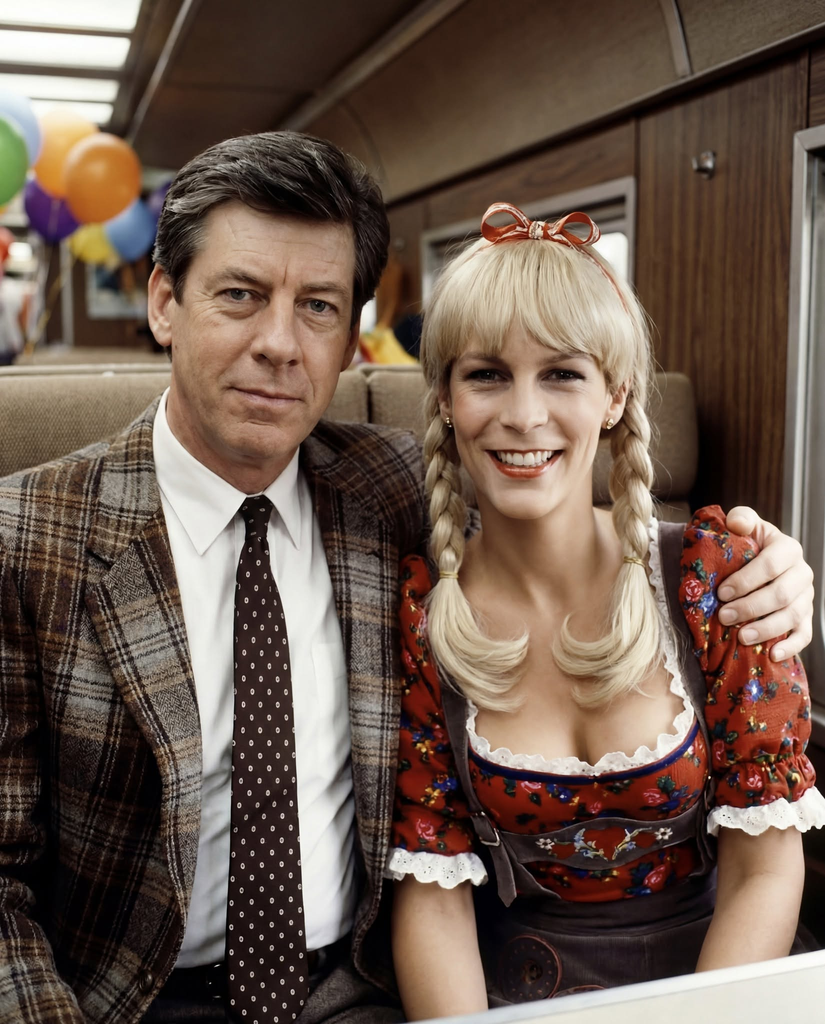
The role eventually went to Paul Gleason (The Breakfast Club) instead, after G. Gordon Liddy allegedly considered playing Clarence until reading the final scene involving his character getting sexually assaulted by a gorilla. In the movie, Beeks reads Liddy’s autobiography Will on the train.
9. It was shot in Philadelphia, New York City, and the U.S. Virgin Islands.
The crew spent 15 days doing exterior shooting in Philadelphia. The city was chosen by Harris because it “has a connection with the founding of the country, the constitution, everybody being entitled to the pursuit of happiness, all the idealism that’s built into America.”
But the interiors of the Duke & Duke office and other Philadelphia locations were shot in New York City. On the last day of production, March 1, 1983, filming concluded on a beach in the U.S. Virgin Islands.
10. Curtis stayed in Marlene Dietrich’s Park Avenue apartment during the shoot.
At the time, Curtis was engaged to Marlene Dietrich’s grandson, production designer J. Michael Riva. The apartment was located at 993 Park Avenue.
11. Breaking Bad’s Gus Frind was one of Murphy’s cellmates in the flick.

Giancarlo Esposito of Breaking Bad fame portrayed the blink-and-you-missed-it role of Cellmate #2 in the comedy hit.
“I was in awe of Eddie Murphy,” Esposito told The AV Club in 2013. “At that time, I was probably a little jealous of Eddie Murphy. Because you work all your early career to be a dramatic actor, and then this guy, a comedian with an affable personality who’s incredibly talented, just shoots right by you to stardom. But that day, we became friends.”
12. There were other interesting cameos.
Bo Diddley played a pawnbroker, Jim Belushi was in the gorilla costume, Al Franken and Tom Davis played baggage handlers, Frank Oz played a police officer, and Kelly Curtis, Jamie Lee’s sister, played “Muffy.”
13. Al Franken still gets paid for his cameo.

In releasing his financial records for 2012, Al Franken revealed he still gets royalties for his appearance as the baggage handler.
14. Aykroyd and Murphy caused billions of dollars in trading to grind to a halt.
Initially, in a shoot where real stock traders performed with some extras at the World Trade Center’s commodity exchange, Comex, Aykroyd and Murphy were supposed to perform on a weekday during actual trading.
According to the studio production notes, the two stars distracted business activities and $6 billion of trading was halted. They then rescheduled to film over the weekend.
15. The Commodity Futures Trading Commission instituted an “Eddie Murphy Rule” in 2010, based on the film’s ending.

In 2010, using misappropriated government information for commodity markets trading was still not technically illegal. The “Eddie Murphy Rule” banning the practice went into effect as part of the Wall Street Transparency and Accountability Act of the Dodd-Frank Wall Street Reform and Consumer Protection Act.
In Trading Places, the Duke brothers used insider info from a not-yet-released USDA report that said orange crops were lowering in value and to focus on buying frozen concentrate orange juice futures. The problem for them was that Aykroyd and Murphy wrote the fake report.
A version of this article was originally published in 2016 and has been updated for 2023.
Related Tags
- FUN
- COMEDY
- WORK
- MOVIES
- FACTS
- NATURE
- PICTURES
- Pop Culture
- CULTURE
- LISTS
Home/ENTERTAINMENT
Did Ernest Hemingway Really Say “Write Drunk, Edit Sober”? Uncorking the Truth
Papa loved his rum, but his writing routine was strictly dry. Here’s the real, surprisingly sober story behind the famous quote.
ByNitya Rao|Jul 20, 2026, 2:57 PM EDT
 Add us as a preferred source

Casual penman or professional wordsmith, just about everyone has heard the wacky piece of writing advice, “write drunk, edit sober.” Widely believed to be a way of life for American writer Ernest Hemingway, this famous phrase has served as a green light for wetting your whistle before the ink dries on the page for decades.
The idea is intuitive—loosen your inhibitions to let the words flow, then clean it up once the spins stop. But the backstory is anything but, especially regarding who—or even if someone—actually said it in the first place.
Hemingway’s Real-Life Writing Routine
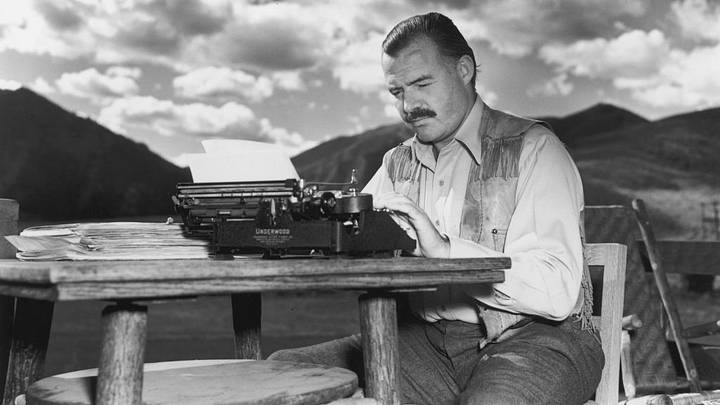
There’s no doubt that Hemingway enjoyed downing a daiquiri or two (or, according to legend, 17 in one sitting). Just as well-known as his works such as The Old Man and the Sea and The Sun Also Rises are his drinking habits, which only got worse after a series of plane and car crashes during his travels. But despite his penchant for adventure and alcohol, Papa was a staunch believer in separating the pen from the pint.
The idea that Hemingway wrote while intoxicated doesn’t hold up to the reality of his actual process. He was undeniably disciplined, waking up before dawn to write while his mind was sharp and, more importantly, sober. He saw writing as a craft that commanded all of his attention, saving his drinking for later on in the day. For Hemingway, a Papa Doble or dry martini was merely a reward once his word count for the morning was met.
His granddaughter, Mariel Hemingway, attests: “He never wrote drunk, he never wrote beyond early, early morning,” she said in an interview. If this is true, then, just how did the edgy quote get attached to his name?
The Faulkner Factor
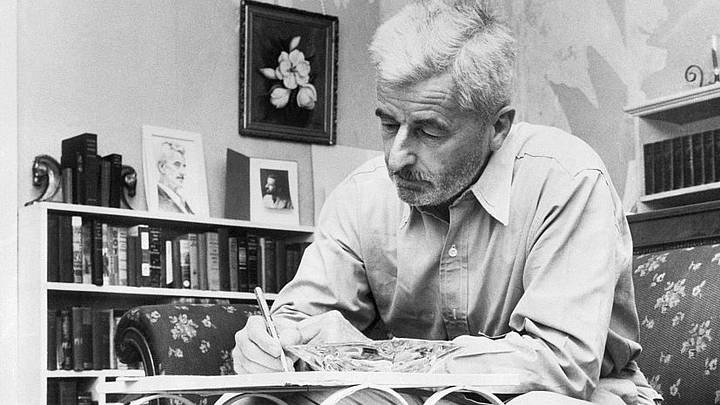
Rivalries didn’t solely reside within Hemingway’s works, but in his real life as well. Throughout his career, the Nobel Prize-winning novelist was pitted against his famous contemporary William Faulkner. The two men critiqued everything about each other, from their contrasting writing styles to their comparable heavy drinking habits.
Not only did Hemingway deny drinking and drafting, but he went so far as to deflect the blame onto his rival. In a Writer’s Digest interview published shortly after his death, Hemingway set the record straight with a sharp retort:
“You’re thinking of Faulkner. He does sometimes—and I can tell right in the middle of a page when he’s had his first one.”
Peter De Vries’ Part
Whether you’re Team Hemingway or Team Faulkner, there’s still no evidence that “write drunk, edit sober” came from either of them. The phrase’s actual roots are entirely fictional.
The quote traces back to a line of dialogue from the 1964 novel Reuben, Reuben by American author Peter De Vries. In the book, a character casually admits: “Sometimes I write drunk and revise sober, and sometimes I write sober and revise drunk.”
Stripped of its backstory, it’s not hard to see why pop culture pins these four words on the talented, albeit tipsy, literary great.
The second half of the quote lends more context to its true meaning: “But you have to have both elements in creation — the Apollonian and the Dionysian, or spontaneity and restraint, emotion and discipline.” Altogether, it’s less of a suggestion and more of an observation on how multifaceted the creative process can be.
Still, Hemingway would agree to disagree. When it came to his typewriter, he knew better than to mix business with booze. Sometimes, a saying survives not because it’s true, but because it’s simply too good a legend to let go.
Next: Join Mental Floss’s Geography Quiz Competition
More Historical Misconceptions:
•
Did Astronaut Jim Lovell Really Say “Houston, We Have a Problem?” Decoding the Real History
•
Did Marie-Antoinette Shout ”Let Them Eat Cake” During the French Revolution? (The Real Story)
•
5 Popular Quotes Commonly Misattributed to Henry David Thoreau
•
4 Popular Quotes Commonly Misattributed to Frida Kahlo
Home/MISCONCEPTIONS