
If Are You Afraid of the Dark? was a way station for future stars on the road to fame, The Adventures of Pete & Pete, which ran from 1993 to 1996, was more of a fun side gig for those who had already made it. Below are 15 famous folks that you probably forgot guest-starred on the Nickelodeon series. (Or had no idea guest starred, because you were in elementary school when the show premiered.)
1. Steve Buscemi
The future Boardwalk Empire star had a recurring role as Mr. Hickle, dad of Big Pete’s best friend Ellen, and appeared in three episodes: 1993’s “Apocalypse Pete,” 1994’s “X=Why?” and 1996’s “Space, Geeks, and Johnny Unitas.” At the time, Buscemi was already an established indie movie star, who had risen to fame playing Mr. Pink in Quentin Tarantino’s 1992 film, Reservoir Dogs.
2. LL Cool J
In Season Two, Episode 10, Little Pete decides to fake a case of food poisoning, and the grownups at his school—including his homeroom teacher, played by LL Cool J—act like they won the lottery. By the time he appeared on the show in 1994, the rapper (real name: James Todd Smith) was a multi-platinum selling artist, widely considered to be one of hip-hop’s first acts to cross into the mainstream.
3. Richard Edson
Character actor Edson, who has more than 100 credits to his name, was also Sonic Youth’s first drummer. To young audiences watching 1993’s “Valentine’s Day Massacre,” in which older Pete develops a crush on his math teacher, he was just a wacky janitor, but at the time, grownups watching probably recognized him as Vito from 1989’s Do the Right Thing and the parking garage attendant from Ferris Bueller’s Day Off.
4. Chris Elliott
The Saturday Night Live and Groundhog Day star played a meter man who can see the future. In 1994’s “Sick Day,” he swings by the Wrigleys’ house to get a reading and comments on the Eisenhower marshmallow stuck up younger Pete’s nose.
5. Gordon Gano
A singer and guitarist for the Violent Femmes, Gano guested as a teacher at Ellen and Big Pete’s high school in 1994’s “X=Why?” Gano’s big break had happened more than a decade earlier with the release of the Violent Femmes’ self-titled album. That record included a little tune called “Blister in the Sun.”
6. Janeane Garofalo
Garofalo also appeared in “X=Why?,” as an English teacher who calls Steve Buscemi—er, Mr. Hickle—in a rage after Ellen asks her why they they have to learn “any of this stuff.” Like Elliott, Garofalo was already a pretty well-respected comedian. She had starred on The Ben Stiller Show, and would join Saturday Night Live and appear in Reality Bites the same year her Pete & Pete episode aired.
7. Debbie Harry
The ’70s rock legend and Blondie frontwoman pops up as one of the Wrigley family’s neighbors in 1993’s “New Year’s Pete.” Big and Little Pete try to convince her to let them sweep her yard for land mines.
8. Patty Hearst
While their parents are out of town in 1996’s “35 Hours,” Pete and Pete accidentally sell their house to John Waters pal, Cry-Baby star, and kidnapping victim Patty Hearst. Oops.
9. Luscious Jackson
If the band on stage at younger Pete’s middle school dance looked familiar, that’s because they were ‘90s alt-rockers Luscious Jackson. Although their biggest hit, “Naked Eye,” was still a year away at the time of their 1996 “Dance Fever” cameo, the group had already appeared at Lollapalooza, been featured on the Clueless soundtrack, and were musical guests on Saturday Night Live and House of Style. (Fun fact: Member Kate Schellenbach was the original drummer for the Beastie Boys.)
10. John McLaughlin
When Dad’s bowling ball is up for grabs, the uncompromising political commentator, playing himself, shows up to voice his support for Big Pete’s bid in 1994’s “When Petes Collide.” It makes sense, given that McLaughlin had been tackling the important issues of the day on his show, The McLaughlin Group, since 1982.
11. Bebe Neuwirth
The Broadway star and Cheers alumna—she played Frasier’s wife, Dr. Lilith Sternin—was featured in two episodes, 1994’s “The Call” and “Sick Day,” as an observant Wellsville mail carrier, who keeps a recorder with her at all times in order to take note of the things she sees on her route.
12. Kate Pierson
Pierson, singer for the B-52s, has a cameo as an eccentric millionaire who helps the boys figure out what happened to Mr. Tastee in 1993’s “What We Did On Our Summer Vacation.” Offscreen, Pierson and her band were credited with helping start rock’s new wave movement. In fact, in a 1980 interview with Rolling Stone, John Lennon says the group’s hit “Rock Lobster” inspired him to get back in the studio.
13. Iggy Pop
The legendary punk rocker appears in several episodes as James “Pop” Mecklenburg—dad to the cast-wearing Nona, who is Little Pete’s best friend. The Stooges frontman (and pal of David Bowie) was featured in 1994’s “Halloweenie” and “Farewell, My Little Viking,” 1995’s “Road Warrior,” and 1996’s “Dance Fever.”
14. Michael Stipe
After Mr. Tastee disappears, R.E.M.’s Stipe plays a cranky old fisherman peddling sludgesicles to the children of Wellsville in 1993’s “What We Did On Our Summer Vacation.” At the time, his band was enjoying massive critical and commercial success, thanks to 1991’s Out of Time and 1992’s Automatic for the People.
15. Adam West
Exhibit 489,809 that Pete & Pete was the coolest show ever: Batman played Little Pete’s killjoy principal in 1995’s “Last Laugh” and “Allnighter.”
Related Tags
- SCHOOL
- FUN
- DANCE
- Pop Culture
- LISTS
- CULTURE
- FOOD
- CELEBRITIES
- TELEVISION
- SPACE
The Bizarre Pay-Per-View Séance That Claimed to Contact Princess Diana
Much attention has been placed on Princess Diana’s extraordinary life and tragic death. But a group of psychics decided to explore her afterlife onscreen in 2003.
ByMeagan Bojarski|Oct 19, 2026, 6:00 PM EDT
 Add us as a preferred source
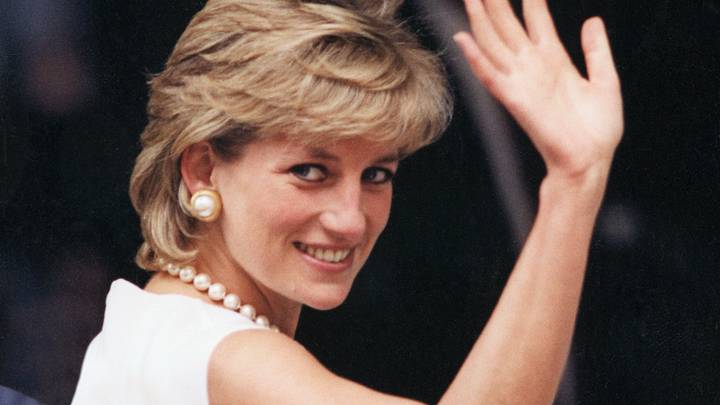
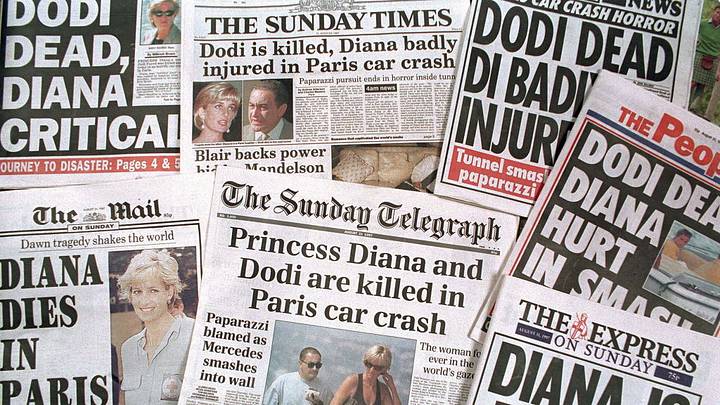
Next year will mark 30 years since the tragic death of “the people’s princess,” Diana Spencer. Her death has been the subject of documentaries and conspiracy theories for decades, but it is gaining renewed attention thanks to her brother’s recent book, Swan Song: Diana, My Sister, and an upcoming series from Prime Video titled Diana: Her Secret Confessions.
While she was internationally celebrated during her lifetime, her years of humanitarian work and compassion have now been largely overshadowed by the events of her death and the questions about what caused it. With that in mind, it isn’t surprising that people would turn to unconventional methods to seek answers. However, two purported mediums—Craig and Jane Hamilton-Parker—took this phenomenon to another level with the 2003 television special, The Spirit of Diana.
What was The Spirit of Diana?
The Spirit of Diana was an internationally televised event where multiple self-identified psychics and spiritual guides attempted to contact Princess Diana’s ghost. The first third of the program functioned as a documentary, with interviews from her biographer Andrew Morton, her boyfriend’s father, Mohamed al-Fayed, and multiple spiritual advisors that Diana consulted in the last few years of her life. From there, the special took a decidedly paranormal turn as Craig and Jane Hamilton-Parker retraced the route Diana and Dodi traveled in the lead-up to their accident, claimed to sense what each person’s last thoughts had been, and then held two live séances and one channeling session.
According to Craig Hamilton-Parker, these spiritual encounters were agreed upon before filming, as he reported Diana’s spirit telling him, “Yes, I’ll do this with you. I’ll be there.” During the séances, the producers gathered groups of people who had known Diana in life, and the mediums seemingly provided information that only Diana could have known. The channeling was more detached, as none of the witnesses had personally known Diana, and the psychic, Patricia Bankins, was reportedly channeling her own spiritual guide, not Diana herself.
Still, the various psychics claimed to provide answers to many of the biggest questions surrounding Diana’s life. In the first séance, Jane Hamilton-Parker spoke for Diana, claiming that she truly did love Dodi Fayed and that she told them, “All I wanted was a man to walk beside me who loved me.” When asked whether her death was an accident or not, Craig Hamilton-Parker claimed that—whether it was staged or not—Diana thought people should move past it. He claimed that Diana’s primary reason for speaking with them was to get the message to William and Harry that “Mum’s alright” and that she loved them.
The channeling was more of a Q&A session than the more social séances, and claimed to provide direct answers to some of the biggest unanswered questions that remained. Patricia Bankins’s spiritual guide portrayed then-Prince Charles as a man who had been unable to properly love his wife, and Dr. Hasnat Khan as a love in Diana’s life but not the love of her life. Fayed received the most attention, with claims that he had been with Diana in a past life and that he was destined to be with her in the afterlife, but the spirit admitted that they likely would not have stayed together if they had survived.
The special debuted on March 9, 2003, and was shown on US pay-per-view for $14.95 and on the cable channel LivingTV in the United Kingdom. However, the UK broadcast cut many of the special’s most significant scenes, because the séances were too controversial to pass Britain’s Independent Television Commission guidelines.
Diana’s History with Psychics
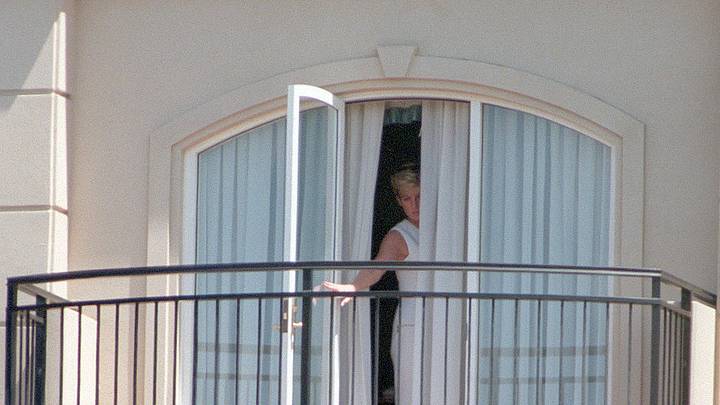
Perhaps there is reason to believe that, if a spirit can contact a medium from the other side, Princess Diana’s would have done so. She was known to believe in the supernatural and spoke with many spiritual advisors in the last decade of her life. According to those interviewed in The Spirit of Diana, she even claimed to be able to heal others with her touch and predict impending tragedies.
Her interest in the paranormal likely began in 1986, when Andrew Mountbatten-Windsor and his then-wife Sarah Ferguson introduced Diana to an astrologer. According to biographer Andrew Morton, Diana was eager to believe that there was a plan for her life, and became a patron of a number of psychics and spiritual healers. While some in her life, including Prince Charles, saw this reliance on New Age spiritualists as an embarrassment, others saw it as a potential danger, as there were several frauds who exploited her unhappiness and fueled her paranoia.
The most prominent of her spiritual consultants was Rita Rogers, who Diana had visited only weeks before her death. Rogers herself claimed to have initially predicted Diana’s relationship with Dodi, adding that she warned that he might be involved in a terrible car accident that would take place in a tunnel in Paris. However, she never saw anything to suggest that Diana would even be in the car, much less die there. Still, when Diana called her from Paris mere hours before the fatal collision, Rogers warned the princess to leave Paris right away. She found out about her friend’s death the next morning.
Since then, Rogers has claimed to feel Diana’s presence around her from time to time, as has her former butler, Paul Burrell. Prince Harry has also openly discussed his own spiritual encounters, including an incident with a leopard and at least one consultation with a medium. The woman reassured him that Diana was watching over him, mentioning a Christmas ornament that his son Archie had recently broken as proof that she really was communicating with Diana’s spirit.
Public Criticism for the Séances
Over the years, many people have criticized The Spirit of Diana for being exploitative, using a woman’s tragic death as a way to make a quick buck. The fact that it was a paid program in the United States only added to that impression, as pay-per-view was primarily associated with sporting events and pornography at the time. However, the people involved in the project have continued to stand by their product.
In a follow-up video released on September 22, 2026, Craig Hamilton-Parker claimed that the project was never intended to cause harm. The producers had heard about a consultation he had done with one of Princess Diana’s friends shortly after her death, he said, which prompted them to reach out. They wanted to prove that there was some form of life after death, and they felt Diana was a good subject due to her own history of spiritual exploration. While Hamilton-Parker admitted that there were some moments that were probably in bad taste, he generally felt it was successful, and he even provided some new predictions about Prince Harry and his wife Meghan.
Ultimately, most complaints were about how the money made off of Diana’s death would be used. Despite the uproar, The Spirit of Diana was estimated to have earned a gross revenue of $8 million, prompting the producers to create The Spirit of John Lennon three years later. However, Hamilton-Parker claimed that the psychics weren’t paid beyond their expenses and that all profits were donated to the Prince’s Trust (now the King’s Trust), a charitable organization that provides funding and training for young people trying to find jobs and start businesses.
Like Diana’s death itself, there will likely always be questions about the production of The Spirit of Diana. What gave these psychics the right to speak for Diana in the public sphere? What non-monetary benefits did they receive for leading the séances? Perhaps most importantly, why would Diana choose to share her thoughts through a tacky, pay-per-view special when she clearly had friends and family members that were already seeking her out in other ways?
Perhaps she truly believed that these mediums could give her children the reassurances that she couldn’t. It’s impossible to know if the princes ever sought it out. The Spirit of Diana was not the first celebrity séance, and it will undoubtedly not be the last. Until the matter of the afterlife is more firmly settled, it will have to be a personal choice to see these attempted séances as purely exploitative or as a genuine way to provide comfort to the grieving.
Read More:
•
When Mary Todd Lincoln Held Séances in the White House
•
8 Notorious Séances Involving Celebrities
•
5 Things Princess Diana Loved That Might Surprise You
•
8 Famous Figures, Past and Present, Who Claimed to Have Encountered Ghosts
Home/HISTORY
Did Ernest Hemingway Really Say “Write Drunk, Edit Sober”? Uncorking the Truth
Papa loved his rum, but his writing routine was strictly dry. Here’s the real, surprisingly sober story behind the famous quote.
ByNitya Rao|Jul 20, 2026, 2:57 PM EDT
Add us as a preferred source

Casual penman or professional wordsmith, just about everyone has heard the wacky piece of writing advice, “write drunk, edit sober.” Widely believed to be a way of life for American writer Ernest Hemingway, this famous phrase has served as a green light for wetting your whistle before the ink dries on the page for decades.
The idea is intuitive—loosen your inhibitions to let the words flow, then clean it up once the spins stop. But the backstory is anything but, especially regarding who—or even if someone—actually said it in the first place.
Hemingway’s Real-Life Writing Routine
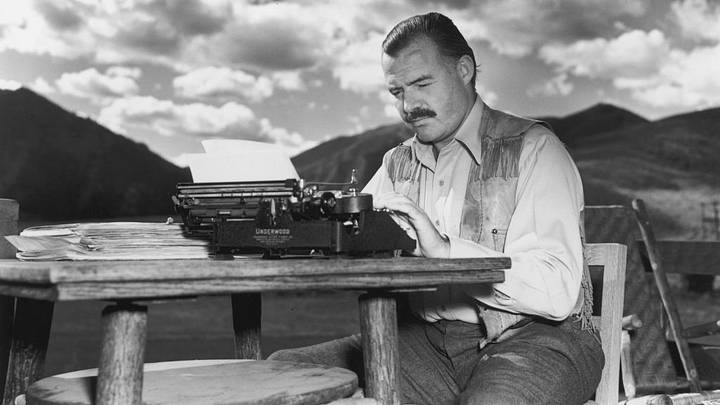
There’s no doubt that Hemingway enjoyed downing a daiquiri or two (or, according to legend, 17 in one sitting). Just as well-known as his works such as The Old Man and the Sea and The Sun Also Rises are his drinking habits, which only got worse after a series of plane and car crashes during his travels. But despite his penchant for adventure and alcohol, Papa was a staunch believer in separating the pen from the pint.
The idea that Hemingway wrote while intoxicated doesn’t hold up to the reality of his actual process. He was undeniably disciplined, waking up before dawn to write while his mind was sharp and, more importantly, sober. He saw writing as a craft that commanded all of his attention, saving his drinking for later on in the day. For Hemingway, a Papa Doble or dry martini was merely a reward once his word count for the morning was met.
His granddaughter, Mariel Hemingway, attests: “He never wrote drunk, he never wrote beyond early, early morning,” she said in an interview. If this is true, then, just how did the edgy quote get attached to his name?
The Faulkner Factor
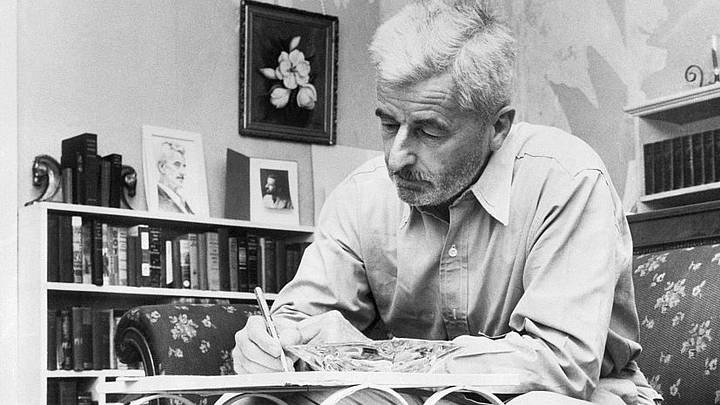
Rivalries didn’t solely reside within Hemingway’s works, but in his real life as well. Throughout his career, the Nobel Prize-winning novelist was pitted against his famous contemporary William Faulkner. The two men critiqued everything about each other, from their contrasting writing styles to their comparable heavy drinking habits.
Not only did Hemingway deny drinking and drafting, but he went so far as to deflect the blame onto his rival. In a Writer’s Digest interview published shortly after his death, Hemingway set the record straight with a sharp retort:
“You’re thinking of Faulkner. He does sometimes—and I can tell right in the middle of a page when he’s had his first one.”
Peter De Vries’ Part
Whether you’re Team Hemingway or Team Faulkner, there’s still no evidence that “write drunk, edit sober” came from either of them. The phrase’s actual roots are entirely fictional.
The quote traces back to a line of dialogue from the 1964 novel Reuben, Reuben by American author Peter De Vries. In the book, a character casually admits: “Sometimes I write drunk and revise sober, and sometimes I write sober and revise drunk.”
Stripped of its backstory, it’s not hard to see why pop culture pins these four words on the talented, albeit tipsy, literary great.
The second half of the quote lends more context to its true meaning: “But you have to have both elements in creation — the Apollonian and the Dionysian, or spontaneity and restraint, emotion and discipline.” Altogether, it’s less of a suggestion and more of an observation on how multifaceted the creative process can be.
Still, Hemingway would agree to disagree. When it came to his typewriter, he knew better than to mix business with booze. Sometimes, a saying survives not because it’s true, but because it’s simply too good a legend to let go.
Next: Join Mental Floss’s Geography Quiz Competition
More Historical Misconceptions:
•
Did Astronaut Jim Lovell Really Say “Houston, We Have a Problem?” Decoding the Real History
•
Did Marie-Antoinette Shout ”Let Them Eat Cake” During the French Revolution? (The Real Story)
•
5 Popular Quotes Commonly Misattributed to Henry David Thoreau
•
4 Popular Quotes Commonly Misattributed to Frida Kahlo
Home/MISCONCEPTIONS