ByRoger Cormier|Mar 17, 2016, 2:00 PM EDT
 Add us as a preferred source

Based on a true story, Erin Brockovich starred Julia Roberts in an Oscar-winning portrayal of a single mother of three who became a legal assistant and started the fight against Hinkley, California’s water-polluting Pacific Gas & Electric. Here are some facts about the film to read after all those numbers stop coming out of your ears.
1. ERIN BROCKOVICH’S CHIROPRACTOR GOT THE BIOPIC ROLLING.
Executive producer Carla Santos Shamberg’s chiropractor told her about one of her other patients, Erin Brockovich, during an appointment. Carla told her husband, producer Michael Shamberg.
2. THE REAL BROCKOVCH WANTED GOLDIE HAWN TO PLAY HER.
“He’d always ask me, ‘If they really do make this movie who should play you?'” Brockovich recalled of a conversation she had with lawyer Ed Masry. “I was always uncomfortable with the question. I’d say, ‘I don’t know. I hope it’s someone funny like Goldie Hawn.’ And Ed would say, ‘I was thinking of someone more like Roseanne Barr.’ And I was like, ‘F**k you, Ed,’ and he would laugh. He said, ‘All kidding aside kid, I don’t care who it is as long as it’s not Julia Roberts.’ He said, ‘She has no t**s and no foul mouth, so it wouldn’t work.'”
3. JULIA ROBERTS MADE A RECORD-BREAKING AMOUNT OF MONEY.
With Erin Brockovich, Roberts became the first actress to ever earn $20 million for a movie. Universal Pictures was reluctant to pay up, but Roberts’ agent successfully argued a Hollywood double standard.
4. ALBERT FINNEY SAID “NO” TO THE FILM.
Producer Danny DeVito had to convince Finney’s girlfriend to convince Finney to change his mind, offering to schedule all of the actor’s scenes as Ed Masry closer together so he wouldn’t have to be in Los Angeles as long as earlier scheduled.
5. THE REAL ERIN SERVED FAKE ERIN IN THE MOVIE.
The actual Brockovich played a waitress named “Julia” in a scene in the film named after her. Director Steven Soderbergh had kept Brockovich and Roberts apart from one another before that so that Roberts wouldn’t be tempted to imitate her. Masry, a former child film actor, also appeared in the restaurant scene, as a customer in the booth adjacent to Roberts.
6. ROBERTS HAD TO LEARN TO WRITE RIGHT-HANDED.
While Brockovich is a righty, Roberts is part of the 10 percent of the world who are left-handed.
7. SODERBERGH WAS INFLUENCED BY ALL THE PRESIDENT’S MEN AND ROCKY.
“It is without question one of my favorite American films of all time,” the director told The New York Times about All the President’s Men (1976). ”And it’s one that I looked to quite a lot while I was making my last two movies, Erin Brockovich (2000) and Traffic (2000), because in both cases we were trying to make films about serious issues that were also very entertaining.” Soderbergh also classified Erin Brockovich as a Rocky-like movie. “It’s a Rocky movie, and that’s fine as long as you make a good Rocky movie. I think the first Rocky is a really good movie. I tried to keep that in mind.”https://www.youtube.com/embed/-0Ii5VXxxLM?feature=oembed
8. A DELETED SCENE SHOWED BROCKOVICH IN THE HOSPITAL.
Hinkley’s toxins made the real Brockovich sick at one point. Soderbergh filmed a scene set at the hospital, but later cut it from the final product. “I didn’t want people to think that this was going to turn into one of those movies where the protagonist gets terminally ill,” he said on the DVD commentary. “It was a tough call, because Erin really did get sick and was hospitalized for a while.”
9. THE FIRST CUT OF THE FILM WAS THREE HOURS AND 15 MINUTES LONG.
One hour and four minutes of footage had to go for the theatrical release.
10. THE REAL JUDGE CAME OUT OF RETIREMENT TO APPEAR IN THE MOVIE.
Judge LeRoy A. Simmons officiated at the pleading and discovery for Hinkley v. PSE&G, and came out of retirement to repeat his decision, this time in front of actors and cameras.
11. UNIVERSAL WAS CONCERNED ABOUT BROCKOVICH’S LANGUAGE.
Studio executives were worried that audiences would not forgive the title character’s language. Most audience members at the test screenings for the film enjoyed themselves anyway.
12. THE STUDIO DID RECEIVE ONE COMPLAINT.
A test screening audience member did take one issue with the film: “The first 99 times I saw her breasts were enough,” he said of Roberts.
13. ROBERTS’ BOYFRIEND HAD A SIMILAR COMPLAINT.
When Roberts sent her then-boyfriend, Benjamin Bratt, pictures of her new décolletage, he responded, “You can’t go out like that!”
14. BROCKOVICH SAID THE MOVIE IS “PROBABLY 98 TO 99 PERCENT” ACCURATE.
“They took very, very few liberties,” Brockovich revealed. “One of the liberties was, I was not Miss Wichita, I was actually Miss Pacific Coast, right here in California. Steven Soderbergh thought it would be cute since I was from Kansas to throw that in there.”
15. IN REAL LIFE, GEORGE TRIED TO EXTORT BROCKOVICH.
Jorge Halaby (the basis for George) and Brockovich’s first husband, Shawn Brown, attempted to extort $310,000 from Brockovich with a claim she had an affair with Masry. Their lawyer was found guilty of extortion and was later disbarred.
Quiz: Can You Name the Halloween Costume From These Three Clues?
See how many classic costumes you can construct before the clock runs out.
ByNitya Rao|Oct 28, 2026, 7:00 PM EDT
Anyone can copy a Halloween costume with the right reference photo, but can you assemble one in reverse from just a handful of random accessories? From wand-wielding wizards to iconic movie monsters, someone, somewhere, has worn it all. Now it’s your turn to put your costume designer hat on and see how quickly you can build a costume from three key components and sheer creativity. Put your pop culture memory and Halloween fashion sense to the test below.https://www.sporcle.com/framed/?v=10&pm&gid=41faab33X4&fid=6ae23fc6d6f32
More Halloween Quizzes:
•
Quiz: Is This a Lyric From “Monster Mash” or “Spooky, Scary Skeletons”?
•
Quiz: Can You Name the ’90s Horror Movie From Its Final Girl?
•
Quiz: Can You Match These TV Witches to Their Shows Without Getting Hexed?
•
Quiz: Can You Finish These Spine-Chilling Literary Titles?
How did your styling session go? Are you ready to open your Spirit Halloween franchise, or did some of those clues leave you (or at least your hypothetical Halloween Sim) naked and afraid? Whether you nailed every look on the first try or had to call it quits after the third ambiguous cape, challenge a fellow Halloween fanatic to see if they can beat your score!
The Most Popular Halloween Costumes Through the Decades
If piecing together costumes from random props made you realize just how deeply pop culture is embedded in our October traditions, take a look at how Halloween fashion has evolved over the last century (according to The Daily Meal):
1920s: Clowns, Witches & Farmers
As trick-or-treating started gaining traction, homemade costumes like witches, farmers, and the Pierrot clown—complete with iconic black-and-white face paint—became instant classics.
1930s: Mickey & Minnie Mouse

Mass-produced costumes hit the scene thanks to Ben Cooper after landing a major Disney license. Kids could easily transform into Mickey, Minnie, and Snow White in simple slip dresses and rubber masks right alongside traditional ghosts and goblins.
1940s: Witches & Cats
With the rise of pinup culture, classic costumes like witches and cats got a flirty makeover featuring things like fishnet stockings, dark makeup, and shorter hemlines.
1950s: Hula Dancers & Cowboys

Years before Hawaii officially became a U.S. state in 1959, a postwar hyperfixation on all things tiki and luau took over the country. Combined with the massive popularity of Western films, this inspired hibiscus prints, grass skirts, and cowboy hats to join the mix of spookier characters on Halloween night.
1960s: Superheroes
Comic book icons like Superman, Batman, and Catwoman surveyed the streets as rubber masks and capes made cosplaying your favorite crime-fighter easy.
1970s: Peanuts & Star Wars

TV, cartoons, and pop culture ruled the decade, with trick-or-treaters sporting plastic masks and ’70s staples to emulate the Peanuts gang, Star Wars characters, and Charlie’s Angels.
1980s: Elvira & Hulk Hogan
Higher-budget costumes let fans lean hard into pop culture on Halloween, whether channeling vampy Elvira hairdos, Hulk Hogan onesies, or slasher villains like Freddy Krueger and Michael Myers.
1990s: Power Rangers & The Simpsons

The Mighty Morphin Power Rangers, Teenage Mutant Ninja Turtles, and The Simpsons were the easy answers to the group costume dilemma. Think colorful nylon onesies, yellow face paint, and many, many masks.
2000s: Y2K Stars & Harry Potter
Halloween costume inspiration shifted toward real-life Y2K icons like Britney Spears and Michael Jackson, with just as many fantasy favorites like Harry Potter and SpongeBob SquarePants down the block.
2010s: Frozen & Pop Culture

Elsa, Anna, and Marvel heroes reigned supreme amongst the new generation of trick-or-treaters. The digital era also saw the rise of meme costumes and political election outfits featuring even more uncanny valley face masks.
If you love testing your pop culture trivia and Halloween knowledge, check out the Mental Floss quiz page daily for more spooky challenges.
The countdown to Halloween is on, and we’re challenging our readers here at Mental Floss with our Trick or Trivia quiz giveaway. For 13 nights between October 19-31, we’re putting your knowledge of all things spooky to the test. Think you know Halloween? Take at least one quiz and enter to be in the running to win a $200 Barnes & Noble gift card.
More Halloween Reads:
•
7 Forgotten Mischief Night Pranks You Used to See Every Year
•
Quiz: Can You Name the ‘Nightmare Before Christmas’ Character From One Clue?
•
•
What Was Trick-or-Treating Like in the 1950s?
•
What the Night Before Halloween Is Called Across America, Mapped
The Artist Who Taught Bob Ross His Famous Painting Technique
Before Bob Ross painted happy little trees, he learned his famous wet-on-wet technique from a German art master.
ByChris Wheatley|Oct 28, 2026, 2:00 PM EDT
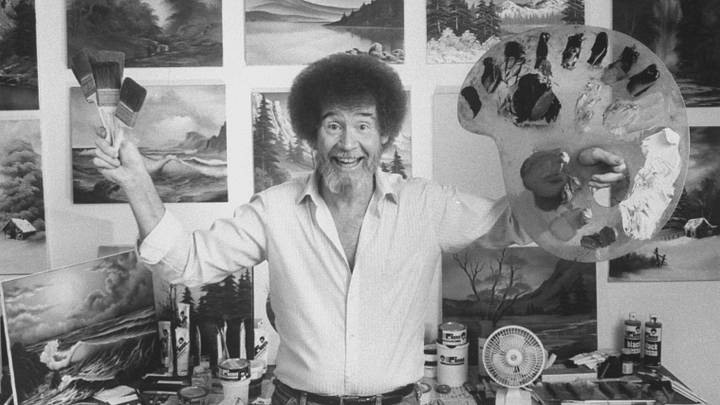
One of the undeniably positive effects of the TikTok era is that, through the vague mysteries of the “algorithm,” fresh generations have been introduced to the soothing talents of painter Bob Ross. Born in 1942 in Daytona Beach, Florida, Ross served as a master sergeant in the United States Air Force, but it was later, when he began working as an art tutor, that his passion for painting propelled him to modest fame.
Becoming Bob Ross
It was one of his pupils, a lady named Annette Kowalski, who first saw possibilities for Ross beyond the classroom. Together with her husband, Walt, Ross, and Ross’ wife, a new company, Bob Ross Inc., was created with Bob as the star. In 1982, Ross taped a pilot for a simple show—just him in front of the camera, painting a landscape whilst offering advice. Broadcast on the tiny station, WNVC, in Falls Church, Virginia, dozens of PBS stations were soon eager to sign him up.
Ross eventually went with WIPB in Muncie, Indiana, where his show, The Joy of Painting, ran from 1983 to 1994. With his distinctive permed hairstyle and soft, welcoming voice, Ross was able to create a warm, comforting atmosphere that appealed even to non-artists.
The Original Master

What many people don’t know is that Ross’ techniques and style were not wholly original. Ross had been working as a bartender when he happened upon a television show titled The Magic of Oil Painting, which was hosted by the German painter, William “Bill'” Alexander. Born in Berlin in 1915, Alexander later emigrated to America, where he began hosting shows and writing books on art. He specialized in the alla prima or wet-on-wet technique. Dating back to the 15th century, this approach allowed for a single canvas to be finished in less than half an hour.
Following his retirement from the Air Force, Ross sought out Alexander and studied under him. He even joined Alexander’s company—Alexander Magic Art Supplies—and was acting as a travelling instructor and salesman for this establishment when he first met Annette Kowalski.
A Bitter Rift
Although in the very first episode of The Joy of Painting, Ross fully acknowledged Alexander’s teaching, his rising fame evidently caused friction between the two men. Alexander felt that Ross had leaped to success on the back of his own career. In a 1991 interview, he said of Ross: “He betrayed me.”
Whilst the truth is that neither man can fairly lay claim to have invented the wet-on-wet technique, it’s sad to think that they ended up in animosity. Ross sadly passed in 1995, a year after the final episode of The Joy of Painting was aired.
Read More:
•
The Artist Who Taught Bob Ross His Famous Painting Technique
•
The 10 Most Expensive Picasso Paintings Ever Sold, Ranked
•
The Personal Tragedy Behind Picasso’s Blue Period
•
The Best Indigenous Peoples’ Day Trivia Questions to Reframe How You See American History
•