ByMatthew Jackson|Sep 10, 2023, 8:00 AM EDT
 Add us as a preferred source
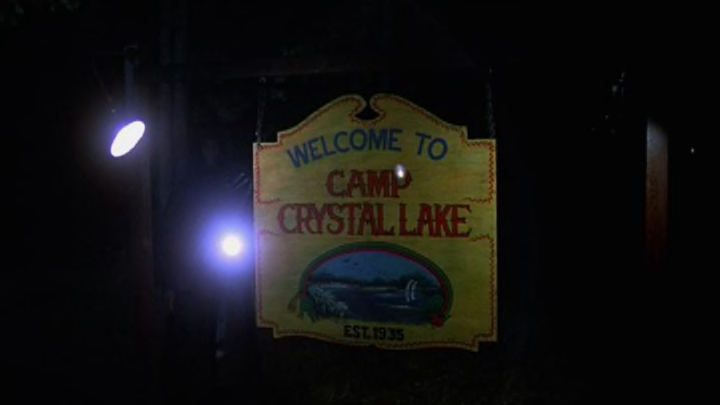
In the fall of 1979, a group of unknown actors, a director desperate for a hit, and a special effects visionary got together in the woods of New Jersey to create the stuff of legend. Friday the 13th was supposed to be a simple exercise in good movie business, a film that would make money thanks to clever manipulation of the horror genre and some gory scares. Instead, it became a watershed moment in horror filmmaking, a landmark that has inspired countless imitators and nearly a dozen sequels.
Today, Friday the 13th is an essential slasher classic, but the road to success wasn’t exactly easy. To celebrate the film, and its often tumultuous production, here are 17 facts about the birth of the legend of Jason Voorhees.
1. THE ORIGINAL INSPIRATION WAS HALLOWEEN.
In 1978, producer and director Sean Cunningham was looking for a model on which to build a commercially successful film, and he found one in John Carpenter’s horror classic Halloween. The two films ultimately don’t share much other than very broad slasher tropes, but Cunningham says he “was very influenced by the structure of Carpenter’s film.”
2. THE FILM WAS BEING ADVERTISED BEFORE IT EVEN HAD FINANCING.
Hoping to drum up publicity for his project, Cunningham took out an ad in the July 4, 1979 edition of Variety, featuring the film’s now-iconic logo bursting through glass. At the time, the general structure of the film was in place, but Georgetown Productions had not yet fully agreed to finance it, and the advertised November 1979 release date was a pipe dream. Still, Cunningham did get a response from the ad. “Everybody wanted this film,” he later said.
3. THE SCREENWRITER HAD A DIFFERENT TITLE IN MIND.
Though Cunningham very quickly latched on to the idea of Friday the 13th as a title, well before the film got made, screenwriter Victor Miller originally came up with something else. In the spring of 1979, he was calling the film Long Night at Camp Blood.
4. MANY OF THE SPECIAL EFFECTS WERE “BAKED” IN THE CAMP’S KITCHEN.
Tom Savini is now a makeup effects legend thanks, in part, to his work on Friday the 13th. And in making the film, he and assistant Taso Stavrakis actually ended up using the camp to finalize the special makeup effects. According to Savini, many of the latex appliances ultimately used to create the film’s gruesome murders were baked in the pizza ovens at the camp where the movie was filmed.
5. THE CAMP USED FOR FILMING IS STILL OPERATIONAL.
Camp Crystal Lake is actually Camp No-Be-Bo-Sco, a fully operational camp that the cast and crew were granted access to after campers left for the summer in 1979. It is still in use today.
6. KEVIN BACON WAS NOT THE FILM’S BIGGEST STAR AT THE TIME OF SHOOTING.

Though he’s without question the biggest name in the movie now, Kevin Bacon hadn’t done much prior to Friday the 13th, apart from things like a small role in Animal House. At the time, the film’s biggest name was Harry Crosby, son of then-recently-deceased legendary singer Bing Crosby, who played Bill.
7. SHELLEY WINTERS WAS THE FIRST CHOICE FOR MRS. VOORHEES.
For the now-iconic role of Mrs. Pamela Voorhees, Cunningham and company went in search of an actress with a recognizable name whose career was nevertheless on the decline, so she could be paid relatively little and the budget could stay low. Cunningham eventually made a list of actresses he was considering, and two-time Oscar winner Shelley Winters was his top choice. Winters wasn’t interested, and while fellow candidate and Oscar-winner Estelle Parsons actually negotiated to be in the film, she ultimately backed out. Cunningham also considered actresses Louise Lasser and Dorothy Malone right up until filming began, but ultimately the production wound up with Betsy Palmer in the role.
8. BETSY PALMER TOOK THE PART SO SHE COULD BUY A NEW CAR.
When Cunningham finally got around to offering Palmer the part of Mrs. Voorhees, she suddenly found herself in need of cash. After more than a year on Broadway, her car broke down as she drove back to her home in Connecticut. She might never have taken the movie if she hadn’t needed the money for a new car.
“I got home at five in the morning, and it was a situation where I desperately needed a new car,” Palmer said. “If I hadn’t needed a car, I don’t think I would’ve done Friday the 13th.”
9. SEVERAL CREW MEMBERS PLAYED THE KILLER BEFORE PALMER WAS CAST.
Even as filming got underway, Cunningham was still looking for an actress to play Mrs. Voorhees, so many of the early murder scenes were actually shot without Betsy Palmer, with members of the crew standing in for the hands of the murderer. For example, when Annie’s (Robbi Morgan) throat is cut early in the film, special effects assistant Taso Stavrakis is the one wielding the knife.
10. BETSY PALMER GAVE MRS. VOORHEES A DETAILED BACKSTORY.
When she was finally cast, Palmer dove deep into her character. As a Method actor, she wanted to know more about the character than the audience, and came up with a backstory that built on the killer’s hatred of sexual transgression. In her mind, Pamela had Jason out of wedlock with a high school boyfriend, and her parents ultimately disowned her for her sins because that “isn’t something that good girls do.”
11. JASON WAS JUST A REGULAR KID IN THE FIRST DRAFT.

In Victor Miller’s original script, the character of Jason Voorhees was, basically, just a kid who accidentally drowned in Crystal Lake. But financier Philip Scuderi wanted something more, and brought in screenwriter Ron Kurz for some rewrites. One of Kurz’s most important contributions to the film was to transform the tragic boy into the deformed child we see in the final movie.
12. DURING FILMING, THE CREW WAS ENTERTAINED BY LOU REED.
Because the camp was closed during filming, and situated in the deep New Jersey woods, the cast and crew didn’t see much outside interference, but it turned out they had a very famous neighbor: rock star Lou Reed, who owned a farm nearby.
“We got to watch Lou Reed play for free, right in front of us, while we were making the film,” soundman Richard Murphy said. “He came by the set and we hung around with each other and he was just a really great guy.”
13. ONE ACTOR WAS TEMPORARILY BLINDED BY FAKE BLOOD.
For the scene in which Bill (Harry Crosby) is killed by multiple arrows, one of which lands in his eye, Tom Savini used a fake blood formula that included a wetting agent called PhotoFlo, which was supposed to make the fake blood soak into clothing and look more realistic. Unfortunately, PhotoFlo is not an ingredient used for “safe blood,” meaning blood that’s going to be encountering the face of an actor. For the arrow-in-the-eye moment, a latex appliance was applied to Crosby’s face, along with the blood. As the scene was shot, the blood welled up into Crosby’s eyes, causing intense pain when the appliance was removed.
“So our unsafe blood had an opportunity to fill up Harry’s eyes under the appliance used to keep the arrow looking like it was in his eye and it surface-burned poor Harry,” Savini said. “Not a proud moment.”
Crosby had to be taken to the hospital for treatment, but was ultimately fine.
14. KEVIN BACON’S ICONIC DEATH TOOK HOURS TO FILM (AND ALMOST DIDN’T WORK).
Perhaps the most iconic death in the film occurs when Jack (Kevin Bacon) is killed with an arrow shoved through his throat from underneath the bed he’s lying on. It’s a brilliant special effects moment, and was also the most complex death scene in the film. To make it work, Bacon had to crouch under the bed and insert his head through a hole in the mattress. Then, a latex neck and chest appliance were attached to give the appearance that he was actually lying down. Getting the setup right took hours, and Bacon had to stay in that uncomfortable position the entire time. For the bloody final moment, Savini—also under the bed—would plunge the arrow up and through the fake neck, while his assistant—also under the bed—operated a pump that would make the fake blood flow up through the appliance. To further complicate things, the crew needed someone to stand in for the killer’s hand as it held Bacon’s head down, and they settled on still photographer Richard Feury.
So, after hours of setup and latex building and planning, it was finally time to shoot the scene, and when the moment of truth came, the hose for the blood pump disconnected. Knowing that he basically only had one take (otherwise they’d have to build a new latex appliance and set everything up again), Stavrakis grabbed the hose and blew into it until blood flowed out, saving the scene.
“I had to think quick, so I just grabbed the hose and blew like crazy which, thankfully, caused a serendipitous arterial blood spray,” Stavrakis said. “The blood didn’t taste that bad either.”
15. THE FINAL SCARE WAS SUPPOSEDLY NOT IN THE ORIGINAL SCRIPT.
The story of who invented the final scare in the film, in which a deformed Jason bursts out of the lake and grabs Alice (Adrienne King) from her canoe, is disputed. Victor Miller, Tom Savini, and uncredited screenwriter Ron Kurz all claim credit for it, Kurz because he claims to be the one who made Jason into a “creature,” and Savini because he claims the moment was inspired by a similar final scare in Carrie. Whatever the case, it left a lasting impression.
16. THE MAIN THEME MUSIC CAME FROM A LINE OF DIALOGUE.
When composing the score for the film, composer Harry Manfredini was looking for a distinctive sound to identify any point when the killer appeared in a scene. When he first saw a print of the film, he heard Mrs. Voorhees, imitating Jason, saying “Kill her, Mommy!” and decided that was the key. So, he took two syllables from that line of dialogue, spoke them himself, and made the iconic sound.
“So I got the idea of taking the ‘ki’ from ‘kill’ and the ‘ma’ from ‘mommy,’ but spoke them very harshly, distinctly, and rhythmically into a microphone and run them through this ’70s echo thing. It came up as you hear it today! So every time there was the perspective of the stalker, I put that into the score,” Manfredini said.
17. THE SCREENWRITER HATES THE SEQUELS.

One of the key twists of the original film, particularly in light of its many sequels (counting a crossover with A Nightmare on Elm Street and a reboot, there are 11 now), is that Jason is not actually the central figure. He provides a haunting mythology, but the real villain is his mother. For screenwriter Victor Miller, this was very important, and he framed Pamela Voorhees as the mother he never had, a woman who tirelessly professed love in her own crazy way. When the film became a hit, and the inevitable sequel featured Jason as the new killer, Miller was disappointed.
“To be honest, I have not seen any of the sequels, but I have a major problem with all of them because they made Jason the villain,” Miller said. “I still believe that the best part of my screenplay was the fact that a mother figure was the serial killer—working from a horribly twisted desire to avenge the senseless death of her son, Jason. Jason was dead from the very beginning. He was a victim, not a villain. But I took motherhood and turned it on its head and I think that was great fun. Mrs. Voorhees was the mother I’d always wanted—a mother who would have killed for her kids.”
Additional Sources: On Location In Blairstown: The Making of Friday the 13th by David Grove (2013)
Related Tags
Quiz: Can You Name the Halloween Costume From These Three Clues?
See how many classic costumes you can construct before the clock runs out.
ByNitya Rao|Oct 28, 2026, 7:00 PM EDT
Anyone can copy a Halloween costume with the right reference photo, but can you assemble one in reverse from just a handful of random accessories? From wand-wielding wizards to iconic movie monsters, someone, somewhere, has worn it all. Now it’s your turn to put your costume designer hat on and see how quickly you can build a costume from three key components and sheer creativity. Put your pop culture memory and Halloween fashion sense to the test below.https://www.sporcle.com/framed/?v=10&pm&gid=41faab33X4&fid=6ae23fc6d6f32
More Halloween Quizzes:
•
Quiz: Is This a Lyric From “Monster Mash” or “Spooky, Scary Skeletons”?
•
Quiz: Can You Name the ’90s Horror Movie From Its Final Girl?
•
Quiz: Can You Match These TV Witches to Their Shows Without Getting Hexed?
•
Quiz: Can You Finish These Spine-Chilling Literary Titles?
How did your styling session go? Are you ready to open your Spirit Halloween franchise, or did some of those clues leave you (or at least your hypothetical Halloween Sim) naked and afraid? Whether you nailed every look on the first try or had to call it quits after the third ambiguous cape, challenge a fellow Halloween fanatic to see if they can beat your score!
The Most Popular Halloween Costumes Through the Decades
If piecing together costumes from random props made you realize just how deeply pop culture is embedded in our October traditions, take a look at how Halloween fashion has evolved over the last century (according to The Daily Meal):
1920s: Clowns, Witches & Farmers
As trick-or-treating started gaining traction, homemade costumes like witches, farmers, and the Pierrot clown—complete with iconic black-and-white face paint—became instant classics.
1930s: Mickey & Minnie Mouse
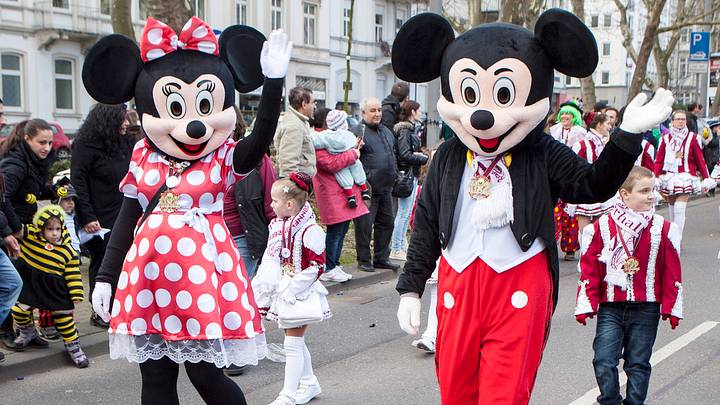
Mass-produced costumes hit the scene thanks to Ben Cooper after landing a major Disney license. Kids could easily transform into Mickey, Minnie, and Snow White in simple slip dresses and rubber masks right alongside traditional ghosts and goblins.
1940s: Witches & Cats
With the rise of pinup culture, classic costumes like witches and cats got a flirty makeover featuring things like fishnet stockings, dark makeup, and shorter hemlines.
1950s: Hula Dancers & Cowboys

Years before Hawaii officially became a U.S. state in 1959, a postwar hyperfixation on all things tiki and luau took over the country. Combined with the massive popularity of Western films, this inspired hibiscus prints, grass skirts, and cowboy hats to join the mix of spookier characters on Halloween night.
1960s: Superheroes
Comic book icons like Superman, Batman, and Catwoman surveyed the streets as rubber masks and capes made cosplaying your favorite crime-fighter easy.
1970s: Peanuts & Star Wars
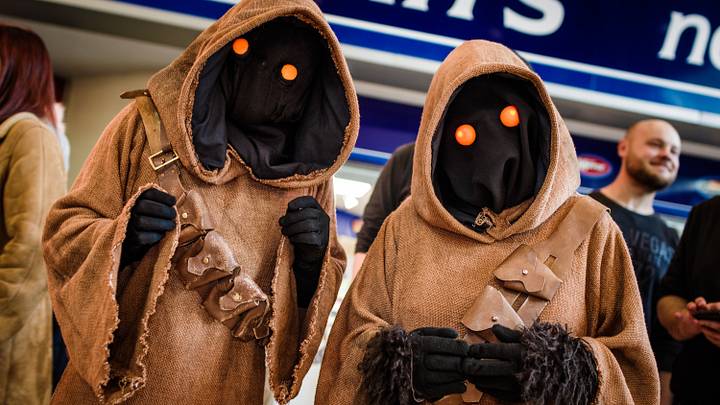
TV, cartoons, and pop culture ruled the decade, with trick-or-treaters sporting plastic masks and ’70s staples to emulate the Peanuts gang, Star Wars characters, and Charlie’s Angels.
1980s: Elvira & Hulk Hogan
Higher-budget costumes let fans lean hard into pop culture on Halloween, whether channeling vampy Elvira hairdos, Hulk Hogan onesies, or slasher villains like Freddy Krueger and Michael Myers.
1990s: Power Rangers & The Simpsons
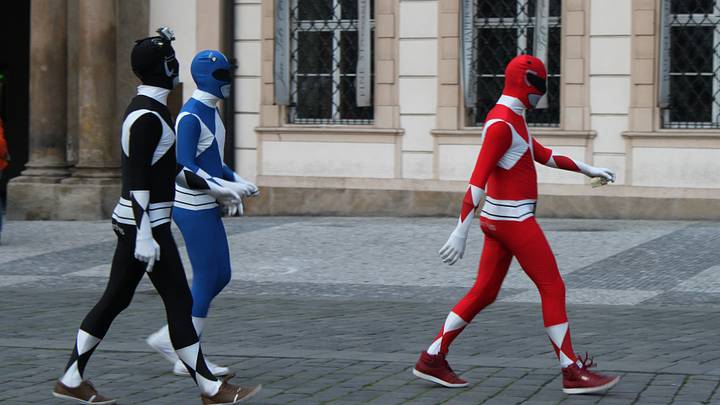
The Mighty Morphin Power Rangers, Teenage Mutant Ninja Turtles, and The Simpsons were the easy answers to the group costume dilemma. Think colorful nylon onesies, yellow face paint, and many, many masks.
2000s: Y2K Stars & Harry Potter
Halloween costume inspiration shifted toward real-life Y2K icons like Britney Spears and Michael Jackson, with just as many fantasy favorites like Harry Potter and SpongeBob SquarePants down the block.
2010s: Frozen & Pop Culture
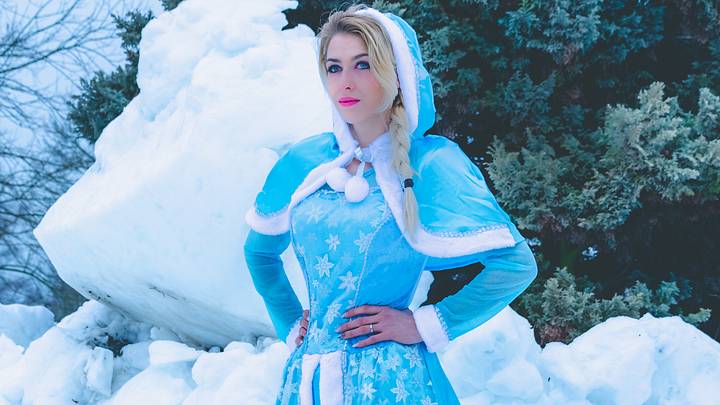
Elsa, Anna, and Marvel heroes reigned supreme amongst the new generation of trick-or-treaters. The digital era also saw the rise of meme costumes and political election outfits featuring even more uncanny valley face masks.
If you love testing your pop culture trivia and Halloween knowledge, check out the Mental Floss quiz page daily for more spooky challenges.
The countdown to Halloween is on, and we’re challenging our readers here at Mental Floss with our Trick or Trivia quiz giveaway. For 13 nights between October 19-31, we’re putting your knowledge of all things spooky to the test. Think you know Halloween? Take at least one quiz and enter to be in the running to win a $200 Barnes & Noble gift card.
More Halloween Reads:
•
7 Forgotten Mischief Night Pranks You Used to See Every Year
•
Quiz: Can You Name the ‘Nightmare Before Christmas’ Character From One Clue?
•
•
What Was Trick-or-Treating Like in the 1950s?
•
What the Night Before Halloween Is Called Across America, Mapped
The Artist Who Taught Bob Ross His Famous Painting Technique
Before Bob Ross painted happy little trees, he learned his famous wet-on-wet technique from a German art master.
ByChris Wheatley|Oct 28, 2026, 2:00 PM EDT
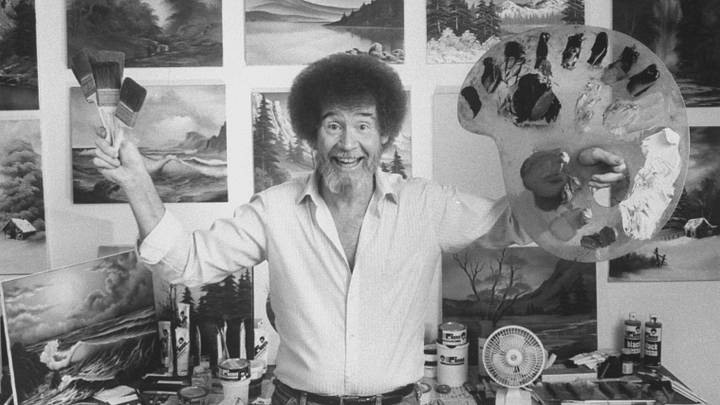
One of the undeniably positive effects of the TikTok era is that, through the vague mysteries of the “algorithm,” fresh generations have been introduced to the soothing talents of painter Bob Ross. Born in 1942 in Daytona Beach, Florida, Ross served as a master sergeant in the United States Air Force, but it was later, when he began working as an art tutor, that his passion for painting propelled him to modest fame.
Becoming Bob Ross
It was one of his pupils, a lady named Annette Kowalski, who first saw possibilities for Ross beyond the classroom. Together with her husband, Walt, Ross, and Ross’ wife, a new company, Bob Ross Inc., was created with Bob as the star. In 1982, Ross taped a pilot for a simple show—just him in front of the camera, painting a landscape whilst offering advice. Broadcast on the tiny station, WNVC, in Falls Church, Virginia, dozens of PBS stations were soon eager to sign him up.
Ross eventually went with WIPB in Muncie, Indiana, where his show, The Joy of Painting, ran from 1983 to 1994. With his distinctive permed hairstyle and soft, welcoming voice, Ross was able to create a warm, comforting atmosphere that appealed even to non-artists.
The Original Master
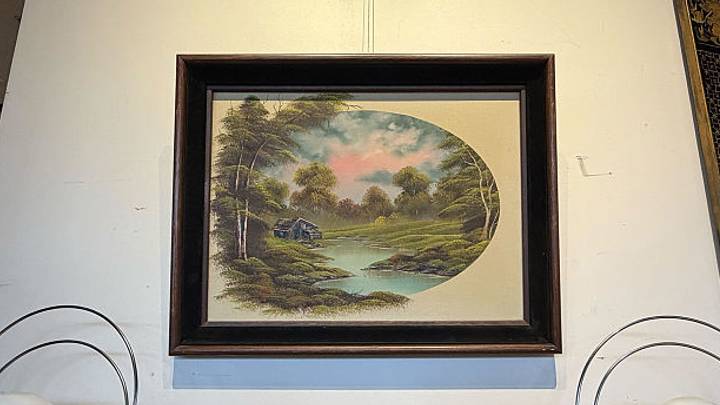
What many people don’t know is that Ross’ techniques and style were not wholly original. Ross had been working as a bartender when he happened upon a television show titled The Magic of Oil Painting, which was hosted by the German painter, William “Bill'” Alexander. Born in Berlin in 1915, Alexander later emigrated to America, where he began hosting shows and writing books on art. He specialized in the alla prima or wet-on-wet technique. Dating back to the 15th century, this approach allowed for a single canvas to be finished in less than half an hour.
Following his retirement from the Air Force, Ross sought out Alexander and studied under him. He even joined Alexander’s company—Alexander Magic Art Supplies—and was acting as a travelling instructor and salesman for this establishment when he first met Annette Kowalski.
A Bitter Rift
Although in the very first episode of The Joy of Painting, Ross fully acknowledged Alexander’s teaching, his rising fame evidently caused friction between the two men. Alexander felt that Ross had leaped to success on the back of his own career. In a 1991 interview, he said of Ross: “He betrayed me.”
Whilst the truth is that neither man can fairly lay claim to have invented the wet-on-wet technique, it’s sad to think that they ended up in animosity. Ross sadly passed in 1995, a year after the final episode of The Joy of Painting was aired.
Read More:
•
The Artist Who Taught Bob Ross His Famous Painting Technique
•
The 10 Most Expensive Picasso Paintings Ever Sold, Ranked
•
The Personal Tragedy Behind Picasso’s Blue Period
•
The Best Indigenous Peoples’ Day Trivia Questions to Reframe How You See American History
•
Why “Gothic” Was Originally an Insult
Quiz: Can You Name the Winona Ryder Movie From One Character?
The two-time Oscar nominee turns 55 on October 28.
ByAlexandria Ingham|Oct 29, 2026, 8:00 AM EDT
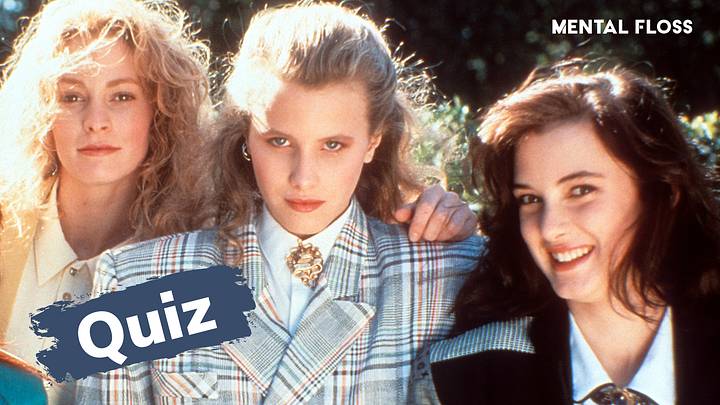
Winona Ryder is one of the most famous actresses of her generation. She has starred in a variety of movies over the years, whether you remember her for her standout, heartfelt performance in Edward Scissorhands or when she was dancing away in the air in Beetlejuice. How many performances can you remember, though? We’re going to give you the name of her character, and we want you to match the movie.
Did you get all eight right? If you did, then you are a true Winona Ryder fan. Don’t worry if you missed a few. It’s the perfect time of year to go through her movie history and do a binge-watch.
More Movie & TV Quizzes:
•
Quiz: Can You Name the ‘Nightmare Before Christmas’ Character From One Clue?
•
Quiz: Can You Name the Winona Ryder Movie From One Character?
•
Quiz: Can You Name the ’90s Horror Movie From Its Final Girl?
•
Quiz: Can You Name the ‘Friends’ Episode From One Chandler Bing Quote?
•
Quiz: Can You Match the Monster Movie to the Famous Quote?
The Most Memorable Winona Ryder Performances
While many now know her as Joyce Byers in Stranger Things, she’s had a history with the wacky and weird when it comes to movies. Her breakthrough remains one of her most notable roles, when she played Lydia Deetz in Beetlejuice in 1988, and she reprised the role in the long-awaited sequel.
In the Tim Burton classic, she played a spiked-haired, camera-toting goth teenager who wasn’t afraid to call it like it was. She brought empathy when it came to the house’s spirits, wanting to help them move on rather than try to scare them away, and it made it clear that she was a star to watch out for.
So, it wasn’t surprising to see her team up with Burton again in 1990, when she played Kim Boggs in Edward Scissorhands. Within the innocence of her relationship with Edward is a warmth that all the adults could learn from.https://www.youtube.com/embed/9-K2wo6btqM?feature=oembed
However, before she reunited with Burton, there was another 1988 performance that stood out. Everyone remembers Heathers, in which Ryder played Veronica Sawyer. It was a career-defining role, as she took on the conflicts of a teenager who wants to get revenge against popular high school bullies, but she does so in a rather terrifying and permanent way.
Ryder isn’t just good at weird movies, though. In 1990, she also took on the role of Jo March in Little Women, bringing a maturity to the role that surprised many who had known her for the quirkier movies to start. In fact, Little Women would earn her a nomination for Best Actress at the Oscars, making it clear that she was growing into an actress to watch.
Since then, Ryder has brought rebels, outsiders, idealists, and doting moms to life throughout a career that spans almost 40 years.
If you love to test your movie knowledge, make sure you bookmark the Mental Floss quiz page for more challenges.
Halloween Quizzes:
•
Quiz: Can You Name the ‘Nightmare Before Christmas’ Character From One Clue?
•
Quiz: Can You Name the Halloween Costume From These Three Clues?
•
Quiz: Can You Name the ’90s Horror Movie From Its Final Girl?
•
Quiz: Can You Match the Monster Movie to the Famous Quote?
•
Quiz: Can You Match These TV Witches to Their Shows Without Getting Hexed?
What Dating Was Like 100 Years Ago
Decades before dating apps and DMs, romance followed courtship rules, and some dates required a chaperone … until the 1920s.
ByLogan DeLoye|Oct 29, 2026, 12:00 PM EDT
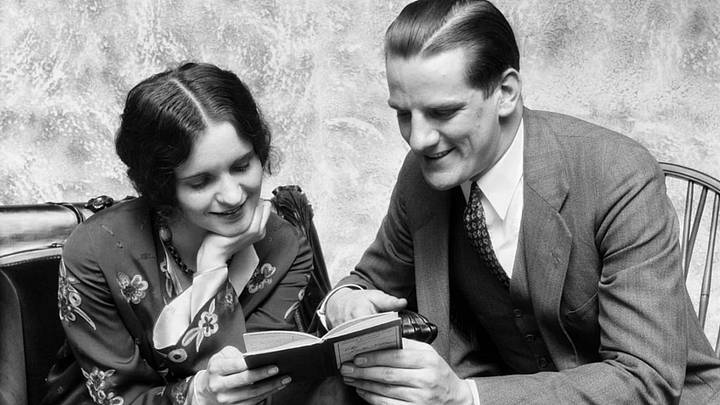
You’re transported back to 1926, and it’s the bee’s knees, but you want someone to share it with.
Feeling lonely, you reach into your sweatpants pocket for your phone to swipe through Hinge; only apps don’t exist yet, cell phones won’t be invented for decades, and you’re probably wearing nice trousers, or a long skirt or dress instead.
So, how are you meant to find a date?
Long before people downloaded dating apps and sent DMs, romance relied on courtship and chaperones to uphold reputation and virtue, at least, until the 1920s.
COURTSHIP BEFORE WORLD WAR I
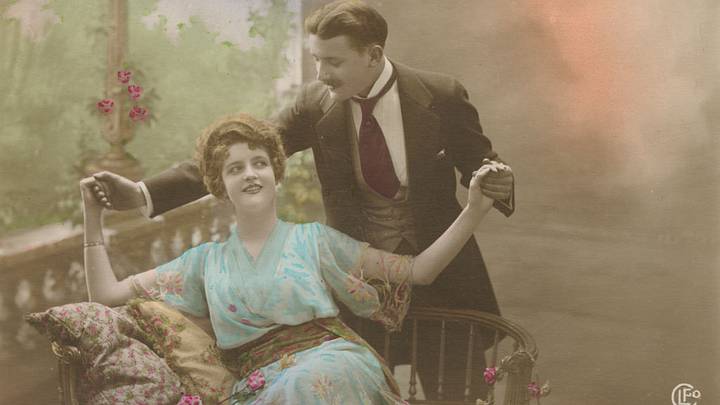
Before World War I ended, dating as we know it today was nonexistent. Parents guided their children toward a possible match, and the courtship process was very strict. A suitor, approved by the woman’s parents, would leave a “calling card” at her doorstep to let her and her family know he intended to court her (spend time getting to know her).
If the parents were pleased with his efforts, they would invite him into their home for a “supervised” visit with their daughter. The actual “date” might’ve consisted of the woman entertaining the man with piano playing or a dance. The suitor would then “call” regularly, bring gifts to his intended match and her family, and eventually, the pair would go on public outings together… chaperoned, of course. This continued until the suitor asked the woman’s father for permission to propose and the family deemed him financially capable of taking care of her.
This was the typical process that led to marriage throughout the 1800s and into the early 1900s.
DATING IN THE 1920s
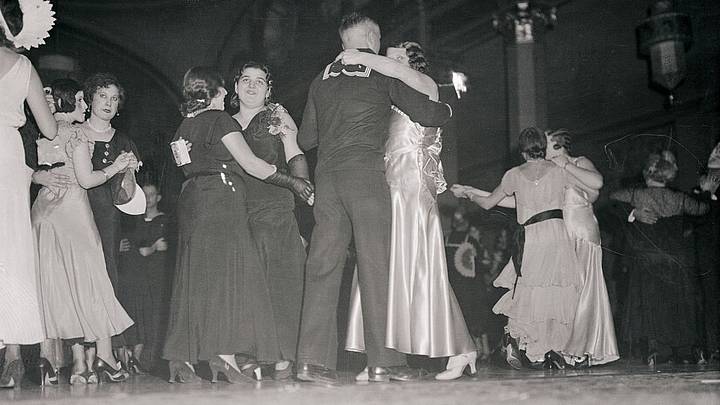
The war ended in 1918; women secured the right to vote in 1919, joined the workforce in droves, and everyone began putting on the Ritz as the Roaring ‘20s rolled in.
Possible suitors rang their dates on the telephone, and new, close-bodied automobiles kept young daters more concealed; a feature that concerned the older generation. Finding a partner became less of a marital strategy and more of a casual ordeal.
Movies and dance halls grew in popularity, providing the perfect setting for an informal date. According to The Mob Museum, upper- and middle-class citizens socialized on the train, with the Pullman Company offering “dining, lounge and ballroom cars with live bands.”
Sometimes, a date was simply driving around in the car and maybe stopping by the local ice cream parlor for a delicious cherry phosphate. As car ownership among young people accelerated, the need for a chaperone lessened, diminishing the courtship process.
Cities boomed as more people left rural communities for the excitement of urban oases, where meeting new people was more common.
While traditional expectations and standards still held true in rural areas, city dwellers thought unconventional dating was the cat’s pajamas in the 1920s. The 18th Amendment, which banned the sale and transportation of liquor, created speakeasies, secret bars that became popular spots for drinks, dancing, and jazz music, especially in metropolitan areas.
Urbanization, entertainment, updated transportation, and changing laws and lifestyles all contributed to the disappearance of traditional courtship and the rise of casual dating 100 years ago. This concept is still alive and well in 2026; only there are fewer chance encounters at dance halls and soda shops, and more online dating profiles and split-the-bill dinners.
Read More:
•
10 Roaring Twenties Phrases You Use Every Day
•
12 World-Shaping Events That Happened in 1920
•