
Michael Jackson’s 1982 album Thriller needs no introduction, but here we are. It’s the all-time best-selling album worldwide. It was also critically acclaimed, bestowed with a record-breaking eight Grammy Awards. It launched Michael Jackson into superstardom, and the artist—and the music industry—were never the same again. Here are some facts about the album, in case you want to be startin’ somethin’.
1. JACKSON WAS INSPIRED BY THE NUTCRACKER SUITE.
While he already had the popular solo album Off the Wall to his credit (also produced by Quincy Jones), Michael Jackson had a dream of making the biggest-selling album ever. He wanted Thriller to resemble Tchaikovsky’s suite, where “every song is a killer.”
2. HE TOLD HIS MUSICIANS TO THINK LIKE MICHELANGELO.
Keyboardist David Paich of Toto was one of the musicians hired for Thriller. He remembered Jackson telling the instrumentalists in the Westlake Recording studio in Los Angeles, California to think of “Michelangelo painting the Sistine Chapel—do whatever you need to do here. Sky’s the limit.”
3. THE ALBUM’S TITLE WAS ALMOST MIDNIGHT MAN.
Quincy Jones asked arranger/songwriter Rod Temperton to come up with an album title. He wrote down 200 to 300 possible titles in his hotel room before deciding on Midnight Man. The next morning he woke up and the word “Thriller” popped into his head. “Something in my head just said, this is the title,” Temperton said. “You could visualize it on the top of the Billboard charts. You could see the merchandising for this one word, how it jumped off the page as ‘Thriller.'”
4. THE SONG “THRILLER” WAS ORIGINALLY TITLED “STARLIGHT.”
Temperton wrote the music and lyrics, with the chorus: “We got to make it while we can / You need the starlight / Some starlight sun / I need you by my side/ you give me starlight / Starlight / tonight.” Jones liked the melody, but asked Temperton to come back with something more like Edgar Allan Poe. The album title Thriller was already on the table, so matching it to the song was relatively easy.
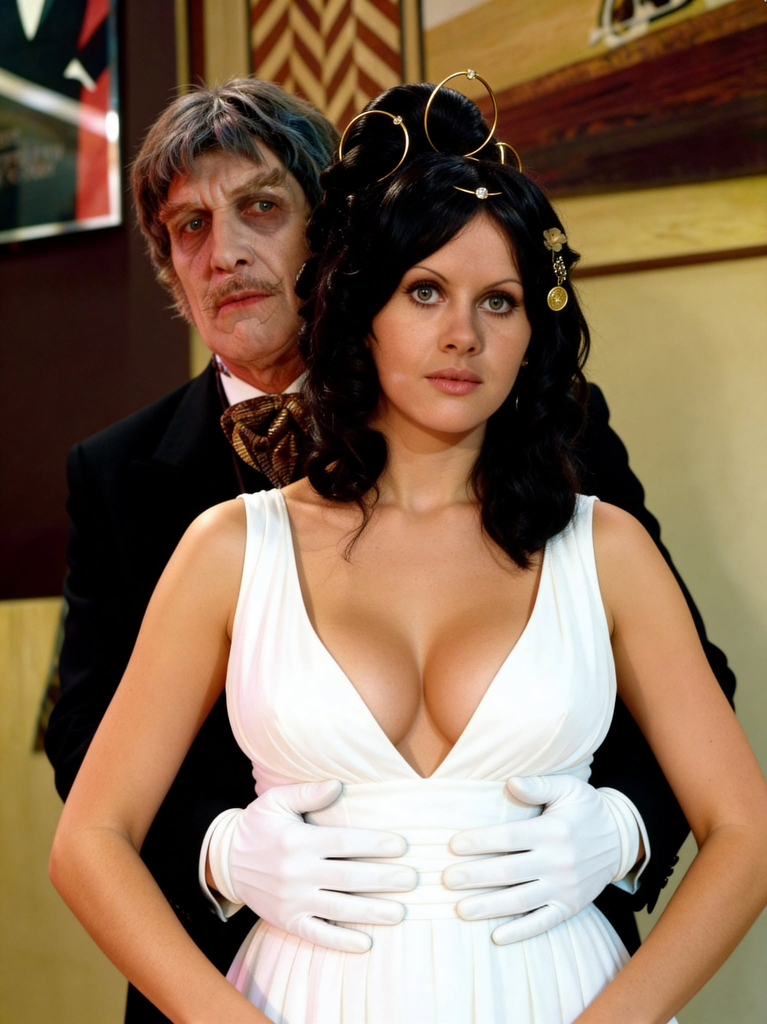
5. VINCENT PRICE MADE LESS THAN $1000 FOR HIS WORK ON THE TITLE TRACK.
Jones’ then-wife Peggy Lipton knew Price. The horror movie legend managed to record his part in two takes. Once the album got big, Price expressed frustration over his meager paycheck and said that Jackson had stopped taking his calls.
6. JACKSON WAS SUED FOR “WANNA BE STARTIN’ SOMETHIN’.”
Cameroon musician Manu Dibango recorded “Soul Makossa” in 1972. The song, sung in the Cameroonian language of Duala, elongated the phrase “mamako mamasa” as “ma ma ko/ma ma sa/ma ko ma ko sa.” Jackson changed it to “ma ma se/ma ma sa/ma ma ku sa,” but the similarity was obvious. A compensation arrangement was hammered out in an out-of-court settlement.
7. “BILLIE JEAN” WAS ABOUT ONE SPECIFIC GIRL.
Quincy Jones claimed that Jackson told him “Billie Jean” was based on a girl who climbed over his wall one morning and accused him of being the father of one of her twins. Jones wanted the singer to change the title to “Not My Lover” to avoid possible confusion with the song being about tennis player Billie Jean King.
8. “BILLIE JEAN” ALMOST KILLED MICHAEL.
In his autobiography, Jackson wrote about the time he was driving his Rolls-Royce down the Ventura Freeway during a recording session break. He was thinking about the song so much that he didn’t notice the bottom of his car was on fire. A kid on a motorcycle warned him in time.
9. JACKSON ADMITTED TO DARYL HALL THAT HE RIPPED OFF HALL & OATES.
As Hall remembers it, Jackson approached him during the “We Are the World” recording and admitted to cribbing the bass line from “I Can’t Go for That (No Can Do)” for “Billie Jean.”
10. “BILLIE JEAN” WAS MIXED 91 TIMES.
Quincy Jones then requested, “‘Let’s go back and listen to mix number two,'” recording engineer Bruce Swedien said. “And we did, and it blew us all away! I had overmixed that song right into the pooper, so the mix that went onto the record was mix number two.”
11. “THE GIRL IS MINE” CAME FROM A REQUEST FROM QUINCY JONES.
Jackson revealed during testimony that successfully fought a plagiarism allegation that the producer directed him to write a song about two men fighting over a girl. He later woke up in the middle of the night and sang the song into a tape recorder. Jones also later requested he add the rap verse.
12. “BEAT IT” WAS INSPIRED BY “MY SHARONA.”
Jones told The Telegraph he wanted a “black version” of The Knack song.
13. EDDIE VAN HALEN PLAYED THE GUITAR SOLO ON “BEAT IT.”
He did it while the rest of his band, Van Halen, was out of town, not thinking anybody in the group would ever know.
14. “HUMAN NATURE” WAS DISCOVERED BECAUSE TOTO DIDN’T GO CASSETTE SHOPPING.
David Paich worked on demos for Jones to potentially use for Thriller, sending him cassettes virtually every day with songs. One day, his then-roommate and Toto bandmate Steve Porcaro was tasked with recording Paich’s demos onto a cassette. Porcaro reused one of his own tapes because they were out of blank cassettes. Jones didn’t like the two songs of Paich’s when he heard them, but he loved the next song that came on—Porcaro’s early version of “Human Nature.”
15. THE TITLE “P.Y.T. (PRETTY YOUNG THING)” CAME FROM PEGGY LIPTON’S LINGERIE.
Jones noticed his wife’s lingerie said “pretty young things” on them, and tasked his songwriters to come up with lyrics for the title, “Pretty Young Thing: Tender Loving Care.” Singer/songwriter James Ingram came up with the winning version.
16. THERE WERE SOME STRANGE RECORDING TECHNIQUES.
Bruce Swedien recalled recording some background vocals in the Westlake shower stall. The “Don’t think twice!” lines in the second verse of “Billie Jean” was Jackson singing through a five-foot-long cardboard tube.
17. CBS RECORDS AND MTV CLASHED OVER THE “BILLIE JEAN” VIDEO.
In March 1983, Billboard Magazine noticed a sizeable delay between the video’s delivery to the fledgling cable network and its first airing. MTV claimed they only played rock artists, but were accused by some—including publicly by Rick James—of being racist. CBS Records president Walter Yetnikoff threatened to pull all videos made by the label’s artists off the network if they didn’t play “Billie Jean.” At first, the video ran two to three times a day for one month, before being put into heavy rotation for the next three months.
18. BLOODS AND CRIPS MADE CAMEOS IN THE “BEAT IT” VIDEO.
The video cost $150,000 to produce, and was directed by Bob Giraldi, even though “Billie Jean” director Steve Barron was initially set to direct it. Jackson and Barron intended to set the video on a slave ship, with Jackson as the slave master.
19. THE “THRILLER” MUSIC VIDEO COST $500,000.
The Showtime cable network footed $300,000 of the budget for the rights to first air the music video and the “making of” feature, with MTV paying the rest to broadcast it after Showtime. Jackson asked John Landis to direct the video after seeing his work on the movie An American Werewolf in London. “I want to turn into a monster,” Jackson told Landis. “Can I do that?” Landis wrote the disclaimer that appears in the beginning of the video because Jehovah’s Witnesses (a group which Jackson belonged to at the time) told the artist that “Thriller” endorsed Satanism.
20. THE “THRILLER” VIDEO PLAYED IN A MOVIE THEATER SO THAT IT COULD QUALIFY FOR AN OSCAR.
For one week in a movie theater in Westwood, California, Thriller served as the opening feature before showings of Fantasia (which didn’t sit well with a lot of parents).
21. MANY FANS THOUGHT THE UPC BARCODE ON “THRILLER” WAS MICHAEL JACKSON’S HOME PHONE NUMBER.
The rumor spread so much that a hair studio in Bellevue, Washington received up to 50 phone calls per day. A woman in Youngstown, Ohio who also had the phone number said that while the kids that called were nice, some of the adults were “pretty rude and ignorant.”
Home/Pop Culture
How Bruce Springsteen Turned One of America’s Darkest Crimes Into a Haunting Classic
Springsteen composed and recorded his celebrated “Nebraska” by himself, in his bedroom.
ByTim Brinkhof|Jul 24, 2026, 7:00 PM EDT
 Add us as a preferred source

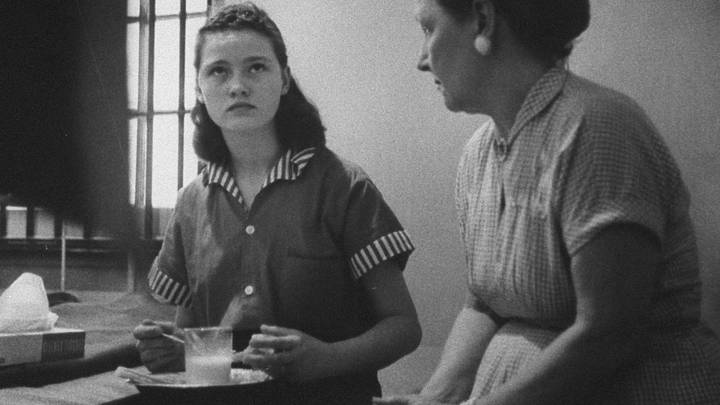
Between January 21 and 29, 1958, a 19-year-old garbageman from Lincoln, Nebraska, called Charles Starkweather went on a killing spree with his 14-year-old girlfriend, Caril Ann Fugate.
Described as a “swaggering good-for-nothing in blue jeans and a black motorcycle jacket” known to yell “go to hell” at strangers, Starkweather killed 11 people—including Fugate’s mother, stepfather, and half-sister—before he was caught and sent to the electric chair.
News of the seemingly random serial killings—a prelude to the likes of Ted Bundy, John Wayne Gacy, and Jeffrey Dahmer—shocked many Americans, including singer-songwriter Bruce Springsteen.
Today, the event is best remembered through the song “Nebraska,” the first in Springsteen’s album of the same name. Though told from Starkweather’s own perspective, it never properly explains his motives—and that’s precisely the point.
How a Murder Spree Inspired a Musical Masterpiece
Though widely regarded as the best album in Springsteen’s long and industrious career—including by Springsteen himself—the singer-songwriter didn’t know if any of its songs would resonate with people. His doubts weren’t unreasonable. Contrary to his previous albums, which were recorded in a studio alongside his E Street band, the songs on “Nebraska” Springsteen recorded by himself, in his bedroom.
Springsteen had tried recording them with his band, but felt that the high production quality didn’t suit their dark, intimate nature. Ultimately, he decided that his own recording—originally intended to be little more than a demo—was superior.
“Nebraska” marked an important turning point in Springsteen’s career. Although dashed dreams and harsh realities had always been a prominent part of his repertoire, this new album sounded much more hopeless.
Unlike with many of the songs on “The River,” Springsteen’s focus was less on celebrating man’s resilience in the face of unyielding hardship, and more on bemoaning the seemingly cruel nature of the universe.
As he sings in the opening song, which is best listened to with the knowledge that Starkweather never gave a proper confession of his crimes: “They wanted to know why I did what I did / Well sir I guess there’s just a meanness in this world.”
Springsteen later claimed that he did not create “Nebraska” with a political agenda in mind, concentrating instead on achieving a particular sound. True or not, his music is often placed in a political context—one that continues to resonate today.
Donald Trump frequently plays Springsteen’s music at his rallies, particularly “Born in the USA.” This he does to the great chagrin of Springsteen himself, who knows better than anyone that his songs do not applaud or criticize American nationalism.
The Album That Almost Stayed a Demo
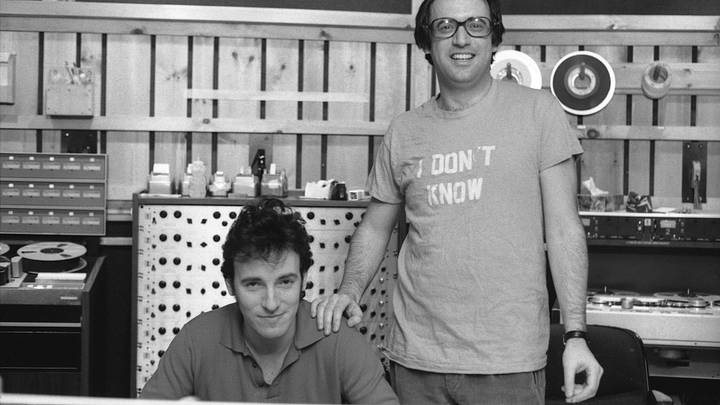
Though certainly a response to current events, “Nebraska” also came into existence because of developments in Springsteen’s own career. Having become a superstar, he wanted to close the gap between him and his fans, and avoid turning into a sellout.
“All popular artists,” Springsteen wrote in his 2016 memoir Born to Run, “get caught between making records and making music.” Once he found himself in this very spot, he chose to make music.
Despite Springsteen’s doubts, “Nebraska” became both a critical and commercial success, topping U.S. and U.K. charts and selling millions of copies. Ultimately, though, it’s remembered for closing that aforementioned gap.
As E Street guitarist Steve van Zandt later said: “An artist could never get closer to his audience than this. Not because it was done with an acoustic guitar, but because he was literally singing for himself.”
More Like This:
•
20 One-Hit Wonders From the 1980s You Still Know Every Word To
•
6 Classic Rock Hits That Almost Went to Different Artists
•
The Elvis Presley Encounter That Changed Tom Petty’s Life
•
Quiz: Can You Name the Tom Petty Song From One Lyric?
•
Quiz: Is This a Lyric From “Monster Mash” or “Spooky, Scary Skeletons”?
Home/MUSIC