ByAbbey Stone|Apr 29, 2022, 10:08 PM EDT
 Add us as a preferred source

The Sopranos made household names of James Gandolfini, Edie Falco, and the rest of New Jersey’s fictional Satriale’s-eating, Bing-frequenting tough guys. On January 10, 1999—20 years ago today—the series premiered, and helped usher in the concept of “prestige television.” Even in today’s Golden Age of Television, The Sopranos is still heralded as one of the best TV shows ever made. But not even six seasons and 86 episodes on the air—plus another 12 years of critical comparisons and acclaim—could unveil all of the show’s secrets.
(Tip: If you’re still pining for more behind-the-scenes facts after reading the 25 below, The Sopranos Sessions—a new book by Matt Zoller Seitz and Alan Sepinwall—is a great place to continue your education.)
1. The Sopranos started as a movie pitch.
Before The Sopranos creator David Chase developed the story of Tony Soprano and his family for television, he pitched it as a movie about a mobster who enters therapy to discuss problems he has with his mother. According to Chase, his manager Lloyd Braun made him consider TV for the first time by telling him, “I want you to know that we believe that you have inside you a great television series.”
2. Livia Soprano was supposed to die in the first season.

While Chase abandoned his movie idea, the tension between Tony and his mother, Livia, provided the central conflict for the show’s first season—and that’s where it was supposed to end. Chase originally intended for Tony to succeed in suffocating his mother with a pillow after she tries to have him killed in season 1. However, Nancy Marchand, who played Livia, was sick with cancer during her time on the show. She asked Chase, “David, just keep me working.” He graciously obliged.
3. Nancy Marchand died before filming what would have been her final scenes.
Just as she wished, Chase kept Marchand working until the very end. She passed away from lung cancer and emphysema on June 18, 2000, one day before her 72nd birthday. Livia’s final moments on screen were cobbled together from old footage, recordings of her usual choruses, and special effects (Marchand’s head was CGI’ed onto a body double). At the time, critics panned the scene, deeming it awkward and convoluted.
4. The show’s creative team boasts some powerful alumni.
Sopranos writers and producers included Matthew Weiner, who went on to create Mad Men, Terence Winter, the mastermind behind Boardwalk Empire, and Ilene Landress, who executive produced Girls.
5. DAVID CHASE ONLY DIRECTED TWO EPISODES …

…the pilot and the finale. Tim Van Patten, who has directing credits on Game of Thrones, The Wire, and Boardwalk Empire, directed the most (20). Allen Coulter directed 12 episodes, including two of the series’ best: “College” and “The Test Dream.” Steve Buscemi directed four episodes, including the incredible “Pine Barrens.” Only one episode was directed by a woman: Lorraine Senna took the helm of season 1 episode “Down Neck.”
6. The Sopranos shares 28 cast members with Martin Scorsese’s Goodfellas.
According to IMDb, six regular Sopranos cast members appeared in Goodfellas (Lorraine Bracco, Michael Imperioli, Tony Sirico, Vincent Pastore, Frank Vincent, and Joseph R. Gannascoli). Ten recurring Sopranos characters and 11 one-time guest stars also appeared in the 1990 Martin Scorsese masterpiece.
7. Ray Liotta was approached about a role.

In a 2001 Today Show interview, Liotta said he was offered a part in The Sopranos—without saying which one—but turned it down to focus on his film career. In 2003, Liotta corroborated his story for the university newspaper the GW Hatchet. “Having done Goodfellas, I mean, that’s pretty much the ultimate in Mafia everyday life. And that show is pretty much structured around Tony Soprano. There was no way I was gonna shine,” he said. “It just didn’t seem like the right thing to do. I love him [James Gandolfini] as an actor. I think he’s great. But my ego’s as big as anybody’s.”
8. Steven Van Zandt was David Chase’s first pick for Tony.
Before he auditioned James Gandolfini, Chase wanted Steven Van Zandt, guitar player of Bruce Springsteen’s E Street Band, to play Tony. “I used to listen to music a lot on headphones and look at [Springsteen’s] LP, and Steven Van Zandt’s face always grabbed me,” Chase told Vanity Fair in 2012. “He had this similarity to Al Pacino in The Godfather. Then we were casting the pilot, and my wife, Denise, and I were watching TV. Steven came on VH1, when they were inducting the Rascals into the Rock and Roll Hall of Fame, and Steven gave the speech. He was very, very funny and magnetic. I said to my wife, ‘That guy has got to be in the show!'”
The producers didn’t want to gamble on a first-time actor for the show’s lead, so Chase offered to write a part for Van Zandt. The character Silvio Dante, who Van Zandt came to play, was in fact inspired by a short story about a retired hitman written by Van Zandt himself.
9. Tony wasn’t originally supposed to be such a tough guy.

Chase didn’t view Tony as such a ruthless character; this came straight from James Gandolfini. In a 2007 conversation with Tom Fontana (creator of Oz, Homicide: Life on the Street, and St. Elsewhere) for Written By magazine, Chase said, “Jim showed me early on how much of a prick that guy would have to be. The first day we shot, there was a scene where Christopher said he was going to sell his story to Hollywood. In the script, it said something like, ‘Tony slaps him.’ But when we shot it, all of a sudden Jim was out of his seat. He picked Michael Imperioli up by the neck, by the collar, had him almost off the ground and said, ‘What?! Are you crazy?’ And I thought, Of course, that man’s a motherf***er. That guy is surviving the mob. He’s really a dangerous person. He’s not a fun guy.”
10. Lorraine Bracco was originally asked to play Carmela.
After portraying a similar role in Goodfellas, the Sopranos producers originally envisioned Lorraine Bracco as Tony’s wife, Carmela Soprano. It was Bracco who asked to play Tony’s therapist, Dr. Jennifer Melfi, which she thought would be more of a challenge. Bracco later said of playing Melfi, “I was not ready for how f***ing difficult Dr. Melfi was to play. I am an explosive girl. I am loud. I am full of life and full of all kinds of bull****, and I have to sit on every emotion, every word, everything, to play this character.” Bracco went on to garner four Emmy nominations and three Golden Globe nominations for her performance.
The wonderful Edie Falco, of course, was cast as Carmela.
11. Dr. Melfi was modeled on Chase’s real-life therapist.

In a 2006 interview with Rolling Stone, Chase revealed that Lorraine Kaufman, his therapist during the time he conceptualized The Sopranos, provided the inspiration for Dr. Melfi. “She had the same way of cutting through your bull****,” he said. Not only did Chase tell Dr. Kaufman of her influence, Kaufman became involved in the characters’ psychological development. “After three or four seasons, she wrote me a breakdown of the Soprano family,” Chase said. “This is not a bible, but every once in a while we get it out. Strangely enough, these fictional characters have, in fact, behaved in the way she predicted they might, even though we might have forgotten she ever wrote it.”
12. Michael Imperioli thought he blew his audition.
It’s almost impossible to imagine The Sopranos without Michael Imperioli as Tony’s nephew/cousin Christopher Moltisanti, but as Imperioli tells it, he almost didn’t land the gig. “They brought me in, and I met with David. I thought he hated my audition, because David’s a poker-faced guy,” Imperioli told Vanity Fair in 2012. “He kept giving me notes and giving me direction, and I walked out of there, and I was like, ‘I blew that one.'”
13. Drea de Matteo played an unnamed hostess in the pilot.

Chris-ta-fuh’s better half almost didn’t make the cut, either. Drea de Matteo was brought in to read for the role of Adriana La Cerva during the initial round of casting, but, according to de Matteo, Chase “didn’t think she was Italian enough.” So, in the pilot, de Matteo appears in one scene as an unnamed hostess. It wasn’t until after the series was picked up that de Matteo became the Adriana we all know and love.
14. Much of Paulie’s storyline came straight from Tony Sirico’s life.
Before Tony Sirico was Paulie “Walnuts” Gaultieri, he was a criminal. Seriously. According to the Los Angeles Times, his rap sheet was longer than his acting credits: 28 arrests to 27 acting jobs. And as both Sirico and Chase tell it, the similarities between Sirico and his character didn’t end there. Paulie’s neat-freak tendencies and unusual living arrangements were transferred directly from Sirico’s real life to the screen. “I lived with Ma for 16 years before she passed. David knew that going in. That became one of my story lines,” he told Vanity Fair.
15. Tony is estimated to be worth about $5 to $6 million.

David Chase and The Sopranos producers worked with a technical consultant, former New York assistant district attorney Dan Castleman, to fully understand the way the real mob made their money. According to Castleman, Tony Soprano’s estimated net worth was $5 to $6 million—but this number often fluctuated due to Tony’s gambling habits.
16. Steven Schirripa wore a fat suit to play Bobby Baccalieri.

When Steven Schirripa got his first script and saw all the fat jokes Tony directed at Bobby, he thought he had been miscast—he was barely larger than Gandolfini. But a couple days before filming began, he was fitted for his fat suit, which he wore for the first few seasons. “And then I guess, in season 4, David thought I was fat enough on my own, so he let me get rid of it,” Schirripa told Vanity Fair.
17. The Bada-Bing scenes were filmed at a real New Jersey strip club.
The Sopranos was filmed on location in New Jersey and New York and on sound stages at Silvercup Studios in Queens. The Bing, however, was no studio creation. Those scenes were shot at Satin Dolls, a “gentleman’s club” on State Route 17 in Lodi, New Jersey.
18. Exterior shots of the Sopranos’ home were shot at a private residence in North Caldwell, New Jersey.
The Soprano family resides at (the fictional) 633 Stag Trail Road in (the real) North Caldwell, New Jersey.
19. The Sopranos was so realistic, the real mob thought there was a connected guy on the inside.
FBI agents told The Sopranos‘s creative team that on Monday mornings all anyone could talk about was The Sopranos. And on the wire taps they’d collected from the weekend, that’s all the real-life mobsters could talk about as well. Terence Winter told Vanity Fair, “We would hear back that real wiseguys used to think that we had somebody on the inside. They couldn’t believe how accurate the show was.”
20. To settle disputes over actor salaries, James Gandolfini gave each actor $33,333 of his own money.

After season 4, production on The Sopranos was delayed due to a pay dispute with HBO. According to Edie Falco, the cast staged a sort of “Occupy Vesuvio” sit-in that shut down the set. To help quell tensions, Gandolfini split his bonus among all the regular cast members, giving them each $33,333.
21. Chase shot multiple versions of many scenes so that not even the actors would know how things turned out.
Were you shocked to see Sil whack Adriana in season 5? So was Drea de Matteo. De Matteo told Vanity Fair that David Chase had the cast and crew film two different versions of the dramatic episode: one in which Adriana suspects something fishy and drives away after her final phone call with Tony, and one where—well, you know what happens.
According to de Matteo, this practice of filming multiple versions of the same scene to keep the cast and crew guessing (along with interviewers and fans) was a common occurrence.
22. the show’s theme song is “Woke Up This Morning” by Alabama 3.
Originally, Chase wanted to use a different song during the opening credits of each episode, but the other producers convinced him otherwise. For the theme, Chase chose a remixed version of “Woke Up This Morning” from Exile on Coldharbour Lane, the 1997 debut album by English band Alabama 3. Oblivious to the fact that his song would one day become synonymous with Jersey mobsters, Alabama 3 frontman Rob Spragg wrote the song after hearing about the 1996 murder trial of Sara Thornton, who stabbed her alcoholic husband to death after suffering years of domestic abuse at his hands.
23. During the first three seasons, the World Trade Center can be seen in Tony’s rearview mirror during the opening credits.

As Tony exits the Lincoln Tunnel on his drive from New York to his Jersey ‘burb, the Twin Towers can be seen in his rearview mirror (in a bit of Hollywood magic, since the World Trade Center wasn’t actually visible from the Lincoln Tunnel’s exit). This shot was removed beginning with the first episode following the terrorist attacks on September 11, 2001.
24. It was the first cable television show to win the Emmy for Outstanding Drama Series.
In 2004, after being nominated for the award five times, The Sopranos won the Emmy Award for Outstanding Drama Series. It would continue to be nominated every year it was eligible, winning again for its final season in 2007. Matthew Weiner, who shared the Emmy with David Chase and the other executive producers, would go on to win the award the next four years for Mad Men, until Homeland broke his winning streak in 2012.
25. Michael Imperioli is convinced Tony Soprano dies in the finale.

The famous cut-to-black—and impeccably truncated version of Journey’s “Don’t Stop Believin'”—in The Sopranos finale is heralded as one of the most shocking (and controversial) cliffhangers of all time. Does Tony get shot? Does he get arrested? Or does the whole family finish their sundaes and go home?
No one but David Chase can say for sure. But Michael Imperioli (Christopher) is firmly in the “Ohmigod, they killed Tony!” camp. “I think he’s dead, is what I think,” Imperioli told Vanity Fair in 2012. “David was trying to put us in the place of the last things you see before you die. You remember some little details and something catches your eye and that’s it. You don’t know the aftermath because you’re gone.” And with that, the show was gone, too.
Related Tags
The Real-Life Serial Killer That Might’ve Inspired Dexter’s Dark Passenger
Brazil’s most notorious killer of killers has been called the real Dexter for years, but ‘Dexter’s’ creator tells a different origin story.
ByMatt Hoffman|Oct 30, 2026, 9:00 PM EDT
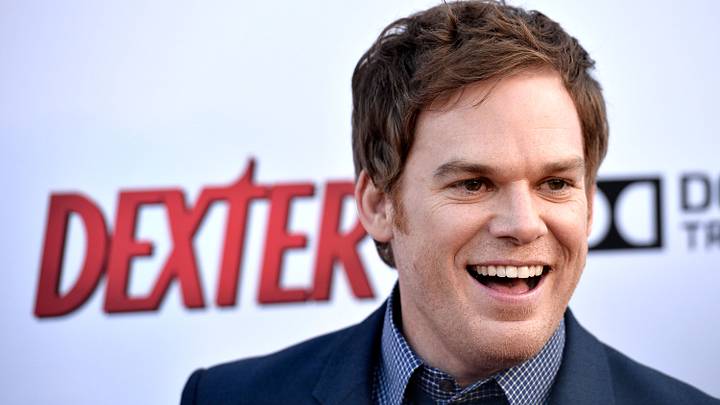
Back in July 2004, Jeff Lindsay introduced readers to Dexter Morgan, a Miami police blood-spatter analyst who kills only people who deserve it, egged on by a voice in his head he calls the “Dark Passenger.” Two years later, Showtime turned Darkly Dreaming Dexter into a hit series with Michael C. Hall.
Somewhere along the way, the internet decided Dexter had a real-life model: Pedro Rodrigues Filho, a Brazilian who claimed to have killed more than 100 people, most of them criminals. Entertainment sites now call him “the Brazilian Dexter,” and ScreenRant describes the show as loosely based on his crimes. No quote from Lindsay or the show’s producers backs that up, but the similarities are hard to miss.
The Boy Who Settled Scores
Filho was born in 1954 on a farm in Santa Rita do Sapucaí, in the Brazilian state of Minas Gerais, with an injured skull: his father, he said, had kicked his pregnant mother during a fight. He told the magazine Época in 2003 that he first wanted to kill at 13, when he shoved an older cousin into a sugarcane press. A year later, after his father lost his job as a school guard over accusations that he was stealing school lunches, Filho shot the official who had fired him, then shot the guard he believed was the real thief. (Accounts disagree on who that first victim was: some Brazilian outlets say the mayor of his hometown, others the deputy mayor of Alfenas, also in Minas Gerais.)
He fled to Mogi das Cruzes, outside São Paulo, where he robbed drug dens, killed traffickers, and took over a dead drug boss’s business. When his pregnant girlfriend was shot dead, he went looking for the man who ordered it and, with four friends, hit a wedding party, leaving seven dead and 16 wounded, according to Época. He was arrested shortly after turning 18 and entered prison on May 24, 1973; in the van on the way there, he killed a fellow prisoner he said was a rapist.
Where the Comparison Holds
Like Dexter, Filho had a code, or said he did. He told Época he killed only people who were no good, and that he never killed children, women, or family men. He also had a father story to rival Harry Morgan’s, though a much darker one: Filho claimed he killed his own father in prison, in revenge for his mother’s stabbing, and chewed a piece of his heart. (Época noted that he gave a psychiatrist a completely different account of how his father died.)
The resemblance mostly ends there. Dexter’s code, as Mental Floss has laid out before, includes “don’t get caught,” and Filho spent roughly four decades behind bars, much of it bragging. He had “Mato por prazer” (“I kill for pleasure”) tattooed on his left arm. He claimed 47 victims inside prison alone, though Época found just 18 charges against him on file in 2003; by his death, Brazilian outlets counted 71 homicides on his record.
What Dexter’s Creator Actually Said
Lindsay has told his origin story many times, and it starts nowhere near Brazil: at a Kiwanis Club lunch where he sat at the head table waiting to speak and, as he told BookPage in 2005, “the idea just popped into my head that sometimes serial murder isn’t a bad thing.” He then built the character out of research: he collected books on sociopaths and murderers, interviewed psychologists and crime scene investigators, and got cop friends to turn him loose in their dead-files room. He also rejects the very label that made Filho famous: “Dexter’s not a vigilante,” he told Middlebury Magazine in 2011. “Vigilantes are trying to perform an act of justice. Dexter just likes to kill people.”
The Ending Dexter Survived
Filho walked out of prison in 2007, went back in 2011 for crimes committed during his sentence, and was released for good in 2018. Within months, he had reinvented himself as a YouTube personality who commented on crimes in the news and lectured about his past. On the morning of March 5, 2023, he was on a sidewalk in Mogi das Cruzes holding a small child when men in a black car opened fire, according to the news site G1. The child was unhurt, but according to the police report, one of the attackers stabbed Filho in the throat as he lay on the ground. He was 68.
Read More:
•
•
Dexter: New Blood: 7 Things We Know
Quiz: Which ‘Little House on the Prairie’ Character Are You?
Find out which pioneer best matches your personality with this eight-question quiz!
ByNitya Rao|Jul 18, 2026, 8:00 PM EDT

Before we had the “tradwife” trend, we had Little House on the Prairie, where living off the land was the norm rather than the niche lifestyle it is today. The sweeping plains of Independence, Kansas, from Laura Ingalls Wilder’s original novel to the 2026 Netflix adaptation, remain the same. Yet, somehow, the world was an entirely different place. It was a world where survival required just as much pluck as it did positivity.
In the series premiere, Pa tells Laura that “hope is everything,” a profound sentiment she eventually echoes back to him by the season finale. And while the unpredictability of life on the prairie probably calls for a prayer or two, Ma reminds us that it isn’t always a bad thing. In Episode 4, she insists that “an uncertain life is full of possibilities.”
Maybe you relate to Ma’s realism, or perhaps you’re more like Pa, rose-colored glasses and all. Then there are the Lauras of the world who would rather be traipsing through the tallgrass than thinking about the perplexities of pioneering. Dr. George Tann’s charisma, Mary’s perfectionism, and John Edwards’ mysteriousness fill in the blanks. We may have evolved from bonnets to baseball caps, but each of us has an inner pioneer personality that persists.
Are you ready to find your place within the covered wagon? Take this quiz to discover which Little House on the Prairie character captures your true colors.
Which pioneer mirrors your personality the most? Each and every member of the community is resilient, passionate, and inspiring in their own way. Share this personality quiz with your family and friends to find out if you’re the same Little House on the Prairie character, or if you have the perfect balance of traits to brave the frontier together!
The Evolution of the Little House Legacy
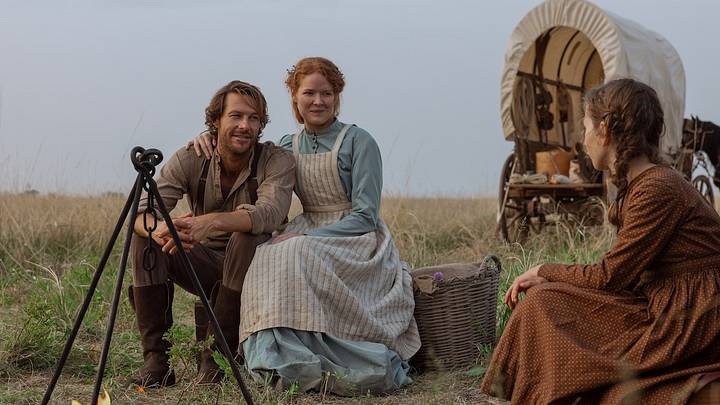
If you were raised on Little House reruns, odds are you have a favorite memory of life on the prairie. But before it became the next big thing to stream, Little House on the Prairie was a product of pen, paper, and fuzzy frontier flashbacks. That was roughly the recipe that Laura Ingalls Wilder used to craft the autobiographical book Little House in the Big Woods in 1932.
It was this coming-of-age tale that gave readers a tiny taste of the family’s cozy yet chaotic world of handcrafted log cabins and homemade maple sugar. Much like the staple pioneer sweet, one bite—and book—simply wasn’t enough. Over nearly a century, that opening chapter spawned eight more original novels, a 1970s TV series, and, most recently, a Netflix series offering a visually richer, realistic take on frontier life.
Along the way, generations of fans hitched their wagons to Laura’s fiery spirit and Mary’s quiet strength, while looking to Ma and Pa as the blueprint for making a house a home. From the page to the screen, this timeline traces the Little House on the Prairie legacy, showing how each installment puts its own spin on the Ingalls saga:
The Original Book Series
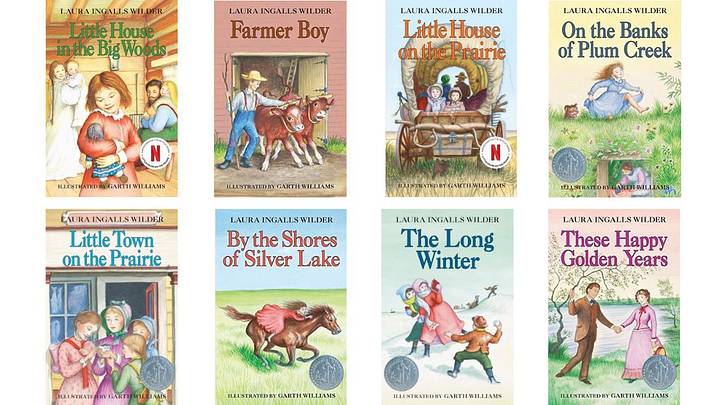
Little House in the Big Woods (1932)
Farmer Boy (1933)
Little House on the Prairie (1935)
On the Banks of Plum Creek (1937)
By the Shores of Silver Lake (1939)
The Long Winter (1940)
Little Town on the Prairie (1941)
These Happy Golden Years (1943)
The First Four Years (1971)
The Screen Adaptations
Little House on the Prairie, NBC Series (1974–1983)
Beyond the Prairie: The True Story of Laura Ingalls Wilder, CBS Movies (2000-2002)
Little House on the Prairie, Disney Miniseries (2005)
Little House on the Prairie, Netflix Series (2026)
We might swap out the actors or change the cinematography, but the heart of the Ingalls family never fails. We keep coming back to them because watchable resilience is rare, whether they’re braving a brutal blizzard or just fighting to keep a roof over their heads. Every reimagining reflects the respective era it was made in, but the overarching theme of holding onto hope through hardship is timeless.
Next: Join Mental Floss’s Geography Quiz Competition
More Personality Quizzes:
•
Quiz: Which ‘Sex and the City’ Character Are You?
•
Quiz: Which Beatles Band Member Are You?
•
Quiz: Which Disney Princess Are You?
•