
ByMichele Debczak|Feb 27, 2020, 5:00 AM EST
 Add us as a preferred source

Making a movie is hard. It’s even more difficult when freak accidents, premature deaths, and biblical acts of nature torment the cast and crew.
The movie productions below were so troubled that they’ve developed a reputation in Hollywood for actually being cursed. Since many of the films deal with satanic or supernatural subjects, fans have projected the horrors portrayed on the screen onto their behind-the-scenes happenings. The sources of other so-called curses are less mysterious: Today we know that filming downwind from a nuclear test site or covering your actors in aluminum makeup is a bad move, for example—but that wasn’t always the case.
From The Wizard of Oz to Poltergeist, here are eight “cursed” movies that have become Hollywood legends.
1. Poltergeist (1982)

Poltergeist is about a family whose new home, unbeknownst to them, was built on an ancient burial ground. This doesn’t sit well with the spirits whose final resting places have been disturbed, which leads to a series of supernatural happenings. With all that in mind, you might think that director Tobe Hooper, writer-producer Steven Spielberg, and the rest of the filmmakers would know better than to use actual human remains as props, but that’s exactly what they did.
In the scene where JoBeth Williams is dragged into a swimming pool that’s under construction, the skeletons that pop up around her are real. Superstitious movie fans have pointed to this as an explanation for the shocking deaths of two of the movie’s young stars: Dominique Dunne was murdered by an ex-boyfriend in 1982, just a few days shy of her 23rd birthday, and Heather O’Rourke died from misdiagnosed intestinal stenosis in 1988 at age 12.
2. The Omen (1976)

Danger began following the cast and crew of Richard Donner’s The Omen even before production on the film had officially begun. On his way to shoot the film in London, star Gregory Peck’s plane was struck by lightning. Executive producer Mace Neufeld experienced a similar scare when his flight from Los Angeles was electrocuted just a few weeks later. Other tragedies related to the movie included a terrorist bombing at the hotel where Neufeld and his wife were staying in London and the death of the film’s animal trainer. The day after he came to the set to handle the baboons in the famous zoo scene, the trainer was mauled by a tiger.
However, the most shocking The Omen-related incident occurred two months after the film premiered on June 6, 1976. The film’s special effects pro John Richardson was driving in the Netherlands with his assistant Liz Moore when they got into an accident. While Richardson survived, Moore was decapitated. A nearby sign for a town added another unsettling layer to the tragedy: It read Ommen, 66.6 km.
3. The Exorcist (1973)

When the New York City set of The Exorcist burned down in 1972, filmmakers immediately suspected evil forces were to blame. Jesuit priest Father Thomas M. King was brought in to bless the set when the crew moved to Washington, D.C., but that didn’t end the production’s unlucky streak. It was reported that a total of nine people involved with the movie died by the time production wrapped.
4. The Conqueror (1956)

The curse afflicting Dick Powell’s The Conqueror isn’t blamed on supernatural forces. The historical epic was filmed in Snow Canyon, Utah, just downwind from Nevada’s Yucca Flats. The site had recently been used to test 11 atomic bombs—something the filmmakers were made aware of before shooting. The ill effects of radiation weren’t widely known at the time and any suspicions of danger were downplayed by the government. By 1980, 91 members of The Conqueror’s cast and crew had gotten cancer and 46 had died from it—including star John Wayne and director Dick Powell. It’s impossible to prove how big a role radiation played in these deaths, if any, but it definitely doesn’t explain the movie’s bad luck at the box office. The Conqueror bombed so badly that it was partly responsible for putting its studio out of business. For that, however, we choose to blame John Wayne’s unfortunate performance as Genghis Khan.
5. Rosemary’s Baby (1968)

Rosemary’s Baby is another film about satanic subjects that was touched by tragedy. Sidney Blackmer, the actor who played coven leader Roman Castevet, commented on set, “No good will come of all this ‘Hail Satan’ business.” Following the production, producer William Castle needed surgery for his gallstones and composer Krzysztof Komeda fell and sustained brain injuries that led to a coma that was ultimately fatal. But the most notorious incident associated with the curse was the 1969 murder of Sharon Tate by the Manson Family. Tate was stabbed to death in the home she shared with Roman Polanski, her husband and the director of Rosemary’s Baby, who was away working on a film in Europe. She was eight-and-half months pregnant with their son at the time.
6. The Passion of the Christ (2004)

If you’re looking for a sign to stop making your R-rated movie about Jesus’s crucifixion, getting struck by lightning is a pretty clear one. During the production of The Passion of the Christ in 2003, a bolt of lightning hit star Jim Caviezel and assistant director Jan Michelini. And it was actually the second time Michelini had been struck by lightning on the set of the film. Both victims walked away from the incidents relatively unscathed, and when it premiered in 2004, The Passion of the Christ raked in $611 million worldwide.
7. Rebel Without a Cause (1955)

Nicholas Ray’s Rebel Without a Cause is famously one of the last movies James Dean starred in before passing away at age 24. The actor was in a fatal car crash just weeks before the premiere in 1955, and that alone would have been enough to mar the film in tragedy. It’s legacy was further complicated when the movie’s two other leads met untimely death decades later: In 1976, Sal Mineo was murdered outside his Los Angeles apartment and in 1981, Natalie Wood drowned off Catalina Island under suspicious circumstances (that are still being investigated). Dean was also injured multiple times during the film’s production, once when he broke his hand pounding a desk and again when he was cut during a knife fight scene.
8. The Wizard of Oz (1939)

The land of Oz was much less cheery than it appeared onscreen, as the troubles plaguing The Wizard of Oz were nonstop. First the Tin Man had to be recast when Buddy Ebsen, the actor originally hired to play the role, had a life-threatening reaction to his aluminum makeup. During the scene when the Wicked Witch is supposed to disappear in a plume of smoke, the trapdoor malfunctioned, and actress Margaret Hamilton suffered second-degree burns. She was wearing copper makeup at the time and crew members had to rush to remove the toxic material before it further aggravated her injuries.
Stunt and background actors were also prone to disaster. Hamilton’s double Betty Danko was sent to the hospital when a prop broom exploded and two actors playing winged monkeys fell when their wires snapped. But not every dark story you’ve heard about The Wizard of Oz is true: The Munchkin who is notoriously said to have hanged himself in one scene is actually a bird spreading its wings.
The Original Name for ‘Sesame Street’ Wasn’t Nearly as Catchy
The beloved show’s first title was the name of an actual street in the East Village.
BySabrina Reed|Nov 10, 2026, 12:00 PM EST
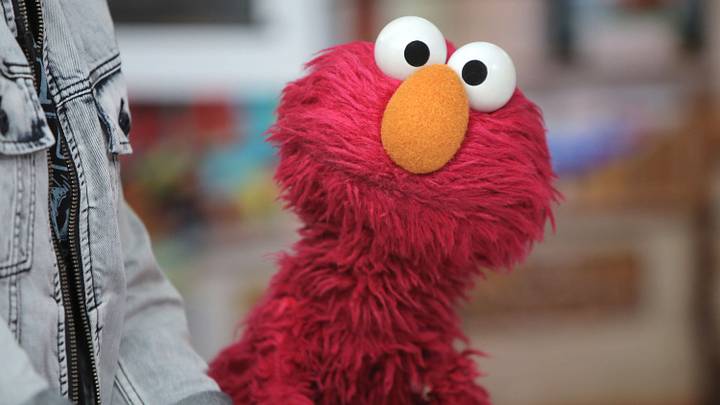
Can you imagine a world where Sesame Street is called 123 Avenue B?
Before the beloved children’s educational program was launched on November 10, 1969, that was the name co-creators Joan Ganz Cooney and Lloyd Morrisett were weighing with their team.
While the original show title doesn’t quite roll off the tongue, it is fun to say. Most importantly, it connected the series to New York City, the diverse populace Sesame Street would draw inspiration from in its design, character representation, and understanding of the world around it. But 123 Avenue B was deemed too on the nose because it’s an actual street in Alphabet City located in the East Village near the Lower East Side.
Naming the Street: From Alphabet City to Sesame
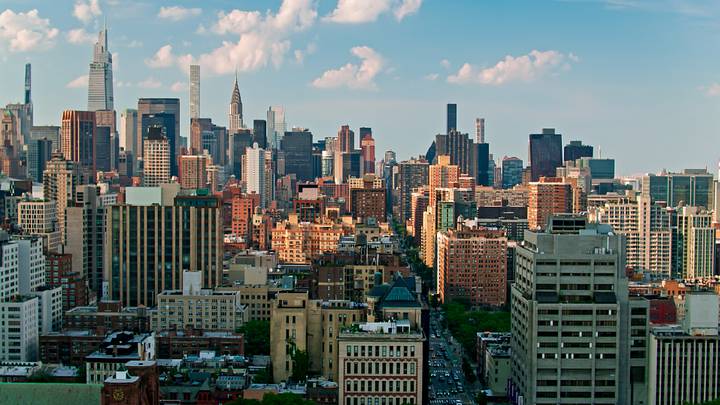
For a series sponsored by letters and numbers, Alphabet City would have been the perfect place to set the program. However, in choosing to name the show after a fictional street, a new idea took shape.
Sesame Street gets its name from “open sesame,” the phrase popularized by Antoine Galland’s translation of “Ali Baba and the Forty Thieves” from One Thousand and One Nights. In the story, the thieves use the phrase to open the secret entrance to their treasure trove. According to Sesame Workshop, the word ‘sesame’ is meant to invoke “a street where neat stuff happens,” and that’s exactly what the show has come to embody.
A Street Where Learning Happens
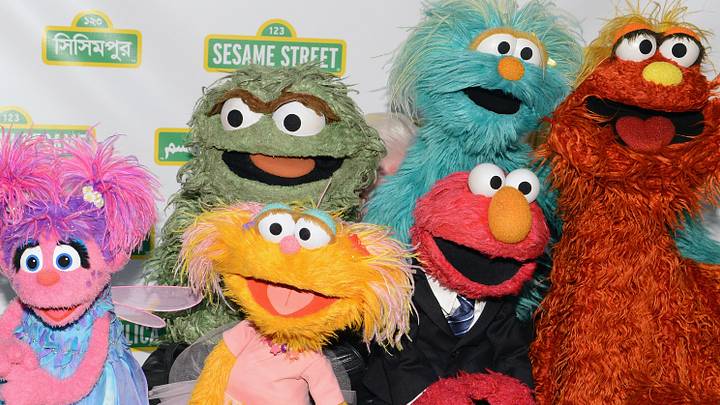
60 years ago, in 1966, the series was simply a thought based on the question of whether a television program could educate children. Cooney worked for the local PBS station, WNET THIRTEEN, as a documentarian. With the support of Morrisett, who was vice president of the Carnegie Corporation of New York, she conducted a study that spanned three months—The Potential Uses of Television in Preschool Education. Cooney interviewed early learning experts as well as children’s television producers and filmmakers to answer this question, and it became the basis for Sesame Street and the Children’s Television Workshop (now known as the Sesame Workshop).
The series is the first preschool program to blend education and entertainment to teach children basic skills through play, pretend, and storytelling. Young viewers learn and practice their alphabet and counting. They also expand their reasoning ability and strengthen their literacy through the show. Sesame Street incorporates topics on health, science, art, music, and dance. It helps parents develop their child’s social skills and healthily navigate their emotions as well.
Since 1969, the show has broadcast daily and remained committed to taking a multicultural approach to discussing and teaching about the diverse world its characters and audience live in. More than 300 PBS stations carry the program, and it’s available on Netflix and YouTube. The series has been watched by hundreds of millions of children across the world in more than 140 countries. Per Sesame Workshop, “Indigenous co-productions reflecting local languages, customs, and educational needs have since been produced for audiences in the Arab world, Israel, India, Indonesia, Bosnia, Portugal, Turkey, Germany, France, Poland, Norway, Sweden, Holland, Russia, China, South Africa, Egypt, the Philippines, Canada, Spain, and Latin America.”
Finding Sesame Street in the Real World
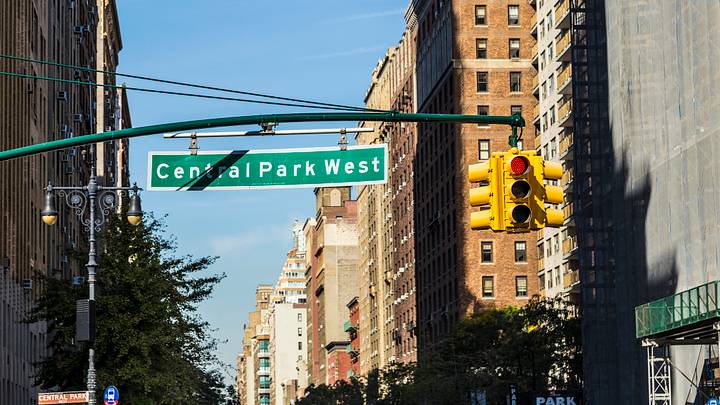
Though Sesame Street is fictional, and Alphabet City didn’t become its home, it is actually possible to visit. The show itself is filmed in Astoria, Queens, at Kaufman Astoria Studios. But if you want to take a picture beneath its sign in New York City, you’ll need to go to the block of West 63rd Street between Central Park West and Broadway in Manhattan on the Upper West Side. That’s where the official “Sesame Street” is located, right next to Sesame Workshop’s headquarters.
In 2019, Mayor Bill de Blasio bestowed the address on the series for its 50th anniversary. It’s possible to reach Sesame Street by subway, just like you can in the program. So, if anyone asks, “Can you tell me how to get to Sesame Street?” you can say yes and show them the way.