ByMichele Debczak|Feb 27, 2020, 5:00 AM EST
 Add us as a preferred source

Making a movie is hard. It’s even more difficult when freak accidents, premature deaths, and biblical acts of nature torment the cast and crew.
The movie productions below were so troubled that they’ve developed a reputation in Hollywood for actually being cursed. Since many of the films deal with satanic or supernatural subjects, fans have projected the horrors portrayed on the screen onto their behind-the-scenes happenings. The sources of other so-called curses are less mysterious: Today we know that filming downwind from a nuclear test site or covering your actors in aluminum makeup is a bad move, for example—but that wasn’t always the case.
From The Wizard of Oz to Poltergeist, here are eight “cursed” movies that have become Hollywood legends.
1. Poltergeist (1982)

Poltergeist is about a family whose new home, unbeknownst to them, was built on an ancient burial ground. This doesn’t sit well with the spirits whose final resting places have been disturbed, which leads to a series of supernatural happenings. With all that in mind, you might think that director Tobe Hooper, writer-producer Steven Spielberg, and the rest of the filmmakers would know better than to use actual human remains as props, but that’s exactly what they did.
In the scene where JoBeth Williams is dragged into a swimming pool that’s under construction, the skeletons that pop up around her are real. Superstitious movie fans have pointed to this as an explanation for the shocking deaths of two of the movie’s young stars: Dominique Dunne was murdered by an ex-boyfriend in 1982, just a few days shy of her 23rd birthday, and Heather O’Rourke died from misdiagnosed intestinal stenosis in 1988 at age 12.
2. The Omen (1976)

Danger began following the cast and crew of Richard Donner’s The Omen even before production on the film had officially begun. On his way to shoot the film in London, star Gregory Peck’s plane was struck by lightning. Executive producer Mace Neufeld experienced a similar scare when his flight from Los Angeles was electrocuted just a few weeks later. Other tragedies related to the movie included a terrorist bombing at the hotel where Neufeld and his wife were staying in London and the death of the film’s animal trainer. The day after he came to the set to handle the baboons in the famous zoo scene, the trainer was mauled by a tiger.
However, the most shocking The Omen-related incident occurred two months after the film premiered on June 6, 1976. The film’s special effects pro John Richardson was driving in the Netherlands with his assistant Liz Moore when they got into an accident. While Richardson survived, Moore was decapitated. A nearby sign for a town added another unsettling layer to the tragedy: It read Ommen, 66.6 km.
3. The Exorcist (1973)

When the New York City set of The Exorcist burned down in 1972, filmmakers immediately suspected evil forces were to blame. Jesuit priest Father Thomas M. King was brought in to bless the set when the crew moved to Washington, D.C., but that didn’t end the production’s unlucky streak. It was reported that a total of nine people involved with the movie died by the time production wrapped.
4. The Conqueror (1956)

The curse afflicting Dick Powell’s The Conqueror isn’t blamed on supernatural forces. The historical epic was filmed in Snow Canyon, Utah, just downwind from Nevada’s Yucca Flats. The site had recently been used to test 11 atomic bombs—something the filmmakers were made aware of before shooting. The ill effects of radiation weren’t widely known at the time and any suspicions of danger were downplayed by the government. By 1980, 91 members of The Conqueror’s cast and crew had gotten cancer and 46 had died from it—including star John Wayne and director Dick Powell. It’s impossible to prove how big a role radiation played in these deaths, if any, but it definitely doesn’t explain the movie’s bad luck at the box office. The Conqueror bombed so badly that it was partly responsible for putting its studio out of business. For that, however, we choose to blame John Wayne’s unfortunate performance as Genghis Khan.
5. Rosemary’s Baby (1968)

Rosemary’s Baby is another film about satanic subjects that was touched by tragedy. Sidney Blackmer, the actor who played coven leader Roman Castevet, commented on set, “No good will come of all this ‘Hail Satan’ business.” Following the production, producer William Castle needed surgery for his gallstones and composer Krzysztof Komeda fell and sustained brain injuries that led to a coma that was ultimately fatal. But the most notorious incident associated with the curse was the 1969 murder of Sharon Tate by the Manson Family. Tate was stabbed to death in the home she shared with Roman Polanski, her husband and the director of Rosemary’s Baby, who was away working on a film in Europe. She was eight-and-half months pregnant with their son at the time.
6. The Passion of the Christ (2004)

If you’re looking for a sign to stop making your R-rated movie about Jesus’s crucifixion, getting struck by lightning is a pretty clear one. During the production of The Passion of the Christ in 2003, a bolt of lightning hit star Jim Caviezel and assistant director Jan Michelini. And it was actually the second time Michelini had been struck by lightning on the set of the film. Both victims walked away from the incidents relatively unscathed, and when it premiered in 2004, The Passion of the Christ raked in $611 million worldwide.
7. Rebel Without a Cause (1955)

Nicholas Ray’s Rebel Without a Cause is famously one of the last movies James Dean starred in before passing away at age 24. The actor was in a fatal car crash just weeks before the premiere in 1955, and that alone would have been enough to mar the film in tragedy. It’s legacy was further complicated when the movie’s two other leads met untimely death decades later: In 1976, Sal Mineo was murdered outside his Los Angeles apartment and in 1981, Natalie Wood drowned off Catalina Island under suspicious circumstances (that are still being investigated). Dean was also injured multiple times during the film’s production, once when he broke his hand pounding a desk and again when he was cut during a knife fight scene.
8. The Wizard of Oz (1939)

The land of Oz was much less cheery than it appeared onscreen, as the troubles plaguing The Wizard of Oz were nonstop. First the Tin Man had to be recast when Buddy Ebsen, the actor originally hired to play the role, had a life-threatening reaction to his aluminum makeup. During the scene when the Wicked Witch is supposed to disappear in a plume of smoke, the trapdoor malfunctioned, and actress Margaret Hamilton suffered second-degree burns. She was wearing copper makeup at the time and crew members had to rush to remove the toxic material before it further aggravated her injuries.
Stunt and background actors were also prone to disaster. Hamilton’s double Betty Danko was sent to the hospital when a prop broom exploded and two actors playing winged monkeys fell when their wires snapped. But not every dark story you’ve heard about The Wizard of Oz is true: The Munchkin who is notoriously said to have hanged himself in one scene is actually a bird spreading its wings.
David Lynch’s Extremely Reliable Daily Routine
The filmmaker’s work was anything but predictable—but his daily habits were the foundation of his frequent creative ventures beyond the edges of ordinary reality.
ByEden Gordon|Nov 3, 2026, 10:00 AM EST
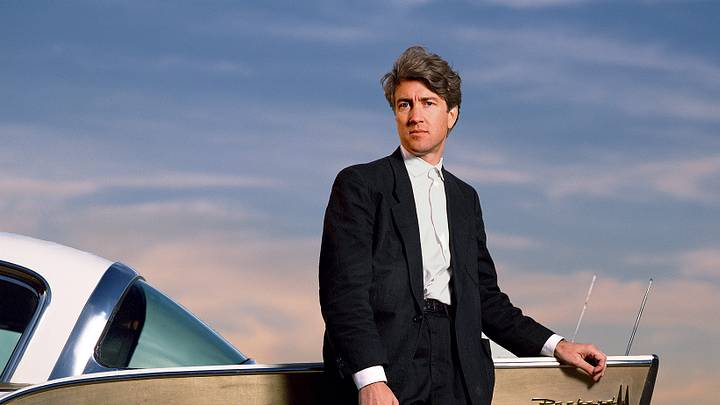
In his work, David Lynch plundered the depths of the bizarre, trawling the underbelly of the American psyche and translating it into dreamlike and disorienting cinema and television. But in his daily life, he made sure his days were as predictable as possible.
The filmmaker behind masterpieces like Twin Peaks and Mulholland Drive relied on daily routines, which allowed his limitless creativity to wander far beyond the edges of what most people could dream up. “If you have a habit pattern,” Lynch told The New Yorker in 2021, “the more conscious part of your mind can concentrate on your work, and you can get ideas and do those things, and the rest sort of takes care of itself in the background.”
David Lynch’s morning ritual: coffee and meditation
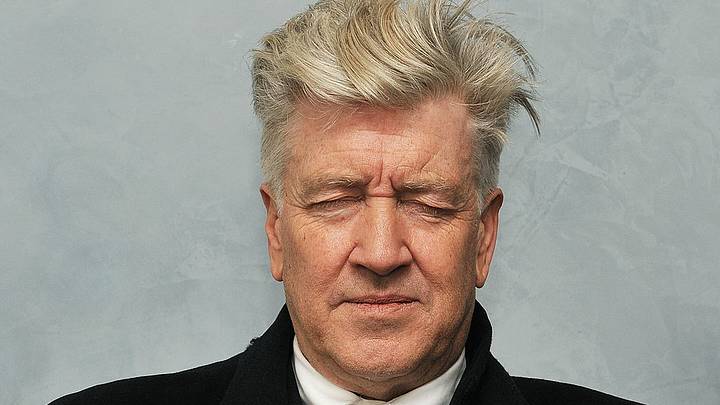
Lynch’s days always began with one thing: coffee. Like Dale Cooper in Twin Peaks, Lynch shared an unshakable love for the stuff, and typically started his days with a cappuccino. “I like to get going with the coffee right away. That’s just the way it is with me,” he shared with Vice in 2020. “You know how in a hospital they put an IV in your arm? I pretty much have a drip going all day long.”
After his first cup of joe, he would sit for meditation—a non-negotiable cornerstone of the filmmaker’s life for decades. Lynch began practicing Transcendental Meditation in 1973 and continued to do so daily until his death in 2025, claiming to have never missed a session. The practice involves sitting for 20 minutes twice a day and mentally reciting a mantra, which is provided by a certified teacher at an official Transcendental Meditation course and kept secret for life.
Lynch was a major advocate for the technique, which he often said was key to his happiness and creativity. The practice inspired his book Catching the Big Fish: Meditation, Consciousness, and Creativity, and in 2005, he established the David Lynch Foundation, which aimed to spread Transcendental Meditation around the world.
After Lynch finished his morning meditation, he’d head to work. That could look quite different each day, depending on whether he was searching for new ideas, filming on set, promoting a film, or something else. Still, no matter what, and even on set, he always made time for his afternoon meditation session.
David Lynch’s eating habits
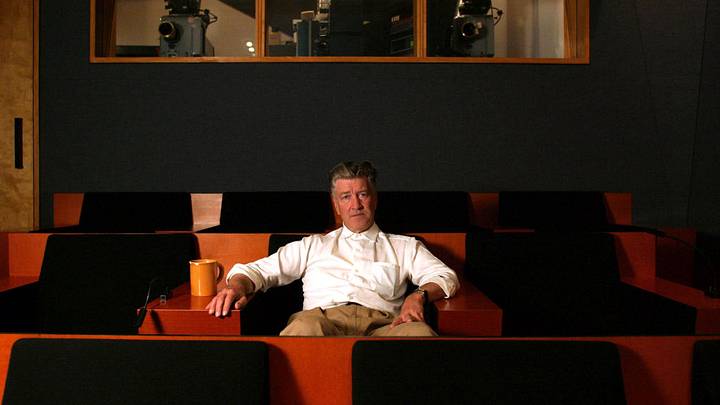
Lynch preferred to eat the same meals many times in a row, and sometimes stuck with one dish for months at a time. After meditating, he would typically have a small breakfast—“either some amrit nectar or a small smoothie with protein powder and blueberries and peaches,” he once shared. In a 1997 interview with Marie Claire, he said that at the time, his favored lunch meal consisted of tomatoes, tuna, feta cheese, and olive oil. For dinner, he cited a preference for chicken and broccoli with soy sauce.
Some food habits endured longer than others. His longest-lasting daily meal, he said, was a Bob’s Big Boy chocolate milkshake, which he had at 2:30 p.m. every day for seven years. He also aimed to eat at the same times every single day, no matter what.
Lynch preferred not to cook at home, however. “I don’t allow cooking in my house. The smell. The smell of cooking—when you have drawings, or even writings— that smell would go all over my work,” he said in a 1990 interview with Time. “So I eat things that you don’t have to light a fire for. Or else I order a pizza. The speed at which I eat it, it doesn’t smell up the place too bad. The smell doesn’t last too long.”
For the filmmaker, routine was the foundation that allowed his creativity to fly as freely as it did. “When there’s some sort of order there, then you’re free to mentally go off any place,” he said in a 2000 interview with the journalist Charlie Rose. “You’ve got a safe sort of foundation and a place to spring off from. It is very important for me [in the creative process]…The purer the environment, the more fantastic the interior world can be, it seems to me.”
manual. Read More: