
“You were in ‘Spider-man.’ ” “No … I was, in ‘Avengers.’ ”
ByRebecca Pahle|Jun 17, 2024, 8:03 AM EDT
 Add us as a preferred source

No judgment here: We all forget things from time to time. Even movie stars—they’re just like us!—occasionally blank (or pretend they do) on having appeared in a movie, with the cameo-friendly MCU turning out multiple examples. Avengers, assemble … if you remember to.
- Paul Bettany // Iron Man
- Jared Leto // Urban Legend
- Gwyneth Paltrow // Spider-Man: Homecoming
- Chris O’Dowd // Thor: The Dark World
- Anna Kendrick // The Twilight Series
- Jack Black // The Holiday
- Arnold Schwarzenegger // Terminator: Salvation
- Heidi Klum // Zoolander
- Conan O’Brien // Weird: The Al Yankovic Story
Paul Bettany // Iron Man
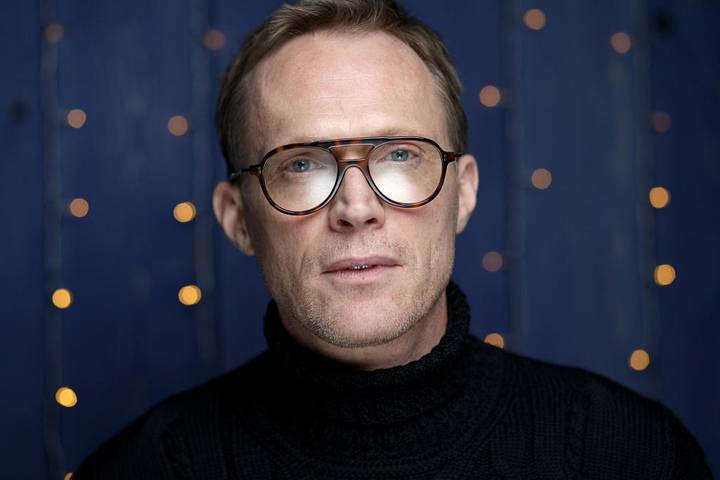
Paul Bettany was the first Marvel actor to forget about one of his MCU movies—though he wouldn’t be the last. Before Bettany was the superhero Vision, he was Tony Stark’s trusty AI JARVIS in 2008’s Iron Man—a voiceover role that required him to spend “30 minutes in a recording studio laughing my arse off,” and that he forgot about after the fact. Said the actor: “I forgot I was in Iron Man. Someone said, ‘I loved you in Iron Man. I said, ‘You’ve got me mixed up with someone else.’ ”
Jared Leto // Urban Legend
OK, so Jared Leto was probably joking when repeatedly insisted that he didn’t remember starring in the 1998 horror film Urban Legend—no, really, he has no idea what you’re talking about—in a 2002 interview with IGN. Beyond claiming he forgot about being in Urban Legend, one of the early teen-centric late ‘90s horror films to hit in the wake of Scream’s massive success, he doubled down on having no damn clue what the movie even is. Highlights from the discussion: “What’s that?,“ “I didn’t do that,” “Get the $%&* outta here!,” “I’ve never even heard of that movie,” and “I must [have] had a blackout.” His commitment to the bit is truly worthy of an Oscar winner.
Gwyneth Paltrow // Spider-Man: Homecoming
This one goes beyond just forgetting. When Gwyneth Paltrow filmed Pepper Potts’s brief appearance in 2017’s Spider-Man: Homecoming—the first film in the MCU’s Spider-Trilogy—she apparently didn’t even know what movie was shooting, later telling Jimmy Kimmel she thought it was “an Avengers movie.” Paltrow got up to speed in during an episode of director/actor Jon Favreau’s “The Chef Show,” where a mention of their shared scene in Homecoming was met with a confused “Spider-Man?… We weren’t in Spider-Man.” She seemed absolutely delighted to learn the truth.
Chris O’Dowd // Thor: The Dark World
Did Chris O’Dowd (@BigBoyler) just totally forget he was in a #Thor movie??? 😂 pic.twitter.com/2kCOchbhga— MTV NEWS (@MTVNEWS) February 5, 2019
Having been in multiple MCU movies spanning over a decade-plus, it’s understandable that Paltrow would blank out on which movies she was in. Irish actor/comedian Chris O’Dowd, however, was only in one—the critically panned Thor: The Dark World (2013), where he’s seen on a date with Natalie Portman’s Jane Foster—and he still managed to forget all about it, or at least claimed to. After he was asked about his character’s fate in the aftermath of Thanos’s Snap, he came back with: “God, I forgot that I was in that one until you just mentioned it.” Once he’d been re-acquainted, he joked that he had a “good feeling” about his character having survived. There have been no further updates.
Anna Kendrick // The Twilight Series
Holy shit. I just remembered I was in Twilight.— Anna Kendrick (@AnnaKendrick47) November 26, 2018
Robert Pattinson and Kristen Stewart have both had major career glow-ups since starring in the Twilight series—but they weren’t the first actors to transition from teen vampire drama to critical acclaim in less sparkly movies. Anna Kendrick, who played Bella’s (human) friend Jessica in four of the five films, had already snagged an Oscar nomination (for 2009’s Up in the Air) by the time the series came to a close. Given she was in so many of the films, she was probably joking when she tweeted, in 2018, “Holy shit. I just remembered I was in Twilight.”
Jack Black // The Holiday
Jack Black forgot he was in a holiday movie for a second there pic.twitter.com/b6KdWR1hXY— Variety (@Variety) December 10, 2019
The Holiday (2006) is something of an anomaly in the career of Jack Black, who brought his comedy chops to co-star in a full-on rom-com. But hey, it worked, and the film is generally loved today. Except by Jack Black, apparently, who said on a 2019 red carpet that his favorite Christmas movie was Jon Favreau’s Elf. When the interviewer remarked that he could have said his own holiday movie, Black blanked before catching on quick: “Do I have a Christmas movie? Which one is mine? Oh, The Holiday! Obviously The Holiday. Nancy Meyers: Genius. Let’s do this!” Good recovery.
Arnold Schwarzenegger // Terminator: Salvation
If you’re going to forget about being in a movie, it might as well be a bad one. During the press tour for 2015’s Terminator: Genisys, Arnold Schwarzenegger commented on the fact that he hadn’t been in 2009’s Terminator: Salvation, saying, “Thank god. It sucked.” Except that he did make a cameo in it as a de-aged version of himself. Schwarzenegger reportedly couldn’t actually film anything due to his schedule as governor of California, so he agreed to have his face superimposed on a body double.
Heidi Klum // Zoolander

Another case of actors forgetting their own cameos: model Heidi Klum, when talking about how she had to turn down a cameo in Zoolander 2 due to scheduling difficulties, seems to have forgotten that she’d been in the first one, if only for a few seconds. “That’s a brain fart. See what happens when you have four kids?” she said. “They suck it all out of you.”
Conan O’Brien // Weird: The Al Yankovic Story
For most of Conan O’Brien’s career, things he worked on—notably, talk show episodes—would be seen by the public shortly after filming. O’Brien used that fact to explain, in a radio interview with Howard Stern, how he completely forgot about his cameo playing Andy Warhol in Weird: The Al Yankovic Story. “I shoot this thing—I forgot that I did it,” O’Brien said. Roughly a year and a half later, when the movie was released, “I start getting texts from people saying ‘Hey, liked you in the Weird Al movie’—friends of mine. And I’m thinking, ‘Wait a minute, I’m in the Weird Al movie?’”
Read More Articles About Celebrities:
•
15 Actors Who Hated Their Own Films
•
The Fascinating Stories Behind 15 Celebrity Stage Names
•
All 26 Members of the ‘Saturday Night Live’ Five-Timers Club
•
15 Celebrities Who Played (Versions of) Themselves in Movies
•
All 19 Members of the EGOT Winners’ Circle (and 17 Almost-EGOTs)
•
The 20 Movie Stars With the Biggest Box Office Appeal
•
The Full Names of 37 One-Name Celebrities
Related Tags
6 Foods Families Really Ate During the Gilded Age
That lavish spread you saw in ‘The Gilded Age’? From towering aspics to sea turtle soup, high society’s favorite dishes weren’t a Hollywood creation, but actual history.
ByNitya Rao|Nov 7, 2026, 8:00 PM EST
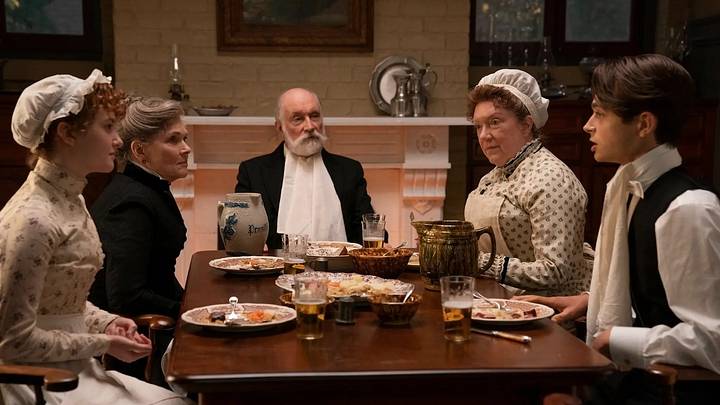
If “you are what you eat,” then you might want to rethink “eating the rich.” From our history books to the HBO series The Gilded Age, records and recreations show that the wealthiest Americans often ate foods that would make a poor man’s plate look a lot more appealing.
The Gilded Age shows that not everything that glitters is gold. This flashy period between the 1870s and 1900 was fueled by new money at the hands of tycoons like Vanderbilt and Carnegie—fortunes that embossed New York’s Fifth Avenue and Newport, Rhode Island, in glitz and gold leaf. The era was a snapshot of America’s elite that included clifftop “cottages,” lavish balls, and… tureens of turtle soup?
That’s just one of the delicacies that graced Gilded Age tables. While the servants and working class—like the show’s Mrs. Bauer and Jack Trotter—ate far simpler fare and leftovers, the upper crust’s menu was a lot more eclectic.
From oysters on the half shell to meat jelly, here are five foods families really ate during the Gilded Age that you may or may not see on season 4 of HBO’s namesake show.
Celery
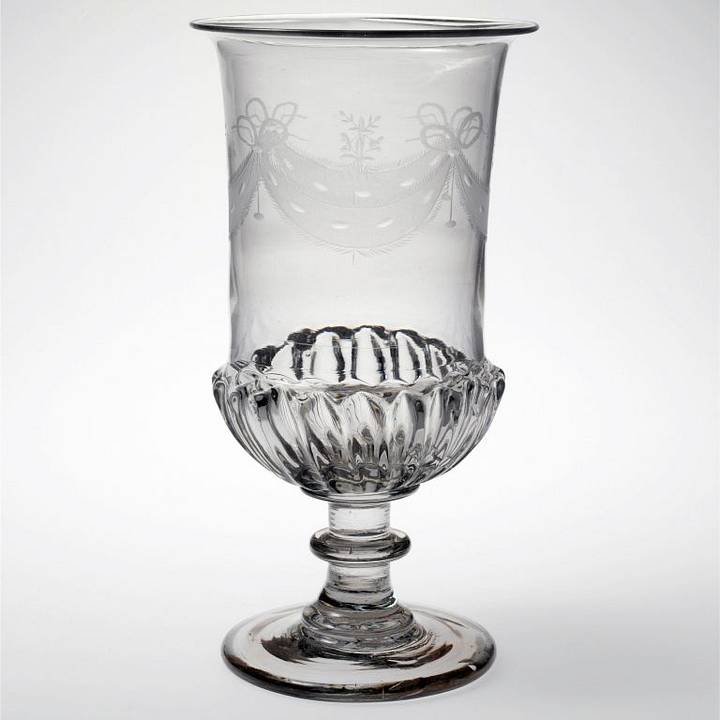
Today, we see celery as nothing more than the free side given with chicken wings. But back in the Gilded Age, this crunchy, watery vegetable was the centerpiece of the meal—literally. 19th-century aristocrats even had decorative glass “celery vases” made to hold the hard-to-grow stalks, displaying the unlikely status symbols upright for all to see. As celery production increased and its price decreased, Gilded Age chefs began experimenting with the vegetable in the kitchen—braising it, dressing it in mayo, and more.
Oysters
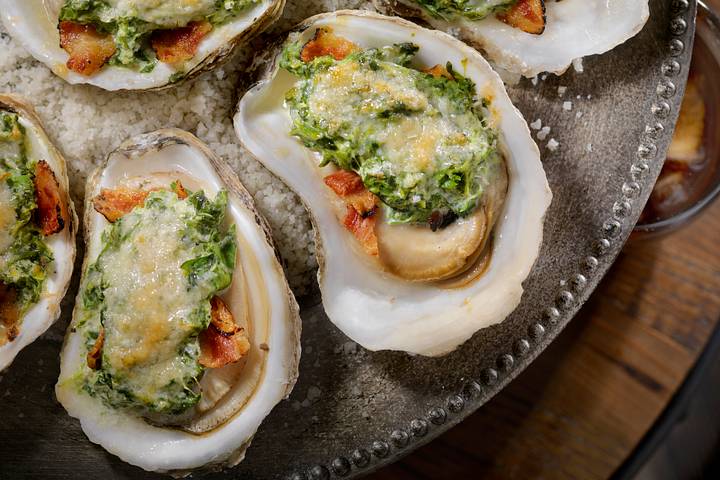
No trip to Newport is complete without stopping by Midtown Oyster Bar for a dozen on the half shell, and back in the Gilded Age, high society was just as obsessed. Much like lobster, oysters had a humble beginning as a working-class staple across 19th-century coastal cities. They were shucked and slurped down by maritimers on the streets of New York long before becoming an elegant appetizer on Gilded Age menus. From raw oysters on sparkling beds of crushed ice to decadent baked preparations like Oysters Rockefeller, the modest mollusk underwent one of the greatest glow-ups in culinary history.
Turtle Soup
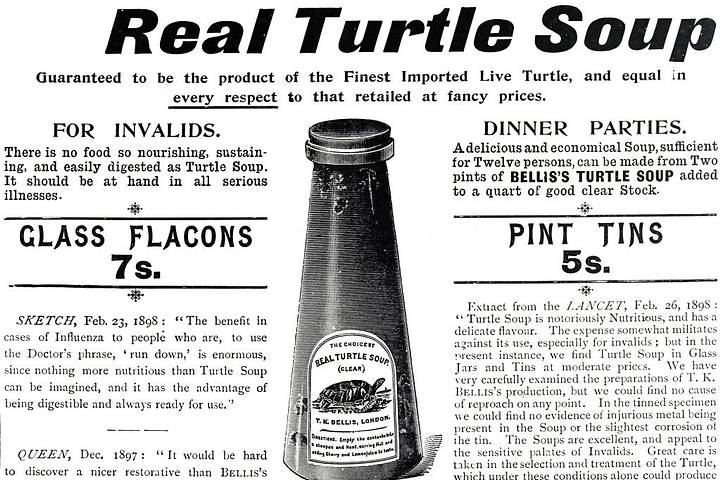
On The Gilded Age, most meals start with the clink of silver spoons against porcelain bowls. Menus from Gilded Age establishments like Delmonico’s and period etiquette magazines back up this soup starter standard. An excerpt from Godey’s Lady’s Book on how to throw a proper dinner party goes as follows: “Commence dinner with raw oysters, then a choice of one or two soups.”
The soup du jour wasn’t always lobster bisque or cream of celery, though. A luxury at the time—and a dish rarely seen today due to strict conservation protections—turtle soup was all the rage in the Gilded Age. Chefs favored the diamondback terrapin, a turtle found from Cape Cod down the Gulf Coast. Whether eating out at a fine dining establishment in the city or hosting an intimate dinner party, these turtles were boiled, chopped, and finished with a swish of sherry before landing on high-society tables in the 1880s and ’90s. That is, until overhunting almost wiped the creature out by the 1910s, sending prices soaring and pushing the dish off most menus.
Aspic
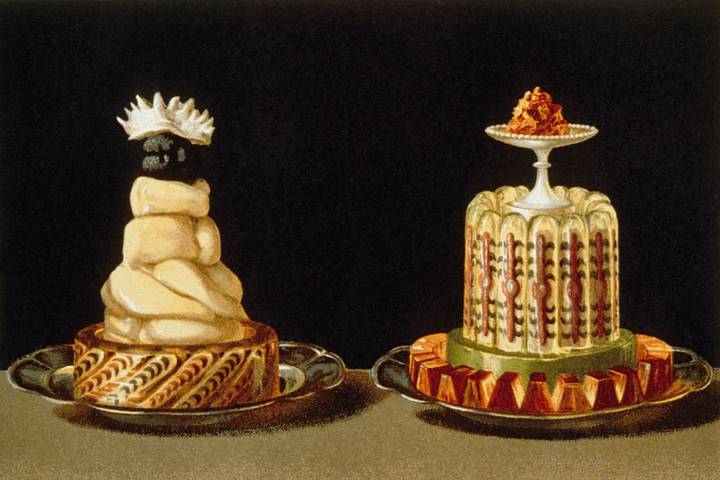
Before 1950s housewives discovered Jell-O molds, Gilded Age kitchens were constructing towering aspics that served as equal parts savory centerpiece and sign of a master chef. These edible gelatinous sculptures—which migrated from Europe and were made from boiled animal bones before powdered gelatin was popularized in the late 1800s—contained meat, fish, produce, and eggs suspended in translucent broth like an edible display case. Served midway through formal multi-course banquets, colorful aspic creations were more of an art form than the cold course they were presented as.
Charlotte Russe
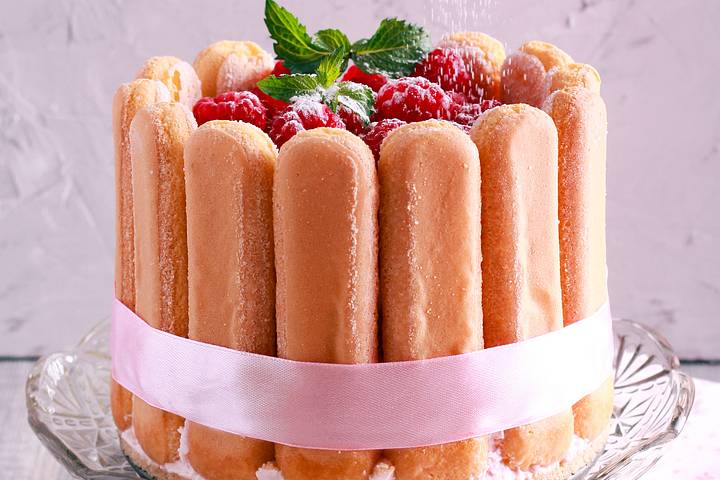
You might recognize the name from the popular 2000s women’s clothing store, but unlike the store, this sweet, berry-topped cake wasn’t always made for the masses. Concocted by French chefs in the late 18th century and said to be named in honor of Queen Charlotte, Charlotte Russe cake—a tower of ladyfingers surrounding cold Bavarian cream or custard and berries—was the creme de la creme of Gilded Age dessert spreads.
While the nouveau riche enjoyed decadent riffs, sometimes even decked out with a decorative ribbon, the treat eventually evolved past wedding breakfasts and banquets of the elite. Decades later in the 20th century, the spongy sweet shifted from the white tablecloths of Delmonico’s to the streets of Brooklyn, where pushcart vendors served simplified versions out of cardboard cups to working-class New Yorkers.
Read More:
•
6 Foods Families Really Ate During the Middle Ages
•
6 Foods Families Really Ate in the Times of ‘Little House on the Prairie’
•
What Did People Eat for Breakfast in Colonial Williamsburg?
•
5 Foods Families Really Ate During the Black Death
Quiz: Which ‘Little House on the Prairie’ Character Are You?
Find out which pioneer best matches your personality with this eight-question quiz!
ByNitya Rao|Jul 18, 2026, 8:00 PM EDT

Before we had the “tradwife” trend, we had Little House on the Prairie, where living off the land was the norm rather than the niche lifestyle it is today. The sweeping plains of Independence, Kansas, from Laura Ingalls Wilder’s original novel to the 2026 Netflix adaptation, remain the same. Yet, somehow, the world was an entirely different place. It was a world where survival required just as much pluck as it did positivity.
In the series premiere, Pa tells Laura that “hope is everything,” a profound sentiment she eventually echoes back to him by the season finale. And while the unpredictability of life on the prairie probably calls for a prayer or two, Ma reminds us that it isn’t always a bad thing. In Episode 4, she insists that “an uncertain life is full of possibilities.”
Maybe you relate to Ma’s realism, or perhaps you’re more like Pa, rose-colored glasses and all. Then there are the Lauras of the world who would rather be traipsing through the tallgrass than thinking about the perplexities of pioneering. Dr. George Tann’s charisma, Mary’s perfectionism, and John Edwards’ mysteriousness fill in the blanks. We may have evolved from bonnets to baseball caps, but each of us has an inner pioneer personality that persists.
Are you ready to find your place within the covered wagon? Take this quiz to discover which Little House on the Prairie character captures your true colors.
Which pioneer mirrors your personality the most? Each and every member of the community is resilient, passionate, and inspiring in their own way. Share this personality quiz with your family and friends to find out if you’re the same Little House on the Prairie character, or if you have the perfect balance of traits to brave the frontier together!
The Evolution of the Little House Legacy
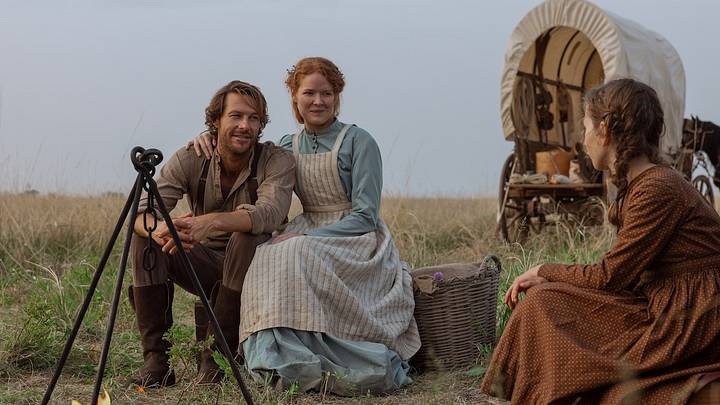
If you were raised on Little House reruns, odds are you have a favorite memory of life on the prairie. But before it became the next big thing to stream, Little House on the Prairie was a product of pen, paper, and fuzzy frontier flashbacks. That was roughly the recipe that Laura Ingalls Wilder used to craft the autobiographical book Little House in the Big Woods in 1932.
It was this coming-of-age tale that gave readers a tiny taste of the family’s cozy yet chaotic world of handcrafted log cabins and homemade maple sugar. Much like the staple pioneer sweet, one bite—and book—simply wasn’t enough. Over nearly a century, that opening chapter spawned eight more original novels, a 1970s TV series, and, most recently, a Netflix series offering a visually richer, realistic take on frontier life.
Along the way, generations of fans hitched their wagons to Laura’s fiery spirit and Mary’s quiet strength, while looking to Ma and Pa as the blueprint for making a house a home. From the page to the screen, this timeline traces the Little House on the Prairie legacy, showing how each installment puts its own spin on the Ingalls saga:
The Original Book Series
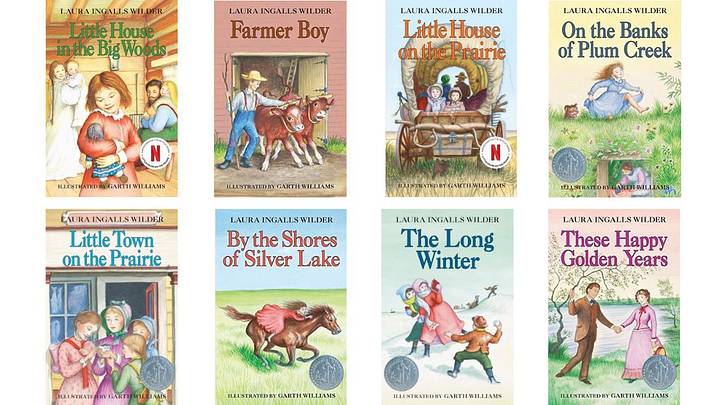
Little House in the Big Woods (1932)
Farmer Boy (1933)
Little House on the Prairie (1935)
On the Banks of Plum Creek (1937)
By the Shores of Silver Lake (1939)
The Long Winter (1940)
Little Town on the Prairie (1941)
These Happy Golden Years (1943)
The First Four Years (1971)
The Screen Adaptations
Little House on the Prairie, NBC Series (1974–1983)
Beyond the Prairie: The True Story of Laura Ingalls Wilder, CBS Movies (2000-2002)
Little House on the Prairie, Disney Miniseries (2005)
Little House on the Prairie, Netflix Series (2026)
We might swap out the actors or change the cinematography, but the heart of the Ingalls family never fails. We keep coming back to them because watchable resilience is rare, whether they’re braving a brutal blizzard or just fighting to keep a roof over their heads. Every reimagining reflects the respective era it was made in, but the overarching theme of holding onto hope through hardship is timeless.
Next: Join Mental Floss’s Geography Quiz Competition
More Personality Quizzes:
•
Quiz: Which ‘Sex and the City’ Character Are You?
•
Quiz: Which Beatles Band Member Are You?
•
Quiz: Which Disney Princess Are You?
•