After She Murdered Three Elderly Women for Crack Cocaine….
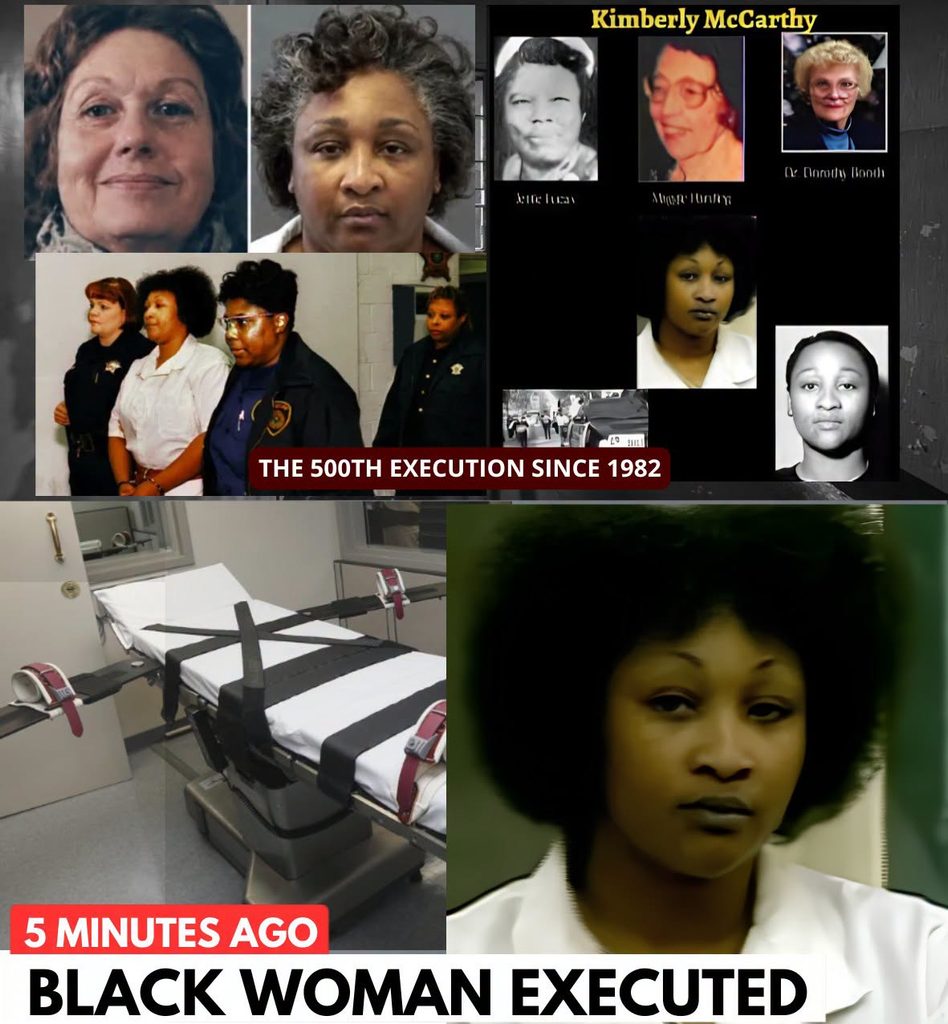
 The state of Texas executed Kimberly McCarthy by lethal injection on Wednesday evening, making her the 500th person put to death by the state since it resumed capital punishment in 1982, and the first woman executed in the United States in nearly three years.
McCarthy, 52, was pronounced dead at 6:37 p. m. at the Huntsville Unit, just twenty minutes after a single dose of pentobarbital began flowing into her veins.
Her final statement, delivered to witnesses including her ex-husband and spiritual advisor, contained no mention of the woman she was convicted of murdering. “This is not a loss. This is a win.
You know where I’m going. I’m going home to be with Jesus. Keep the faith.
I love you all,” she said, adding two final words in Arabic before the 𝒹𝓇𝓊𝑔 took effect: “Allahu Akbar.”
The execution marked the culmination of a sixteen-year legal odyssey that began with the brutal slaying of Dorothy Booth, a 71-year-old retired psychology professor, in her Lancaster, Texas home on July 21, 1997. Booth, who had taught for decades at El Centro College in Dallas, opened her front door that afternoon to a neighbor asking for a simple cup of sugar. That neighbor was McCarthy.
Within hours, Booth was dead, stabbed five times with a butcher knife from her own kitchen, bludgeoned with a heavy candlestick, and left to bleed out on the floor of the home where she had lived for years.
The violence did not end with the killing. McCarthy, in a frenzy fueled by an insatiable crack cocaine addiction, severed Booth’s finger to remove a diamond wedding ring, then took the victim’s purse, credit cards, and white Mercedes sedan. She drove to a pawn shop in Dallas where she sold the ring for $200, then used the stolen credit cards at a nearby liquor store, leaving a trail of receipts that investigators would later describe as almost careless in its recklessness.
 She then proceeded to a 𝒹𝓇𝓊𝑔 house, where witnesses testified she handed over the Mercedes keys and demanded crack cocaine immediately.
Booth’s body was discovered the following day. The evidence against McCarthy accumulated with astonishing speed. Investigators found Booth’s blood inside McCarthy’s own home.
They recovered the murder weapon, matching Booth’s DNA directly to the blade. The pawn shop had a record of the ring sale. The liquor store had a record of the stolen credit cards.
McCarthy was arrested within 24 hours of the discovery of Booth’s body, a speed that investigators noted was highly unusual for a case of such brutality.
What investigators discovered next would expand the scope of the case far beyond a single murder. While preparing for trial, prosecutors reopened the files on two unsolved homicides from December 1988, both elderly women who had been beaten and stabbed to death in their Dallas County homes within weeks of each other. Maggie Harding was 81, bludgeoned with a claw hammer and stabbed.
Jettie Lucas was 85, beaten with a sledgehammer and stabbed in her own kitchen. Both women had been part of the same small social circle as McCarthy’s mother, women who would have opened their doors to her without hesitation, as one does for the daughter of a friend.
DNA evidence, a forensic tool that had not been widely available when Harding and Lucas were killed, linked McCarthy to both murders. The matches were definitive. McCarthy had killed before, twice, nearly a decade before she murdered Dorothy Booth.
The victims were all elderly women she knew personally. The motive in each case was the same: money for crack cocaine. The pattern was consistent, and prosecutors presented it to the jury during the sentencing phase of Booth’s murder trial, even though McCarthy was never formally charged with the other two killings.
McCarthy’s path to the death chamber was anything but straight. In 2001, an appeals court overturned her original conviction, ruling that a confession used against her had been illegally obtained after she had requested an attorney. The case was retried, and in November 2002, a new jury again convicted her of Booth’s murder and again sentenced her to death.
But a second legal battle was already forming around that trial, one that would follow her case for the next decade all the way to the United States Supreme Court.
The issue was the composition of the jury itself. Dallas County had a well-documented history of excluding Black jurors from criminal trials, and McCarthy’s attorneys argued that the pattern had repeated in her case. The jury that convicted her in 2002 consisted of eleven white jurors and one Black juror.
McCarthy was Black. Booth was white. The claim was not new to Dallas County, which had faced decades of legal challenges over the practice of prosecutors using peremptory strikes to disproportionately remove Black potential jurors from criminal trials, a practice the Supreme Court had ruled unconstitutional in its landmark 1986 decision Batson v.
Kentucky.
McCarthy’s attorneys spent years litigating the racial discrimination claim through state and federal courts, arguing that prosecutors had deliberately engineered the jury to exclude Black members. The claim became the cornerstone of her appeals and nearly saved her life twice. Her final federal appeal was denied in July 2012.
Her attorneys took the case as far as legally possible, filing a petition for certiorari before the Supreme Court, which declined to hear the case in January 2013.
Her execution was scheduled for January 29, 2013. On that day, a Dallas judge granted a stay just hours before the scheduled time, wanting more time to properly evaluate the jury selection claims. A new execution date was set for April 3, 2013.
That date also came and went. In late March, the Dallas County District Attorney’s office announced a second postponement, this time reportedly related to capital punishment legislation being debated in the Texas legislature that could have affected similar cases. A new execution date was finally set for June 26, 2013.
By that time, McCarthy had spent more than 14 years on death row in Texas. Two full trials, two last-minute stays, and countless rounds of appeals. Throughout nearly all of it, she maintained her innocence, insisting that she had been framed for Booth’s murder and that the two men she had accused years earlier, men investigators were never able to confirm even existed, were the real culprits.
Her attorney, Mary Liven, told reporters that if there had been any legal avenue remaining, she would have pursued it. But by June 2013, all procedural doors had closed.
 For the family of Dorothy Booth, those fourteen years meant living in a cycle that repeated itself over and over. A date would be set. They would prepare.
Then, at the last minute, it would be canceled. Twice, they came within hours of what they were told would be a final resolution, only to be asked to wait again. There is a particular kind of exhaustion that comes from grief that is interrupted again and again by a legal system that operates on its own timeline, indifferent to how many times a family has braced for the end.
Outside the Huntsville Unit on Wednesday evening, about 30 death penalty opponents gathered to protest. The Texas Coalition to Abolish the Death Penalty spent the day publicly commemorating the moment, calling it a grim milestone in the state’s history and pointing to a list of past Texas cases where the state had executed men despite serious doubts about their guilt. Names like Gary Graham, Claude Jones, Ruben Cantu, Carlos DeLuna, and Cameron Todd Willingham, cases that had attracted national attention in the years before McCarthy’s execution due to faulty forensic testimony, questionable eyewitness accounts, and jailhouse informants whose credibility later collapsed.
The group’s argument was not about McCarthy’s specific conviction. The evidence against her, from the DNA on the murder weapon to the pawn shop trail to her statements to police, left little room for doubt. Their argument was broader.
A system capable of executing 500 people, they argued, was also, by simple statistical necessity, a system capable of convicting at least some of those 500 wrongly. The argument was being made outside the walls of the Huntsville Unit, and it had little bearing on those who had spent 16 years waiting for justice in Dorothy Booth’s case. But it was present in Texas that summer for another reason entirely.
Just weeks before McCarthy’s execution, Texas prison officials had publicly acknowledged that their supply of pentobarbital, the same 𝒹𝓇𝓊𝑔 used to end her life, was running out with no clear replacement in sight. Pharmaceutical companies, facing pressure from death penalty opponents in the United States and abroad, had begun refusing to sell their drugs to prison systems for use in executions. States across the country were quietly turning to loosely regulated compounding pharmacies to supply their death chambers.
Texas, which had carried out more executions than any other state in the country by a wide margin, suddenly found itself facing the prospect of running out of the very means to carry out the sentences its courts continued to issue.
None of that changed what happened to Kimberly McCarthy on June 26, 2013. But it formed the backdrop to her death. A legal system reaching a symbolic milestone at the very moment its physical machinery was beginning to run dry.
McCarthy was the eighth person executed in Texas that year, and the 500th since 1982, a number that was then far higher than any other state in the country, and higher than most countries in the world. Texas alone accounted for nearly 40 percent of all executions carried out in the United States since the Supreme Court allowed the resumption of capital punishment nationwide in 1976.
McCarthy was also the 13th woman executed in the United States since that same 1976 ruling, and the first woman executed anywhere in the country in nearly three years. The last woman executed before her was Teresa Lewis, put to death in Virginia in September 2010. The rarity of female executions in the United States is a statistical anomaly that criminologists have studied for decades.
Women commit a tiny fraction of homicides, and juries are demonstrably less likely to sentence women to death than men for comparable crimes. But when women do reach the death chamber, their cases often attract outsized attention precisely because they are so rare.
In the small viewing room adjacent to the execution chamber, separated by a pane of glass, Dorothy Booth’s daughter, Donna Aldred, stood with her granddaughter and several friends. They had waited sixteen years for this night. They had attended two separate trials.
They had watched two scheduled execution dates pass without resolution. The clock had been reset again and again while their grief remained in place. And on the night it finally happened, they did not hear their mother’s or grandmother’s name spoken by the woman who had taken her from them.
McCarthy’s final statement made no mention of Dorothy Booth. It made no reference to the family watching from the other room. It was a statement of personal faith, delivered to her own witnesses, and then she was gone.
When reporters asked the Booth family afterward about the historic number attached to that night, they said they had not come to Huntsville thinking about milestones. Their only focus that night, and every night for the past sixteen years, had been on Dorothy. Not on the 500th execution in the state’s history, but on their mother, their grandmother, their friend.
The story of Kimberly McCarthy is a story of addiction and violence that spanned nearly a decade before it was finally stopped. She was born on May 11, 1961, in Greenville, Texas, a small town about 80 kilometers northeast of Dallas. She trained as an occupational therapist in her youth, working in nursing homes, helping elderly residents regain simple physical skills that age or illness had taken from them.
Dressing without assistance. Holding a fork steadily. Rising from a chair without losing balance or falling.
It is a job that requires a particular kind of patience. Occupational therapy is not glamorous work. It is slow, repetitive, and often thankless.
The same exercise, the same instructions, the same small victories measured in inches rather than miles. People who choose this profession tend to do so because something inside them drives them to help the most vulnerable people in the room regain a measure of their independence.
McCarthy married a man named Aaron Michaels, who would later found the New Black Panther Party. They had a son together. The marriage did not last, and they divorced years before the crimes that would define McCarthy’s life.
Michaels did not disappear entirely from her story. He reappeared suddenly at its end, sitting behind glass in a room in Huntsville, having testified on her behalf at both of her trials.
In the years following her divorce, McCarthy became addicted to crack cocaine. There is no documented moment that marks the beginning of this addiction. No police report that captures a turning point.
But the records show clearly the devastation it wrought. In February 1990, she was convicted of forgery and sentenced to two years in prison. She was released on parole in June of the same year, and her parole was finally terminated in December 1991.
Alongside her forgery conviction, she was also charged with prostitution and theft of services. The woman who had helped elderly patients regain their ability to stand was now stealing to feed a habit that was consuming everything in her life: her career, her marriage, her freedom, and ultimately her conscience.
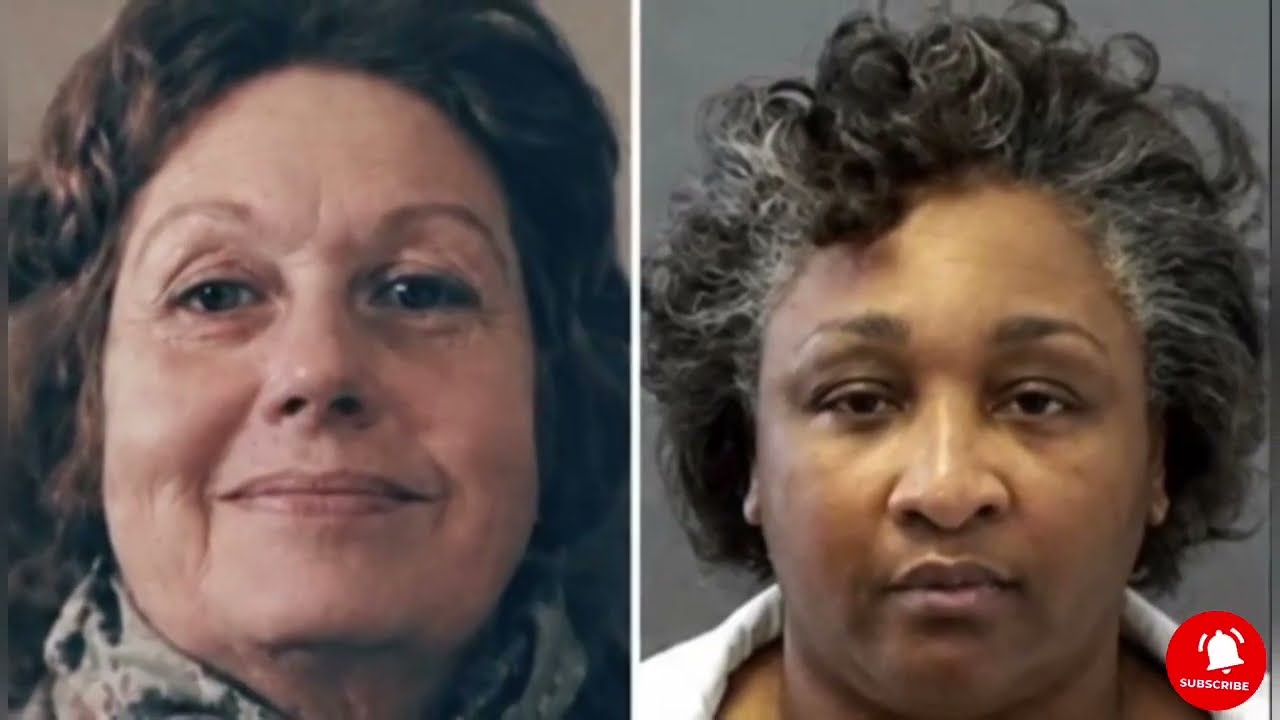 By the summer of 1997, McCarthy was 36 years old and living in Lancaster, a quiet suburb about 15 miles south of Dallas. Her addiction had consumed most of what remained of her former life. Her job, her marriage, the stability she had built for herself, all of it was gone, piece by piece, in exchange for crack cocaine.
Next door lived Dorothy Booth. The retired professor had built a life and a career, and finally a quiet retirement in Lancaster, Texas. The kind of peaceful suburban life she had earned after years of hard work.
She was, by all accounts, warm, intelligent, and fiercely independent. The kind of person who deserved the quiet life she had built in Lancaster and intended to enjoy every day of it. The kind of person who would open the door for someone she knew without hesitation.
In the afternoon of July 21, 1997, McCarthy picked up the phone and called Booth. She asked if she could borrow a cup of sugar. It was a simple, ordinary request, the kind neighbors make of each other every day across the country without a second thought.
Booth agreed. Prosecutors would later argue that the sugar was never the real reason for that call. Once Booth opened her door, McCarthy’s true intention had already begun.
What happened next did not take long, and it was not merciful. Inside that home, McCarthy turned on the woman who had just welcomed her in. She grabbed a butcher knife from Booth’s own kitchen and stabbed her five times.
Then she picked up a heavy candlestick from a nearby table and beat her with it. While Booth was still alive, McCarthy grabbed her hand and cut off her finger to remove her diamond wedding ring. The cut was so violent it nearly severed the adjacent finger as well.
McCarthy then took Booth’s purse and credit cards. She took the keys to Booth’s white Mercedes and drove away, leaving a 71-year-old retired professor bleeding on the floor of the home where she had lived for years, dying alone. The entire confrontation, from the moment Booth opened her door to the moment McCarthy got into the stolen car, likely lasted no more than half an hour.
In that brief period, a woman who had built 71 years of life, career, family, and a well-deserved retirement had been reduced to a crime scene.
McCarthy did not go far, and she made little effort to disappear. She drove Booth’s Mercedes from Lancaster to Dallas. Her first stop was a pawn shop where she sold Booth’s diamond wedding ring, the ring she had just cut from the hand of a dying woman less than an hour earlier, for $200.
From there, she used Booth’s stolen credit cards to buy alcohol from a nearby store, leaving receipts and timestamps at nearly every step. Then she went to a 𝒹𝓇𝓊𝑔 house. According to court testimony and contemporary news reports, when she arrived, she handed over the keys to Booth’s Mercedes and told someone inside that she needed crack and needed it immediately.
McCarthy’s trial in 1998 was a straightforward case of overwhelming evidence. The DNA, the murder weapon, the pawn shop receipt, the credit card trail, the eyewitnesses who saw her driving Booth’s car. Her defense, that two unnamed 𝒹𝓇𝓊𝑔 dealers were responsible, fell apart under the weight of the physical evidence.
The jury deliberated and convicted her of capital murder. During the sentencing phase, prosecutors presented the DNA evidence linking her to the murders of Harding and Lucas, establishing a pattern that the jury found compelling enough to impose the death penalty.
The appeals process that followed was lengthy and complex. The first conviction was overturned in 2001 because of the illegally obtained confession. The second trial in 2002 produced the same result, but the jury composition became the focus of a new round of appeals.
McCarthy’s attorneys argued that the prosecution had systematically excluded Black jurors, a claim that had deep resonance in Dallas County, which had been the subject of numerous legal challenges over the years for exactly that practice. The case wound its way through the courts for another decade, with the racial discrimination claim becoming the primary basis for her appeals.
In January 2013, the Supreme Court declined to hear her case. Her execution was scheduled for January 29, then stayed, then rescheduled for April 3, then postponed again. Finally, the date was set for June 26.
By that time, McCarthy had exhausted every legal avenue available to her. Her attorney said she would have pursued any remaining legal option if one existed, but all procedural doors had closed.
The execution itself was routine by Texas standards. The small, windowless room inside the Huntsville Unit. The gurney with restraints for the wrists and shoulders.
The curtain that opens to reveal the witness rooms on either side. The intercom connecting the room to the prison warden whose job it was to give the final signal. By 2013, Texas had performed this same procedure hundreds of times, and its routine, down to the timing, the paperwork, and the placement of witnesses, was bureaucratically precise.
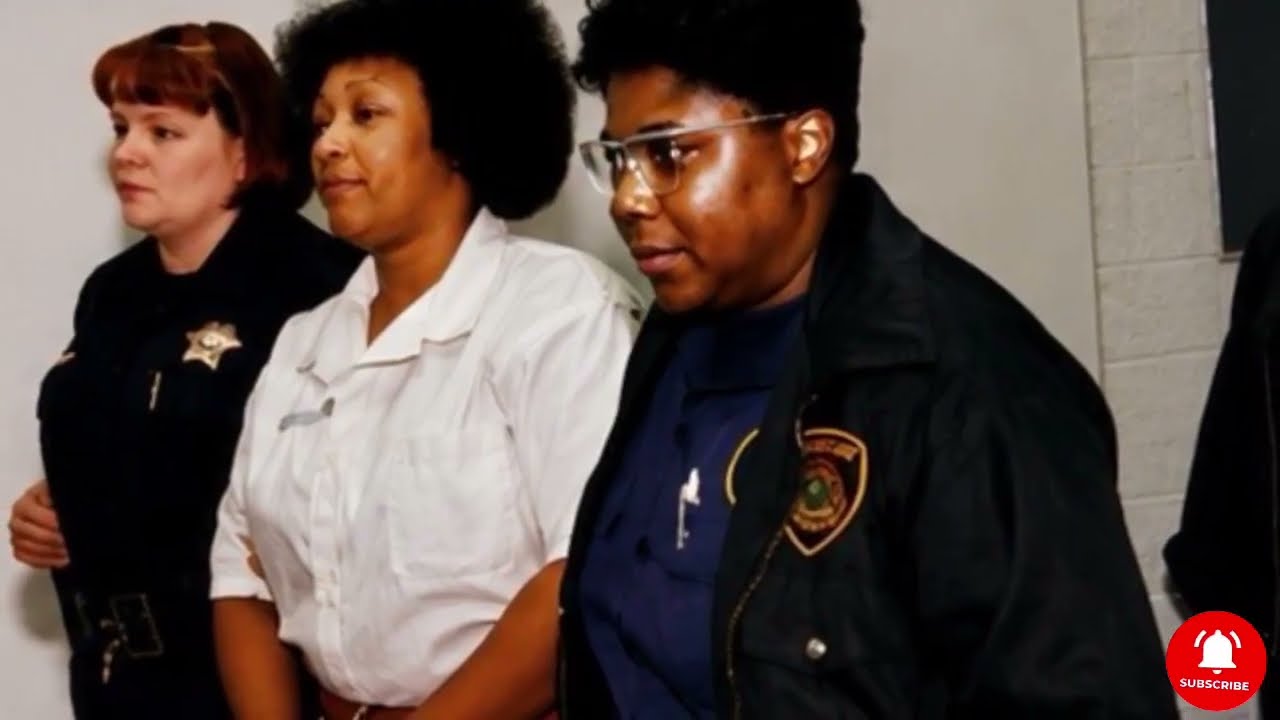
McCarthy’s final words were delivered calmly. She addressed her own witnesses, her ex-husband, her spiritual advisor, her attorney. She did not acknowledge the family of Dorothy Booth, who were watching from behind another pane of glass.
She spoke of her faith and her belief that she was going to a better place. Then the pentobarbital began to flow, and within twenty minutes, she was dead.
The aftermath of the execution was marked by the dual narratives that had surrounded the case from the beginning. For the Booth family, it was the end of a sixteen-year wait for justice. For death penalty opponents, it was a grim milestone, the 500th execution in Texas since 1982, a number that highlighted the state’s unique position in the American criminal justice system.
For historians of capital punishment, it was a moment that connected the individual case to the broader sweep of American legal history.
The number 500 was not just a statistic. It represented half a thousand people whose lives had ended at the hands of the state of Texas. Some of them, as the abolitionist coalition pointed out, may well have been innocent.
 The list of questionable Texas executions was long and well-documented. Gary Graham, executed in 2000 despite claims that he was innocent and that the eyewitness testimony against him was unreliable. Claude Jones, executed in 2000 despite questions about the DNA evidence used to convict him.
Ruben Cantu, executed in 1993 despite recantations from the key witness. Carlos DeLuna, executed in 1989 despite evidence that another man may have committed the murder. Cameron Todd Willingham, executed in 2004 despite evidence that the fire that killed his children was not arson.
These cases had become a rallying point for opponents of capital punishment, who argued that the sheer volume of executions in Texas made it statistically inevitable that the state had killed innocent people. The argument was not new, but the milestone of 500 executions gave it renewed urgency. The fact that the state was simultaneously running out of the drugs needed to carry out executions added another layer of complexity to the debate.
The 𝒹𝓇𝓊𝑔 shortage was a relatively new development. For years, Texas had used sodium thiopental, a barbiturate that was part of the standard three-𝒹𝓇𝓊𝑔 protocol used in executions across the country. But in 2011, the manufacturer of sodium thiopental announced it was ceasing production, and the remaining supply expired.
States scrambled to find alternatives, and many turned to pentobarbital, a single-𝒹𝓇𝓊𝑔 protocol that was seen as more humane. But pentobarbital was also in short supply, as European manufacturers, facing pressure from death penalty opponents, refused to sell their drugs to American prisons.
Texas had been using pentobarbital for its executions, but the supply was dwindling. The state had not publicly disclosed how much pentobarbital it had on hand, but officials acknowledged that the supply was limited. This created a strange situation: a state that had executed more people than any other in the country was facing the possibility of being unable to carry out future executions because it could not obtain the drugs.
For McCarthy, the 𝒹𝓇𝓊𝑔 shortage was irrelevant. She was executed with pentobarbital, the last dose the state had available for her. But the broader implications of the shortage were not lost on observers.
The 500th execution in Texas history had been carried out with a 𝒹𝓇𝓊𝑔 that might not be available for the 501st.
The story of Kimberly McCarthy is not just a story about one woman and her crimes. It is a story about the American criminal justice system, about addiction and violence, about the long and winding road from crime to punishment, and about the families who are left behind on both sides of the equation. It is a story about a retired psychology professor who opened her door to a neighbor and paid for that kindness with her life.
It is a story about two other elderly women, Maggie Harding and Jettie Lucas, whose murders went unsolved for nearly a decade and who never received the justice of a trial in their names.
It is also a story about the 500 people who came before McCarthy in Texas, and the thousands more who have been executed across the United States since 1976. It is a story about a system that is capable of making mistakes, and about the people who argue that any mistake is one too many. It is a story about a state that has embraced capital punishment more enthusiastically than any other, and about the moral and practical questions that embrace raises.
In the end, the execution of Kimberly McCarthy was a moment that brought together many threads of American life: crime and punishment, addiction and violence, race and justice, faith and doubt. It was a moment that was historic in its numbers but deeply personal in its details. For the family of Dorothy Booth, it was the end of a long and painful journey.
For the family of Maggie Harding and Jettie Lucas, it was a reminder that not all victims receive the same measure of justice. For the state of Texas, it was a milestone that raised questions about the future of capital punishment in a state that had come to define it.
McCarthy was pronounced dead at 6:37 p. m. on June 26, 2013.
She was the 500th person executed in Texas since 1982, the 13th woman executed in the United States since 1976, and the first woman executed in the country in nearly three years. Her final words were about faith and victory, not about the woman she had killed or the family that had waited sixteen years to see justice done. She went to her death maintaining her innocence, even as the evidence against her was overwhelming.
The Booth family left Huntsville that night with a sense of closure that had eluded them for sixteen years. They had attended two trials, watched two execution dates come and go, and finally seen the process through to its end. They said they were not thinking about the historic number attached to the execution.
They were thinking about Dorothy, about the mother and grandmother and friend they had lost to a senseless act of violence.
For the abolitionist coalition gathered outside the Huntsville Unit, the night was a reminder of the work that remained. The 500th execution was not a cause for celebration but a call to action. They pointed to the list of questionable cases, the systemic problems in the Texas criminal justice system, and the moral questions that capital punishment raises.
They argued that a system capable of executing 500 people is a system that has almost certainly executed innocent people, and that no number of executions can bring back the victims or undo the damage.
The story of Kimberly McCarthy is a story that will be studied by criminologists, historians, and legal scholars for years to come. It is a case that touches on many of the most contentious issues in American criminal justice: the death penalty, racial discrimination in jury selection, the reliability of forensic evidence, the role of addiction in violent crime, and the long and complex process of appeals that can take decades to resolve. It is a case that raises questions about justice and mercy, about punishment and rehabilitation, about the limits of the state’s power to take a life.
But at its core, it is a story about people. Dorothy Booth, who spent her life teaching others and was killed for a cup of sugar. Maggie Harding and Jettie Lucas, who were killed for reasons that were never fully explored in a courtroom.
Kimberly McCarthy, who spent the first part of her adult life caring for the elderly and the second part killing them. And the families who were left behind, who waited years for justice and who will carry the memory of their loved ones for the rest of their lives.
The execution of Kimberly McCarthy was a historic moment in the annals of American capital punishment. But it was also a deeply human moment, one that will be remembered not just for the number 500, but for the lives that were touched and ended along the way.
© 2026 MZ News — Blog powered by WordPress.