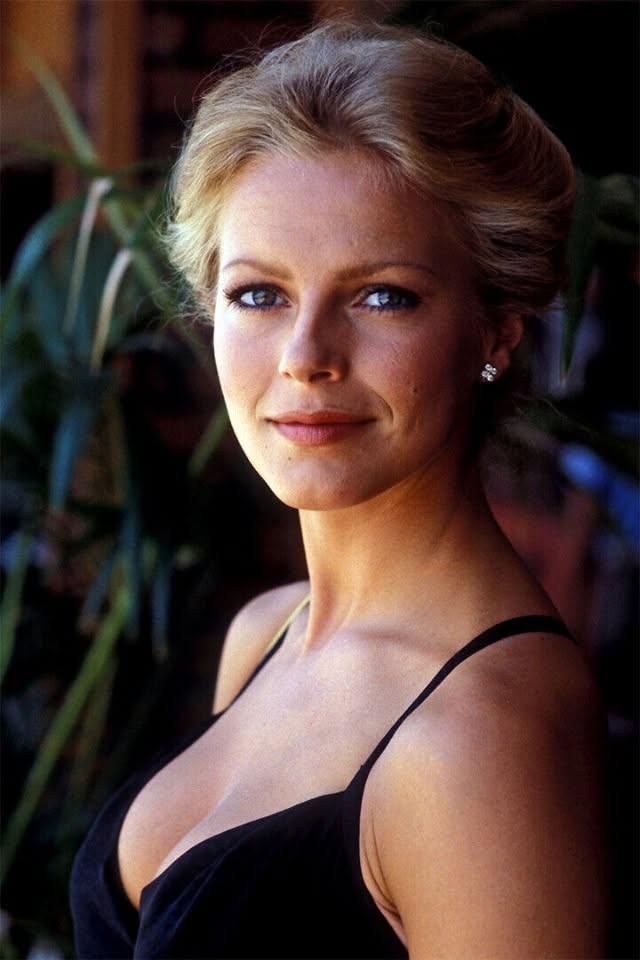
at least not for long. She wasn’t supposed to. Cast in the wake of Farrah Fawcett’s sudden exit after just one season, Ladd was brought in as a solution to a crisis, not a star in her own right.
The network needed someone blonde, camera-ready, and likable to calm the storm. What they got was something far more lasting.
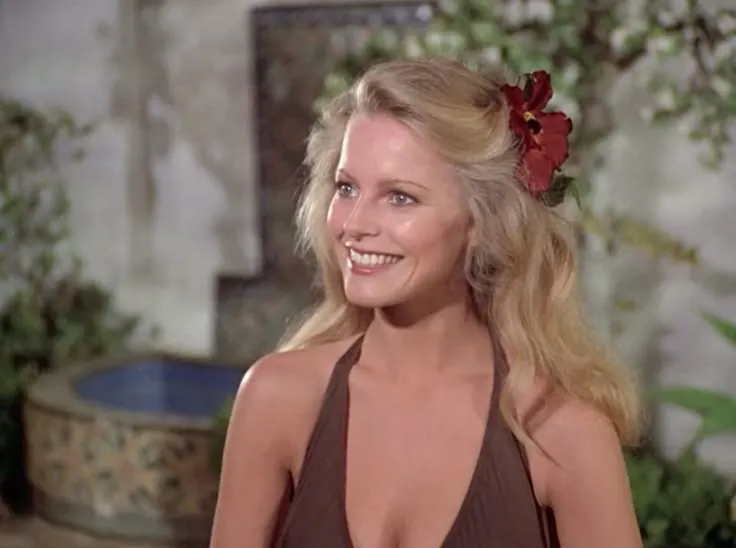
Farrah Fawcett wasn’t just a TV star—she was a cultural phenomenon.
Her smile and hair had become global trademarks. Her feathered hairstyle was copied in salons everywhere.
Her famous red swimsuit poster sold in the millions and became the most iconic pin-up of the 1970s. Farrah wasn’t just one-third of Charlie’s Angels—she was the Angel, the face of the franchise.
So when she announced she was leaving after a single season, producers and executives panicked. How do you replace lightning in a bottle?
Enter Cheryl Ladd.
At the time, she was sweet-faced, blonde, and relatively unknown outside small roles in commercials, music, and TV appearances. Producers cast her as Kris Munroe, the younger sister of Farrah’s Jill Munroe—a clever move to acknowledge Farrah’s absence without attempting an impossible one-to-one replacement.
But make no mistake: Cheryl was stepping onto a minefield of expectations.

From the very beginning, the pressure was intense. She was seen as the knockoff, the substitute nobody had asked for. Entertainment magazines labeled her “the new girl,” while die-hard fans of Farrah Fawcett bristled at her very presence.
In some cases, she was booed in public appearances. On set, she received patronizing notes about how to smile, how to keep her energy “light,” and how not to overshadow her co-stars. The message was clear: Cheryl Ladd was supposed to keep the machine running, not reinvent it.
But Cheryl had other plans.
Instead of fighting against the comparisons, she leaned into quiet excellence.
She treated every script seriously, even when the storylines were light and campy. She memorized her lines meticulously, developed her own interpretation of Kris Munroe, and committed herself fully to the role. Ladd even performed many of her own stunts, proving she wasn’t just the bubbly blonde sidekick.
Slowly, that twinkle in her eye, her warmth, and her charisma began to win audiences over. She wasn’t Farrah—and she didn’t need to be.

Then came the shift.
Cheryl Ladd stayed with Charlie’s Angels for four seasons, far longer than Fawcett’s original run. She became one of the anchors of the show during its peak years, helping it remain one of the most-watched programs on television.
By the time she left, she was no longer “the replacement.” She was simply an Angel, and one of the most memorable at that.
But Cheryl’s story was never just about television fame. Off screen, she was balancing a demanding workload with being a young wife and mother.
She also pursued music, releasing several albums in the late 1970s and early 1980s. Her singing career took her all the way to Super Bowl XIV, where she performed the national anthem before an audience of millions. This versatility—acting, singing, performing—proved she was more than just a TV actress.

As the 1980s and 1990s brought new challenges, Cheryl faced the same fate as many actresses of her generation: Hollywood’s tendency to discard women as they aged. Roles for women over 35 were scarce, especially for those who had once been considered “the pretty blonde on TV.”
But instead of fading away, she reinvented herself.
She took to the stage, starring in Broadway’s Annie Get Your Gun. She charmed audiences in TV movies, particularly in Hallmark’s signature family dramas. And she appeared in hit shows like Las Vegas and NCIS, reminding audiences she was still here, still working, and still magnetic on screen.
She also used her platform for advocacy.
Cheryl became a passionate spokesperson for child abuse prevention, lending her voice and name to causes that mattered deeply to her.
Unlike many celebrities who attach themselves to causes for publicity, Cheryl’s work came from personal conviction, shaped by her own experiences and desire to use her fame for something meaningful.

That resilience—on screen and off—is the thread running through Cheryl Ladd’s life. She didn’t just inherit someone else’s spotlight; she built her own brick by brick, through determination, professionalism, and authenticity.
She endured ridicule, doubt, and the constant reminder that she wasn’t the “original Angel.” But instead of being reduced to a footnote, she wrote her own chapter in television history.
Looking back, it’s easy to see how Cheryl Ladd’s casting might have seemed like damage control. But what she gave the world was so much more: a lesson in grace under fire, in quiet persistence, and in the ability to redefine yourself even when others refuse to see you as more than a replacement.

Today, Cheryl Ladd is remembered not just as the woman who kept Charlie’s Angels afloat after Farrah’s departure, but as a talented actress, singer, mother, advocate, and survivor in an industry notorious for chewing people up and spitting them out.
She may have entered Hollywood as “the new girl,” but she stayed as a lasting reminder that underestimated women often shine the brightest.
She began as the replacement. She ended as the Angel who refused to be forgotten.