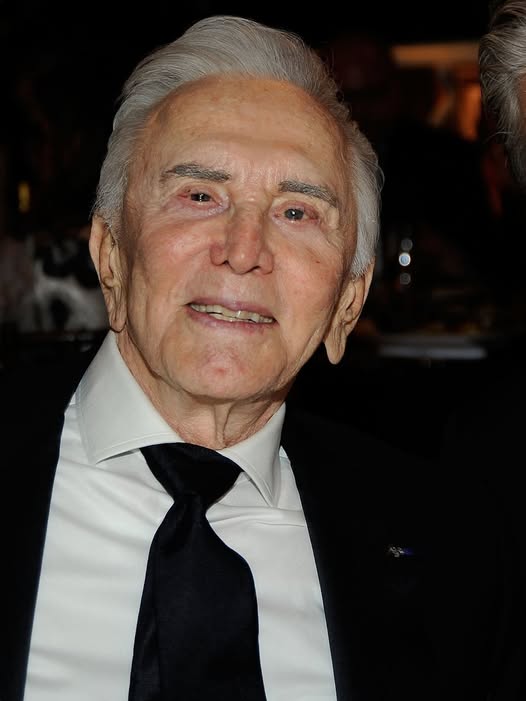
Kirk Douglas was more than just a movie star — he was one of the last towering giants of Hollywood’s Golden Age, a man whose life story felt as epic and dramatic as the films he starred in.
Born Issur Danielovitch on December 9, 1916, in Amsterdam, New York, Douglas grew up in extreme poverty as the son of Russian-Jewish immigrants.
His childhood was shaped by hardship, struggle, and relentless determination.
Long before fame found him, he worked odd jobs to help support his family, selling snacks, delivering newspapers, and doing whatever he could to survive.
Those difficult early years forged the fierce drive and resilience that would later define both his legendary career and his larger-than-life personality.
From the moment he appeared on screen, Douglas possessed a magnetic intensity that audiences could not ignore.
With his piercing eyes, unmistakable cleft chin, and explosive emotional energy, he brought a raw realism to Hollywood at a time when many leading men relied mainly on charm and glamour.
His breakthrough role came in Champion (1949), where he portrayed an ambitious boxer willing to sacrifice everything for success.
The performance shocked audiences with its emotional brutality and earned him his first Academy Award nomination.
It also established Douglas as an actor unafraid to play deeply flawed, morally conflicted men — characters who were often driven by obsession, pride, or desperation.
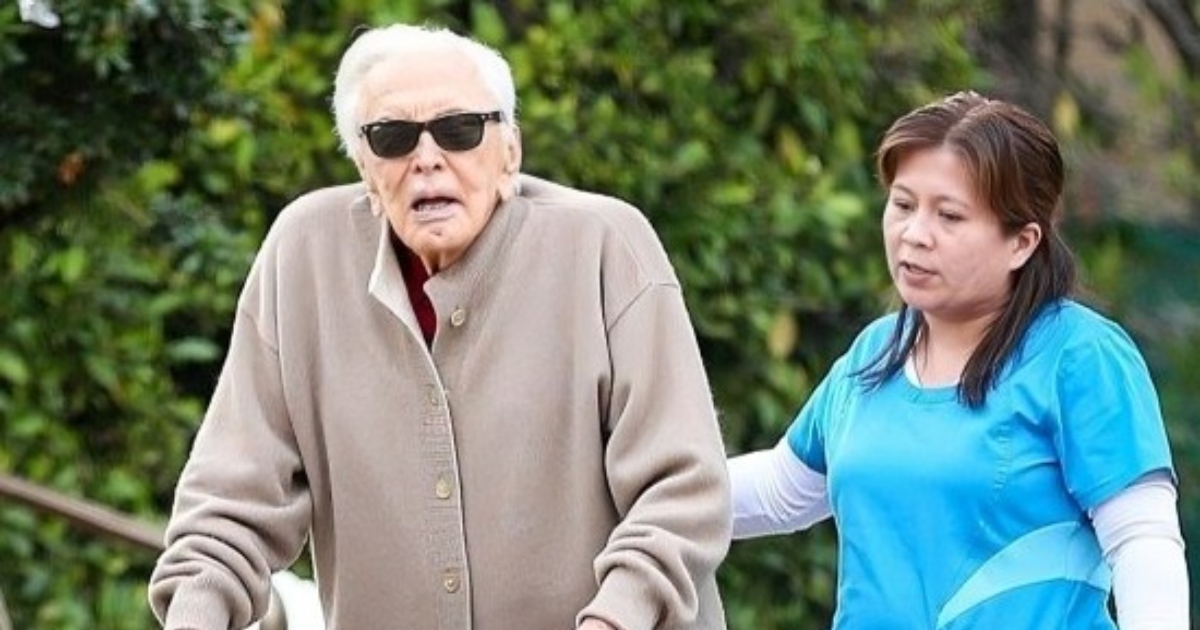
Over the following decades, Douglas built one of the most respected careers in cinema history.
He became known for choosing demanding, emotionally charged roles that pushed the boundaries of traditional Hollywood storytelling.
In The Bad and the Beautiful (1952), he played a ruthless movie producer whose ambition destroys relationships, delivering one of the defining performances of his career.
In Lust for Life (1956), he transformed himself into the tortured painter Vincent van Gogh, capturing both the genius and agony of the artist with heartbreaking authenticity.
The role earned him another Oscar nomination and remains one of the most acclaimed portrayals of an artist ever put on film.
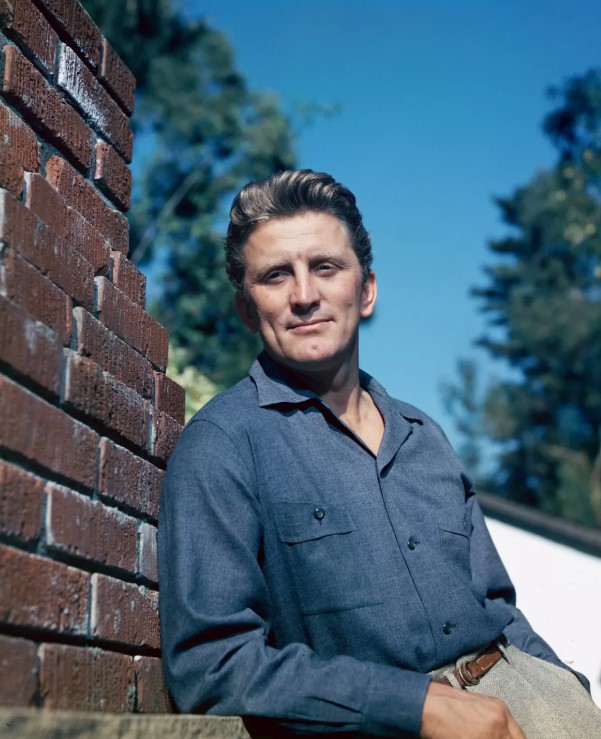
Douglas also demonstrated extraordinary courage in the kinds of projects he chose to support.
His collaboration with director Stanley Kubrick on Paths of Glory (1957) resulted in one of the most powerful anti-war films ever made.
The movie challenged military corruption and the senseless cruelty of war with a boldness that was uncommon in Hollywood at the time.
Douglas’s performance as Colonel Dax — a man fighting against injustice within his own army — reflected the actor’s own strong sense of morality and conviction.
Perhaps his most influential contribution to Hollywood came with Spartacus (1960), the sweeping historical epic in which he both starred and served as executive producer.
The film was groundbreaking not only because of its scale and ambition, but because Douglas made the courageous decision to publicly credit blacklisted screenwriter Dalton Trumbo during the height of the Hollywood blacklist era.
At a time when fear and political pressure silenced many in the entertainment industry, Douglas took a stand for artistic freedom and human dignity.
That decision helped break the blacklist system and changed Hollywood history forever.
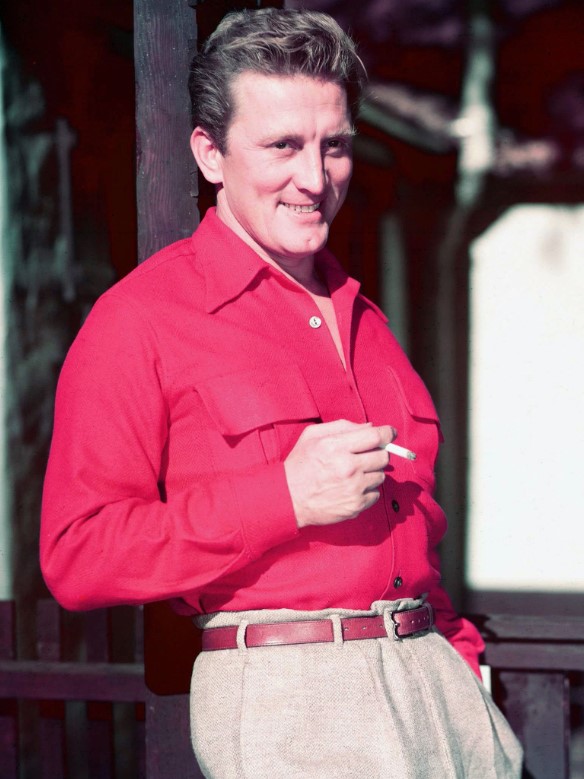
Off-screen, Douglas’s life was equally remarkable. He was known for his fierce determination, outspoken personality, and relentless work ethic.
Yet beneath his tough exterior was a deeply thoughtful and reflective man.
Over the years, he became an accomplished author, writing memoirs and novels that revealed his personal struggles, insecurities, and philosophies about life.
He also dedicated much of his later life to philanthropy, donating millions to hospitals, schools, and charitable organizations alongside his wife Anne Buydens, with whom he shared more than six decades of marriage.
Douglas faced enormous personal challenges throughout his life. He survived a helicopter crash in 1991 that could easily have killed him.
Five years later, he suffered a debilitating stroke that severely affected his speech — a devastating blow for a man whose power had always come through communication and performance.
But true to form, Douglas refused to surrender. He worked tirelessly to recover, continuing to write, make appearances, and inspire others with his resilience and optimism.
As the father of actor Michael Douglas, Kirk Douglas also helped establish one of Hollywood’s most famous acting families.
Yet despite his immense fame, he never forgot his roots or the struggles that shaped him.
He often spoke about gratitude, perseverance, and the importance of giving back, becoming as admired for his humanity as for his cinematic achievements.
When Kirk Douglas passed away in February 2020 at the age of 103, the world lost not just an actor, but a symbol of an entire era of filmmaking.
His career spanned more than seven decades, touching generations of audiences through unforgettable performances filled with passion, courage, vulnerability, and strength.
Few stars in Hollywood history have combined artistic brilliance, personal resilience, and moral courage in the way Douglas did.
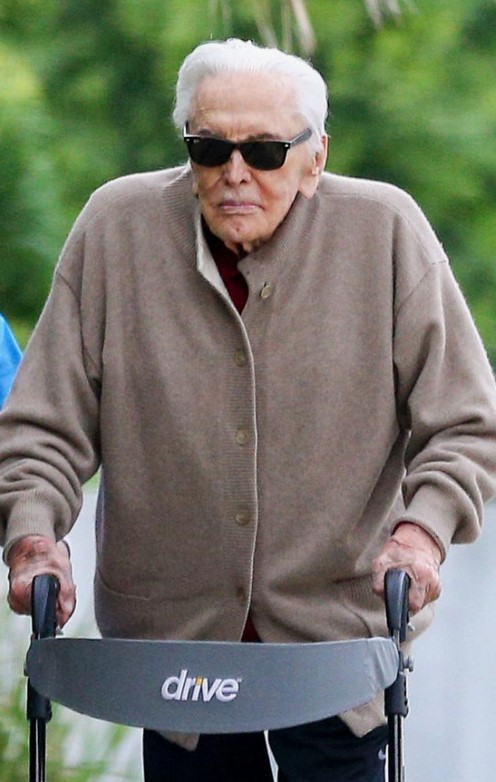
Today, Kirk Douglas remains an enduring icon of classic cinema — a man who rose from poverty to greatness, shattered barriers in Hollywood, and left behind a legacy far larger than fame alone.
His films continue to inspire new generations, while his life story stands as a powerful reminder that determination, integrity, and fearlessnesscan truly change the world.