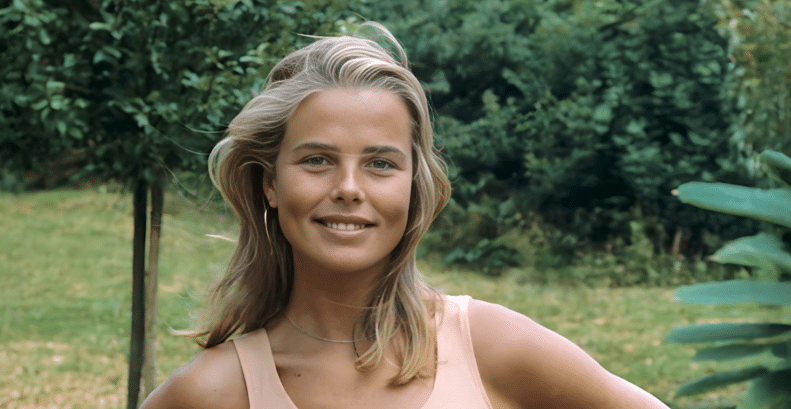
Some faces bring an entire era rushing back.
One glance can recall the glow of an old movie theater marquee, the rustle of a newspaper’s entertainment section, or the familiar anticipation of waiting for a favorite star to appear on television.
The young woman in these photographs possessed that rare quality.
She did not need an extravagant entrance or a larger-than-life personality. Her beauty was striking, yet there was also something thoughtful behind her eyes—a quietness that made audiences wonder what she might be thinking.
Before she had even reached her twenties, she had appeared in several challenging films and earned one of Hollywood’s highest honors: an Academy Award nomination.
But can you remember her name?
A Young Face From a Very Different Hollywood
The late 1970s were an unusual and fascinating period for American movies.
Hollywood was moving away from the polished studio traditions of earlier decades. Filmmakers were becoming more interested in imperfect people, complicated relationships, and stories that did not always offer easy answers.
Audiences encountered a new generation of performers who looked and behaved differently from the carefully managed stars of Hollywood’s golden age.
Among them was a tall, naturally poised young actress whose calm screen presence stood apart from the louder personalities around her.
Her name was Mariel Hemingway.

Born in 1961, she came from a family already familiar to millions of Americans. Her grandfather was celebrated author Ernest Hemingway, while her older sister Margaux had established herself as a fashion model and actress.
Yet Mariel’s career would soon develop an identity of its own. The Hemingway Society describes her as the daughter of Jack Hemingway and the granddaughter of Ernest Hemingway and Hadley Richardson.
Her First Film Arrived When She Was Only 14
Mariel’s introduction to motion pictures came remarkably early.
At 14, she appeared with her sister Margaux in the 1976 drama Lipstick. The sisters also played siblings on screen, giving the film a natural connection that could not have been manufactured through casting alone.
The movie dealt with difficult and unsettling subject matter, but Mariel’s performance drew attention to her unusual composure.
She did not appear to be chasing the camera.
Instead, the camera seemed to discover her.
Even at that age, she displayed the quality that would define much of her early work: emotional restraint. Rather than exaggerating every feeling, she allowed small expressions and moments of silence to carry the scene.
For moviegoers accustomed to the more theatrical performances of earlier generations, that natural approach felt distinctly modern.
The Role That Changed Everything

Three years later, Mariel appeared as Tracy in the 1979 film Manhattan.
Set against an elegant vision of New York City, the picture became one of the most discussed films of its time. Its relationships now invite considerably more scrutiny than they received from many contemporary reviewers, but Mariel’s performance continues to stand out for its clarity and sincerity.
Tracy could easily have been treated as a minor figure.
Instead, Mariel gave her a quiet emotional intelligence that made the character difficult to forget. In a story filled with older adults who believed they understood life, her character often appeared to possess the greatest honesty.
That achievement was recognized by the Academy.
At just 18 years old, Mariel Hemingway received a nomination for Best Actress in a Supporting Role. She appeared in the category alongside Jane Alexander, Barbara Barrie, Candice Bergen and eventual winner Meryl Streep.
For a performer still in her teens, it was an extraordinary milestone.
In a later interview, Mariel recalled that Manhattan was the project that made her realize acting was the path she wanted to pursue.
When an Oscar Nomination Still Felt Like a National Event
Older movie fans may remember when Academy Award season had a different atmosphere.
There were no social-media campaigns, instant online reactions, or endless streams of predictions arriving throughout the day.
People learned about nominations through newspapers, radio broadcasts and evening television. Families discussed the contenders at the dinner table. Movie lovers clipped photographs from magazines and saved them in scrapbooks.
An Oscar nomination could transform a young performer overnight.
For Mariel, it also created expectations that would follow her into adulthood. Audiences now knew her name, while directors understood that she could carry emotionally demanding material without losing her natural quality.
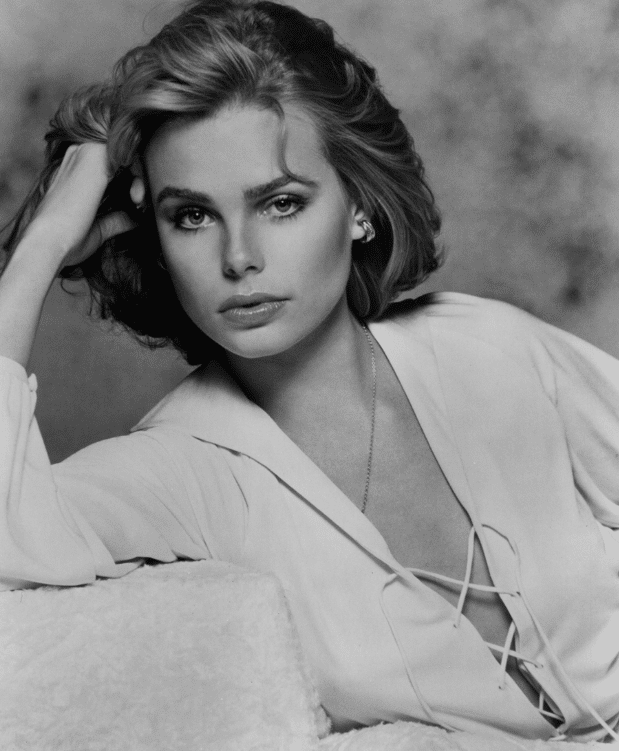
Yet she did not immediately choose the safest or most commercially predictable projects.
She continued accepting roles that explored ambition, identity and the complicated pressures placed upon young women.
A Career Built on Unconventional Choices
In 1982, Mariel starred in Personal Best, playing a track-and-field athlete striving to compete at the highest level.
The film explored the demanding world of elite sports, as well as an intimate relationship between two female athletes. At the time, such a story was far less common in mainstream American cinema than it would become in later decades.
Mariel approached the role with the same seriousness she brought to her earlier work.
She trained to appear convincing as an athlete and portrayed her character’s uncertainty without turning it into melodrama. The result was a performance that combined physical discipline with emotional vulnerability.
The following year brought another demanding assignment.
In Bob Fosse’s Star 80, Mariel portrayed model and actress Dorothy Stratten. The film examined ambition, celebrity and the darker consequences of fame, requiring its leading actress to balance innocence, hope and growing unease.
Rather than choosing projects designed merely to protect a glamorous image, Mariel repeatedly entered stories that asked uncomfortable questions.
That willingness made her early filmography unusually bold.
Finding a Life Beyond the Movie Camera
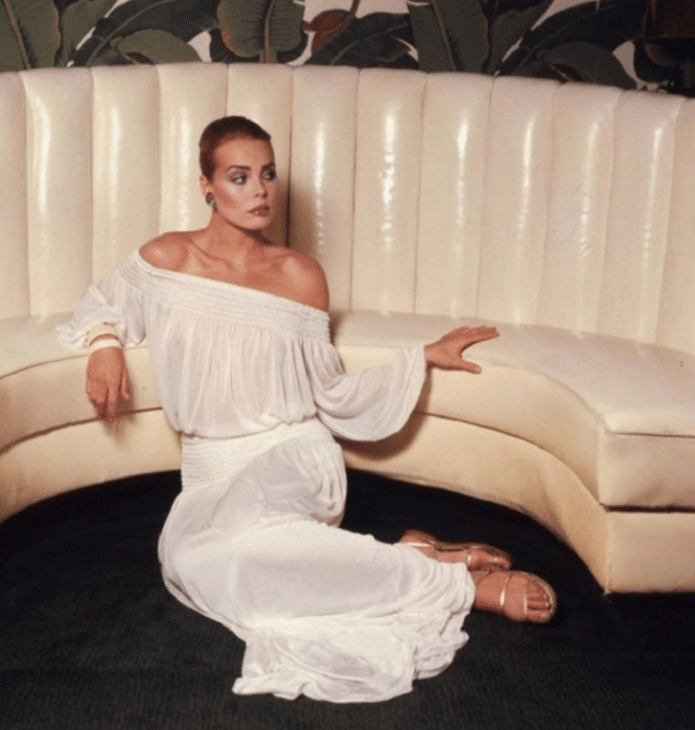
For some performers, stepping away from Hollywood’s brightest spotlight can feel like disappearing.
Mariel followed a different route.
She wrote books about balance, well-being and her personal experiences. She explored yoga and healthy living, and she became increasingly willing to discuss the emotional realities behind a famous family name.
This later chapter gave new meaning to the restraint audiences had noticed in her youth.
The young actress who once conveyed so much through silence grew into a woman willing to speak openly about subjects many families once kept behind closed doors.
Her story therefore became larger than a collection of movie credits.
It became a story about learning how to define oneself after childhood, fame and public expectation have all played their part.
Aging in a Culture That Worships Youth
Hollywood has never found it easy to let women grow older.
For generations, actresses have been praised for youthful beauty and then judged when time naturally alters their appearance. Men were often permitted to become distinguished, while women were encouraged to appear unchanged.
Mariel has more recently reflected with unusual honesty on aging, appearance and the emotional experience of seeing a familiar face change over time.
She has acknowledged that acceptance is not always simple or immediate. Her reflections emphasize that a person’s identity and value do not disappear as the years become visible.
That message may be especially meaningful to readers who have watched several generations of beauty standards come and go.
Fashion changes.
Hairstyles change.
The faces on magazine covers change.
Yet character, memory and experience often become richer with age.
Why Her Early Photographs Still Hold Our Attention
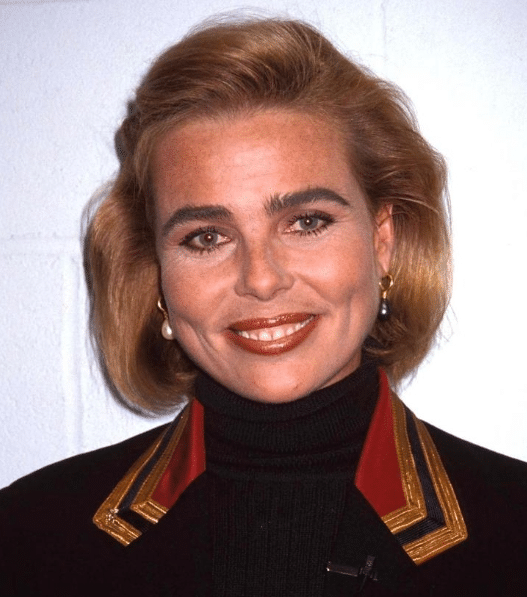
Old celebrity photographs have a special power.
They return us to a time before careers had been fully written and before audiences knew which stars would remain famous for decades.
In Mariel Hemingway’s early portraits, we see a young woman standing at that uncertain beginning.
She could not have known how long the road ahead would be, how greatly the film industry would change, or how her understanding of success would evolve.
Perhaps that is what makes the images feel so poignant today.
They preserve not only youth, but possibility.
For older viewers, they may also recall an era when a trip to the movies felt like an event. There was the smell of popcorn in the lobby, the heavy curtain before the screen and the shared silence as the lights slowly dimmed.
Stars were distant enough to remain mysterious.
A single magazine portrait could be studied for minutes rather than passed over in seconds.
A Face That Brings the Past Back to Life
To those who first saw her on a theater screen in the 1970s, Mariel Hemingway may forever remain the thoughtful young woman whose performance seemed wiser than her years.
To later audiences, she is an author, advocate and public voice who built a meaningful life beyond the demands of Hollywood.
These photographs connect both versions of her.
They remind us of how quickly time passes—and how a memorable performance can preserve a moment long after the fashions, theaters and movie posters have changed.
That is the enduring magic of classic cinema.
A face appears on the screen.
The lights come up.
Decades pass.
And somehow, we still remember her.