
ByStacy Conradt|Jan 25, 2018, 11:00 AM EST
 Add us as a preferred source

Nearly 20 years after Murphy Brown signed off for the last time, the Emmy-winning series is staging a comeback. Following in the footsteps of Roseanne, The X-Files, and the many other beloved series of the past that have gotten recent reboots, CBS just announced that it has ordered 13 new episodes of the hit 1990s series to run either this year or next. While details beyond that are minimal, we do know that Candice Bergen will return to the title role (how could it work without her?).
Even if you can rattle off Murphy’s plethora of secretaries by heart, you’re sure to discover something new about the FYI gang with these 12 facts about the series that started it all.
1. HEATHER LOCKLEAR WAS CONSIDERED FOR THE TITLE ROLE.
When series creator Diane English first pitched the show to the network, they were intrigued. But they wanted the title character to be younger—Heather Locklear, in fact—and returning from a week at the spa instead of a month at the Betty Ford Center. “Diane English … went in and slapped the head of the network around and said she would prefer to go with someone more mature, so I got it,” Bergen said on Today. “But I had to really fight for it.” Even after her audition, the network president wasn’t convinced, telling English he didn’t think Bergen could do it. He later took her out to dinner to apologize.
2. DAN QUAYLE SENT MURPHY’S BABY A STUFFED ELEPHANT.
Murphy became a single mother during season four, something then-Vice President Dan Quayle infamously took umbrage with. After making a speech in which he said Brown was “mocking the importance of fathers by bearing a child alone and calling it just another lifestyle choice,” Quayle was roundly mocked. He later sent “Baby Brown” a stuffed elephant, “in the spirit of lightheartedness and joining in the fun.”
3. CANDICE BERGEN LATER SAID SHE AGREED WITH DAN QUAYLE—SORT OF.

Although much was made of the Murphy Brown/Dan Quayle feud, the woman at the center of it wasn’t as bothered as everyone else was. “His speech was a perfectly intelligent speech about fathers not being dispensable and nobody agreed with that more than I did,” Bergen said.
But on June 19, 1998, Bergen responded to an op-ed written by Quayle’s former speechwriter, Lisa Schiffren, who had suggested that she thought Quayle was a visionary the whole time.
“[Schiffren] quotes me as saying that family values ‘was the right theme to hammer home,’ that I ‘agreed with all of it except his references to the show,’ and that ‘the body of the speech was completely sound.’ Since that quote serves as the crux of her argument, let me print what she left out: ‘it was an arrogant and uninformed posture, but the body of the speech was completely sound.'”
4. HALEY JOEL OSMENT PLAYED AVERY, MURPHY’S SON.
Murphy’s son had grown up by the final season of the show and needed to be played by a young actor who could hold his own in scenes with Bergen. Enter Haley Joel Osment, who, at the age of nine, had already been a series regular on two sitcoms: Thunder Alley and The Jeff Foxworthy Show. Bergen described him as “strikingly professional and prepared.”
5. AFTER HER FIFTH EMMY, CANDICE BERGEN DECLINED ADDITIONAL NOMINATIONS.
Bergen took home trophies in 1989, 1990, 1992, 1994, and 1995. Feeling that she had been lauded enough, the actress refused to put herself up for any more Emmy nominations. She still held the record for best actress Emmy wins for playing a single role until 2016, when Julia Louis-Dreyfus tied her for Veep. In 2017, Louis-Dreyfus broke the record when she won her sixth Emmy for playing Selina Meyer.
6. MURPHY HAD A TOTAL OF 93 SECRETARIES.
Murphy’s revolving door of secretaries ended at number 93, who happened to be played by Bette Midler. Other celebrities that stepped in to assist Murph included Sally Field, Paul Reubens, Craig Bierko, and Michael Richards in a Seinfeld crossover.
7. DIANE ENGLISH RETURNED FOR THE FINAL SEASON.
Though she left the series after season four, Diane English came back for season 10 to make sure the show got a proper send-off. “I wasn’t really very pleased with how the series was evolving,” English told Entertainment Weekly in 2014. “I wanted to sort of get back to our roots and tackle a serious subject.” They definitely went serious—Murphy’s arc in season 10 was about battling breast cancer. English had a cameo in the final episode, playing a nurse who delivered the good news that the cancer was gone.
8. THE FINAL SEASON COULD HAVE BEEN ABOUT MENOPAUSE INSTEAD OF BREAST CANCER.
According to Bergen, executives weren’t thrilled with the breast cancer storyline. “They thought Murphy should just struggle through menopause,” Bergen explained. ”Diane and I had to tell them menopause is not jeopardizing.” Years later, however, English remembered it a little differently: “There wasn’t a lot of resistance. Really, Les Moonves was a champion of this. It was more the press, actually. When we announced this was where we were going at the Upfronts, there was kind of an outrage, like, ‘Wait a minute. This is a serious subject. People die from this. Why is this funny?’”
9. THE SHOW HAD AN IMPACT ON THE NUMBER OF WOMEN WHO GOT MAMMOGRAMS.

The breast cancer plot resulted in something bigger than just good ratings: The number of American women who got mammograms increased by 30 percent.
10. THE SHOW SPAWNED AN ALBUM.
Unlike Bergen, The Sounds of Murphy Brown didn’t clean up at any awards shows. But fans who enjoyed the Motown tunes that popped up across the series surely enjoyed this compilation of songs, including hits by Smokey Robinson, Gladys Knight and the Pips, Marvin Gaye, and the Temptations. Bergen has a couple of tracks on there too.
11. DON’T BOTHER LOOKING FOR THE SERIES ON DVD.
The first season was released, but sales were allegedly so awful that plans to roll out the other nine seasons were immediately withdrawn. That Motown soundtrack may also have played a role in that decision, reported Vulture; with poor sales, it just wasn’t worth it to secure the rights to all of those hit songs. (Though with its reboot coming, don’t be surprised to see it streaming somewhere soon.)
12. ENGLISH PREDICTED ITS COMEBACK.

A few years ago, English practically predicted the show’s comeback. “If Sarah Palin runs for president, I’m going to ask CBS to put us back on the air,” English told the San Francisco Chronicle during an interview. “Six episodes, that’s all I need.” Looks like she got her wish—and then some.
The Real-Life Serial Killer That Might’ve Inspired ‘Dexter’s Dark Passenger
Brazil’s most notorious killer of killers has been called the real Dexter for years, but ‘Dexter’s’ creator tells a different origin story.
ByMatt Hoffman|Oct 30, 2026, 9:00 PM EDT
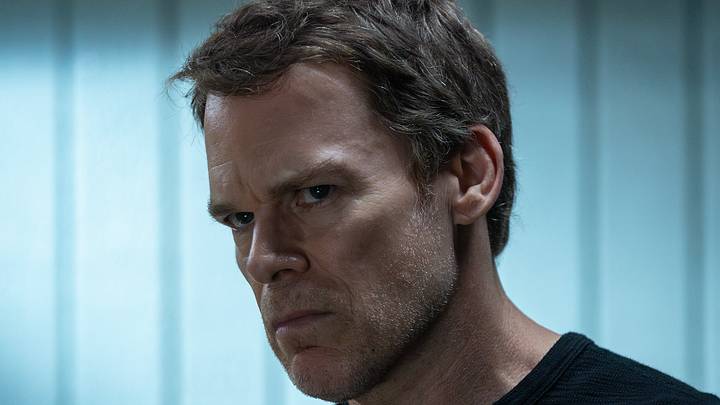
Back in July 2004, Jeff Lindsay introduced readers to Dexter Morgan, a Miami police blood-spatter analyst who kills only people who deserve it, egged on by a voice in his head he calls the “Dark Passenger.” Two years later, Showtime turned Darkly Dreaming Dexter into a hit series with Michael C. Hall.
Somewhere along the way, the internet decided Dexter had a real-life model: Pedro Rodrigues Filho, a Brazilian who claimed to have killed more than 100 people, most of them criminals. Entertainment sites now call him “the Brazilian Dexter,” and ScreenRant describes the show as loosely based on his crimes. No quote from Lindsay or the show’s producers backs that up, but the similarities are hard to miss.
The Boy Who Settled Scores
Filho was born in 1954 on a farm in Santa Rita do Sapucaí, in the Brazilian state of Minas Gerais, with an injured skull: his father, he said, had kicked his pregnant mother during a fight. He told the magazine Época in 2003 that he first wanted to kill at 13, when he shoved an older cousin into a sugarcane press. A year later, after his father lost his job as a school guard over accusations that he was stealing school lunches, Filho shot the official who had fired him, then shot the guard he believed was the real thief. (Accounts disagree on who that first victim was: some Brazilian outlets say the mayor of his hometown, others the deputy mayor of Alfenas, also in Minas Gerais.)
He fled to Mogi das Cruzes, outside São Paulo, where he robbed drug dens, killed traffickers, and took over a dead drug boss’s business. When his pregnant girlfriend was shot dead, he went looking for the man who ordered it and, with four friends, hit a wedding party, leaving seven dead and 16 wounded, according to Época. He was arrested shortly after turning 18 and entered prison on May 24, 1973; in the van on the way there, he killed a fellow prisoner he said was a rapist.
Where the Comparison Holds
Like Dexter, Filho had a code, or said he did. He told Época he killed only people who were no good, and that he never killed children, women, or family men. He also had a father story to rival Harry Morgan’s, though a much darker one: Filho claimed he killed his own father in prison, in revenge for his mother’s stabbing, and chewed a piece of his heart. (Época noted that he gave a psychiatrist a completely different account of how his father died.)
The resemblance mostly ends there. Dexter’s code, as Mental Floss has laid out before, includes “don’t get caught,” and Filho spent roughly four decades behind bars, much of it bragging. He had “Mato por prazer” (“I kill for pleasure”) tattooed on his left arm. He claimed 47 victims inside prison alone, though Época found just 18 charges against him on file in 2003; by his death, Brazilian outlets counted 71 homicides on his record.
What Dexter’s Creator Actually Said
Lindsay has told his origin story many times, and it starts nowhere near Brazil: at a Kiwanis Club lunch where he sat at the head table waiting to speak and, as he told BookPage in 2005, “the idea just popped into my head that sometimes serial murder isn’t a bad thing.” He then built the character out of research: he collected books on sociopaths and murderers, interviewed psychologists and crime scene investigators, and got cop friends to turn him loose in their dead-files room. He also rejects the very label that made Filho famous: “Dexter’s not a vigilante,” he told Middlebury Magazine in 2011. “Vigilantes are trying to perform an act of justice. Dexter just likes to kill people.”
The Ending Dexter Survived
Filho walked out of prison in 2007, went back in 2011 for crimes committed during his sentence, and was released for good in 2018. Within months, he had reinvented himself as a YouTube personality who commented on crimes in the news and lectured about his past. On the morning of March 5, 2023, he was on a sidewalk in Mogi das Cruzes holding a small child when men in a black car opened fire, according to the news site G1. The child was unhurt, but according to the police report, one of the attackers stabbed Filho in the throat as he lay on the ground. He was 68.
Read More:
•
•
Dexter: New Blood: 7 Things We Know
Why Do We Associate Ravens With Death?
“Quoth the Raven, ‘Nevermore!'”
ByChelsea Thatcher|Oct 31, 2026, 10:00 AM EDT

Ravens are incredibly intelligent birds able to mimic human speech, remember faces, and even hold grudges against those who’ve wronged them. And while they have been a symbol of wisdom and prophecy in different cultures, they’re most often thought of in relation to grief and death. But why?
In several mythologies from around the world, the raven is associated with death. Does that mean these birds are actually ill omens, or that there’s some truth to the folklore? How did so many different civilizations all come to believe similar things about the raven? It honestly has a lot to do with their main source of food.
Carrion Birds
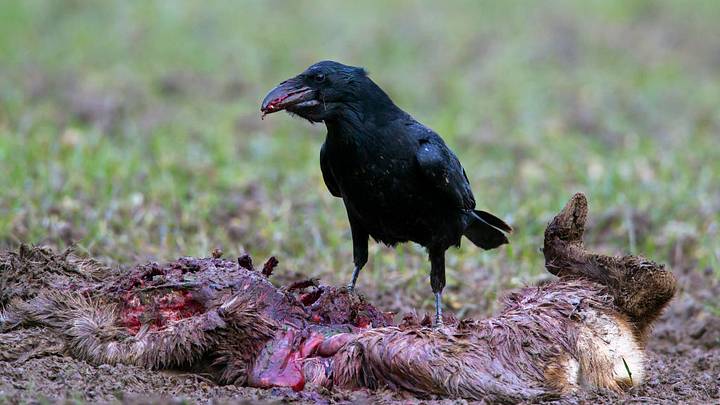
Ravens, along with crows, rooks, and magpies, are carrion birds. They are scavengers, eating the decaying flesh of dead bodies. Today, they commonly find their meals in roadkill and other dead animals, but in the past, they learned that there were absolute feasts on the world’s battlefields.
In war, there were many times that the number of dead was too great to bury all of them. Ancient peoples saw ravens flitting among the bodies of the slain at almost every battlefield, and the connection became ingrained in the collective conscience. Superstition then bled into the narrative, and people saw ravens as omens of death rather than the clean-up crew afterwards.
Ravens in Myth and Religion
Ravens appear in ancient myths and religious texts as symbols of fate and death. In several different cultures, ravens act as messengers between the worlds of the living and the dead. They might even work as Grim Reapers, collecting and transporting souls to the underworld. Swedish mythology claims that ravens are the souls of murder victims who didn’t receive a proper burial, and Germanic lore says they are the souls of the damned.
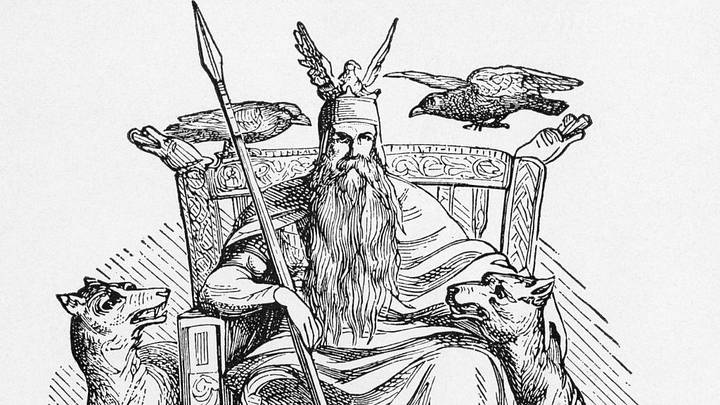
In Norse mythology, Odin, the god of war and death, had two ravens, Huginn (thought) and Muninn (memory), who acted as his eyes and ears in battle. The Norse people believed that if a raven appeared on the battlefield with them, it meant that Odin was watching. In Celtic lore, ravens were also linked to the Mórrígan, goddess of death, war, and fate.
The Bible and the Quran also feature ravens in stories that deal with death. In the biblical tale of the Flood, Noah first releases a raven to see if the waters still cover the land. The raven never returns, presumably because it has found food in the number of wicked flood victims. And in the Quran, a raven is the one to teach Cain how to bury his murdered brother’s body.
Poe’s “The Raven”
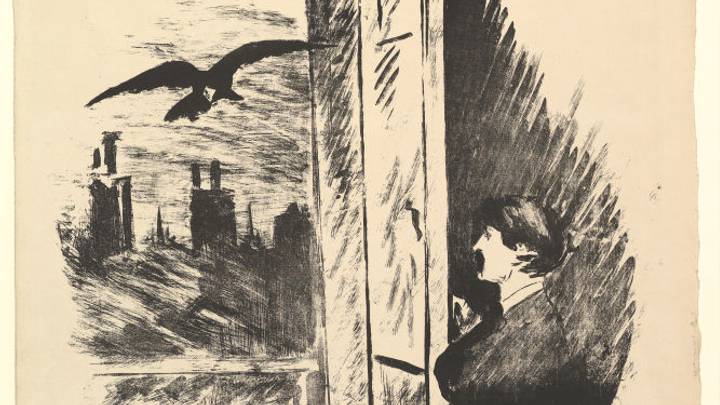
While ravens had been connected with death for centuries, it wasn’t until Edgar Allan Poe popularized the bird in his Gothic poem that they became symbols of horror and misery as well. Poe published “The Raven” in January of 1845, telling the sad tale of a man haunted by the loss of his love and the beginnings of madness. He wants to know if he will ever see his love again, or if the pain of loss will ever subside, and the raven drowns him in despair when it cries out: “Nevermore!”
Ravens were no longer mere omens of death, but an integral part of the horror genre. Alfred Hitchcock would later capitalize on this connection in his 1963 horror film, The Birds. If you weren’t scared of ravens and their association with death before, you were certainly wary of them after that film. And it’s probably a good idea to remain wary of ravens, or at least remember to treat them kindly. Otherwise, they may work together to cause you misery as vengeance.
Read More:
•
Why Do We Associate Ravens With Death?
•
5 Common Misconceptions About Día de los Muertos
•
The Medium Who Wants You to Be Nicer to Ghosts
•
The Personal Tragedy Behind Picasso’s Blue Period
•
Why Baba Yaga Lives in a House With Chicken Legs
What Dating Was Like 100 Years Ago
Decades before dating apps and DMs, romance followed courtship rules, and some dates required a chaperone … until the 1920s.
ByLogan DeLoye|Oct 29, 2026, 12:00 PM EDT
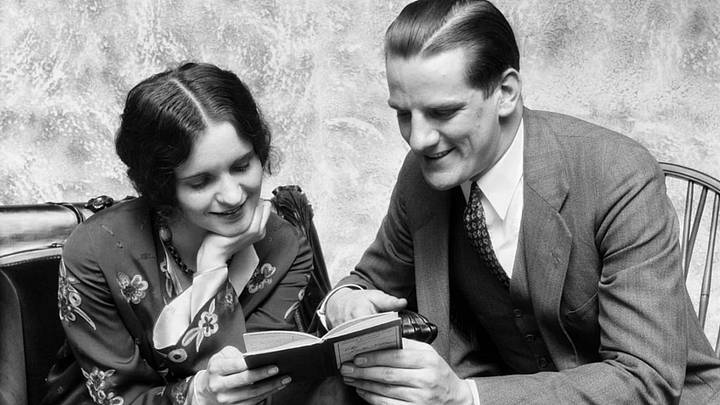
You’re transported back to 1926, and it’s the bee’s knees, but you want someone to share it with.
Feeling lonely, you reach into your sweatpants pocket for your phone to swipe through Hinge; only apps don’t exist yet, cell phones won’t be invented for decades, and you’re probably wearing nice trousers, or a long skirt or dress instead.
So, how are you meant to find a date?
Long before people downloaded dating apps and sent DMs, romance relied on courtship and chaperones to uphold reputation and virtue, at least, until the 1920s.
COURTSHIP BEFORE WORLD WAR I
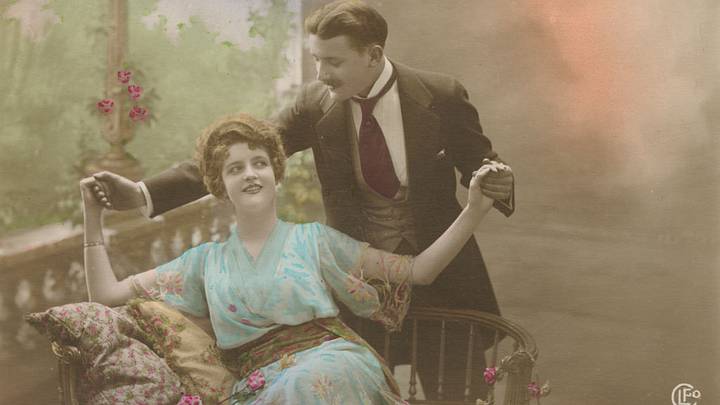
Before World War I ended, dating as we know it today was nonexistent. Parents guided their children toward a possible match, and the courtship process was very strict. A suitor, approved by the woman’s parents, would leave a “calling card” at her doorstep to let her and her family know he intended to court her (spend time getting to know her).
If the parents were pleased with his efforts, they would invite him into their home for a “supervised” visit with their daughter. The actual “date” might’ve consisted of the woman entertaining the man with piano playing or a dance. The suitor would then “call” regularly, bring gifts to his intended match and her family, and eventually, the pair would go on public outings together… chaperoned, of course. This continued until the suitor asked the woman’s father for permission to propose and the family deemed him financially capable of taking care of her.
This was the typical process that led to marriage throughout the 1800s and into the early 1900s.
DATING IN THE 1920s
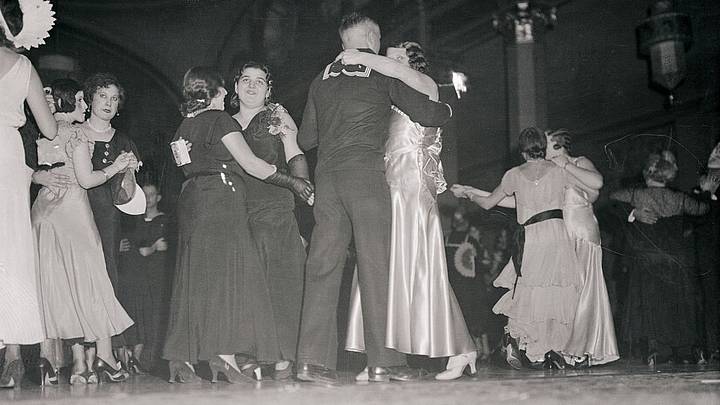
The war ended in 1918; women secured the right to vote in 1919, joined the workforce in droves, and everyone began putting on the Ritz as the Roaring ‘20s rolled in.
Possible suitors rang their dates on the telephone, and new, close-bodied automobiles kept young daters more concealed; a feature that concerned the older generation. Finding a partner became less of a marital strategy and more of a casual ordeal.
Movies and dance halls grew in popularity, providing the perfect setting for an informal date. According to The Mob Museum, upper- and middle-class citizens socialized on the train, with the Pullman Company offering “dining, lounge and ballroom cars with live bands.”
Sometimes, a date was simply driving around in the car and maybe stopping by the local ice cream parlor for a delicious cherry phosphate. As car ownership among young people accelerated, the need for a chaperone lessened, diminishing the courtship process.
Cities boomed as more people left rural communities for the excitement of urban oases, where meeting new people was more common.
While traditional expectations and standards still held true in rural areas, city dwellers thought unconventional dating was the cat’s pajamas in the 1920s. The 18th Amendment, which banned the sale and transportation of liquor, created speakeasies, secret bars that became popular spots for drinks, dancing, and jazz music, especially in metropolitan areas.
Urbanization, entertainment, updated transportation, and changing laws and lifestyles all contributed to the disappearance of traditional courtship and the rise of casual dating 100 years ago. This concept is still alive and well in 2026; only there are fewer chance encounters at dance halls and soda shops, and more online dating profiles and split-the-bill dinners.
Read More:
•
10 Roaring Twenties Phrases You Use Every Day
•
12 World-Shaping Events That Happened in 1920
•