Rita Hayworth, the iconic Hollywood actress of the 1940s, captivated audiences with her extraordinary beauty, magnetic charm, and undeniable talent. From her sultry, unforgettable dance in Gilda to her radiant transformation in Cover Girl, she became one of the most recognizable faces of cinema’s Golden Age.
To the world, she embodied glamour itself—a flawless vision carefully crafted by Hollywood. Yet behind that dazzling façade existed a far more complicated woman, shaped by sacrifice, reinvention, and a lifelong struggle to reconcile fame with identity.
This is the story of Rita Hayworth not as a myth, but as a human being navigating the unforgiving machinery of stardom.
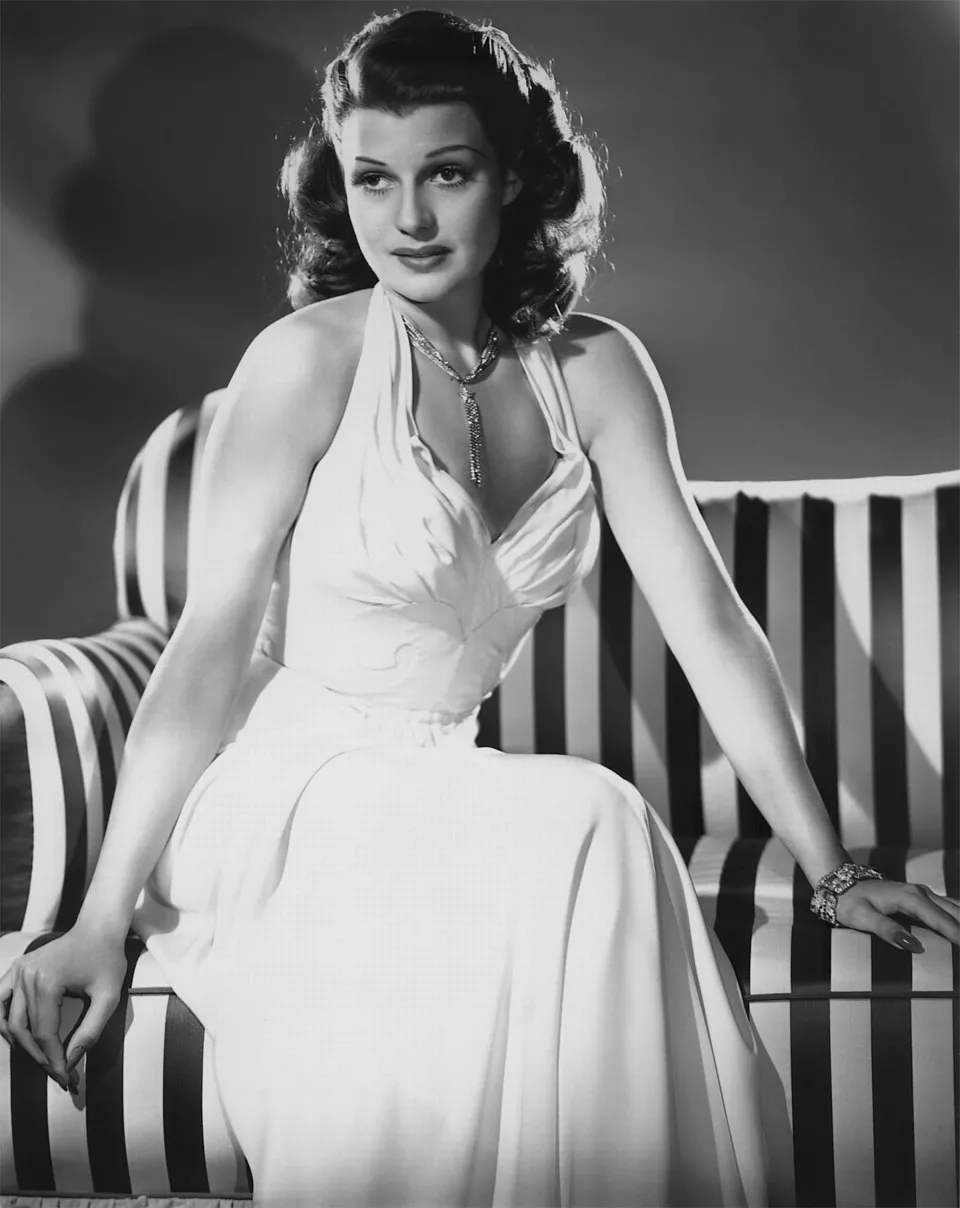
The Early Years: A Childhood on Stage
Born Margarita Carmen Cansino on October 17, 1918, in Brooklyn, New York, Rita Hayworth was introduced to performance almost before she could walk. Her father, Eduardo Cansino Sr., was a renowned Spanish flamenco dancer who believed discipline and perfection were essential to success.
From a very young age, Margarita was trained rigorously in dance, performing professionally by the time she was twelve.
While this early exposure laid the foundation for her future success, it also robbed her of a traditional childhood. Long hours of rehearsals and performances left little room for play or self-discovery.
In later years, Hayworth would reflect on how this early pressure shaped her—instilling professionalism and grace, but also deep emotional vulnerability. Fame was never her choice; it was a path laid out for her long before she could fully understand it.

Hollywood’s Makeover Machine
When Margarita Cansino entered Hollywood in the mid-1930s, the studio system immediately saw both her potential and her “problem.” At the time, ethnic features were often considered commercially risky.
Columbia Pictures executives decided she needed to be transformed—physically, culturally, and even psychologically—to fit the image of the ideal American starlet.
Her dark hair was dyed a striking red. Painful electrolysis sessions reshaped her hairline. Her name was changed to Rita Hayworth, erasing much of her Spanish heritage from public view.
She was taught new speech patterns, mannerisms, and even a different way of moving. While the transformation was undeniably successful in terms of box-office appeal, it came at a profound personal cost.
Rita Hayworth later admitted that the glamorous image audiences adored was not who she truly was. “They go to bed with Gilda,” she once said, “but they wake up with me.” The line, often quoted, reveals the deep disconnect between her public persona and private self.
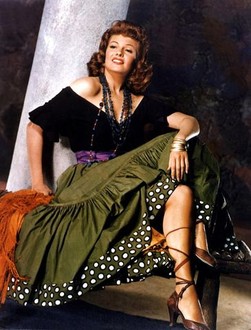
Stardom and Seduction on Screen
By the early 1940s, Hayworth had become Columbia Pictures’ biggest star. Films like Cover Girl (1944) showcased her dancing ability and screen presence, while Gilda (1946) immortalized her as a symbol of sensuality.
Her performance in Gilda, particularly the iconic glove-removal scene, cemented her reputation as a cinematic seductress—though she herself never viewed the role as overtly sexual.
Audiences projected desire and fantasy onto her, but few recognized the emotional toll of being endlessly objectified. Hayworth was marketed as a goddess, yet treated as property.
Every appearance, relationship, and expression was scrutinized, controlled, and monetized.

Love, Marriage, and Disillusionment
Rita Hayworth married five times, each relationship reflecting her yearning for love, protection, and normalcy. Her marriage to filmmaker Orson Welles was particularly notable.
Welles admired her intelligence and depth, famously casting her against type in The Lady from Shanghai. Yet even this union—one that promised artistic partnership—eventually collapsed under the weight of conflicting ambitions and public pressure.
Her later marriage to Prince Aly Khan elevated her to international royalty, but once again, emotional fulfillment proved elusive. Hayworth found herself increasingly isolated, expected to perform the role of a glamorous wife while suppressing her own needs.
Time and again, her marriages seemed less about romance and more about escape—from Hollywood, from loneliness, from herself.

The Silent Battle with Alzheimer’s
Perhaps the most heartbreaking chapter of Rita Hayworth’s life unfolded quietly, away from cameras and red carpets. In her later years, she began exhibiting signs of cognitive decline—mood swings, memory lapses, and confusion.
At the time, Alzheimer’s disease was poorly understood and often misdiagnosed as alcoholism or emotional instability.
Only later was the truth revealed: Hayworth was battling Alzheimer’s, a disease that gradually stripped her of her memories, independence, and identity. The woman once worshipped by millions was forced into seclusion, cared for privately as the world slowly forgot her.
Her struggle played a crucial role in raising public awareness of Alzheimer’s, particularly after her daughter, Princess Yasmin Aga Khan, became a prominent advocate for research and education.

Legacy Beyond Glamour
Rita Hayworth passed away in 1987, but her influence endures. She remains a symbol of classic Hollywood beauty, yet her story resonates far beyond aesthetics. Her life exposes the darker realities of fame—the erasure of identity, the pressure to conform, and the emotional cost of living as an illusion.
In retrospect, Hayworth’s legacy is not only found in her films, but in the lessons her life imparts. She reminds us that behind every icon is a person, often carrying unseen burdens. Her journey urges us to question how society treats its stars—and what is lost when authenticity is sacrificed for fantasy.
Rita Hayworth lived a life of contradictions: adored yet lonely, powerful yet controlled, unforgettable yet deeply misunderstood. The enigma she represents continues to fascinate, not because she was perfect, but because she was profoundly human. And in that humanity lies her most enduring legacy.