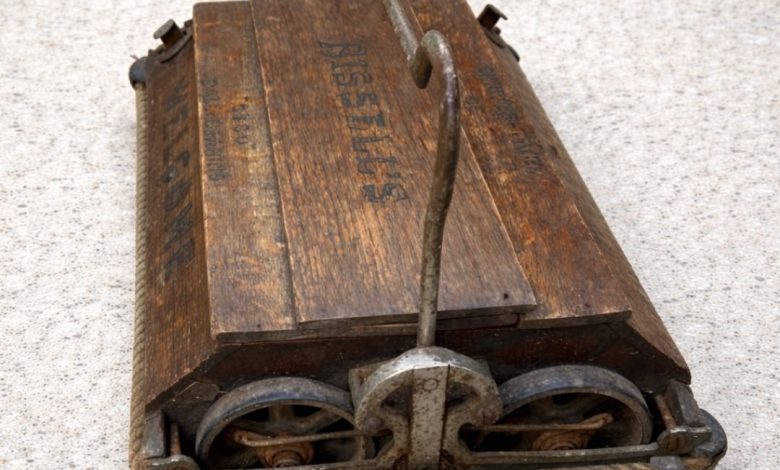
The item shown is an antique manual carpet and floor sweeper, commonly associated with the early 1900s through the 1920s. This style is often identified as a Bissell “Standard” Sweeper, recognizable by its wooden body, metal handle linkage, and front brush/roller assembly designed to pick up dust and debris without electricity.
What You’re Looking At
Key visible features in the photo include:
- Wooden housing with aged patina and stamped branding (including “Bissell’s Standard”)
- Twin internal wheels that drive the mechanism as the unit is pushed
- Front brush/roller (rope/cord-like brush appearance) that contacts the floor surface
- Metal frame and handle rods connecting the handle to the sweeper’s internal drive
How a Manual Sweeper Works
Unlike a vacuum, a sweeper relies on mechanical motion rather than suction. As it rolls forward:
- Wheels rotate from contact with the floor.
- The wheel movement drives gears and axles inside the housing.
- A brush roller spins, sweeping debris inward.
- Dirt and lint are guided into an internal chamber/bin that can be emptied later.
Why It Was Popular in the 1900s–1920s
Manual sweepers became household staples because they offered a practical solution at the time:
- No electricity required, making them useful in homes without reliable power
- Quieter and lighter than early electric vacuums
- Effective for quick, everyday touch-ups on rugs, runners, and hard floors
- Built to be repairable, with durable wood and metal construction
Bissell “Standard” Sweepers: Typical Identifiers
While exact dates can vary by model and markings, many Bissell sweepers from this era share:
- Brand stamping on the top wood panels (often prominent and centered)
- Low, rectangular profile designed to fit under furniture edges
- Metal side hardware and robust wheel assemblies
- A brush system intended for both carpet and bare floors (depending on brush type and adjustment)
Materials and Construction
These sweepers were commonly made with:
- Hardwood bodies (chosen for strength and stability)
- Steel or iron components for the drive linkage, brackets, and wheel frames
- Brush/roller materials designed to tolerate abrasion from carpet fibers and floor grit
Everyday Use Then vs. Now
What it was used for historically:
- Crumbs, ash, lint, and tracked-in dirt from rugs and entryways
- Fast cleaning between deeper weekly cleanings
- Maintaining parlors, dining rooms, and hall runners
Why people still want them today:
- Antique décor appeal and early home-technology charm
- Collectible value tied to brand, condition, markings, and completeness
- Some owners still use them for light cleaning in vintage-style interiors
Collector Checklist: What Matters Most
If you are evaluating or describing one for a listing, highlight:
- Branding and model name (clear “Bissell’s Standard” stamps increase interest)
- Original parts present (handle hardware, brush roller, wheels)
- Functionality (wheels turn freely; brush rotates when pushed)
- Wood condition (stable panels, no major splits, intact joints)
- Metal condition (surface rust is common; bent linkages are more problematic)
Care and Preservation Tips
To preserve the antique character while preventing damage:
- Use a soft brush or dry cloth to remove loose dust
- Avoid soaking the wood; use lightly damp wiping only when necessary
- Keep in a dry environment to prevent warping and corrosion
- If displaying, support it to avoid stress on the handle linkage and wheel frame
Why This Object Tells a Bigger Story
A Bissell-style manual sweeper represents a transitional moment in home life: mechanical convenience before electrification became universal. Its sturdy wood-and-metal build reflects an era when household tools were designed to be used daily, repaired, and kept for decades.