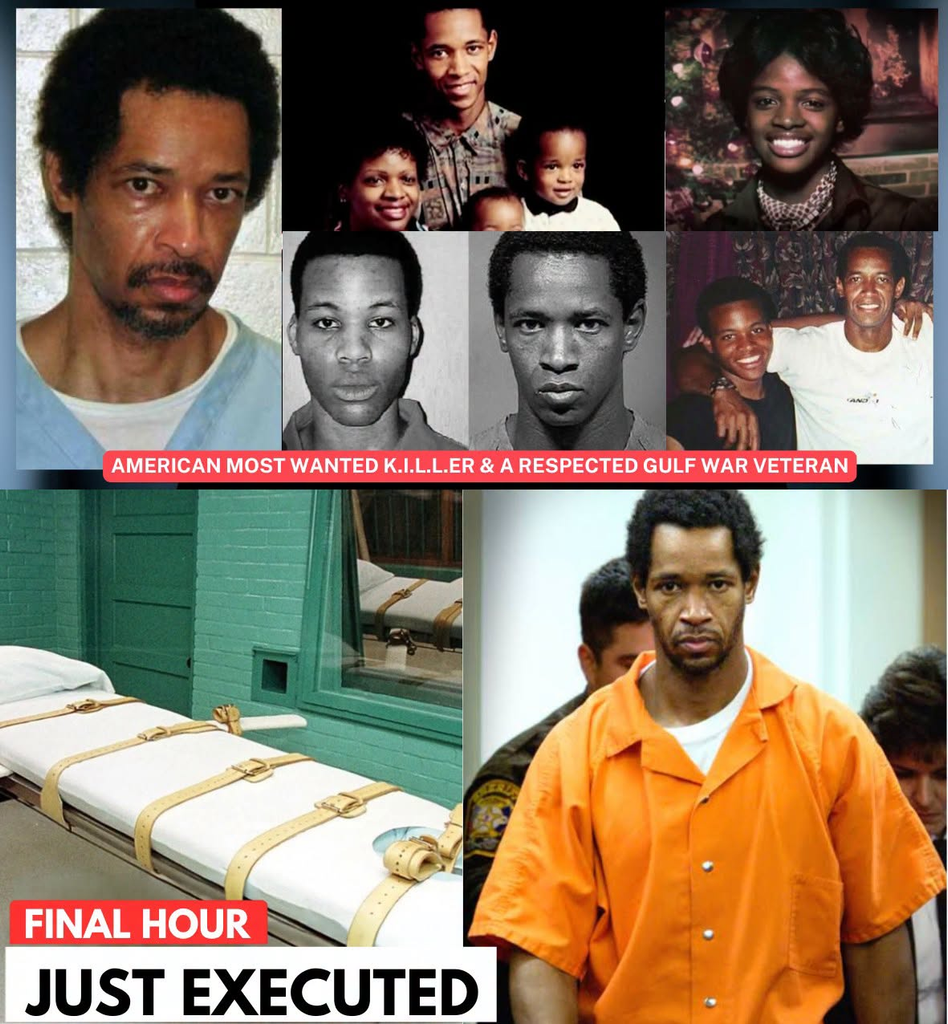
The final hours of John Allen Muhammad were a study in silence and procedure, a stark conclusion to a three-week reign of terror that paralyzed the Washington, D. C. , metropolitan area and left a permanent scar on the American psyche.
As the clock wound down toward his scheduled execution on November 10, 2009, the man once known as the D. C. Sniper offered no final confession, no expression of remorse, and no last-minute plea for mercy that would alter his fate.
 Instead, he met his end with a stoic, almost defiant calm, refusing to speak his last words and leaving the state of Virginia to carry out the sentence that had been handed down six years prior. The execution at the Greensville Correctional Center in Jarratt, Virginia, was the culmination of a legal saga that tested the limits of the justice system and forced a nation to confront the chilling reality of a meticulously planned campaign of random violence.
The narrative of John Allen Muhammad is not a simple one, nor does it offer the comfort of a clear-cut motive that explains the horror he inflicted. He was a decorated veteran of the Gulf War, a man who spent seventeen years in the uniform of the United States Army, trained as a mechanic, a truck driver, and a metalworker. The military gave him a rifle and the title of expert marksman, a skill that would later transform a mundane Chevrolet Caprice into a mobile assassination platform.
He was also a father, a man described by his own family as devoted to his children, a figure of joy and participation in their lives. Yet, this same man orchestrated a killing spree that spanned multiple states, claimed at least seventeen lives, and held a region of over five million people hostage to the fear of a bullet fired from an unseen position. The disconnect between these identities is the central, unsettling mystery of his life, a paradox that investigators, prosecutors, and psychologists have spent decades trying to unravel.
Born John Allen Williams on the last day of December 1960 in a charity ward in Baton Rouge, Louisiana, his entry into the world was marked by absence and hardship. His mother, Eva, was diagnosed with breast cancer shortly after the family moved to New Orleans, and she died when John was just three years old. His father, Ernest, did not stay to raise the boy; he left shortly after his wife’s death, leaving a toddler without either parent.
This foundational loss shaped his early years, a childhood built on the improvisational love of a grandfather and an aunt who took him in. It was a childhood marked not by dramatic 𝓪𝓫𝓾𝓼𝓮, but by a quiet, unspoken grief, a lesson learned early that the people who are supposed to stay can simply disappear. In the segregated and underfunded schools of 1960s New Orleans, he was a quiet, unremarkable child, the kind that teachers later describe as “no trouble,” a phrase that often masks a deep well of unaddressed pain.
At seventeen, John Williams found the structure and purpose that had been missing from his life when he enlisted in the Louisiana Army National Guard in August 1978. He served as a combat engineer for seven years before transitioning to the regular Army in November 1985. His military record paints a picture of a competent, unremarkable soldier, moving between posts like Fort Lewis in Washington and Fort Ord in California.
He was not selected for sniper school, nor was he on a path to special operations. He was a regular soldier doing regular work, holding wrenches and moving equipment. However, within this unglamorous career, he demonstrated a natural aptitude that would later prove devastating.
 He qualified as an expert marksman, the highest of the Army’s three basic marksmanship qualification levels, a distinction that separates the merely competent from the truly gifted behind a rifle’s scope. This skill, recorded in a personnel file, meant nothing to anyone until October 2002, when it meant everything.
The first major shift in his psyche occurred during Operation Desert Storm in 1991. Muhammad was deployed to the Gulf as part of a unit tasked with the dangerous and specific mission of locating and dismantling Iraqi chemical weapons missiles left in the desert. It was not the kind of combat that makes for dramatic news footage, but it was work that placed him in direct, repeated contact with the remnants of a regime’s worst intentions.
He returned from that mission with service medals, but those closest to him described a man who was different. His second wife later testified that the man who returned from the war was angry and distracted, a change that predated any of the violence that would follow. He continued his career for three more years before being honorably discharged in April 1994 as a sergeant after sixteen years of combined service.
In 1987, seven years before his discharge, John Williams made a decision that would redefine his identity. He joined the Nation of Islam. For a man raised without a father, in poverty, and under the racial hierarchies of the mid-century South, the organization’s message of discipline, self-respect, and racial pride resonated deeply.
He took his faith seriously enough to legally change his name from Williams to Muhammad in October 2001, shedding a surname inherited from a history of slavery for one that connected him to his chosen faith. He even volunteered as part of the security team for the Million Man March in Washington, D. C.
, in 1995, placing him in the same city he would later terrorize. It is crucial to note that the Nation of Islam, as an institution, disavowed his actions. Louis Farrakhan publicly and unambiguously distanced the organization from Muhammad and his crimes.
Whatever radicalization occurred within him happened outside the bounds of the doctrine he had formally joined.
His personal life during this period was a slow-burning fuse. He married Mildred in 1988, and they had three children. For a time, he had built the life that many men who grew up as he did spend their entire lives pursuing: a wife, children, a stable military paycheck, and a community.
But beneath the surface, something was eroding. Mildred testified that he became possessive and had multiple affairs. When she confronted him and asked him to leave, his response was not remorse but a threat.
“You have become my enemy,” he told her. “I will 𝓀𝒾𝓁𝓁 you.” She took the threat seriously, changing her locks, changing her phone number, and obtaining a restraining order that, under federal law, should have stripped him of the legal right to purchase or possess a firearm.
The divorce was finalized in 1999, but the war did not end; it merely moved to family court, where the two fought over custody of their three children. The court order initially allowed for weekend visitations, a legal fiction that trusted a man capable of threatening his ex-wife’s life with unsupervised access to their children.
In 2000, with the custody case still pending, Muhammad made his move. He took the three children without Mildred’s knowledge or consent and disappeared with them to the island of Antigua in the Caribbean. For eighteen months, Mildred had no confirmed knowledge of her children’s whereabouts.
She later described this period as an indescribable pain, a time of prayer and surrender to God because there was nothing left in her control. It was during this time in Antigua that Muhammad’s path crossed with a Jamaican teenager named Lee Boyd Malvo. Malvo was a quiet tragedy of his own, a boy shuffled between relatives, with a mother who had left to find work and stability.
When they met, Muhammad was in his late thirties, a decorated war veteran with a chosen name and an unvented anger. Malvo was a teenager, hungry for food, for stability, and for a father figure. Muhammad became that figure.
 Malvo called him “Dad,” took his surname informally, and absorbed his worldview with the totality that only a lonely, hungry teenager can give to the first adult who seems to truly see him. Investigators would later view this relationship not as mentorship but as a slow, deliberate process of psychological acquisition, an older man isolating a vulnerable boy and rebuilding him piece by piece into an instrument for his own goals.
On September 4, 2001, Mildred was granted full and permanent custody of the three children in a Tacoma, Washington, courtroom. It was a total, final legal loss for Muhammad. Seven days later, the World Trade Center towers collapsed.
In the weeks that followed, according to accounts that emerged after his arrest, Muhammad began expressing admiration for Osama bin Laden and al-Qaeda, viewing them not as enemies to be defeated but as models to be studied. The timing is chillingly proximate on the calendar: a custody decision that stripped him of his children on September 4th, and a terrorist attack he seemed to endorse just one week later. No one who studied the case, including those who prosecuted him, could definitively say where personal bitterness ended and ideological anger began.
It is entirely possible that Muhammad himself could not draw that line. The man who loses everything he has left to lose does not always experience his breakdown as separate emotions; sometimes it comes as one all-encompassing anger looking for any language capacious enough to contain it.
What followed was a slow fade into the margins of American life. Muhammad and Malvo drifted together, using aliases, moving through a landscape of poverty and instability that starkly contrasted with the disciplined military life Muhammad had built. At one point in early 2002, they were living in a homeless shelter in Bellingham, Washington.
Over the following months, they traversed the country, moving through Louisiana and New Jersey, heading eventually toward the capital in a slow migration that investigators would later trace retroactively through a series of unsolved shootings left in their wake. The pattern that emerged was terrifying in its geographic spread: shootings in Alabama, Arizona, a trail of violence that stretched across at least ten states before the pair set foot in the greater Washington area. Murders were recorded individually by local police departments as isolated incidents, with no reason at the time to connect a liquor store robbery in Montgomery, Alabama, with a shooting a thousand miles away.
In total, investigators eventually attributed at least seventeen deaths to the duo during this early, scattered killing phase, months before the nation heard the word “sniper” associated with Washington, D. C.
On September 11, 2002, a date Muhammad seemed to choose with the same deliberateness he applied to everything else, exactly one year after the attacks he secretly admired, he purchased a 1990 Chevrolet Caprice, a former police car, in New Jersey. The car was outwardly ordinary, an old boxy sedan of the type still common on used car lots and in the backgrounds of countless small towns. But the Caprice had been modified in a way that turned it into a mobile assassination platform.
A hole was cut in the trunk, positioned so a shooter lying inside could aim a rifle through the rear panel, remaining invisible to anyone on the street and invisible to any officer who might glance inside the car through its windows. The rifle he obtained, a Bushmaster, was functionally similar to the weapons he had trained on in the Army, and it became the tool through which two people, a middle-aged veteran and a teenager he had effectively adopted as a surrogate son, spent three weeks terrorizing a region of over five million people.
The shootings that would become known as the D. C. Sniper attacks began in earnest on October 2, 2002, though the pattern had actually started forming slightly earlier, in the days just before.
Over roughly fifteen hours on the first weekend of October, five people were shot and killed in the suburbs of Montgomery County, Maryland. Men and women who were doing nothing more than going about their daily, mundane errands. A man mowing the grass, a man crossing a parking lot.
There was no pattern to the victims, no connection between them, no shared workplace, no shared neighborhood, nothing in common except the horrifying coincidence of being visible at a particular moment and from a particular angle to a rifle they never saw. Over the next three weeks, the shootings continued to spread across the Beltway and down along Interstate 95 into Virginia. Victims were shot at gas stations while fueling their cars.
Victims were shot in parking lots while loading groceries or Halloween decorations into their vehicles. A woman was shot outside a Home Depot in Falls Church, Virginia. She was an FBI intelligence analyst named Linda Franklin, just loading purchases with her husband.
A man named Dean Harold Meyers was shot while fueling his car at a Sunoco station in Manassas, Virginia. That crime was the specific charge for which Muhammad was tried, convicted, and sentenced to death.
In total, during the three weeks that terror gripped the capital region, ten people were killed and three others were wounded. The randomness of the attacks was what made them so effective as a tool of terror. There was no clear logic linking the victims, no shared demographic, no discernible motive for any individual murder, which meant that for three weeks, anyone in the D.
C. area engaging in the most mundane daily activities had to live with the possibility that they might be next. Schools canceled outdoor recess.
Gas station customers crouched behind their open car doors while fueling, using the metal as a shield against a threat that was, as it turned out, watching them clearly from inside a quietly parked car nearby. The entire region went into a defensive crouch, and the feeling of vulnerability that gripped millions of people had a specific and very deliberate engineer: a man who had spent sixteen years being trained, funded, and honored by the very government whose citizens he was now terrorizing.
The killers were not entirely silent during the killing spree. Notes were left at some crime scenes with playing cards, a detail that fueled public fascination and speculation about the killer’s psychology. One message directed investigators to an unsolved murder and robbery at a liquor store in Montgomery, Alabama, an act that seemed, in retrospect, to be a kind of taunt, an invitation for police to connect the dots that the killers knew existed.
Investigators who responded to the Alabama crime scene found a discarded rifle with fingerprints on it. The prints belonged to Lee Boyd Malvo, whose prints were already on file with federal immigration authorities from a prior incident, and who investigators already knew was associated with an older man traveling under the name Muhammad. There was also, at another point during the terror, a phone call made to a police hotline, a man’s voice demanding money in exchange for stopping the shootings, a call that an investigator later identified through voice analysis as belonging to Muhammad himself.
The extortion demand, as prosecutors would argue at trial, totaled $10 million sought from local and state governments as a ransom for the region’s safety.
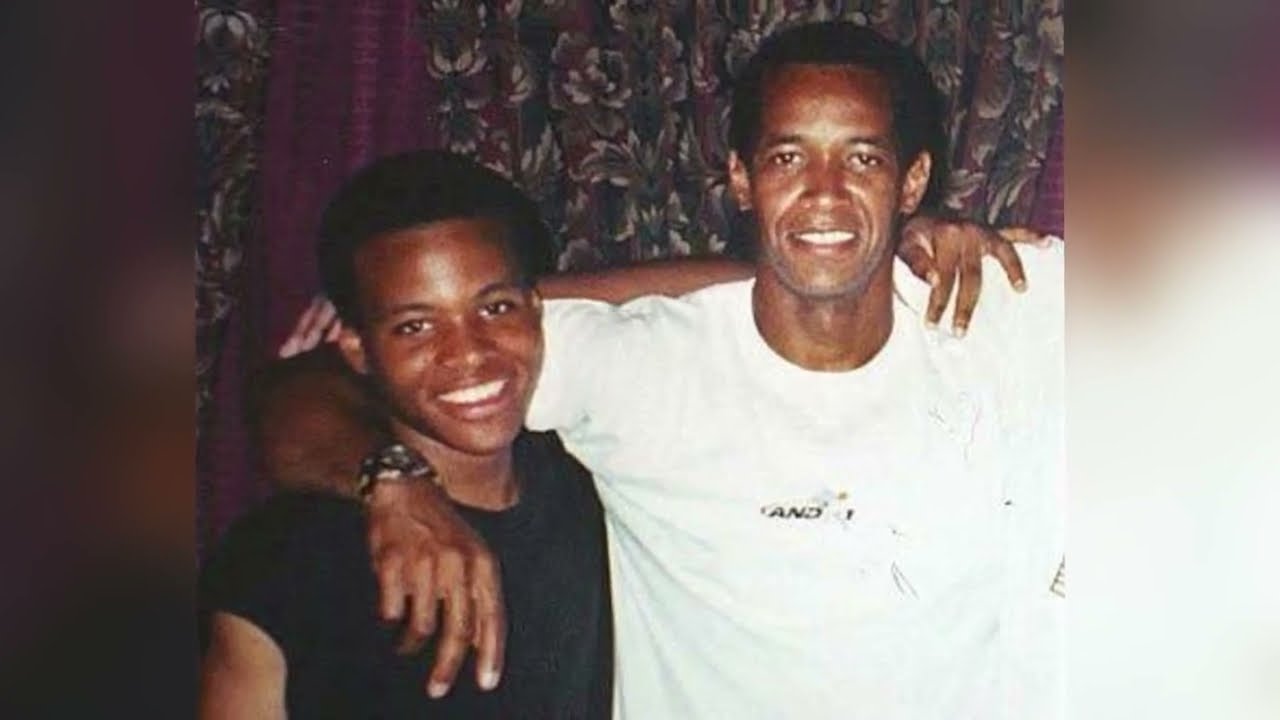 Whether the extortion demand represented Muhammad’s true and complete motive, or merely one layer of a far more personal and darker plan, remains one of the most contested aspects of the case. Mildred Muhammad, along with members of her family, came to believe—and stated so publicly in detail in books, documentaries, and public appearances dedicated to domestic violence awareness—that the three-week random killing spree was in fact a brutally elaborate cover for a single, intended murder: her own. The theory posits that Muhammad intended to 𝓀𝒾𝓁𝓁 her and make her death look simply like another victim of the unknown sniper terrorizing the region, after which he could re-emerge in the role of the grieving, wronged father and use her death to regain custody of the children the courts had taken from him.
She had moved to Clinton, Maryland, where she lived in hiding, and according to her own account, spent years afterward convinced that he had found her, convinced that she was, in her words, somewhere within the scope of his rifle’s sight during those three weeks. Several shootings occurred outside stores like Michael’s craft store and Home Depot, chains she frequented when she lived in Tacoma, a detail she pointed to as more than coincidence.
It is important, when telling this story honestly, to note that this theory, despite its persistence over nearly two decades of Mildred Muhammad’s public testimony, was not fully proven in the court that tried her ex-husband. At trial, the judge explicitly ruled that there was insufficient evidence to support the claim that the entire killing spree was built on a conspiracy to 𝓀𝒾𝓁𝓁 her. What the courts were able to prove, through compelling physical evidence and testimony, was the framework of terror and extortion upon which prosecutors built their case, a case strong enough to secure a death sentence.
The truth may well be that both things were true at once, that Muhammad was seeking to 𝓀𝒾𝓁𝓁 his ex-wife while simultaneously waging a broader campaign of ideological terror and financial extortion, each motive feeding the other within a mind that, by the fall of 2002, had stopped drawing lines between personal grievances and political rage. That ambiguity is not a gap in the record; it may simply be the most honest thing anyone can say about why John Allen Muhammad did what he did.
There was, according to testimony that only emerged years later, an even grander plan behind the three weeks of shooting. A plan described in detail by Lee Boyd Malvo during Muhammad’s 2006 trial in Maryland, after Malvo had undergone psychological counseling and recanted his earlier claim, made during his own trial, that he alone had pulled the trigger in every shooting. He testified that he had lied in that first trial specifically to protect Muhammad from the death penalty, believing—as it turned out—that his status as a minor at the time of the crimes would save him from execution regardless of what he confessed.
Once he stopped protecting his former mentor, Malvo laid out what he described as a three-phase plan. Phase one was the D. C.
area shooting campaign itself, meticulously planned and rehearsed with pre-determined escape routes after each operation, though Malvo said the plan quickly collided with the reality of traffic and lack of clear sightlines, forcing them to improvise constantly. Muhammad’s stated goal for this phase, according to Malvo’s testimony, was to 𝓀𝒾𝓁𝓁 six white victims per day for thirty consecutive days. Phase two, never executed, was to unfold in Baltimore.
It was to begin with the shooting of a pregnant woman, followed by the killing of a Baltimore police officer, then the detonation of improvised explosive devices filled with shrapnel at that officer’s funeral, timed to 𝓀𝒾𝓁𝓁 the officers who would attend his burial. Phase three, which was supposed to run concurrently with phase two, was the extortion scheme. Using the ransom money to fund travel to Canada, with stops along the way at YMCAs and orphanages to recruit fatherless boys, the same type of boy Muhammad himself had once been, the same type of boy Malvo had been when Muhammad found him.
The plan, as Malvo described it, was to train this new generation of recruits on weapons and deploy them across the United States to carry out further mass killings, multiplying the original attack many times over.
It is worth pausing on the credibility of that testimony rather than presenting it as settled fact, because Malvo’s own record on the witness stand includes at least one instance of deliberate deception under oath. The physical evidence supports the broad outlines of what he described. The rifle, the modified vehicle, the laptop computer found in Muhammad’s car, which contained maps marked with icons indicating shooting sites and potential future targets.
The specific numbers, the precise rhetoric about killing six whites a day, and the detailed mechanics of an unexecuted bombing plot in Baltimore, rest more heavily on the words of a teenager who had already proven himself willing to lie under oath to protect the man who was leading those operations. Whether every detail of that plan existed exactly as Malvo described it or not, the general shape of what Muhammad was building, a machine for producing terror on a self-replicating, escalating scale, is consistent with everything known about the man, his military training, his ideological leanings, and his proven ability to draw a fatherless boy into his orbit and reshape him.
The terror ended on October 24, 2002, and it ended almost by accident, as many manhunts do, not through a dramatic tactical breakthrough but through the slow accumulation of small, ordinary pieces of information landing in the right hands at the right time. The fingerprint match in Alabama had already identified Malvo. Malvo’s known association with an older man traveling under the name Muhammad had narrowed the search.
Records of the purchase of the Chevrolet Caprice, bought in New Jersey under Muhammad’s name, gave investigators a specific vehicle to look for, and its description was broadcast to the public. In the early hours of that October morning, the Caprice was spotted parked at a rest stop on Interstate 70 near Myersville, Maryland. Inside, police found the two men asleep.
The most wanted fugitives in the country were arrested not in a firefight or a car chase, but in a moment of exhausted vulnerability at a highway rest stop, the same place millions of ordinary travelers stop to rest every day.
The legal accounting that followed was a study in how American capital punishment law actually works, far from the glamour of television 𝒹𝓇𝒶𝓂𝒶. Although the majority of the D. C.
area murders occurred in Maryland, and Maryland prosecutors were ready to file charges, U. S. Attorney General John Ashcroft made the decision to route the case to Virginia, specifically to Prince William County, under the supervision of Commonwealth’s Attorney Paul Ebert.
The reasons were clear, direct, and unemotional. Virginia’s capital punishment laws were seen as more likely to actually result in an execution than Maryland’s. More importantly, Virginia at the time allowed for the execution of defendants who were minors at the time of their crimes, a provision that was of paramount importance in how prosecutors would handle Malvo.
That strategic calculation proved to be accurate. Virginia delivered exactly the outcome Ashcroft’s office was seeking.
Muhammad’s trial for the murder of Dean Meyers began in October 2003, and was moved from Prince William County to Virginia Beach, about 200 miles away, in an attempt to select a jury that had not already been saturated by weeks of regional terror and months of subsequent media coverage. In a decision that stunned courtroom observers, Muhammad exercised his right to represent himself, dismissing his defense attorneys, but he quickly abandoned this strategy after delivering his opening statement, re-appointing his legal team to handle the rest of the case. The prosecution built a compelling case.
More than 130 witnesses and more than 400 separate pieces of evidence, all centered on the argument that Muhammad planned and directed the killings and ordered Malvo to assist in carrying them out. Ballistics tests linked the rifle found in Muhammad’s car to eight of the ten D. C.
 area murders, plus two other murders in Louisiana and Alabama. The modified Caprice, with its hidden firing platform, was at the heart of the evidence. Next to it, the laptop containing maps of shooting sites was placed.
Witnesses placed Muhammad’s car near multiple shooting scenes and confirmed Muhammad himself, on one occasion, directly across the street from where a shooting occurred. And then there was the recorded extortion call, the voice that an investigator identified as his own.
The defense strategy rested on a narrow but legally significant argument. Virginia law at the time included what was known as the “triggerman rule,” which limited liability for first-degree murder in certain circumstances to the person who actually pulled the trigger and fired the fatal shot. Malvo’s fingerprints were on the rifle.
Muhammad’s DNA was also found on the weapon. But no witness testified to seeing Muhammad, rather than Malvo, pull the trigger against Dean Meyers specifically. The defense argued that this technical gap should prevent a death sentence regardless of Muhammad’s broader role in planning and directing the killings.
The jury did not find this argument persuasive. On November 17, 2003, Muhammad was convicted on all four counts against him: first-degree murder in the death of Dean Meyers; first-degree murder under Virginia’s anti-terrorism law for committing murder with the intent to terrorize the government or the public at large; conspiracy to commit murder; and the illegal use of a firearm. During the penalty phase, the jury deliberated for five hours over two days before unanimously recommending the death penalty.
On March 9, 2004, a Virginia judge formally imposed the sentence, agreeing with the jury’s recommendation.
When Muhammad’s appeal reached the Virginia Supreme Court in April 2005, the court upheld the conviction and rejected the “triggerman” argument entirely. Justice Donald W. Lemons wrote that Muhammad executed his scheme with extensive calculation, planning, premeditation, and a callous disregard for human life, language that would follow the case through every subsequent appeal.
Maryland’s turn came in 2006, after an extradition agreement allowed prosecutors there to file their charges while Muhammad remained technically under the death sentence in Virginia. In May of that year, a Maryland jury convicted him of six separate counts of first-degree murder. On June 1, 2006, he was sentenced to six consecutive life sentences without the possibility of parole.
A sentence that, given the existing death sentence in Virginia, was more of an official accounting of the dead than a change in his ultimate fate. Alabama, Arizona, Louisiana, and Washington state did not move to file their own charges, as a man already under a death sentence in Virginia was not worth the cost and effort of separate trials.
In 2006, in another round of confessions, Malvo admitted that the pair had also killed victims in California, Arizona, and Texas, raising the full scope of their combined violence to a total far exceeding the ten deaths most people associated with the D. C. Sniper name.
In May 2008, Muhammad’s words appeared in a letter to prosecutors, revealing something closer to despair beneath the calm defiance the public had seen through years of trial coverage. He asked prosecutors to help him end his legal appeals, not out of remorse, but with phrasing that described it, in his own words, as a request to allow the state to 𝓀𝒾𝓁𝓁 this innocent black man. It was a formulation that recast his execution as another injustice perpetrated against him, rather than the consequence of what his own hands had wrought.
At the same time, his defense team filed a separate appeal, citing evidence of brain damage, arguing that cognitive impairment should have prevented him from representing himself at his original Virginia trial. Neither argument succeeded in changing the outcome.
On September 16, 2009, a Prince William County judge set Muhammad’s execution date for November 10 of that year. His final legal attempt came one day before his death when the U. S.
Supreme Court denied his request for review. Three justices, John Paul Stevens, joined by Ruth Bader Ginsburg and Sonia Sotomayor, issued a separate statement indicating their general concern about the practice of setting execution dates before a prisoner’s full appeals process had been exhausted, even as they agreed not to consider the specific petition before them. It was, in the end, an expression of institutional unease, not a reprieve.
On the evening of November 10, 2009, hours before his scheduled execution, Virginia Governor Tim Kaine denied a final clemency petition filed by his lawyers. Under Virginia law at the time, death row inmates were given the choice between lethal injection and the electric chair. Muhammad refused to choose either, and by law, lethal injection was automatically selected for him.
He was offered a last meal and accepted it: chicken, red sauce, and cake, according to the attorney who relayed the details later.
Asked in the death chamber at the Greensville Correctional Center whether he had any last words, he said nothing. Witnesses described him as calm, even stoic, tapping his left foot on the execution bed while the IV lines were inserted into both arms. The execution procedure began at 9:06 p.
m. He was pronounced dead five minutes later at 9:11 p. m.
Eastern Time on November 10, 2009, at the age of 48. His body was cremated, and his ashes were ultimately turned over to his son in Louisiana, the same state where his story had begun quietly 48 years earlier in a charity hospital ward in Baton Rouge. What remains, nearly two decades later, is a case that defies any simple, tidy explanation, no matter how much one might wish for one.
There is the story of the soldier: sixteen years of honorable service, an expert marksmanship badge, a Gulf War deployment, and an honorable discharge with a clean record. None of that was an indicator of what followed. There is the story of the convert: a man who found a name, a faith, and a community, and whose radicalization, whatever form it took, was disavowed by the institution he joined.
There is the story of the father: a man who fought and lost a custody battle for his children, who allegedly told his ex-wife she had become his enemy and that he would 𝓀𝒾𝓁𝓁 her, and who may have spent three weeks in October 2002 trying, in the most horrifyingly indirect way imaginable, to make that threat a reality. And there is the story of the terrorist: the extortion demands, the admiration for bin Laden, the anti-terrorism law that ultimately put him on Virginia’s death row and kept him there until the needle reached his arm. None of these stories cancel each other out.
That may be the most honest and most unsettling truth about John Allen Muhammad: that a man could be, at once, a decorated soldier, a heartbroken father, an ideological extremist, and an extortionist. And that all four of those identities could coexist without contradiction within the same body, lying in the trunk of a stolen, modified car, waiting for an ordinary person to step into the sights of a rifle the United States Army had once taught him to shoot.
© 2026 MZ News — Blog powered by WordPress.