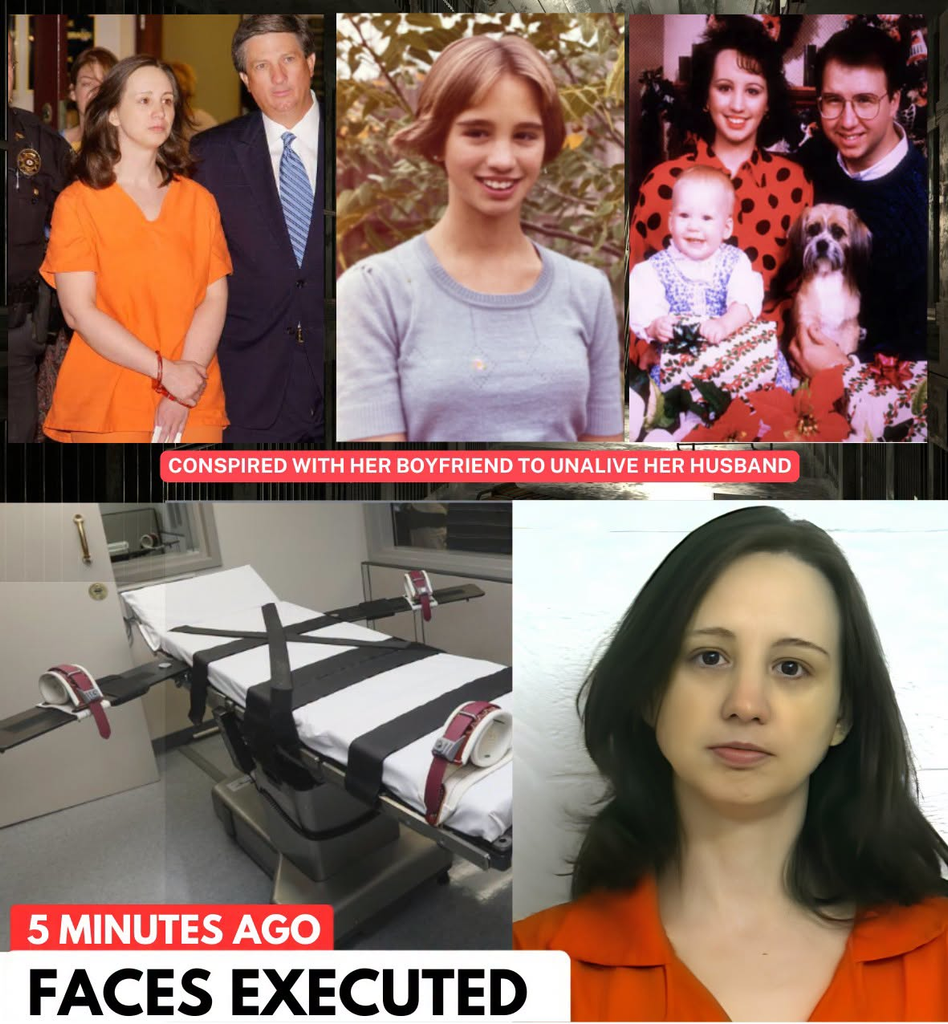
 The Oklahoma Court of Criminal Appeals has set an execution date for James Pavatt, the man convicted of fatally shooting advertising executive Rob Andrew in 2001, while his alleged accomplice and former lover, Brenda Andrew, remains the only woman on the state’s death row after a federal appeals court upheld her conviction for a second time this year.
The 10th Circuit Court of Appeals rejected Brenda Andrew’s latest bid for relief in January, affirming her 2004 first-degree murder conviction and death sentence, a decision that her legal team has vowed to challenge despite the dwindling options available to a condemned inmate who has already exhausted the standard appellate pipeline.
Brenda Andrew, a former Sunday school teacher and mother of two, was convicted of orchestrating the murder of her estranged husband, Rob Andrew, who was shot twice with a 16-gauge shotgun in the garage of the family home in Oklahoma City on November 20, 2001, just two days before Thanksgiving.
The case against Andrew has always rested on circumstantial evidence, as no forensic link placed the murder weapon in her hands, no gunshot residue was found on her clothing, and the man who confessed to pulling the trigger, James Pavatt, has maintained for nearly a quarter-century that she had no involvement in the killing.
Instead, prosecutors built their case around a narrative of marital betrayal, financial motive, and what they described as Andrew’s cold and calculating demeanor in the aftermath of her husband’s death, a strategy that included parading her lingerie before the jury and eliciting testimony about her sexual history that had no direct bearing on the mechanics of the murder.
The 10th Circuit panel, in its January ruling, acknowledged that some of the gender-based evidence presented at trial was troubling, but concluded that it did not rise to the level of making the proceedings fundamentally unfair under the strict standards of federal habeas review, a finding that has drawn sharp dissents from judges who reviewed the case at both the state and federal levels.
Judge Robert Bacharach, who authored a passionate dissent in an earlier appeal, wrote that the trial focused from start to finish on Andrew’s 𝒔𝒆𝒙 life, portraying her as a modern-day Jezebel whose supposed moral failings were used to prejudice the jury against her without any legitimate evidentiary purpose.
The Oklahoma Court of Criminal Appeals has now scheduled Pavatt’s execution for November 12, 2026, at the Oklahoma State Penitentiary in McAlester, the same facility that made national headlines in 2014 over a botched lethal injection that left an inmate writhing in pain for over 40 minutes before he died of a heart attack.
Pavatt, a former Air Force master sergeant and deacon at the church where both he and Andrew taught Sunday school, has consistently admitted to shooting Rob Andrew but has equally consistently denied that Andrew played any role in planning or executing the murder, a position he has maintained through his own trial, decades of appeals, and now into the final months before his scheduled death.
The timeline of events leading to Rob Andrew’s death is marked by a series of warnings that, in hindsight, paint a chilling picture of a man who knew he was in danger but could not prevent the inevitable.
In the weeks before the murder, someone cut the brake lines on Rob Andrew’s car, an act of sabotage that he survived and reported to police, telling officers that he suspected his estranged wife and Pavatt, the man she was having an 𝒶𝒻𝒻𝒶𝒾𝓇 with, were responsible.
Days later, someone called Rob Andrew’s office claiming his wife had been in a horrific car accident, a lie designed to lure him to a location where he could be ambushed, but he did not take the bait and instead rushed to the hospital where no such accident had occurred.
On the day of the murder, Rob Andrew arrived at the family home to pick up his children for the Thanksgiving holiday, and Brenda Andrew met him at the door, asking him to come into the garage to help relight a pilot light on the furnace, a request that placed him in the exact spot where Pavatt was waiting with a shotgun.
The couple’s two children, a daughter born in 1990 and a son born a few years later, were inside the house watching television at a volume loud enough that they heard nothing as their father was shot twice, the second shot ending his life as he reached for a bag of metal cans in a desperate final instinct for cover.
Brenda Andrew was also shot once in the arm, a wound that investigators later determined came from a .22 caliber handgun fired at close range, so close that gunshot residue on her skin told a story that did not match her account of being attacked by two masked intruders who fled the scene.
She told emergency dispatchers that two masked men had entered the garage and attacked both her and Rob, but investigators quickly found inconsistencies in her story, including an empty shotgun shell casing found resting on top of the family car, a location that made no sense if the shooters had been fleeing in panic.
No items were stolen from the home, Rob Andrew still had his wallet, and the .22 caliber bullet found embedded in the wall did not match the trajectory of a shot fired by someone running away from the scene, all details that pointed toward a staged crime scene rather than a random home invasion.
A search of the neighboring house, owned by the Gigstad family, revealed evidence that someone had recently accessed the attic through a bedroom closet, a hiding spot that would have allowed the shooter to slip away from the crime scene without being seen by neighbors on the street.
Investigators also learned that a .22 caliber handgun had been purchased from a local gun store approximately one week before the murder, the same caliber that caused the superficial wound to Brenda Andrew’s arm, and a coworker of Pavatt’s named Larson told police that Pavatt had warned her not to repeat that Brenda Andrew had asked him to 𝓀𝒾𝓁𝓁 Rob Andrew, threatening to 𝓀𝒾𝓁𝓁 her as well if she did.
The day after the murder, Pavatt borrowed his daughter’s car, telling her he was taking it for maintenance, but when he returned it the next morning, no maintenance had been performed, and his daughter found a .22 caliber bullet on the floorboard, which Larson later disposed of at Pavatt’s request.
 Three days after the shooting, Rob Andrew’s funeral was held, and neither Brenda Andrew nor Pavatt attended, nor did the couple’s children, because by that time all four of them had crossed the border into Mexico, fleeing an investigation that was closing in on them far faster than they had anticipated.
For nearly three months, the two adults and two children lived somewhere south of the border, evading murder charges while Oklahoma City investigators quietly built their case, waiting for the fugitives’ money to run out.
When their funds were exhausted, Brenda Andrew and Pavatt attempted to re-enter the United States in February 2002 and were immediately arrested by border agents, at which point Pavatt confessed to shooting Rob Andrew but insisted that Brenda Andrew had nothing to do with it, a claim he has repeated consistently for the past 24 years.
Both were charged with first-degree murder and conspiracy to commit murder, and Pavatt was tried first in 2003, convicted, and sentenced to death, while Brenda Andrew’s trial began in July 2004.
From the outset, the prosecution faced a significant problem: there was no physical evidence placing the shotgun in Brenda Andrew’s hands, no fingerprints, no gunshot residue on her clothing that would link her directly to the weapon that killed her husband, and the only man who could speak directly to what happened inside that garage had already testified under oath that she was not involved.
The state instead built its case around Brenda Andrew’s character, calling four separate witnesses to describe outfits she had worn years before the murder, including short skirts, low-cut tops, and a leather outfit that one witness described as inappropriate for a woman in her position.
Prosecutors elicited testimony about how many times she had 𝒔𝒆𝒙 in a car, a detail with no relevance to whether she conspired to 𝓀𝒾𝓁𝓁 her husband, and they introduced a self-help book found among her belongings about how to keep a romantic partner interested, presenting it to the jury as evidence of her character.
In a single day of testimony, references to her behavior and her perceived lack of tears after Rob Andrew’s death were made 15 times by prosecutors and witnesses, and over the course of the entire trial, that number rose to more than 30 separate references to her appearance, her demeanor, and whether she had cried enough or in the right way.
During closing arguments, the prosecutor walked toward a suitcase that Brenda Andrew had packed before fleeing to Mexico, opened it in front of the jury, and pulled out her underwear piece by piece, holding up a thong for all in the courtroom to see while questioning whether a grieving widow would pack such an item.
In that same closing argument, he called her a whore in front of the twelve jurors who were deciding between life and death, told them she had 𝒔𝒆𝒙 in betrayal of her husband repeatedly while keeping a lover, and compared her at every point to Rob, describing him as a faithful man of God who was betrayed by a wife who was not.
At one moment, he invited the jurors to imagine Rob Andrew’s last words as he lay dying on the garage floor, looking at Brenda Andrew’s face, suggesting that he was likely trying to say I love you, because that was the kind of man he was.
The jury convicted Brenda Andrew of first-degree murder and conspiracy to commit murder, and they recommended the death penalty, which was formally imposed on September 22, 2004, making her the only woman on Oklahoma’s death row, a distinction she has held for over two decades in a state that has executed nearly 200 people since the early 20th century, only a handful of whom were women.
Not every judge who reviewed the trial agreed that it was fair, as Oklahoma Court of Criminal Appeals Judge Arlene Johnson dissented, writing that the state’s presentation had no purpose other than to establish that Brenda Andrew was a bad wife, a bad mother, and a bad woman.
Years later, Judge Bacharach dissented again, writing that the case focused from beginning to end on Andrew’s 𝒔𝒆𝒙 life and that the evidence not only lacked relevance but portrayed her as a woman obsessed with seducing the men around her, stripping away any realistic chance that the jury would seriously consider her version of events.
He described it as a portrayal of a fallen woman, a modern-day Jezebel, designed to provoke distrust based on nothing more than her private life, and he noted that the prosecution chose to open and close with evidence of her adultery, creating what he called an exaggerated effect due to its temporal proximity to the moment of jury deliberation.
The case has drawn comparisons to that of Karla Faye Tucker in Texas in the late 1990s, the last time an American woman on death row became a national flashpoint for debates about clemency, but the question at the heart of Brenda Andrew’s case is not about redemption or rehabilitation, but rather whether the trial that led to her sentence was legitimate in the first place.
Her legal team took this argument to the Supreme Court, contending that the sheer volume of irrelevant sexual character evidence violated her right to due process under the Fourteenth Amendment, and that gender stereotypes had effectively done the work that conclusive forensic evidence should have done in a capital murder case.
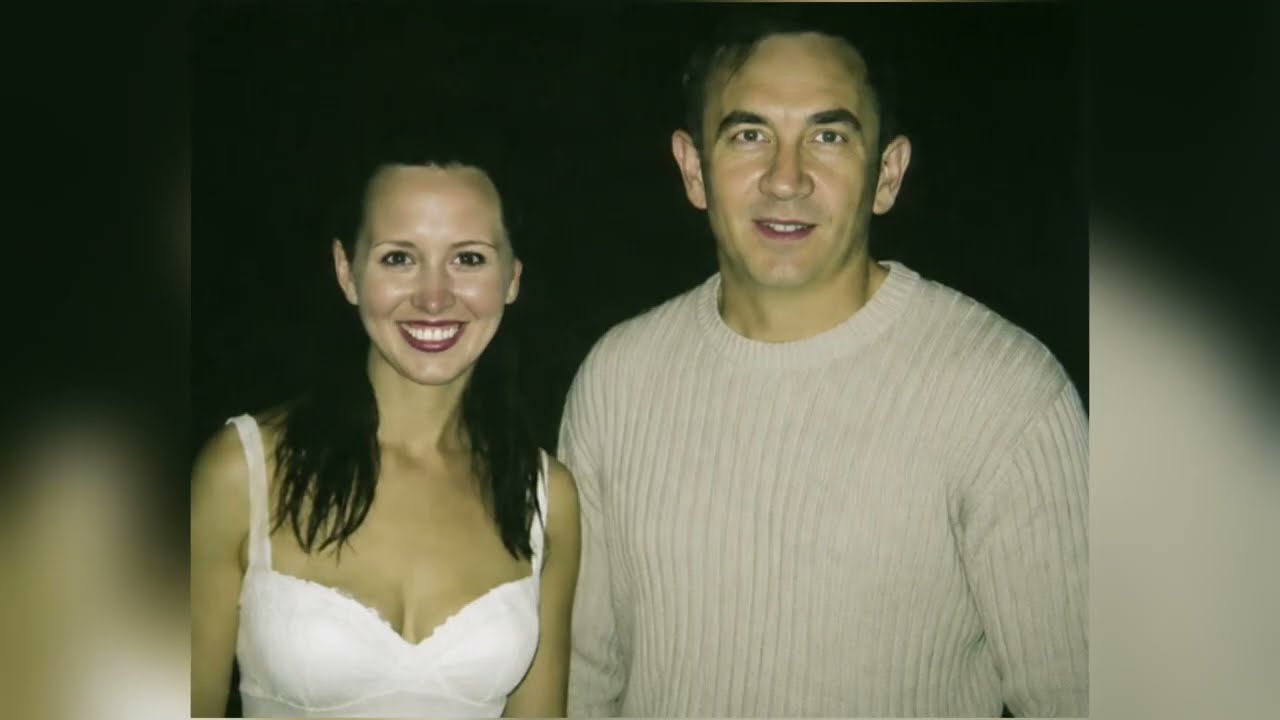 On January 21, 2025, the Supreme Court issued its ruling, a 7-2 decision that did not overturn her conviction but vacated the 10th Circuit’s previous ruling and remanded the case, finding that established federal law allows challenges to proceedings when a trial is saturated with prejudicial evidence of this kind.
Justice Alito, concurring separately, wrote that due process rights can be violated when irrelevant and highly prejudicial evidence overwhelms legally admissible evidence, making the trial fundamentally unfair, while being careful to say he was expressing no opinion on whether that high bar had actually been met in Brenda Andrew’s specific case.
Justice Thomas dissented, joined by Justice Gorsuch, arguing that the state’s case against Andrew was strong enough on its own merits to withstand any trial management issues, and that some of the disputed testimony was fair rebuttal given that her defense team had portrayed her as a devoted mother who would never go to such lengths.
The 10th Circuit heard the case again that summer, and on January 13, 2026, the panel issued its ruling, again authored by Judge Bacharach, who this time followed the Supreme Court’s specific instructions and considered the significance of the disputed evidence, the degree of prejudice against Andrew, and the trial court’s failure to provide any limiting instructions to the jury.
After all that deliberation, the panel found that while some of the gender-based evidence was concerning, it did not rise to the level of making the trial fundamentally unfair under the strict legal standards applicable to federal review, and the request for habeas relief was denied for the second time.
Her team did not stop there, filing a petition on April 27, 2026, asking the full 10th Circuit to rehear the case en banc, arguing that the January panel had ignored most of the gender stereotyping evidence presented at trial, evaluated only a fraction of it in isolation, and never addressed the cumulative weight of weeks of testimony about her 𝒔𝒆𝒙 life, her clothing, and her fitness as a mother.
On August 17, 2026, less than two weeks before this report, the 10th Circuit denied the en banc rehearing petition, ending that avenue entirely, and Brenda Andrew’s conviction and death sentence remain fully in effect, just as they have been since 2004.
Ten days after that decision, on August 27, 2026, the Oklahoma Court of Criminal Appeals set James Pavatt’s execution date for November 12, 2026, to be carried out by lethal injection at the Oklahoma State Penitentiary in McAlester.
The execution date fits within a broader pattern of Oklahoma accelerating its execution schedule, with the state having successfully petitioned courts twice to expand the required interval between executions, first from 30 days to 60 days in 2023, then from 60 to 90 days in 2024, citing what officials described as severe psychological and emotional trauma experienced by corrections staff who carry out executions.
Pavatt’s lawyers have called the November 12 date premature, arguing that substantive questions remain unanswered in the underlying case, and a clemency hearing before the Oklahoma Pardon and Parole Board is scheduled for mid-October, where his legal team plans to focus heavily on his military record.
Pavatt is a decorated Air Force master sergeant, a Baptist deacon, and someone who, according to his defense, had no trouble with the law before all of this, having served as a trusted legal assistant and model inmate over more than two decades of imprisonment.
If the board recommends clemency, Governor Kevin Stitt could commute the sentence to life without the possibility of parole, but if the board declines or the governor takes no action, Pavatt is expected to become the fourth person executed in Oklahoma in 2026.
By all indications over the past 24 years, he is expected to face death still insisting, just as he did the day border agents arrested him in February 2002, that Brenda Andrew had no involvement in the murder of Rob Andrew.
Brenda Andrew remains at the Mabel Bassett Correctional Center in McAlester, Oklahoma, the only woman on the state’s death row, a distinction that means there is no one else in that system who shares her exact circumstances, no peer group, no comparable case in the hallway to exchange conversation with.
For more than two decades, she has lived inside a cell measuring approximately 6 feet by 9 feet, smaller than a standard parking space, with a steel bed bolted to the wall, a steel toilet, and a small metal sink, and for long stretches of those years, according to most accounts, she has spent up to 22 or 24 hours per day locked in that space.
Human contact often comes through a narrow slot in a steel door, a guard passing a food tray through the opening or restraining her wrists before allowing her out for recreation, and the wake-up announcement comes over an intercom system at around six in the morning.
She washes her face at a small metal sink, breakfast is pushed through the slot, usually lukewarm by the time it reaches her, and if she is lucky, she gets an hour of recreation, during which she is led in restraints to a small enclosed concrete yard, perhaps 20 by 20 feet, covered with an opaque skylight that lets in light but offers no real view of the sky.
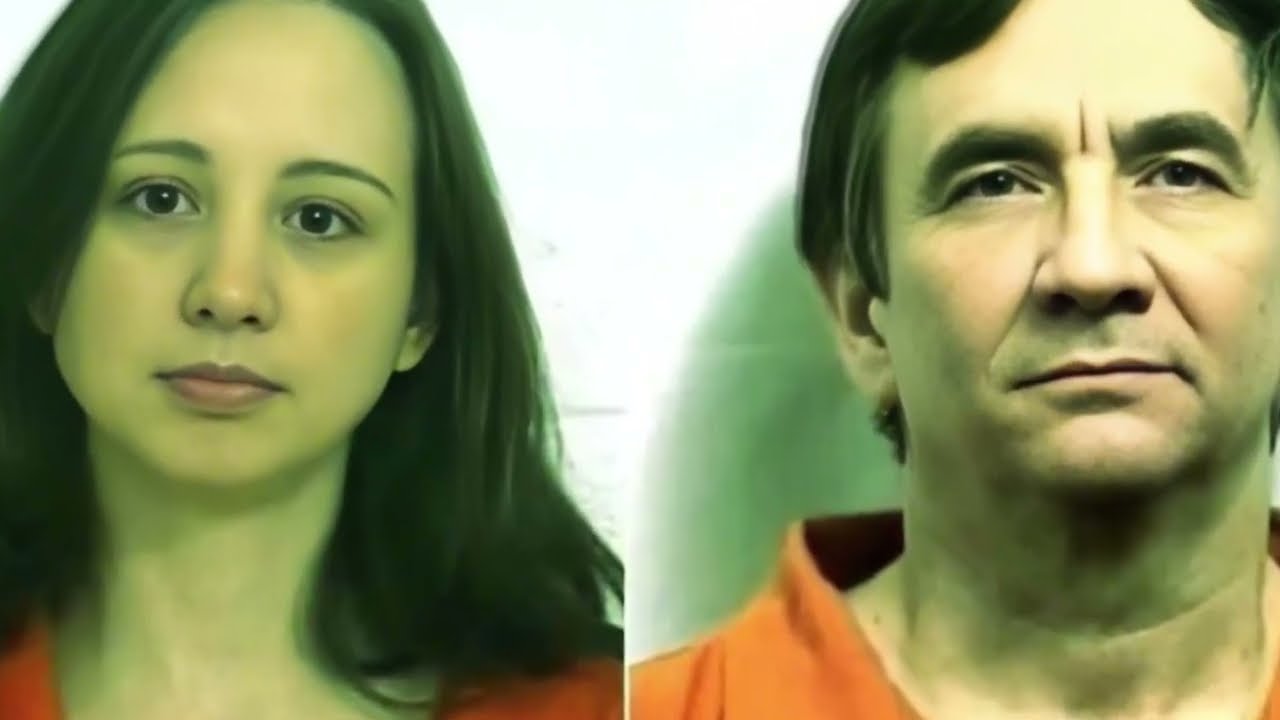 She walks in circles, does stretching exercises, and after 60 minutes she is taken back inside, where the rest of the day is hers to fill in whatever way she can, letters to her legal team, paperwork related to whatever appeal is currently active, religious readings.
Once a week, she gets an hour with a chaplain, conducted through a glass barrier and over a telephone, with no physical contact allowed at all, and for many people held in such conditions, a visit like that becomes the emotional anchor around which the entire week is built.
Lights out comes at around eight in the evening, and then it begins again the next morning, almost identically, with one exception, every day for over two decades, she has woken up in a cell built and run by a state that has spent all that time trying to carry out her execution.
The two children who were watching television in the hallway while their father was shot have grown up without either parent in the home, one dead, the other convicted of killing him and shipped to a prison hours away from the house where they once shared life, the house where they used to watch television together on ordinary afternoons before any of this happened.
Whatever role their mother actually played on November 20, 2001, those two children lost both parents on that same afternoon, in that same house, and neither the courts nor the news coverage that followed over the next 25 years has had much time to ask what that cost them.
Two people were tried and convicted for the exact same murder, and by every account in the public record, the man who confessed to firing both shots has spent 24 consecutive years insisting that the woman had no role in it, through his trial, through decades of appeals, and up to the clemency hearing that may decide whether he lives or dies in the coming months.
Throughout that entire period, no forensic evidence has emerged placing the shotgun in her hands, nothing linking her fingerprints to the weapon, no gunshot residue on her clothing consistent with her having fired it, and what convicted her, according to two dissenting judges in two separate courts across both the state and federal systems, was a trial that spent more time talking about her wardrobe and her 𝒔𝒆𝒙 life than it did about the actual physical mechanics of who killed Rob Andrew and how.
It would be easy to simplify this case, easy to decide, the way the jury apparently did in 2004, that a woman who had an 𝒶𝒻𝒻𝒶𝒾𝓇, filed for divorce, fled the country days after her husband was murdered instead of attending his funeral, and lived with a fabricated story about masked intruders for months before being caught at a border checkpoint is exactly the kind of person capable of arranging her husband’s murder.
None of those facts are in dispute, she did have the 𝒶𝒻𝒻𝒶𝒾𝓇, she did file for divorce against his wishes, she did flee with her children rather than bury her husband, and those choices tell you real things about who Brenda Andrew is, and they are not flattering things.
But there is a difference between someone capable of betrayal and abandonment, and someone capable of planning a murder, and the legal system built on due process exists precisely because juries, made up of ordinary people doing their best with limited information, can lose sight of that difference when the evidence before them is designed to blur it.
Perhaps the jury was exactly right in 2004, perhaps Brenda Andrew planned her husband’s murder down to the insurance policy and the pilot light excuse, and James Pavatt has spent 24 years lying under oath, lying to the Pardon and Parole Board, and lying, apparently, all the way toward his own execution, to protect a woman who did not deserve that kind of loyalty.
That is a perfectly coherent version of this story, and it is the version that Oklahoma prosecutors have defended for two decades across multiple administrations.
Or perhaps a jury looking at a case built on circumstantial evidence, with the shooter’s confession of her innocence under oath, and a prosecutor waving her underwear in front of 12 strangers, convicted the version of Brenda Andrew that the state constructed inside the courtroom rather than the version supported by actual evidence.
Two federal courts, one state appeals judge, and nine Supreme Court justices have now looked closely and formally at this exact question using the full weight of the appellate system in American law, and they have not all agreed on the answer.
If the people whose entire careers are built on resolving this type of dispute cannot reach consensus after 20 years and two rounds of Supreme Court review, it is worth considering how much confidence we should have in a verdict reached by 12 jurors over a few weeks in the summer of 2004.
Here is what is worth asking yourself before the comments start flowing, if a jury in your hometown had to decide on a death sentence for a woman, and a significant portion of the evidence presented against her was about what she wore to the grocery store two decades earlier, how many times she had 𝒔𝒆𝒙 in a car, and whether she cried the right way and at the right volume in the days following her husband’s murder, would you trust that verdict as much as you trust the death penalty itself to be applied only to people who truly deserve it?
And if James Pavatt is executed on November 12, still saying the same thing he said the day border agents arrested him at that checkpoint in February 2002, that Brenda Andrew had nothing to do with it, does that settle anything at all about what actually happened in that garage, or does it only mean that the state finished the job before the record was honestly and fully sorted out?
© 2026 MZ News — Blog powered by WordPress.