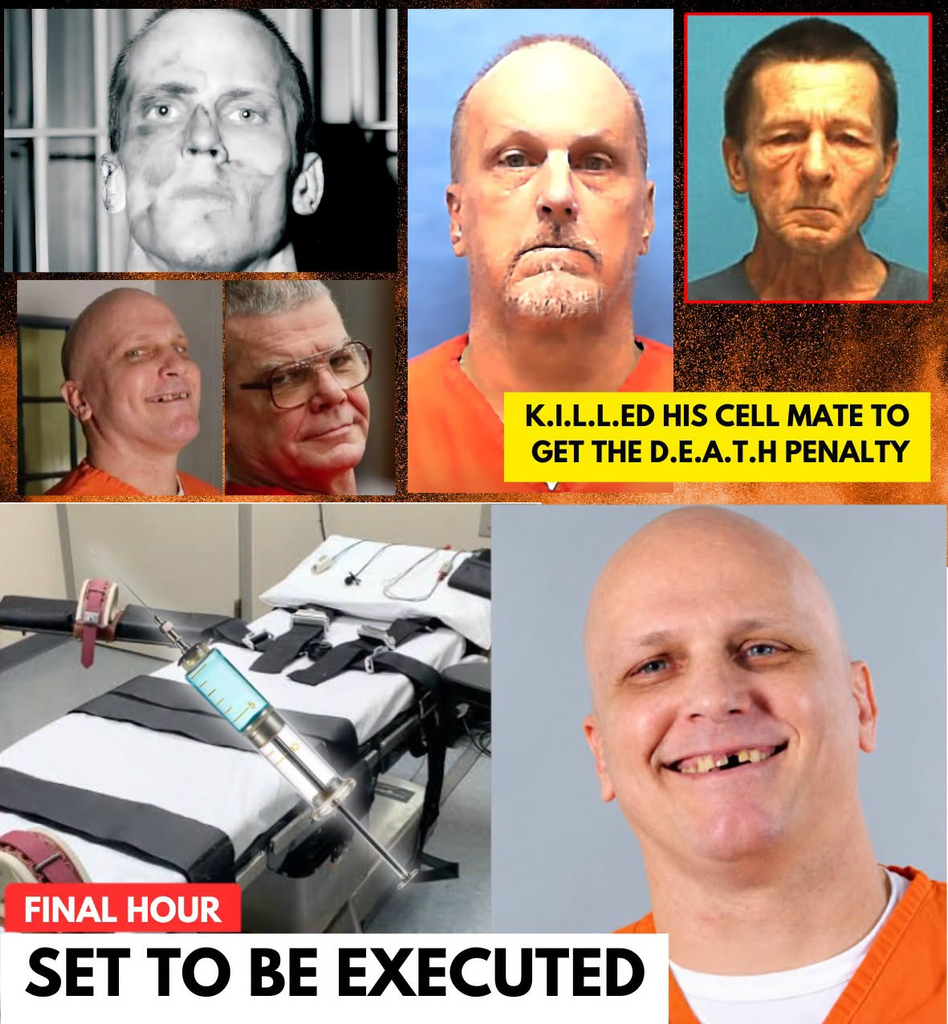
On October 13, 2026, the state of Florida is scheduled to execute James Robertson, a 62-year-old man who has spent nearly two decades fighting for exactly what he is about to receive. This is not a case where a condemned prisoner exhausted every legal avenue to escape death. It is the opposite.
Robertson spent years demanding his own execution, rejecting life sentences, and even writing to prosecutors to ask for harsher charges. The man at the center of this case wanted to die, and the state is finally giving him what he asked for.
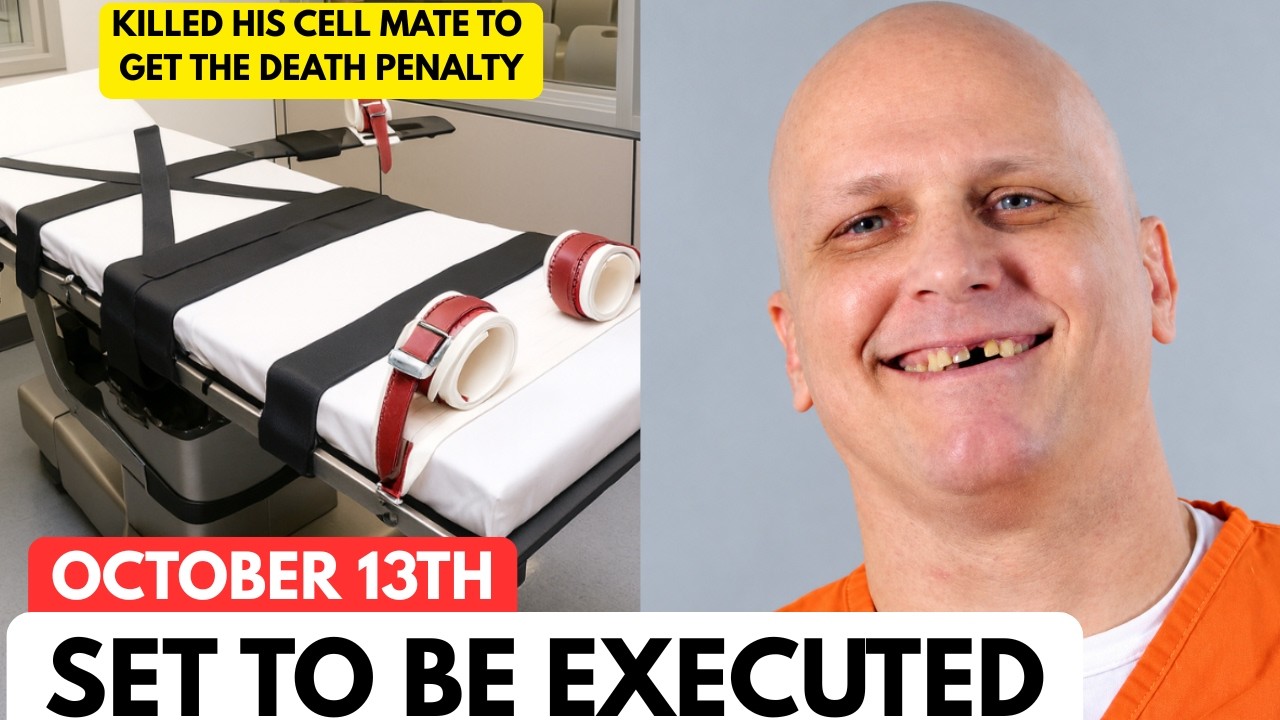 The execution order stems from a murder that took place inside a Charlotte County jail cell in 2008. According to investigators, Robertson strangled his cellmate, Frank Hart, and later admitted that he did it because he wanted to be charged with first-degree murder and sentenced to death. The execution is scheduled to be carried out by lethal injection at Florida State Prison on October 13.
On October 1, Governor Ron DeSantis signed the death warrant. Robertson has been waiting for this moment for a long time.
Most death row inmates spend years fighting to avoid their fate. They file appeals, they seek clemency, they argue that their trials were flawed, and they do everything in their power to stay alive. James Robertson did none of that.
Instead, he spent years trying to get to death row. He did not simply accept a death sentence. He demanded one.
When the state offered him life in prison, he refused. When prosecutors charged him with a crime that did not carry the death penalty, he wrote to them and asked for a more serious charge. The man who paid the price for that decision was not a guard.
It was not a judge. According to Robertson’s own account, Frank Hart had never done anything to him at all. Hart was asleep when Robertson killed him.
On the afternoon of October 13, the state of Florida is scheduled to give James Robertson exactly what he has been asking for. This is the story of how he got here. The case sits in an uncomfortable place because the man at the center of it wants his own execution to be carried out.
He has said so in court and on camera. Everything you are about to hear comes from court files, Florida Supreme Court opinions, Department of Corrections records, and news reports. This is not speculation.
It is the documented record of a man who killed to be killed.
We know less about Frank Hart than I would like. That is the honest starting point. No family member has spoken publicly in any source I was able to find.
 There is no obituary page, no quoted friend, no photograph in the media coverage. What the record tells us is this. Frank Hart was an inmate at Charlotte Correctional Institution, a state prison in Punta Gorda, Florida.
Department of Corrections records show he was serving time on 𝒔𝒆𝒙 charges. There is nothing in any court record to suggest that Frank Hart ever did anything to James Robertson. Robertson himself says there was no fight and no provocation.
In late 2008, Hart was assigned to a cell with a new roommate. That roommate was James Robertson. The Department of Corrections investigated what happened next.
Their report indicates that the two men were alone in that cell from about 10:30 at night. At approximately 9:20 the next morning, on December 10, 2008, Frank Hart was found dead. The cause of death was strangulation.
The weapon used was a garrote, a rope made by tying several socks together. Robertson later told investigators in detail how he carried out the crime and what he was planning. He waited until Hart was asleep.
He waited until the guards finished their rounds. He knew they would not return to that section for about 30 minutes.
Robertson told investigators and medical experts that he gave Hart a choice between two ways to die. According to the Charlotte Sun, which reported his account, Hart begged for his life and called for help from inside the cell. No one came in time.
Frank Hart was in a prison cell under the custody of the state of Florida when he was killed. Whatever he had done to be placed there did not change what happened that night. A man who could not leave the room was killed by the man he was locked inside it with.
Now, the question everyone asks is why. To answer that, you have to understand how long James Robertson had already been inside.
By December 2008, Robertson was 45 years old. He had been in prison for 28 years. If you count the years backward, you arrive at 1980.
He was a teenager. His first criminal conviction came before his 18th birthday. At a sentencing hearing, a judge noted that his criminal record began at age 14.
His first term was for theft and assault charges in Orange County. That should have been the story of a young man who served his time and got out. It was not.
 Over the years, Robertson accumulated other convictions in three counties. More importantly, he picked up new convictions inside the walls. Each one added to his sentence.
By 2008, his release date was 2038. He would have been 75 years old.
There was a second problem, and it is the most important part of this case. Because of his history of violence within the prison system, Robertson was held in what Florida calls close management. It is a long-term restrictive housing status, and news reports describe the conditions as similar to solitary confinement.
An inmate spends most of the day alone in a cell with little movement and limited privileges. Years later, in a Netflix series called I Am a Killer, Robertson described what he said about that experience. He said the guards degraded him.
He described the conditions as inhumane. Those are his claims, and the state has not endorsed them, but they are the core of how he justifies his actions.
Then there is what he concluded from all of it. A court-appointed review later found that at the time of the killing, Robertson was depressed about his future as a prisoner and about the close management restrictions. The sentencing judge accepted that as a mitigating factor, but did not give it much weight.
His reasoning went like this. He believed he would never leave Charlotte Correctional Institution, and in his mind there was only one place in the Florida system that was different. Death row.
This is where the case takes a turn that we rarely see in capital punishment cases.
When prosecutors first charged James Robertson with killing Frank Hart, they charged him with second-degree murder. Under Florida law, second-degree murder does not carry the death penalty. The state was not seeking to execute James Robertson.
It was only seeking to convict him. But the state went further. The prosecution offered Robertson a plea deal in exchange for a life sentence.
He refused it. At his first court appearance in June 2009, Robertson told the judge the charge was wrong. He said it should be first-degree murder because the crime was premeditated.
That same year, he wrote to five people in the state attorney’s office telling them the killing was planned and requesting the death penalty.
Later, in a recorded statement to investigators, he said he had been thinking about how to get to death row since 2008. He said something else, something the sentencing judge would later take into consideration. He said, if I do not get the death penalty, I will keep killing until I do.
In 2011, Robertson’s attorney requested a mental evaluation to determine whether he was sane at the time of the crime. Two mental health experts, a psychiatrist and a psychologist, examined him. Their conclusion was that he did not meet the criteria for legal insanity.
Later, they evaluated him again, this time to determine whether he was competent to stand trial. The court moved forward.
Then, in October 2011, something else happened. Robertson was being held at the Charlotte County Jail, where he was staying during court appearances. According to the Florida Supreme Court, he attacked a jail officer with a homemade weapon.
He was charged with attempted murder. I could not find a clear outcome for that charge, but it appears in the records for a reason. Robertson later pleaded guilty to that incident in court.
It matters because it supports what the judge already believed. This was not a man who made one terrible decision and regretted it. According to the state’s account, he was seeking the same outcome through other means.
In October 2012, a grand jury indicted him on first-degree murder. The thing he had been demanding was finally a formal charge. Robertson pleaded guilty.
Then he did something even more unusual. He waived his right to a jury recommendation on sentencing, and he refused to present any mitigating evidence. In capital cases, mitigation is the evidence defense attorneys use to argue for mercy.
A person’s childhood, their mental health, their trauma. Robertson would not allow any of it. He did not object to the state’s argument for the death penalty.
 He testified that he committed the murder intentionally, and he admitted guilt in the attack on the jail officer.
The sentencing was held on December 18, 2012, before Judge Christine Greider of Florida’s 20th Judicial Circuit. The judge found four aggravating factors. Robertson had a prior conviction for a violent felony.
He was already serving a prison sentence when he committed the murder. The crime was especially heinous, atrocious, or cruel. And it was cold, calculated, and premeditated.
She also considered the contents of his life file. A family history of alcohol and 𝒹𝓇𝓊𝑔 𝓪𝓫𝓾𝓼𝓮, childhood hyperactivity, poverty and domestic violence in his upbringing, 𝒹𝓇𝓊𝑔 use from an early age, and earning his GED in prison. She counted these as mitigating factors, even though he refused to present any of them, but she did not give them much weight.
As for why he killed, she gave great weight to his own words. She wrote that he had been actively seeking a death sentence since 2008. News reports at the time described it this way.
He had spent nearly 30 years behind bars. He was tired of it, and the court gave him what he wanted. In Florida, a death sentence is automatically reviewed by the state Supreme Court.
It does not depend on whether the defendant asks for it. Robertson did not want that review. His appointed attorney, Stephen Pulatton of the 10th Judicial Circuit Public Defender’s Office, told the court he was ethically bound to follow his client’s wishes.
The attorney asked to withdraw from the case.
In 2014, the Florida Supreme Court refused. In a 4-3 decision, it ruled that the attorney had to continue representing Robertson through the mandatory direct appeal. Robertson was allowed to file his own brief explaining what he wanted.
Here is what that looks like. A man asking to die. His own attorney saying the ethical thing is to listen to him.
And the state’s highest court saying the ethical thing is not to do that. In his own brief, Robertson told the court that the only two questions that needed to be addressed were whether the evidence was sufficient and whether the sentence was proportionate compared to other death sentences the court had upheld.
The court’s decision came on March 17, 2016. It found that his guilty plea was knowing, intelligent, and voluntary. It found that the judge did not 𝓪𝓫𝓾𝓼𝓮 her discretion by refusing to appoint someone to search for mitigating evidence against his wishes.
It found that the judge’s focus on his motive, his desire to die, was not a prohibited aggravating factor. It was relevant to whether the murder was cold, calculated, and premeditated. The court found the sentence proportionate.
The conviction and death sentence were upheld.
Most death row inmates file federal petitions, which is the next major stage of appeal. According to Florida death penalty monitors, Robertson did not. On February 7, 2019, the Florida Attorney General filed a notice indicating Robertson was eligible for execution.
After that, nothing happened for seven years. During those years, James Robertson became something he never planned to be, a public figure. In 2018, Netflix released I Am a Killer, a documentary series based on interviews with death row inmates.
Robertson was in the first episode. On camera, he said the same things he had told judges and investigators. He killed his cellmate to escape his living conditions and to get to death row.
Since then, the Florida Attorney General has cited that interview as evidence of motive. In the state’s account, Robertson admitted to killing Hart without provocation, specifically to obtain a death sentence. By 2026, Robertson was 63 years old.
He had been on Florida’s death row since the end of 2012. Some sources say he is 62. Official Florida records list his date of birth as May 26, 1963, which makes him 63.
On Thursday, October 1, 2026, Governor Ron DeSantis signed James Robertson’s death warrant. His execution was scheduled for noon on Tuesday, October 13, at Florida State Prison in Starke. The execution is set to be carried out by lethal injection.
Then there is the detail that makes people talk. Six hours after Robertson, at 6 p. m.
 on the same day, the state plans to execute a second man. William Lee Thompson, 74, was convicted in 1976 of kidnapping, sexually assaulting, and killing Sally Ivester in North Miami Beach. If both executions are carried out, they will be Florida’s 17th and 18th executions of 2026.
This would be the second time this year that Florida has executed two people in one day. The first time was on July 28, when the state carried out two executions hours apart. The governor has not explained why he scheduled things this way.
Then there is the question of timing. Twelve days earlier, Tennessee attempted to execute a woman named Christa Pike. Witnesses said she was still breathing when they were removed from the room, and she was taken to the hospital.
It was the second botched execution in that state this year. Death penalty defense attorneys have pointed to Tennessee as a warning for Florida. That concern is focused on Thompson.
More than 100 medical professionals signed a letter this week asking the governor to withdraw his warrant, citing his seriously deteriorating health. Florida also uses a different method than the one used in Tennessee.
I will say this plainly. There is nothing in the public record that determines what will or will not happen on October 13. But what I can tell you is what Florida’s procedure looks like, because every execution in this state follows the same template.
When a death warrant is signed, the inmate is moved to the execution observation cell at Florida State Prison. It is about 12 by 7 feet. He is under constant surveillance and his visits are restricted.
On the day of execution itself, there is a routine. He is allowed a last meal, costing up to $40, provided it is available locally and approved. He can meet with a spiritual advisor.
He showers under supervision, returns to his cell, and is given the clothes he will wear.
Behind the scenes, the execution team undergoes 𝒹𝓇𝓊𝑔 and alcohol testing. At the scheduled time, he is moved to the execution chamber and strapped to a gurney. The prison warden reads the death warrant aloud.
Up to 12 official witnesses sit in the observation room, along with up to 12 media representatives. Then, the curtain is raised. The inmate is asked if he wants to make a final statement.
Then, the drugs are administered. Florida uses a three-𝒹𝓇𝓊𝑔 sequence, a sedative, a muscle paralytic, and a 𝒹𝓇𝓊𝑔 that stops the heart. After the first 𝒹𝓇𝓊𝑔, the team checks whether the inmate is still conscious.
If he is, the process stops. Once the curtain is raised, the process usually takes 15 to 20 minutes.
For a noon execution, the entire day’s schedule would be moved up compared to a 6 p. m. execution.
No one outside the prison has said exactly how the hours will be arranged. As of the time of this writing, officials have not said whether Robertson will file any last-minute appeals. He has not filed federal habeas petitions, and he waived his appeal after sentencing.
I found no indication that he plans to resist, but that is not certain, and I will not present it as a settled matter.
I want to leave you with something other than a date on a calendar. For 14 years, James Robertson has been the subject of every sentence in this case. His reasons, his motive, his appeal, his wishes, his interviews.
Frank Hart appears in the record for about 30 minutes, the window between guard rounds. That is the small amount of space he was given, and it is why I started this video with him. I do not know what James Robertson will say, or if he will say anything.
But I know that whatever happens on October 13, the question this case leaves behind will not disappear. When a man is sentenced to death for committing a murder so that he could be sentenced to death, who exactly did the state punish? And for whom was it done?
I would like to hear your answers in the comments. Thank you for watching. I will see you in the next one.
© 2026 MZ News — Blog powered by WordPress.