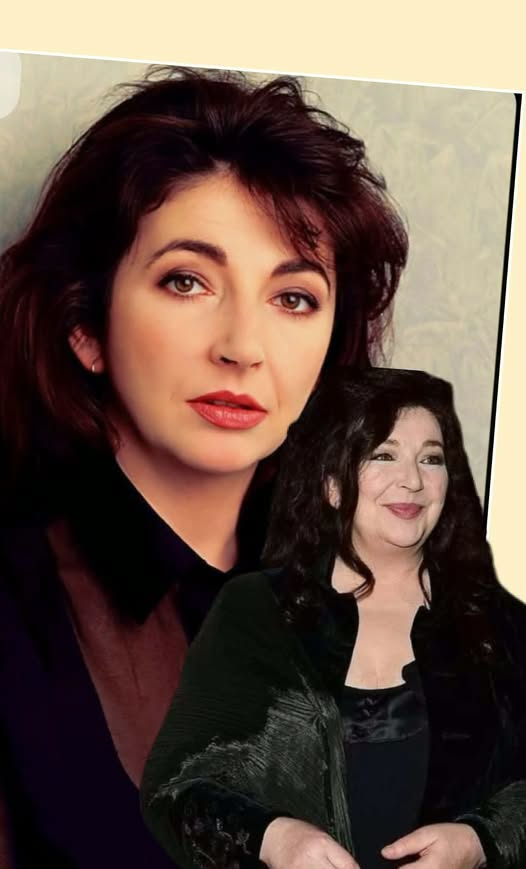
Kate Bush is one of the most original and influential artists in British music history. With her extraordinary voice, theatrical performances, poetic songwriting, and fearless approach to experimentation, she created a musical identity unlike anyone else.
Born Catherine Bush in Bexleyheath, Kent, in 1958, Kate grew up in a creative family and developed a passion for music at an early age. As a teenager, she was already writing songs and developing the artistic vision that would eventually define her career.
A Remarkable Breakthrough
Bush’s career changed dramatically in 1978 with the release of “Wuthering Heights.” Inspired by Emily Brontë’s famous novel, the song was unlike the conventional pop music of its era. Bush’s distinctive vocals, dramatic performance, and unusual songwriting immediately captured the public’s attention.
The song became a major success in the United Kingdom and made Bush the first woman to reach number one on the UK Singles Chart with a self-written song.
An Artist Who Refused to Follow the Rules
Rather than simply repeating the formula behind her first success, Bush continued to experiment. Her music blended pop, rock, classical influences, electronic sounds, theatrical storytelling, and literary themes.
Songs including “Babooshka,” “Cloudbusting,” “Hounds of Love,” and “Running Up That Hill” demonstrated her remarkable ability to create music that was both accessible and unconventional.
Her albums often felt like complete artistic worlds rather than simple collections of songs. She paid close attention to production, storytelling, visual presentation, and performance.
“Running Up That Hill” and a New Generation
One of Bush’s most celebrated recordings is “Running Up That Hill (A Deal with God),” released in 1985 as part of the Hounds of Love album.
The song became one of her signature works. Its atmospheric production, emotional vocals, and unforgettable melody helped establish it as a classic.
Decades later, the song experienced an extraordinary revival after being prominently featured in Stranger Things. A new generation discovered Bush’s music, and the song returned to charts around the world.
The Stage Became Her Own World
Kate Bush was never simply a singer standing behind a microphone. She approached performance as a combination of music, theater, dance, storytelling, costume, and visual art.
Her Tour of Life in 1979 became particularly famous for its theatrical presentation. The show incorporated elaborate choreography, costumes, dramatic lighting, and stage effects, creating an experience that went far beyond a conventional concert.
Bush’s performances helped demonstrate that popular music could also become serious theatrical art.
A Private and Independent Artist
As her career developed, Bush became increasingly selective about public appearances and performances. Rather than constantly remaining in the spotlight, she focused on her creative work and personal life.
Her independence became an important part of her identity. She demonstrated that an artist could achieve enormous success without constantly following the demands of the entertainment industry.
Her relatively rare public appearances only added to the fascination surrounding her.
A Legacy That Continues
Kate Bush’s influence extends far beyond her own recordings. Musicians across pop, rock, alternative, electronic, and experimental music have been inspired by her unusual songwriting, vocal style, production techniques, and visual creativity.
Her career showed that artists did not have to choose between creativity and popularity. She proved that unconventional ideas could reach millions of listeners while maintaining a strong artistic identity.
Kate Bush’s Enduring Impact
Kate Bush’s story is ultimately about artistic freedom. She never seemed interested in becoming a conventional pop star. Instead, she built her own creative universe and invited audiences to experience music through sound, movement, storytelling, and emotion.
From “Wuthering Heights” to “Running Up That Hill,” her work has survived changing musical trends and continues to attract new listeners decades after its original release.
Kate Bush remains an extraordinary example of what can happen when an artist refuses to follow the expected path. Her music is mysterious, emotional, theatrical, and unmistakably personal.
She didn’t simply follow the future of music—she helped create it.