“Nobody tells you how sad you feel.” 💔 Five years after her breast cancer diagnosis, Julia Bradbury has shared the everyday struggles she never expected after her mastectomy. Unable to lift her arms above her shoulders, even drying her hair became impossible without her sister’s help. Her candid reflections reveal the emotional lows and small acts of care behind recovery — and why she’s sharing them now.
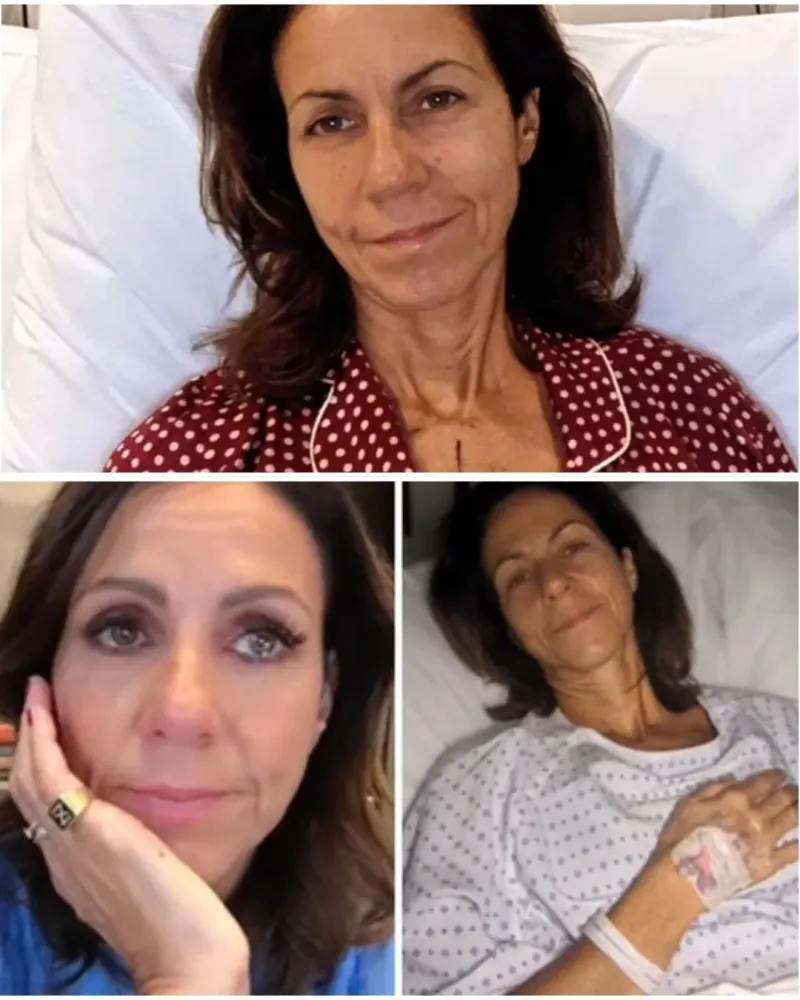
Julia Bradbury has reflected on a moment during her recovery from breast cancer surgery when an ordinary task suddenly felt beyond her: drying her own hair.
Her hairdryer was too heavy to hold up, and she could no longer raise her arms as she once had. Her sister Gina stepped in to help — a small act of care that illustrated how much everyday life had changed.
Five years after her diagnosis, the former Countryfile presenter, 56, has shared a candid account of the physical limitations and emotional upheaval she experienced following a mastectomy.
Her message focuses on the intimate realities of recovery: getting dressed, finding a comfortable sleeping position and adjusting to a body that needs time and support to heal.

THE DIFFICULTIES SHE HAD NOT EXPECTED
Julia was diagnosed with breast cancer in 2021 and underwent a mastectomy with immediate reconstruction.
Looking back on the period after surgery, she explained that she had not anticipated being unable to lift her arms above her shoulders.
Movements she had previously made without thinking became difficult, affecting everything from showering to choosing what to wear.
Drying her hair was one particularly memorable challenge. Unable to comfortably hold the appliance in position, she relied on Gina to do it for her.
The experience brought home how demanding recovery could be, even during moments that might appear insignificant to someone else.
“I had no idea I wouldn’t be able to lift my arms above my head,” Julia said.
In a video accompanying her reflections, she demonstrated the careful movement involved in working towards regaining that range of motion.
Standing beside a door, she gradually walked her fingers upwards until her arm reached above her head. Known as the spider exercise, it formed part of her own recovery routine.
By showing the movement, Julia offered a glimpse of the patient, repetitive work behind an action many people take for granted.
“NOBODY TELLS YOU HOW SAD YOU FEEL”
Alongside those practical difficulties came emotions Julia said she had not fully understood before experiencing them herself.
“Nobody tells you how sad you feel,” she admitted.
She described the unsettling contrast between feeling relatively well one day and reaching an emotional low the next. Her account acknowledged that the aftermath of a major operation could be difficult to predict, both physically and emotionally.
For Julia, understanding the scale of that experience came while she was living through it.
Her reflections make room for those difficult days without suggesting that everyone’s recovery follows the same course. They are a personal account of what she found challenging, shared to support others who have undergone a mastectomy.
There is a particular honesty in her decision to discuss these ordinary struggles.
A public update can explain that surgery has happened, but it cannot always convey what the following days feel like at home.
Julia’s recollection of needing help with her hair gives that experience a concrete, recognisable detail.
THE SMALL ADJUSTMENTS THAT HELPED
In her accompanying caption, Julia also recalled some of the changes that made daily life more manageable.
Clothes that fastened at the front helped her avoid pulling tops over her head when her movement was restricted. At night, she found comfort from placing a heart-shaped pillow beneath her arm.
She also mentioned using a lighter hairdryer or asking someone trusted to help, drawing directly on her own experience with Gina.
These were practical observations from her recovery, rather than a promise that any one approach would suit everybody.
Her latest post looks back at the aftermath of her 2021 operation. Its focus is the part of the experience she felt unprepared for: the effort involved in familiar movements and the sadness that could arrive unexpectedly.
Five years on, Julia is still willing to describe those moments openly. Among the details she remembers is her sister standing beside her, holding the hairdryer when she could not manage it herself.