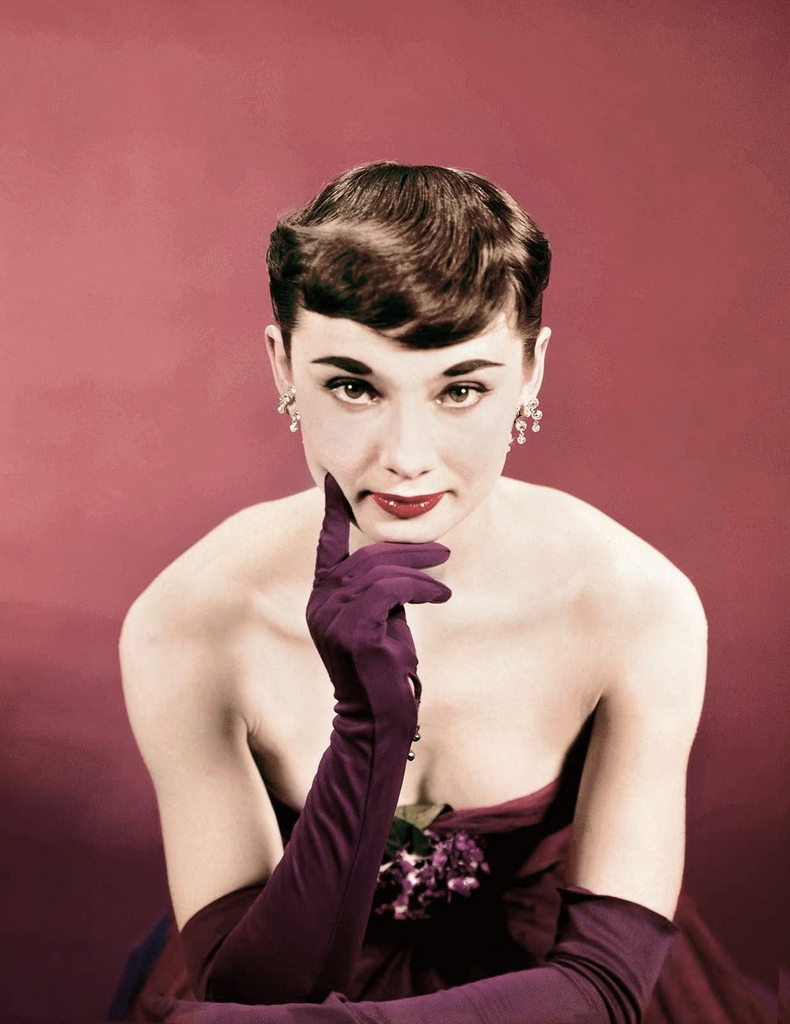
Few names in film history carry the same enduring magic as Audrey Hepburn. Known for her unmistakable grace, captivating charm, and deeply compassionate spirit, Hepburn remains a symbol of classic Hollywood sophistication and heartfelt humanitarianism.
While she first enchanted audiences in the 1950s with her luminous presence on screen, it was her off-screen life that truly solidified her legacy as one of the most beloved and influential women of the 20th century.
Her story is not just about fame or beauty, but about resilience, artistry, and an unwavering dedication to humanity.

Audrey Hepburn was born in Brussels, Belgium, in 1929, and her early life was far removed from the glamour that would later define her. When World War II broke out, she and her family endured the horrors of the German occupation in the Netherlands.
She experienced hunger, witnessed violence, and lived through the daily uncertainty of survival. These painful years left an indelible mark on her psyche. They taught her endurance, humility, and above all, empathy—qualities that would later define both her performances and her humanitarian mission.
The memory of famine, especially, remained vivid, and it became one of the reasons she felt so deeply connected to children suffering from poverty and malnutrition decades later.
Before she discovered acting, Hepburn aspired to be a ballerina. She trained rigorously and showed great promise, but her dreams of a professional dance career were cut short by the lasting effects of wartime malnutrition, which left her without the stamina required for such a demanding art form.
This setback, however, became a turning point. What might have seemed like the end of one dream gave rise to another. Transitioning into acting, she began appearing in small stage productions and minor film roles before landing the part that would change everything: Princess Ann in Roman Holiday (1953).

In Roman Holiday, opposite Gregory Peck, Hepburn embodied a runaway princess experiencing the world outside palace walls with curiosity and innocence. Her performance was fresh, radiant, and utterly convincing.
She won the Academy Award for Best Actress, and in doing so, announced herself as a new kind of star. Unlike the sultry screen goddesses who dominated the era, Hepburn exuded a different kind of beauty—elegant yet approachable, fragile yet resilient.
Her authenticity made her magnetic. Audiences believed her because she was not performing glamour; she was embodying truth.
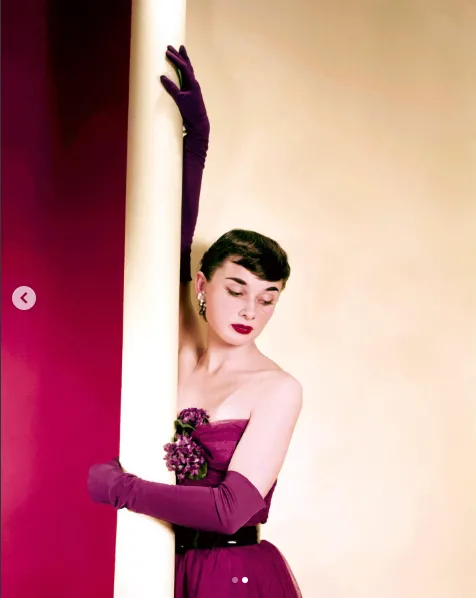
Throughout the 1950s and 1960s, Hepburn’s career blossomed. She starred in Sabrina (1954), where she played the chauffeur’s daughter transformed into a sophisticated woman, and in Funny Face (1957), which showcased her natural elegance in the world of fashion.
But it was Breakfast at Tiffany’s (1961) that cemented her as a cultural icon. As Holly Golightly, she wore the now-legendary little black dress designed by Hubert de Givenchy, accessorized with pearls and oversized sunglasses.
The image became one of the most recognizable in cinema history. Yet what made Holly so compelling was not just her style, but the vulnerability Hepburn infused into the role.
Beneath the glamour, she revealed a woman searching for love, stability, and identity—a character far more complex than the superficial readings often suggest.

Her role choices were always thoughtful. Hepburn avoided roles that felt exploitative or lacked substance, preferring characters that aligned with her own sense of dignity and truth.
In My Fair Lady (1964), she portrayed Eliza Doolittle with charm and depth, charting her transformation from a flower girl to a refined lady. Even in lighter films, she carried a presence that elevated the material, making her characters resonate beyond the script.
While her cinematic achievements made her a global star, it was her later work with UNICEF that revealed the true depth of her character. In the late 1980s, when many of her peers had stepped back from the spotlight, Hepburn dedicated herself almost entirely to humanitarianism.
Appointed as a UNICEF Goodwill Ambassador in 1989, she traveled extensively to countries ravaged by war, famine, and poverty. She visited Ethiopia during a famine, walked through villages in Bangladesh, and held sick children in hospitals in Vietnam.
These were not photo opportunities staged for publicity; often, Hepburn worked away from cameras, quietly listening to people’s stories, offering comfort, and advocating for international aid.
She once explained that her commitment to UNICEF was “a return,” a way of giving back, since as a child she had received food and relief from UNICEF after the war.

Her humanitarian efforts brought her as much admiration as her films. In 1992, she was awarded the U.S. Presidential Medal of Freedom, one of the highest civilian honors, in recognition of her tireless service.
But for Hepburn, awards mattered little compared to the lives touched by her work. “The greatest victory,” she said, “has been the ability to help others without thinking of myself.” These words captured her worldview: that real success is not measured in fame or wealth, but in kindness and service.
Audrey Hepburn passed away in 1993 at the age of 63, after a battle with a rare form of cancer. The world mourned not only the loss of a film star, but the loss of a humanitarian whose light extended far beyond the screen.

Yet her legacy endures in countless ways. On film, her performances continue to enchant new generations. Her fashion sense still influences designers and trends. Her quotes, often simple yet profound, circulate widely as reminders of grace, humility, and generosity.
More importantly, her humanitarian philosophy continues through the Audrey Hepburn Children’s Fund, which carries on her work with UNICEF.
What sets Hepburn apart is that she represents both timeless glamour and timeless humanity. She was undeniably a style icon, but she was never consumed by vanity.
She was an acclaimed actress, but she never allowed fame to overshadow her sense of responsibility to the world. Her life demonstrated that true beauty lies in kindness, empathy, and courage.

In a world often captivated by fleeting celebrity, Audrey Hepburn remains a beacon of something more enduring. Her life story is one of transformation—from a child scarred by war to a star of international cinema, and finally to a humanitarian who dedicated her later years to easing the suffering of others.
She exemplified the idea that one can be both glamorous and compassionate, both adored and selfless.
As she once wisely remarked, “As you grow older, you will discover that you have two hands—one for helping yourself, the other for helping others.” These words not only defined her life but also continue to inspire countless people around the world.
Audrey Hepburn was more than a star; she was a guiding light. And though she left this world too soon, her elegance, her kindness, and her enduring spirit ensure that she remains, in every sense of the word, timeless.