
ByTobias Wartime|Aug 26, 2022, 6:00 PM EDT
 Add us as a preferred source

Life on the road as a rock star can get weird, especially when you throw large amounts of money and partying into the mix. Many famous rock stars—including Ozzy Osbourne, Led Zeppelin drummer John Bonham, and others—could even be considered lucky to come away relatively unscathed, given the amount of on- and offstage brawls (and assorted hijinks) they got up to along the way. Below are eight of the wildest and most bizarre tour stories in the history of rock music.
1. Ozzy Osbourne bit the head off a live bat while onstage.
While onstage during a performance in Des Moines, Iowa on January 20, 1982, Ozzy Osbourne reportedly bit the head off a bat that someone in the audience threw on stage. Osbourne believed it was made of rubber, so he picked it up and sank his teeth in—but as it turned out, the bat was indeed the real deal.
“Immediately, though, something felt wrong. Very wrong,” Osbourne wrote in his memoir, I Am Ozzy. “For a start, my mouth was instantly full of this warm, gloopy liquid, with the worst aftertaste you could ever imagine. I could feel it staining my teeth and running down my chin. Then the head in my mouth twitched. Oh f**k me, I thought. I didn’t just go and eat a f**king bat, did I?”
Osbourne was later rushed to the emergency room where a doctor confirmed that the bat had been real after all and the rockstar had potentially been exposed to rabies. For the rest of the tour, Osbourne had to get a series of injections from doctors as a precautionary treatment against virus.
2. Roger Daltrey and Pete Townshend of The Who got into a fight with a plainclothes police officer.
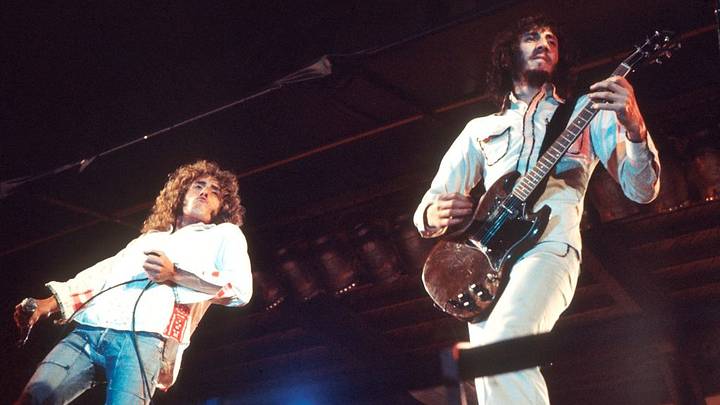
During The Who’s U.S. tour at Fillmore East in New York City in May 1969, a plainclothes police officer reportedly jumped onstage. He rushed the British rock band and tried to wrestle the microphone away from singer Roger Daltrey to warn them about heavy smoke wafting through from a fire next door.
But Daltrey didn’t see the smoke—nor did he realize the man was actually part of law enforcement. He started to fight him, and then guitarist Pete Townshend joined in the melee.
“There was a warrant out for Pete’s and my arrest because we kicked a cop off the stage,” Daltrey, told AOL (via Yahoo!) in 2018. “He was in plain clothes. He ran on the stage while we were in the middle of ‘Tommy’ and took my microphone away. Pete came and kicked him up the ass.”
Luckily for both, the charges were eventually dropped.
3. Led Zeppelin’s John Bonham rode a Harley-Davidson motorcycle through hotel hallways.
Circa 1968, Led Zeppelin drummer John Bonham reportedly rode a Harley-Davidson motorcycle—a gift he received from the band for his 25th birthday—through the halls and lobby of Los Angeles’s legendary Chateau Marmont, which ruined the hotel’s carpet with tire marks. He repeated the stunt again at the Continental Hyatt House Hotel and the Andaz West Hollywood. Meanwhile, Robert Plant is believed to have shouted out his infamous, “I am a golden god!” line (later recreated in Almost Famous) from one of those hotel balconies while Bonham went full hog inside.
4. Ozzy Osbourne took Mötley Crüe “under his wing.”
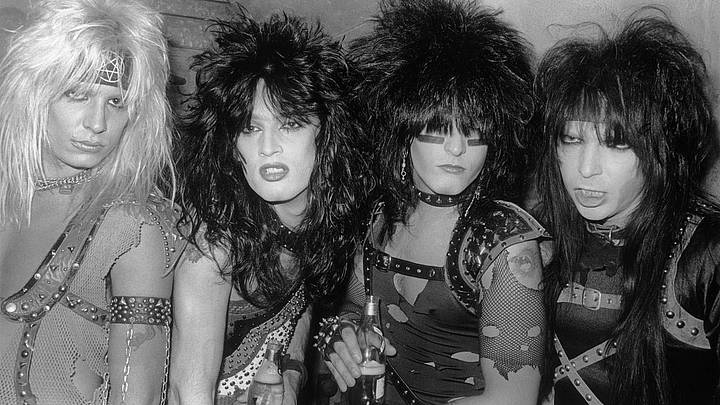
The bat incident wasn’t Ozzy’s first brush with controversy while on the road; in 1984, he found himself in a peculiar competition with Mötley Crüe’s bassist Nikki Sixx, while both acts were on tour together.
According to the hair metal band’s 2001 autobiography, The Dirt: Confessions of the World’s Most Notorious Rock Band, Osbourne snorted a line of ants from the pavement, urinated on the ground, and started to lap it up. He then challenged Sixx to do the same, but the bassist soon learned that it’s not easy going toe-to-toe with the Prince of Darkness.
“We were a wild young band and he kind of took us under his wing,” Sixx told Page Six in 2019. “We thought we could compete with that, but you can’t with Ozzy. He won.”
While Sixx claims it’s all true, former Ozzy Osbourne guitarist Jake E. Lee has maintained that some of the antics described weren’t exactly accurate—namely, that Osbourne never snorted a line of ants. “I was there, and I never saw ants,” Jake E. Lee told Tone-Talk. “I was right there … Ozzy snorted a little tiny stupid spider that was crawling across. There was no ants.”
5. Keith Richards almost burnt down the Playboy Mansion.
In 1972, Rolling Stones guitarist Keith Richards and saxophonist Bobby Keys reportedly set fire to the original Playboy Mansion in Chicago while the pair were up to some party-related hijinks.
“We managed to set a bathroom on fire in the Playboy Mansion. We didn’t notice the curtains had caught fire while we were sitting around on the john smoking,” Richards told NPR in 2015. Fortunately, the structure remained intact and was even put up for sale in 2018 for a cool $3.7 million.
6. Liam Gallagher of Oasis lost teeth during a huge brawl in Germany.
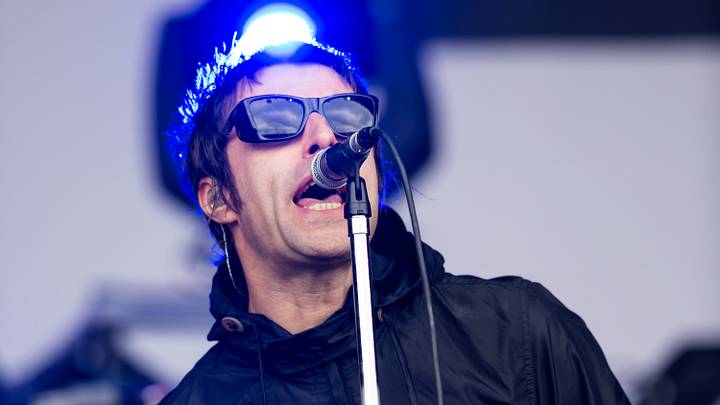
In 2002, Oasis was on tour in Germany when three of the band’s members, including lead singer Liam Gallagher, got into a serious brawl at the Bayerischer Hof nightclub in Munich.
According to reports, 80 police officers were called in to keep the peace and break up the melee, and Gallagher lost several of his teeth during the altercation, which resulted in the arrests of five people (including Gallagher and two other members of Oasis), a €50,000 fine, and the cancellation of two tour dates in Germany.
In 2018, Liam Gallagher told The Guardian, “I remember we were sitting at a table under a balcony, and our security guard just grabs us by the neck, drags us over the f**king table, and the next minute, there’s a geezer on the balcony drops a f**king glass table on our heads, but the security’s got us out of the way, or it could have f**king killed us. And then it went off, man.”
7. Van Halen’s infamous brown M&M clause in their tour rider.
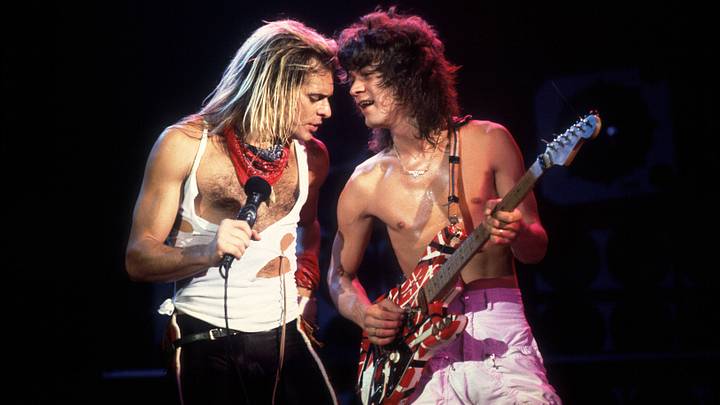
During Van Halen’s 1982 tour, the rock band added a small (yet soon to be notorious) detail to their tour rider contract—the band wanted M&M’s but with a disclaimer: “WARNING: ABSOLUTELY NO BROWN ONES.”
While the seemingly random rider has definitely elicited some chuckles over the years, it actually was less bizarre than it seems. For the band, it served as a test to make sure each concert venue thoroughly read through the document and followed each technical specification included.
“There was so much equipment, and so many human beings to make it function,” lead singer David Lee Roth explained in his memoir, Crazy From the Heat. “When I would walk backstage, if I saw a brown M&M in that bowl … Well, line-check the entire production. Guaranteed you’re going to arrive at a technical error. They didn’t read the contract. Guaranteed you’d run into a problem.”
If the band saw brown M&M’s backstage, they’d get upset because they knew the concert promoters likely hadn’t read the entire contract and therefore couldn’t guarantee their show would go safely and smoothly. In one instance, Roth trashed his dressing room because he found brown M&M candies backstage.
8. Coheed and Cambria’s Michael Todd was arrested for armed robbery at a concert venue.
While on tour in 2011, Coheed and Cambria’s then bassist Michael Todd reportedly walked into a Walgreens and showed a pharmacist a text on his phone, which claimed that he had a bomb and would blow up the drugstore unless he was given OxyContin. Todd then left the store with six bottles of painkillers, hailed a taxi, and went back to the Comcast Center in Mansfield, Massachusetts to play the show.
However, police tracked him down and arrested him for armed robbery and possession of a class B controlled substance.
“Todd was arrested today on what we consider very serious charges and therefore he will not be finishing up the current tour,” the band later wrote on their website, following the incident. “We are surprised, to say the least, and will address the situation with Michael after the tour.”
Todd was later sentenced to one year of home confinement and three years probation after pleading guilty to charges. Meanwhile, touring keyboardist Wes Styles took over on bass for the rest of the tour.
Related Tags
The Real-Life Serial Killer That Might’ve Inspired ‘Dexter’s Dark Passenger
Brazil’s most notorious killer of killers has been called the real Dexter for years, but ‘Dexter’s’ creator tells a different origin story.
ByMatt Hoffman|Oct 30, 2026, 9:00 PM EDT
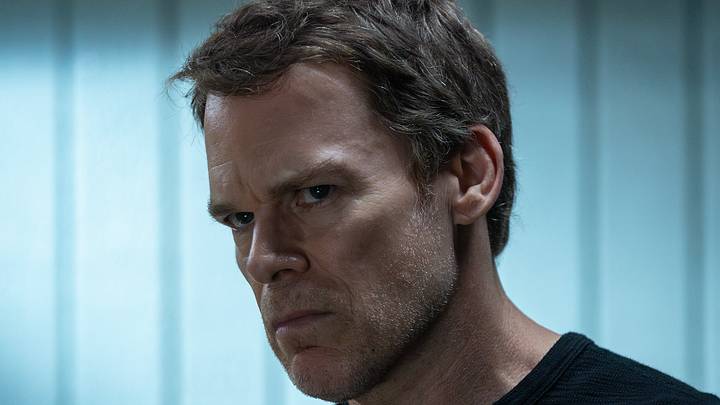
Back in July 2004, Jeff Lindsay introduced readers to Dexter Morgan, a Miami police blood-spatter analyst who kills only people who deserve it, egged on by a voice in his head he calls the “Dark Passenger.” Two years later, Showtime turned Darkly Dreaming Dexter into a hit series with Michael C. Hall.
Somewhere along the way, the internet decided Dexter had a real-life model: Pedro Rodrigues Filho, a Brazilian who claimed to have killed more than 100 people, most of them criminals. Entertainment sites now call him “the Brazilian Dexter,” and ScreenRant describes the show as loosely based on his crimes. No quote from Lindsay or the show’s producers backs that up, but the similarities are hard to miss.
The Boy Who Settled Scores
Filho was born in 1954 on a farm in Santa Rita do Sapucaí, in the Brazilian state of Minas Gerais, with an injured skull: his father, he said, had kicked his pregnant mother during a fight. He told the magazine Época in 2003 that he first wanted to kill at 13, when he shoved an older cousin into a sugarcane press. A year later, after his father lost his job as a school guard over accusations that he was stealing school lunches, Filho shot the official who had fired him, then shot the guard he believed was the real thief. (Accounts disagree on who that first victim was: some Brazilian outlets say the mayor of his hometown, others the deputy mayor of Alfenas, also in Minas Gerais.)
He fled to Mogi das Cruzes, outside São Paulo, where he robbed drug dens, killed traffickers, and took over a dead drug boss’s business. When his pregnant girlfriend was shot dead, he went looking for the man who ordered it and, with four friends, hit a wedding party, leaving seven dead and 16 wounded, according to Época. He was arrested shortly after turning 18 and entered prison on May 24, 1973; in the van on the way there, he killed a fellow prisoner he said was a rapist.
Where the Comparison Holds
Like Dexter, Filho had a code, or said he did. He told Época he killed only people who were no good, and that he never killed children, women, or family men. He also had a father story to rival Harry Morgan’s, though a much darker one: Filho claimed he killed his own father in prison, in revenge for his mother’s stabbing, and chewed a piece of his heart. (Época noted that he gave a psychiatrist a completely different account of how his father died.)
The resemblance mostly ends there. Dexter’s code, as Mental Floss has laid out before, includes “don’t get caught,” and Filho spent roughly four decades behind bars, much of it bragging. He had “Mato por prazer” (“I kill for pleasure”) tattooed on his left arm. He claimed 47 victims inside prison alone, though Época found just 18 charges against him on file in 2003; by his death, Brazilian outlets counted 71 homicides on his record.
What Dexter’s Creator Actually Said
Lindsay has told his origin story many times, and it starts nowhere near Brazil: at a Kiwanis Club lunch where he sat at the head table waiting to speak and, as he told BookPage in 2005, “the idea just popped into my head that sometimes serial murder isn’t a bad thing.” He then built the character out of research: he collected books on sociopaths and murderers, interviewed psychologists and crime scene investigators, and got cop friends to turn him loose in their dead-files room. He also rejects the very label that made Filho famous: “Dexter’s not a vigilante,” he told Middlebury Magazine in 2011. “Vigilantes are trying to perform an act of justice. Dexter just likes to kill people.”
The Ending Dexter Survived
Filho walked out of prison in 2007, went back in 2011 for crimes committed during his sentence, and was released for good in 2018. Within months, he had reinvented himself as a YouTube personality who commented on crimes in the news and lectured about his past. On the morning of March 5, 2023, he was on a sidewalk in Mogi das Cruzes holding a small child when men in a black car opened fire, according to the news site G1. The child was unhurt, but according to the police report, one of the attackers stabbed Filho in the throat as he lay on the ground. He was 68.
Read More:
•
•
Dexter: New Blood: 7 Things We Know
Where Did the Phrase “See You Later, Alligator” Come From?
Bill Haley made the phrase famous in 1956, but its true roots trace back much further.
ByPaul Anthony Jones|Oct 31, 2026, 12:00 PM EDT
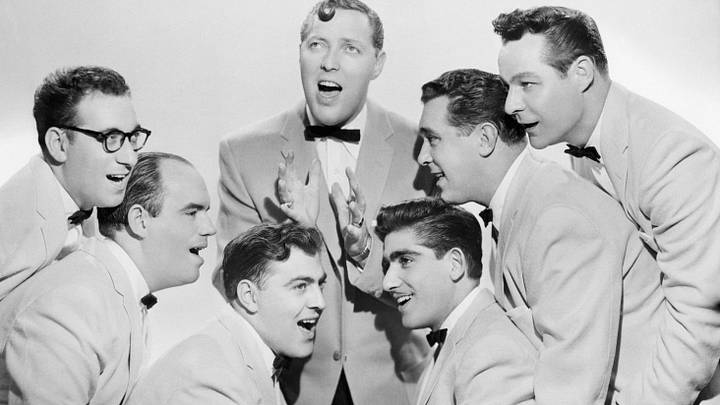
In 1955, rock and roll legends Bill Haley and His Comets recorded a 12-bar blues standard, written and first recorded earlier that year by Louisiana singer-songwriter Bobby Charles, called See You Later, Alligator.
Haley’s track was released early the following year, and although it didn’t hit the top of the charts, See You Later, Alligator nonetheless proved successful enough to become his third and final million-selling record in the U.S. Its popularity was later cemented by Haley performing the song in his 1956 big-screen musical Rock Around the Clock (filmed to cash in on the success of his earlier 1954 hit) that likewise became a global phenomenon—not least thanks to reports of unruly teenagers dancing in cinema aisles and causing riots wherever it was shown.
Before the Beat Dropped
Given both the song and the tie-in movie’s success, it might be tempting to presume that it is responsible for “see you later, alligator” becoming a snappy, slangy way of saying goodbye to someone—and some etymological sources might even claim precisely that. But in fact, the opposite is true: Haley’s song merely helped to circulate and further popularize a phrase that had already long been in use by the time his record was released.
The Oxford English Dictionary‘s earliest record of this phrase dates from just a year before Haley and Charles’ song, when “see you later, alligator” was explained as “meaning goodbye” in a guide to contemporary slang that appeared in a Nevada newspaper article. The linguist and etymologist Pascal Tréguer has since unearthed an earlier record, from a newspaper in Hawaii in 1952, which likewise listed “see you later, alligator” as an example of “the everyday ‘slang’ many high school students use.” But earlier still, the same phrase was used in an article in the Lincoln Heights Bulletin from Los Angeles, California, way back in December 1945:
JINGLE BELLS!! JINGLE BELLS!! Christmas is just around the corner … There are just two weeks shopping time till Xmas Day … so don’t forget all those luscious presents you are buying for the family and friends. See you later alligators!!
Rhyming Slang Roots
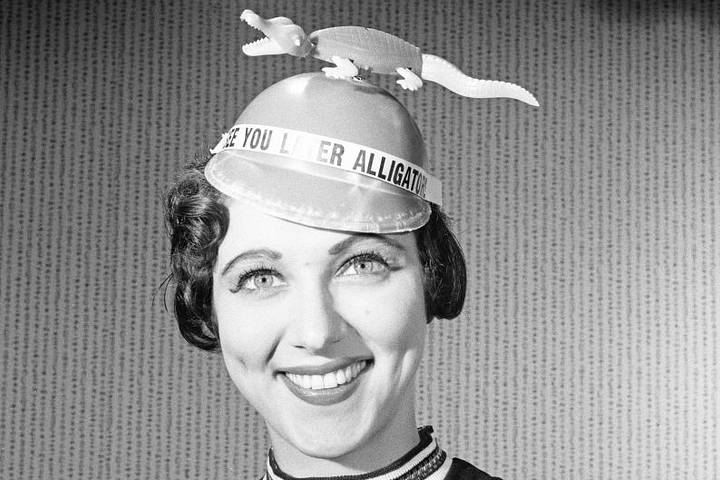
Tellingly, this article doesn’t feel the need to explain the phrase’s meaning, but simply uses it as a jokey sign-off. That suggests that way back in the mid 1940s “see you later, alligator” was already a familiar enough way of saying goodbye. So if it doesn’t come from Haley’s song, and it was already in established use a decade earlier, where did it come from? Well, until any further earlier evidence comes to light, the most likely theory here is that “see you later, alligator” is a hangover from a 19th and early 20th century fad for so-called rhyming slang.
Thought to have emerged in London in the mid 1800s, rhyming slang was a faddish way of talking in which commonly used words were replaced with snappy rhyming equivalents. Stairs, for instance, became “apples and pears.” A wife was a husband’s “trouble and strife.” To believe something was to “Adam and Eve” it. Later, during Britain’s transportation era, when convicts were routinely shipped from the UK to see out their sentences elsewhere, rhyming slang spread to Australia too and quickly caught on there. And as any Brit or Aussie will doubtless tell you, many of these phrases are still well known (if not perhaps quite so well used) as they were almost two centuries ago.
In the 20th century, however, a wave of postwar Australian immigration appears to have brought this technique to the western United States. “See you later, alligator” was presumably either imported from Australia or, as is more likely, coined in the U.S. around this time. Rhyming slang itself doesn’t seem to have caught on for long in America, yet it was a fad just long enough—especially among students or teenagers—for a handful of these phrases to fall into use. So, as well as “See you later, alligator,” and its stock reply “In a while, crocodile,” you might once have heard the likes of “Do you know what I mean, jellybean?,” “Don’t get tough, powder puff,” and “What’s buzzin’, cousin?”
Not all of these have stood the test of time, but “see you later, alligator” did. And it’s likely the success of Haley’s record and the movie in which it appeared that helped to reinforce its use and the popularity it has had ever since.
Read More:
•
75 Terribly Tricky Tongue Twisters to Test Your Talking
•
15 Slang Words From the 1970s We Still Use Today
•
Where Did the Phrase “See You Later, Alligator” Come From?
•
8 Old West Slang Words That Deserve a Cowboy Comeback
•