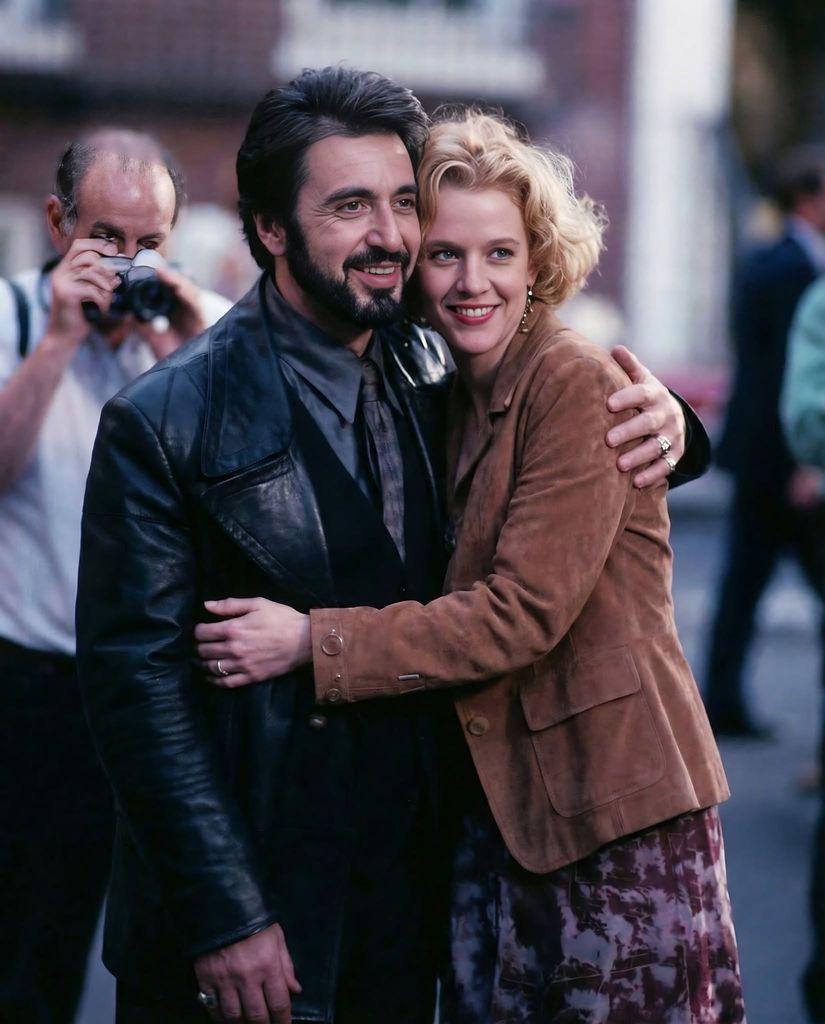
Streaming platforms have a huge selection of movies that can elicit a lot of emotions, but sometimes, you just want a good horror film to put you on edge. If you’ve gotten your spooky fix from Netflix, check out these films currently available on Amazon Prime Video and that are guaranteed to rattle your nerves.
1. Knock at the Cabin (2023)
M. Night Shyamalan (The Sixth Sense) directs this tense, contained thriller about four strangers who try to convince a family that the world is about to end—and that they need to sacrifice one of their own to stop it. The film is an adaptation of the 2018 novel The Cabin at the End of the World by Paul Tremblay, though the movie’s ending is vastly different. Tremblay said he received some advice on how to process someone else revising your work for the screen from Stephen King, who clearly knows a thing or two about that.
2. M3gan (2023)
The latest entry into the killer doll horror genre was a hit with filmgoers. After the tragic death of her parents, young Cady (Violet McGraw) moves in with her Aunt Gemma (Alison Williams), who happens to be working on next-gen, doll-buddy tech. But prototype Megan takes the bonding experience a little too far. Universal helped build buzz for the film by planting M3gan lookalikes at baseball games.
3. Smile (2022)
A therapist (Sosie Bacon) begins seeing some disturbing images—and people—after losing a patient. Writer and director Parker Finn adapted his own short film, Laura Hasn’t Slept, into a feature-length version.
4. Candyman (2021)
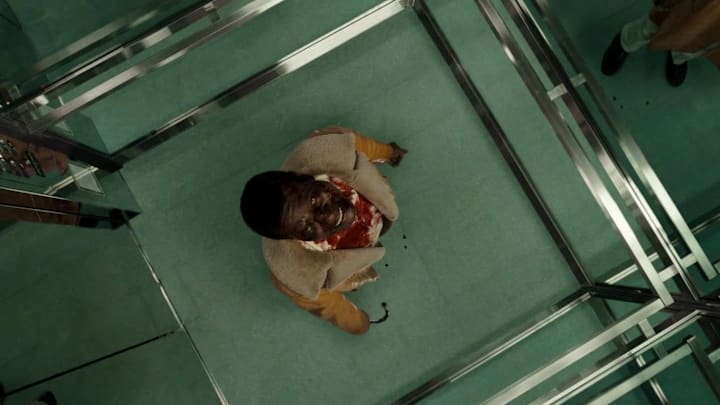
Director Nia DaCosta and producer Jordan Peele reimagine the 1992 horror classic for a new generation. When a couple moves into what used to be Chicago’s Cabrini-Green housing project, they discover the legend of the Candyman is based more on fact than fiction. Before Peele got involved, producers floated a Candyman vs. Leprechaun crossover film, in the vein of Freddy vs. Jason.
5. Train to Busan (2016)
The road to salvation is paved through hell in this zombie thriller from South Korea. After a viral outbreak, a band of survivors boards a train that they hope will lead to safe territory. Gong Yoo (Squid Game) co-stars. A U.S. remake titled Last Train to New York is in the works.
6. Saint Maud (2019)
This slow-burn, psychological chiller stars Morfydd Clark (The Lord of the Rings: The Rings of Power) as a hospice nurse who believes it’s her duty to save the soul of her patient—and explores increasingly extreme methods of doing so. The most cooperative actor may have been Nancy, a cockroach that plays a prominent role: Insect trainer Grace Dickinson said Nancy regularly hit her marks. One scheduled three-hour block of cockroach filming needed just one hour to complete.
7. The Collector (2009)
A simple heist goes awry when a burglar (Josh Stewart) picks the wrong house. Once inside, he’s confronted with finishing the job or rescuing the victims of a maniac. Co-writers Patrick Melton and Marcus Dunstan wrote the script on spec: It was briefly considered as a possible Saw (2004) prequel. The idea was nixed, but Melton and Dunstan went on to write Saw IV, Saw V, Saw VI, and Saw 3D.
8. Children of the Corn (1984)
Homicidal kids terrorize a couple who dare venture into their rural territory in this creepy thriller adapted from the Stephen King short story. King wrote the first script, but screenwriter George Goldsmith is the only one credited in the film.
9. Hellraiser (1987)
With Hellraiser, Clive Barker directed his own adaptation of his short story “The Hellbound Heart.“ After an uncle unleashes a particularly nasty corner of hell under their roof, a seemingly normal family comes under the rule of Pinhead (Doug Bradley) and the other Cenobites. Barker said he wanted to cast “real actors“ in the roles, a sharp contrast to the ’80s slashers of the era that put an emphasis on attractive teenagers being led to slaughter.
10. The Relic (1997)
Penelope Ann Miller and Tom Sizemore fight off an evil entity at—where else—the Chicago History Museum in this ’90s horror flick. Legendary visual effects artist Stan Winston designed the creature.
11. Let the Right One In (2008)
Call it a coming-of-fang story: In Sweden, a young boy befriends a girl whose shyness belies a thirst for human blood. Director Tomas Alfredson wouldn’t let his young leads (Kåre Hedebrant and Lina Leandersson) read the script, preferring they learn by hearing it read aloud to them.
A version of this story ran in 2019; it has been updated for 2023.
Related Tags
What Is Effective Altruism? The Philosophy That Shaped FTX’s Founder, Explained
The Netflix series ‘The Altruists’ explores how Sam Bankman-Fried, once the poster child for a movement focused on doing good, wound up losing billions of dollars.
ByEden Gordon|Nov 19, 2026, 7:00 PM EST
 Add us as a preferred source
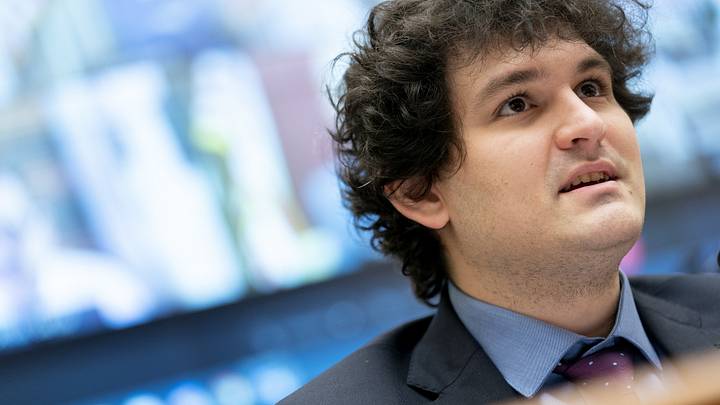
How did an organization whose founder followed a philosophy based on doing the greatest amount of good possible for the world end up in prison for misappropriating billions of dollars of customer funds?
That’s the central question at the heart of The Altruists, the Netflix series that explores the rise and fall of the cryptocurrency exchange company FTX. Before FTX’s collapse, its founder, Sam Bankman-Fried, was a poster child for effective altruism, a philosophy that uses research and evidence to identify the world’s biggest problems and find strategies to solve them.
He openly cited effective altruism as the reason he entered the crypto industry, and had vowed to eventually give away most of his wealth to charity. Yet Bankman-Fried is currently serving a 25-year prison sentence. So how did this all play out, and how did effective altruism influence Bankman-Fried’s actions?
What is effective altruism?

Effective altruism is both a philosophy and social movement. It is based on using reason and logic to identify major global problems and solutions, and helping people to figure out how they can do the most good possible with their lives.
“Effective altruism is about using scientific evidence and careful reasoning to find the best ways to help others, and putting those findings into practice,” reads the program’s website. “It’s both an ongoing research project and a global movement of people working to do good.”
The movement draws much of its inspiration from the philosopher Peter Singer, who has long argued that people have a moral obligation to help people in poverty. It has mobilized billions of dollars in donations over the years. The movement generally encourages people to either dedicate their time or careers to improving specific social issues, or to “earn to give”—making as much money as possible and donating it to charity.
What was Sam Bankman-Fried’s relationship to effective altruism?
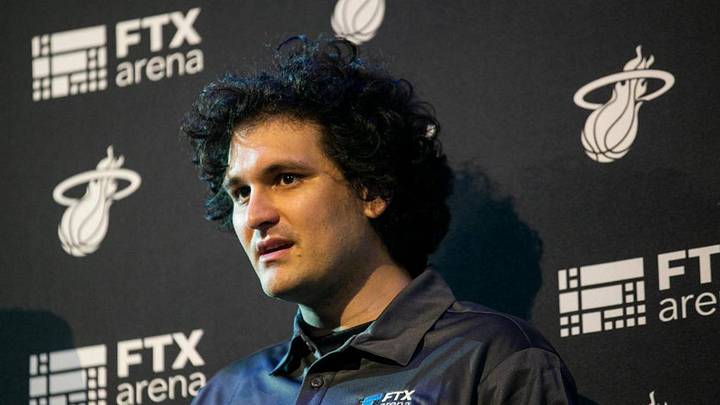
Bankman-Fried was first introduced to effective altruism after meeting William MacAskill, one of the movement’s founders, when he was an MIT undergraduate. Less than a decade later, he had promised to donate the entirety of his net worth—at one point some $26 billion—to charity. Bankman-Fried also publicly said his desire to help as many people as possible through donations drove his decision to take significant financial risks.
FTX’s collapse was devastating for effective altruism proponents and gleefully celebrated by many of its critics. “Bankman-Fried’s behavior went against values central to effective altruism, such as honesty, humility, integrity, and concern for other people,” reads a statement on the Centre for Effective Altruism’s website. “In the years since, leaders in the effective altruism movement have consistently condemned Bankman-Fried’s actions.”
It would be incorrect to say that effective altruism directly caused Bankman-Fried’s actions. Yet his connection to the movement certainly shows the potential pitfalls of fixating on a potential future outcome—no matter how beneficial for the world—while failing to act with integrity in the present.
Read More:
•
The Book That Inspired George Harrison to Write “While My Guitar Gently Weeps”
•
The Most Common Scams in Every State, Mapped
•
Science Fiction or Silicon Valley? 7 Books That Foresaw Our Digital Lives
•
6 Discontinued ’90s Gadgets People Still Miss
7 Real Portland Locations From ‘Wildwood’
‘Wildwood’ is a love letter to the city of Portland.
ByEden Gordon|Nov 20, 2026, 5:00 PM EST
The creators behind the stop-motion film Wildwood took 16 years to painstakingly craft every detail of the transportive fantasy epic. Based on a book by Colin Meloy and Carson Ellis, Wildwood tells the tale of a young girl named Prue whose brother is plucked from the ground by crows. Undeterred, she and her initially hapless sidekick Curtis venture into the wilderness to find him.
What follows is a surreal journey through a land where animals talk, trees are worshiped, coyotes wield cannons, and the dead return—albeit not always to their original forms. Interspersed throughout are recognizable landmarks from the city of Portland, Oregon, which add a sense of modernity and charm to the book and film.
I visited Portland to trace the real-world locations that found their way into Wildwood. Here are some of them.
- Forest Park
- The Bird Alliance
- Pittock Mansion
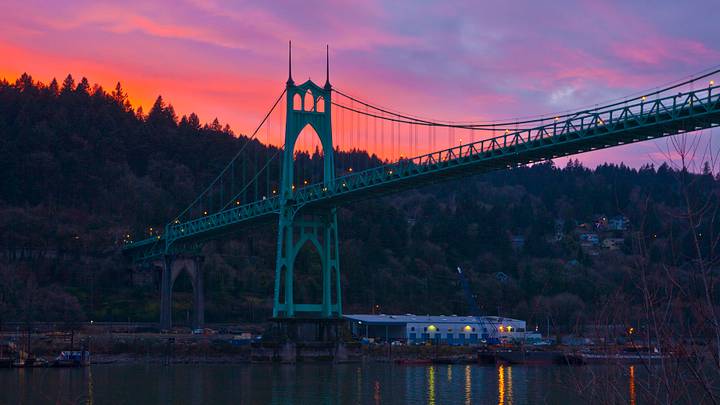
- St. Johns Bridge
- Stumptown Coffee
- Voodoo Doughnuts
- Tom McCall Waterfront Park
Forest Park
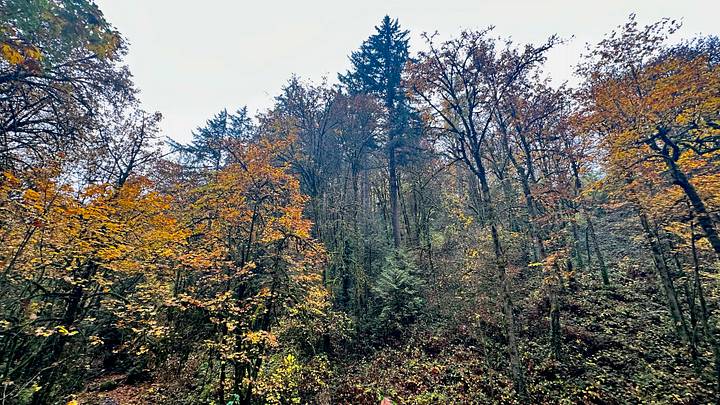
Meloy and Ellis conceptualized the story on their many walks through Portland’s Forest Park. From the first moment I spotted the wall of infinite shades of green rising up almost directly from the city streets, I could see why this place lent itself to imaginal flights of fancy.
It was a crisp autumn morning, a sheen of rain still on the ground. I had started my morning with a latte and breakfast burrito at the quaint Haven Coffee Co., so I was feeling pleasantly energized as I walked down a street lined with orange trees.
My guide from Around Portland Tours seemed to know everything about the area. We passed a hill overlooking a cluster of factories that provided the inspiration for the Industrial Wastes in Wildwood. They had been built on a former wetland, my guide informed me. In the book, these are a mysterious cluster of factories and warehouses that act as a barrier between Portland and the so-called Impassable Wilderness beyond.
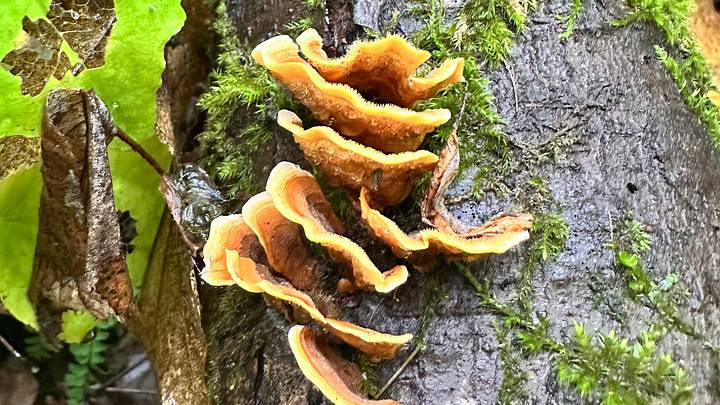
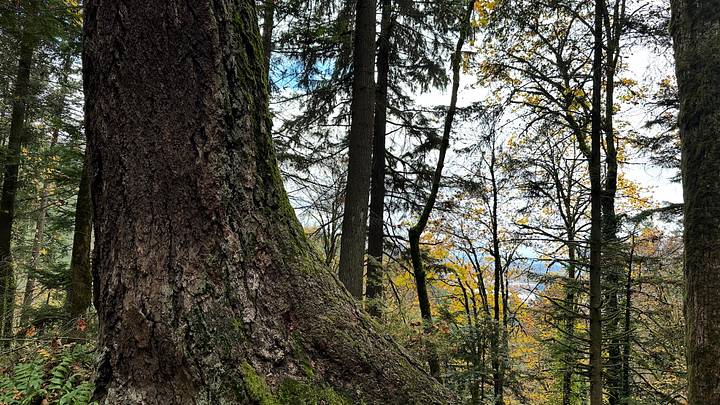
Barely a minute later, we were inside another realm—a kingdom of trees. Towering Douglas firs and cedars soared towards the sky. Dewy ferns and huckleberry bushes shimmered, massive orange maple leaves coated the ground, and countless types of mushrooms covered fallen trees in the process of decomposing and becoming new life.
I have always felt uniquely at peace in forests, and this one was no exception; a sense of deep calm and presence washed over me immediately. Forest bathing—or the practice of wandering through a forest, exploring it with all your senses—is an increasingly popular way to reduce stress and improve health, my guide explained, and this one felt like the perfect place to do just that.
The fact that the forest stood so close to bustling city streets made it feel all the more otherworldly, as if we truly had stepped through a portal from the human world into something much wilder and older.
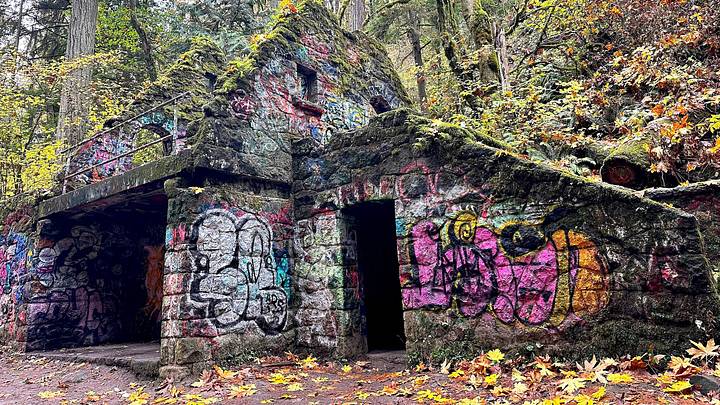
The woods of the Pacific Northwest have long inspired various tales of cryptids such as Sasquatch, and I didn’t have to look far to see withered, gnarled trunks or mossy stones that resembled various mythical creatures. This was the forest’s domain, and even human-made structures were all in the process of being reclaimed. We paused for a while at the dilapidated Witch’s Cabin, a former outpost rapidly being swallowed by moss and lichens. Altars made of stones, books, and Polaroids filled the crumbling windows.
Then we continued deeper and higher up into the woods. At one point, I caught a tiny glimpse of a house poking through the tall trees. That was the house originally used as the Cullens’ home in the first Twilight movie, my guide informed me, and indeed it wasn’t too hard to imagine vampires leaping through these trees.
We continued our climb. The beauty was near-indescribable; the forest consisted of countless colors that shone far brighter in real life than in any of my photos. The air filling my lungs was clean, alive. I wanted to stay, to continue to wander through all 5,200 acres of the United States’ largest urban park.
The Bird Alliance
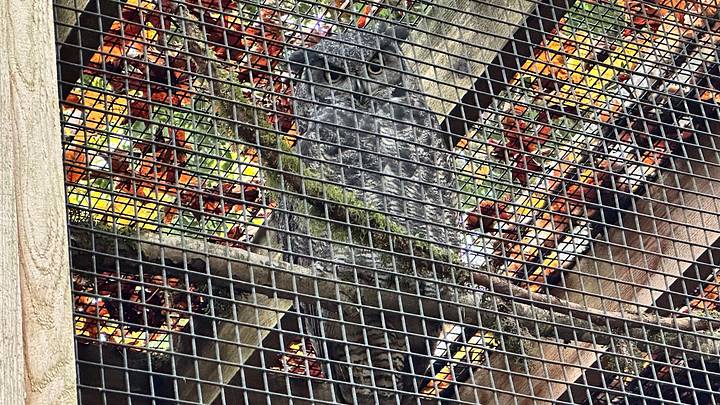
Our first stop within Forest Park was the Bird Alliance, which served as the inspiration for Wildwood’s Avian Principality, or the kingdom of birds. Formerly the Audubon Society, this 150-acre expanse of land is dedicated to protecting birds and connecting people to nature.
We made our way down to a large enclosure, which I knew was home to the bird that inspired the noble Owl Rex in Wildwood. At first we couldn’t spot her. The enclosure was large, filled with various perches, fauna, and equipment, and had wire mesh walls that looked out onto the forest.
Suddenly I realized that she had been perched on a branch directly above us the whole time, almost as if she had specifically been waiting for our appointment. Julio was a Great Horned Owl who looked remarkably regal, with round golden eyes that burned with intelligence. The plaque beside her explained she had been rescued as a young owl and never learned how to successfully be wild, which was why she spent her days here.
Her head swiveled backward, and she stretched out her scalloped wings for a moment. It was not hard at all to see why Meloy and Ellis had thought to model the Crown Prince of the Avian Principality after her. As we left, I felt somehow obligated to thank her for her presence. I then bought a bird-themed puzzle at a quaint gift shop, and then we ventured back into the woods.
Pittock Mansion
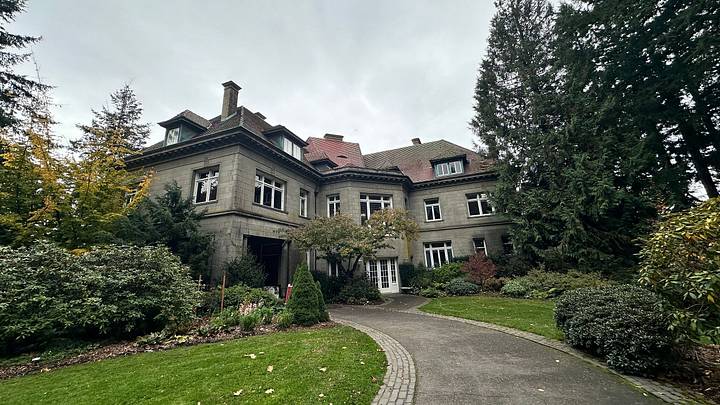
We then made our way up Wildwood Trail, the path that inspired the name of Meloy and Ellis’s book. The forest seemed to grow deeper and ever-wilder, until a mansion emerged out of nowhere.
It was grand, built in the French Renaissance style with smooth sandstone walls, and I recognized it immediately. I had seen the film Wildwood just two days before, and now I had the strange feeling that I’d stepped directly into a scene from it. The experience was disorienting, as if the lines between reality and story had blurred ever-so slightly.
Pittock Mansion was built in 1914 for Oregonian publisher and businessman Henry Pittock and his wife Georgiana, a philanthropist who founded the Portland Rose Society. The mansion is rumored to be haunted by both Henry and Georgiana’s spirits, among others, and today it is preserved as a museum and event space.
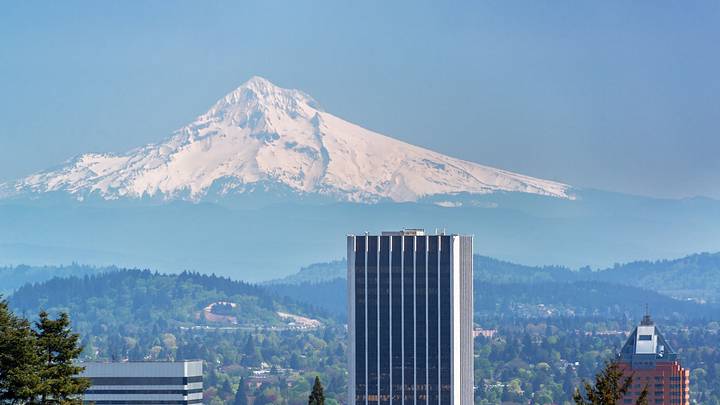
We sat by the edge of the grounds, looking down over Portland and towards the towering Mount Hood, which was veiled in clouds. The mountain hasn’t been as snowy as usual in recent years, my guide said, and we both were quiet for a while. I thought of the droughts and wildfires that had filled the news recently. Wildwood, I reflected, is not only about fanciful forest adventures; it’s also about human greed and violence, and the dangers of taking what does not belong to you. “When you mess with nature,” my guide said, using more colorful language in reality to effectively sum up one of Wildwood’s core messages, “it messes back.”
I had thought we might walk back through the woods, but instead we made our way down a winding street that led us past a series of impressively elegant mansions, all staring out over the city. Then, all at once, we arrived at a bus station beside a bustling highway. Minutes later, we were back among the skyscrapers and gas stations of the metropolitan world.
I felt like I’d just been somewhere secret and magical yet profoundly real and alive, and this world of humans and cars felt more like the dream. I had been entertaining the idea of leaving the city to live closer to nature for some time, and this experience, among other things, made me sure that my next home would be somewhere closer to the woods.
St. Johns Bridge
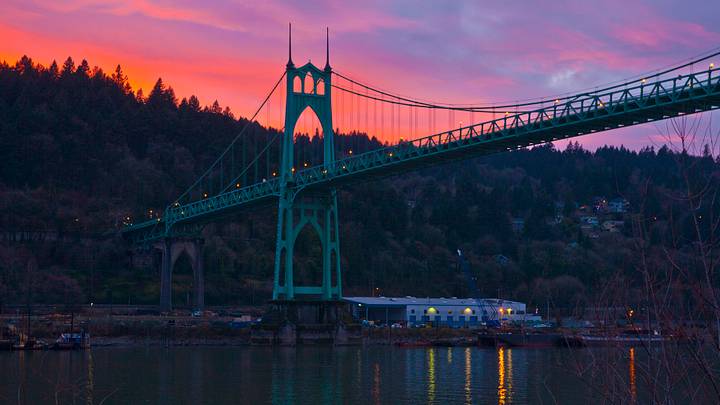
That afternoon, I made my way over towards St. Johns, the neighborhood where Meloy and Ellis lived while writing Wildwood. Rain clouds were gathering, but I had my umbrella and decided to brave it. It was drizzling when I got out near the bridge.
First, I made my way to the neighboring town, grabbing some hot tea and then wandering through the array of bookshops and honey stores that made up the town center. I stopped off at Two Rivers Bookstore and browsed for a while, then headed back out. The rain made the trees look even more colorful in their autumn finery, and I admired them as I wandered past craft shops and quirky bars toward Cathedral Park.
St. Johns Bridge towered above the charming expanse of the park beneath it, shivering slightly as cars and trucks crossed its vast expanse. I was safe from the rain underneath it, and fully able to take in its vast size.
The bridge appears in Wildwood, but in the story it is called the Ghost Bridge. It links Prue’s home of St. Johns to the Impassable Wilderness, and is a phantom bridge that can only be summoned with magic. During one particularly haunting scene, Alexandra, the primary antagonist of Wildwood, stands on it and makes a dangerous bargain with Prue’s parents. Just then, I could almost imagine her emerging from the foggy woods on the other side of the bridge.
Stumptown Coffee
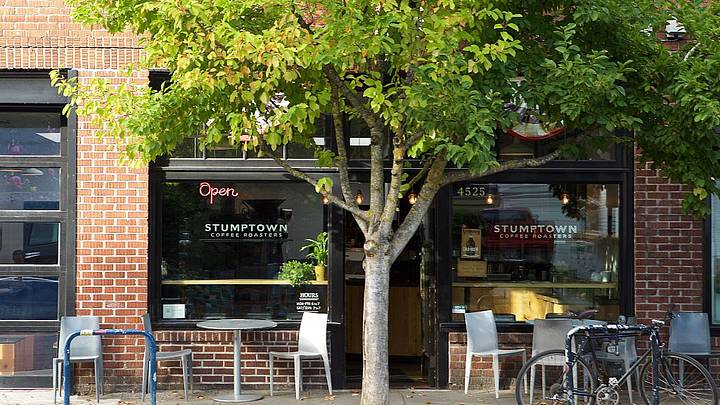
Two mornings later, I made my way to Stumptown Coffee. Prue orders a shot of espresso in the movie, but I sat with my usual hot latte and read from the stack of books I’d acquired at Powell’s, the cavernous city block-sized bookstore I’d explored the night before. I’d been shocked when I checked my clock and realized two hours had passed there. Portland, I was discovering, was quite a charming place for a book and forest-lover.
I’d spent the previous day at the Portland Book Festival, where I heard Meloy and Ellis discuss the inspiration behind Wildwood. The idea first came to them as warehouse-dwelling young Portland artists, but they’d only revived it after finding creative success—Meloy is the lead singer of the band The Decemberists and Ellis has illustrated many children’s books—and having kids. Wildwood emerged as a “mythogeography,” a story that projects magical worlds onto real-world locations and, as Meloy said, hopefully inspires kids to go out and connect with wild places like Forest Park.
Though I was not exactly the target audience, I reflected that the book and film had managed to do exactly that for me. The evening prior, I’d also found time to visit Portland’s majestic Japanese Garden, one of the most beautiful places I’d ever been. A blend of Japanese gardening techniques and the wild Pacific Northwest forests that I loved, it was exquisite. I’d also heard poets and writers read excerpts of their work in the Portland Art Museum as part of the Book Festival, and I’d had a lot of great food and excellent wine at Canard, a restaurant in East Portland. I was not, in short, quite ready to leave.
Voodoo Doughnuts
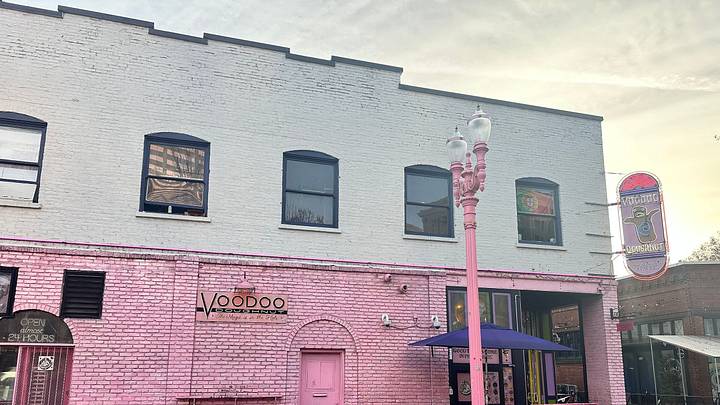
I had a plane to catch, but there were a few more places I wanted to see. The full brightness of the morning was just beginning to rouse the sleepy city when I reached Voodoo Doughnuts, which was easily visible thanks to its neon sign and bright pink paint. Prue visits this spot as well in the movie on her morning jaunt with her baby brother, pre-crow abduction. I’m not usually a doughnut person, but all I can say about the S’Mores Fritter I had is that it was, inarguably, the best doughnut I ever had.
Tom McCall Waterfront Park
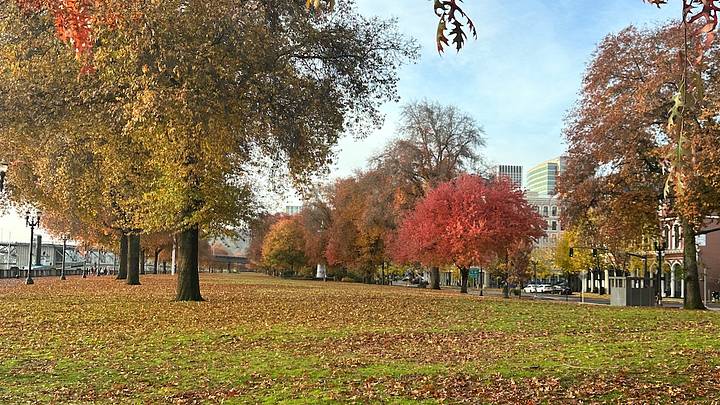
Donut and coffee acquired, I then walked through Arkeny Plaza, past Skidmore Fountain and towards the river. On the way, I spotted a crow perched atop a building, cawing loudly. I stopped to snap a photo, and then realized that another crow had emerged. And another. And another.
Soon there were dozens of crows lining the tops of the buildings, the fountain, and the surrounding trees. This was exactly what happened in Wildwood before Prue’s brother was abducted. Had the lines between fiction and reality dissolved so completely that I’d stepped into the story? Were the crows about to somehow draw me back into the woods after them? Would I mind if they did?
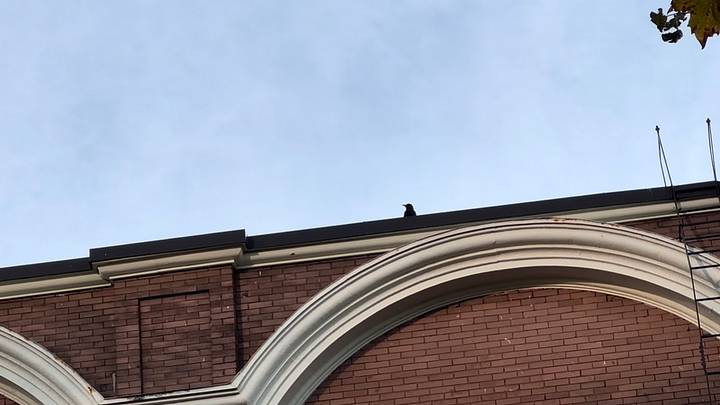
I kept walking, and soon made it to the waterfront park, where a huge group of runners was gathering for their morning jog. The Willamette River sparkled. I had to go home; I’d had my time in the woods for now. But I would be back, I resolved, either in reality or in fiction—back somehow to those grand Pacific Northwest trees, so full of stories.
Then again, the forest in Wildwood is not a paradise; it is deeply fractured and plagued by violence and bureaucracy. Wildwood is less of an escapist tale than a deeper look at our own world and its problems mapped onto one of the oldest tales of all: a child’s adventure into the woods and home again.https://www.youtube.com/embed/dtr5JL1zkiM?feature=oembed
Whenever I travel I leave with a better understanding of the places I come from, and the same goes for the stories I read. Wildwood is a story that reminds us of the magic all around us, within us, and in the plants on our desks just as much as the trees in distant woods. It is also about the way that pain and greed can warp that magic, leading to destruction and corruption—at least until enough people gather together to make a change. And amid all this, it’s also a love letter to the one-of-a-kind city of Portland.
Read More:
•
Colin Meloy on the Folklore, Forests, and Political Message of ‘Wildwood’
•
The Greek Myths and Heroes That Inspired All 5 ‘Percy Jackson and the Olympians’ Books
•
Quiz: Is It a ‘Lord of the Rings’ Character or an IKEA Product?
•
The Real Mythology That Helped Inspire J.R.R. Tolkien’s Elves
•
6 of the Best Book Retreats in the United States
•
Why Marigolds Are Displayed During Día de los Muertos
Home/BOOKS