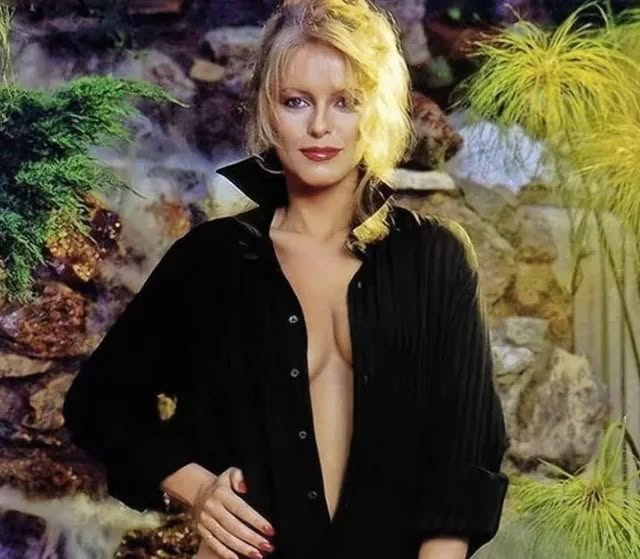
Cheryl Ladd’s life and career read like a classic Hollywood story—one shaped by talent, timing, perseverance, and an ability to grow beyond a single defining role.
While many remember her first and foremost as the golden-haired angel who replaced Farrah Fawcett on Charlie’s Angels, Cheryl Ladd’s journey stretches far beyond that iconic moment, encompassing music, television, film, theater, writing, and philanthropy.
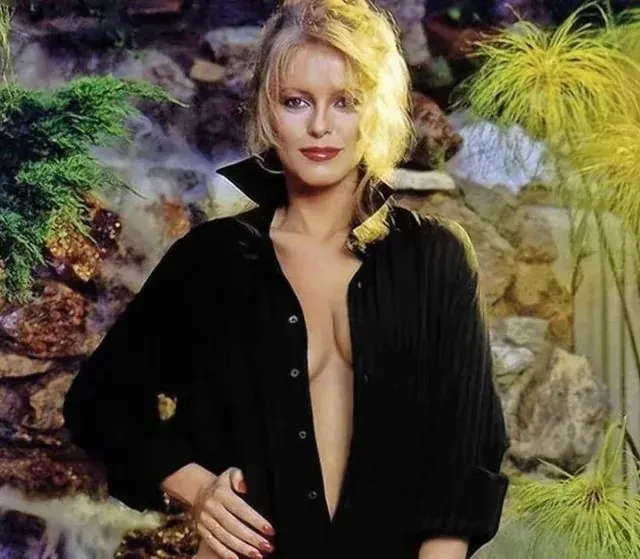
Cheryl Jean Stoppelmoor was born on July 12, 1951, in Huron, South Dakota, and raised in the nearby town of Garretson. Her upbringing was far removed from the glamour of Hollywood.
She grew up in a modest, close-knit Midwestern environment, one that emphasized discipline, hard work, and humility—qualities that would later help her navigate the often unforgiving entertainment industry.
From an early age, Ladd showed an interest in performing. She sang in a band called The Music Shop during her teenage years, gaining confidence on stage and discovering a love for music that would later resurface in her professional career.
After graduating high school, Ladd attended the University of South Dakota but soon realized her ambitions extended beyond academia.

In the early 1970s, she made the bold decision to move to Los Angeles, chasing the dream that countless hopeful performers shared. Like many newcomers, she started small, taking on voice work and minor roles.
One of her earliest professional breakthroughs came not from her face, but her voice—she provided the singing voice for Melody on the animated series Josie and the Pussycats, a job that showcased her vocal talent and helped her gain a foothold in the industry.
Ladd’s early on-screen appearances included guest roles on popular television shows such as Happy Days, The Partridge Family, and The Rookies. These roles helped her build experience and visibility, but nothing could have prepared her for the turning point that came in 1977.
When Farrah Fawcett left Charlie’s Angels at the height of its popularity, producers faced enormous pressure to find a replacement who could fill the void left by one of television’s biggest stars.

Casting Cheryl Ladd as Kris Munroe—Jill Munroe’s younger sister—was considered a risky move. Viewers were fiercely loyal to Fawcett, and many doubted anyone could step into her place.
Against the odds, Cheryl Ladd not only succeeded but thrived. She brought a different energy to the show—warm, approachable, athletic, and confident without trying to imitate her predecessor. Over time, audiences embraced her, and Charlie’s Angels continued to dominate ratings.
Ladd remained on the series from 1977 to 1981, becoming one of the show’s most enduring faces. The role transformed her into an international star and cemented her place in pop culture history.
During her Charlie’s Angels years, Ladd also pursued a parallel career in music. In 1978, she released her debut album, Cheryl Ladd, which included the hit single “Think It Over.” The song reached the Billboard Hot 100 and became a Top 40 hit, an impressive achievement that highlighted her versatility.

She went on to release additional albums, including Dance Forever and Take a Chance, and even performed on television specials and live tours. While music did not ultimately eclipse her acting career, it added another dimension to her public persona.
After Charlie’s Angels ended, Ladd made a conscious effort to avoid being typecast. She shifted her focus to television films, a medium that allowed her to take on more complex and dramatic roles.
Throughout the 1980s and 1990s, she became one of the most reliable and respected actresses in made-for-TV movies. She portrayed real-life figures, survivors, and women facing difficult circumstances in projects such as Grace Kelly, A Death in California, Nowhere to Hide, and Poison Ivy.
These performances earned her critical praise and demonstrated that she was far more than a glamorous action star.

Ladd also appeared in feature films, including Purple Hearts (1984), Millennium (1989), and Permanent Midnight (1998), showing a willingness to explore varied genres.
At the same time, she continued working steadily in television, making guest appearances on shows like NCIS, Las Vegas, Hope & Faith, and CSI: Miami. In later years, she found renewed visibility with recurring roles in series such as Unforgettable and Angie Tribeca.
Beyond acting and music, Cheryl Ladd expanded her creative reach as an author. In 1996, she published Token Chick: A Woman’s Guide to Golfing with the Boys, a humorous and insightful book inspired by her love of golf.
The book reflected her approachable personality and her comfort navigating male-dominated spaces—something she had been doing since the early days of her career.

Ladd has also been deeply involved in philanthropy, particularly in efforts to prevent child abuse. She has worked extensively with organizations such as Childhelp, using her platform to raise awareness and advocate for vulnerable children.
This commitment has remained a central part of her life, underscoring a legacy built not just on fame, but on compassion and responsibility.
In her personal life, Cheryl Ladd married actor David Ladd in 1973, with whom she had a daughter, Jordan Ladd, who later became an actress herself.
Although the marriage ended in divorce, Cheryl later found lasting happiness with music producer Brian Russell, whom she married in 1981.

Today, Cheryl Ladd stands as a symbol of longevity and adaptability in Hollywood. She navigated sudden fame, resisted being boxed into a single image, and continued evolving with grace.
From a small-town girl in South Dakota to a television icon and respected performer, her story is one of quiet determination, enduring talent, and a career that proved there is life—and depth—well beyond a single set of angel wings