
Like most young people, your favorite stars aren’t immune to having an odd job or two in their past. Like Beyoncé Knowles, who swept up hair in her mom’s salon for a bit of extra cash.
ByEthan Trex|Mar 11, 2024, 2:48 PM EDT
 Add us as a preferred source

For many teens, summer is synonymous with summer jobs. While lots of young people find work as lifeguards or camp counselors, just as many are forced off the beaten path to find their first paychecks. Don’t worry if you get stuck with an odd job that might not totally dovetail with your life goals, though. Lots of wildly successful celebrities have had some strange jobs before hitting it big. Here are just a few quirky vocations held by some of your favorite celebs:
1. Orlando Bloom‘s first job was working at a skeet shooting range as a clay pigeon trapper when he was just 13.
2. Beyonce Knowles‘s mother owned a salon when the future pop star was growing up, so the aspiring singer picked up some extra cash by sweeping up hair.
3. As a teenager Mick Jagger worked as an ice cream salesman. After entering the London School of Economics, Jagger also worked as a porter at a mental hospital.
4. Jagger wasn’t the only member of the band to have a gig before the Stones. Keith Richards worked as a ball boy at a tennis club.
5. It’s tough to envision Colin Powell as anything other than a general or diplomat, but when he was growing up in the Bronx, he worked in a baby furniture store. Powell even picked up a bit of Yiddish on the job since that was the preferred language of his employers.
6. Warren Buffett had cash going through his hands even as a young man; his first job was at his grandfather’s grocery store, although he eventually worked his way up to a gig at J.C. Penney.
7. Former NFL running back Edgerrin James had a particularly grueling summer job as a kid: he worked 16-hour days loading watermelons into a truck near his Florida home to save up the cash to buy his first car.
9. Of course, some early jobs predict the future rather well. Before rising to prominence with Black Sabbath, Ozzy Osbourne worked in a slaughterhouse.
10. As a young man, Matthew McConaughey wanted to get away from Texas for a while, so he spent a year in Australia. To support himself, he took on a number of jobs, including one that involved shoveling chicken manure.
11. When country star Clint Black was 14, he got a job selling newspaper subscriptions door-to-door in Houston.
12. Gwen Stefani earned some cash in her early days mopping floors at a local Dairy Queen.
13. Rod Stewart had a number of jobs before his music career took off, but gravedigger was undoubtedly the creepiest.
14. Need a rat catcher? Call Warren Beatty. He caught rodents to pay the bills before hitting it big.
15. Jimmy Stewart was a man of many talents, from acting to being an Air Force general. As a young man, though, he had a job painting the lines on roads and also spent two summers as a magician’s assistant.
16. James Brown had a number of jobs before he became the Godfather of Soul, including one in which he racked balls at a poolhall.
17. You never know how a weird job might pay off. Singer Chubby Checker had a job as a chicken plucker at Fresh Farm Poultry in Philly. His boss would let Checker sing to entertain the customers. When the boss realized just how talented his chicken plucker was, he arranged for Checker to have a recording session with Dick Clark.
19. Tom Cruise‘s family moved around a lot when he was young, but during one stint in Louisville he picked up some extra cash as a paperboy.
20. Ed McMahon knew his voice was going to be valuable early on. As a teenager he worked as a carnival barker and a bingo caller, and he later put himself through college working as a pitchman for vegetable slicers on the boardwalk in Atlantic City.
21. Bill Murray never worked as a greenskeeper, but he did have an interesting job selling chestnuts outside of a grocery store.
22. Brad Pitt did all sorts of things to earn a buck while he tried to start his acting career, including dressing as a giant chicken to promote an el Pollo Loco restaurant.
23. When Christopher Walken was a kid, he joined the circus. He took an unpaid job with a small act and even did a little lion taming, although he later claimed the lion was very old and “really more like a dog.”
This article originally appeared in 2009.
Related Tags
The Most Rat-Infested Cities in the U.S., Ranked
Did your city top the list of the most rat-infested in America?
Jun 2, 2026, 8:00 PM EDT

For as long as people have built cities, rats have found ways to move in right alongside them. They don’t bake you pies to welcome you to the neighborhood, pay taxes, contribute to the local economy, or appear on tourism sites, and yet, they’ve become permanent residents in many of America’s largest urban hubs.
While a rat sighting can be an unpleasant surprise, to say the least, it’s usually a symptom of a deeper issue. Crowded cities deliver the perfect recipe for rodent activity: lots of food, plenty of hiding places, and complex infrastructure that’s hard to monitor and maintain. As a result, some metropolitan areas have become known for combating far more than just traffic and rising housing costs.
Recent pest control data from MightyMite Termite Services reveals which U.S. cities face the biggest rodent challenges and why these unwelcome neighbors continue to flourish.
WHY CITIES ARE SO APPEALING TO RATS
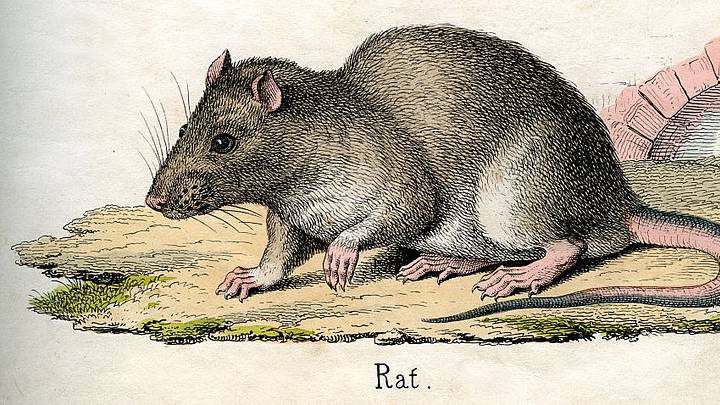
From a rat’s perspective, city life has its advantages.
Urban areas concentrate millions of people into relatively small spaces, creating a stream of food waste and countless opportunities for shelter. Restaurants, apartment buildings, alleyways, and underground systems all offer environments where these rodents can be incognito, for the most part.
Weather also plays a role in population growth. Longer warm seasons give rodents more opportunities to forage and reproduce, while dense development helps them find protection from the elements. Once established, rat populations can be difficult to control, since the resources they depend on are rarely scarce.
Basically, the same factors that make cities convenient for people also make them convenient for rats.
THE UNITED STATES OF RATS
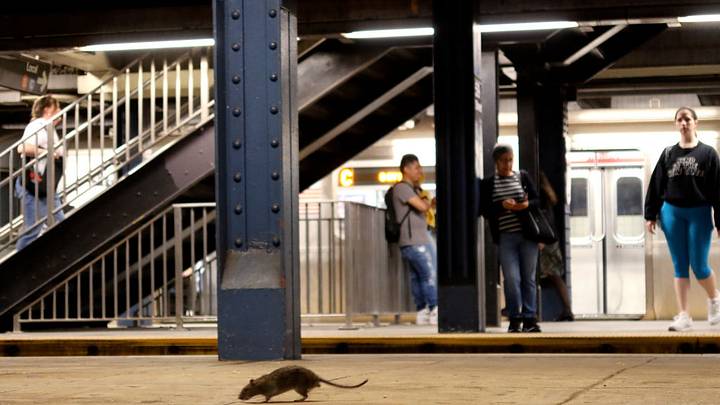
1. New York City, New York
At the top of the list is New York City: a place so closely associated with rats that the animals have become part of the city’s identity.
With an enormous population, tightly packed buildings, and a constant flow of food-related activity, New York offers rodents an environment packed with opportunity. The city’s size alone makes rodent management an ongoing challenge, securing its place at the top of the rankings.
2. Los Angeles, California
Los Angeles comes in second.
Unlike cities with long periods of cold weather, Los Angeles enjoys a climate that allows rodents to stay active most of the year. Combined with its sprawling cityscape and high population density, the region provides countless places for rats to find food, shelter, and nesting sites.
3. San Francisco, Oakland, San Jose, California (Bay Area)
The Bay Area rounds out the top three.
As one of the country’s largest metropolitan regions, it combines compact urban development with extensive infrastructure and commercial activity. These conditions create ideal circumstances for rodents seeking reliable access to food and protection, making the area a consistent fixture on rodent-watch lists.
THE TOP 10, CONTINUED
4. Philadelphia, Pennsylvania
5. Chicago, Illinois
6. Washington, D.C.
7. Houston, Texas
8. Dallas-Fort Worth, Texas
9. Boston, Massachusetts
10. Atlanta, Georgia
Several other metropolitan areas also appear on the broader list, including Sacramento, Stockton, Modesto, Seattle, San Diego, Portland, Palm Springs, and Monterey.
Although these cities vary in size, geography, and climate, they share a common obstacle: creating urban environments that are less attractive to rodent populations.
URBAN RAT-VIVAL
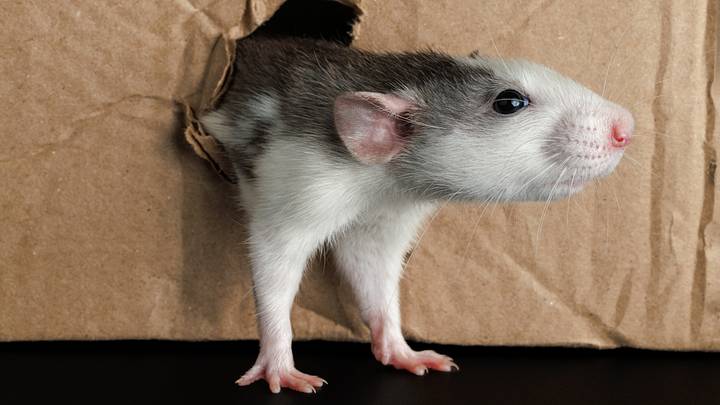
Rats have spent centuries adapting to human activity, and that adaptability keeps them a step ahead in the rat race. As cities grow and evolve, so too will rodents, continuing to find new ways to exploit the resources around them.
The bright spot in all of this data is that communities are not without options. Improved sanitation, responsible waste disposal, routine property maintenance, and proactive pest management can all help limit infestations. But as long as cities provide food, water, and shelter, rodents will keep looking for a place to call home.