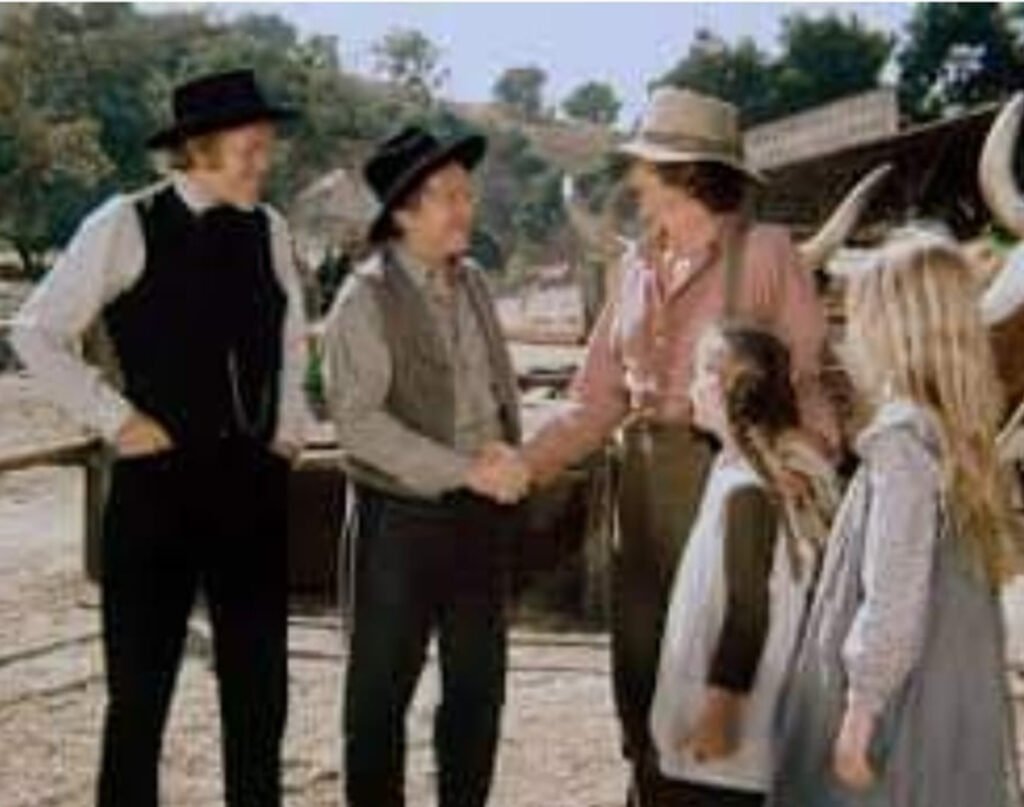
The quote—“Dad said he was happy to live along the banks of Plum Creek because he’d harvested a mass here that he didn’t know he’d sown… a mass of friends”—beautifully captures a central theme of pioneer life: the unexpected rewards of kindness, community, and shared hardship. It echoes the spirit found in Little House on the Prairie and particularly in On the Banks of Plum Creek, where life on the frontier was defined not just by survival, but by human connection.
The Meaning Behind the Quote
At its heart, this reflection speaks about “sowing” without expectation. The father figure—representative of pioneers like Charles Ingalls—did not set out deliberately to build a network of friendships. Instead, through everyday actions—helping neighbors, sharing resources, offering kindness—he unknowingly planted seeds. Over time, those seeds grew into meaningful relationships.
The metaphor of “harvesting” suggests that life often returns what we give, but not always in ways we anticipate. Rather than material wealth, the true reward became a “mass of friends”—a rich, emotional prosperity rooted in trust and mutual support.
Life on the Frontier
Living along Plum Creek, as described in the world of Laura Ingalls Wilder, was not easy. Families faced isolation, harsh weather, and uncertainty. In such an environment, friendships were not just pleasant—they were essential. Neighbors helped each other build homes, gather food, and endure long winters.
This context gives deeper meaning to the quote. Friendship wasn’t a luxury; it was a lifeline. The bonds formed were often stronger because they were built through shared struggle and cooperation.
A Universal Life Lesson
Though rooted in a historical setting, the message extends far beyond pioneer days. In modern life, people often focus on measurable success—career achievements, financial gain, or recognition. Yet this quote reminds us that some of life’s greatest rewards come quietly, through relationships we nurture without even realizing it.
It suggests:
- Kindness has long-term value, even when it seems small.
- Community grows organically from genuine actions.
- The richest “harvest” in life may be emotional rather than material.
Reflection on Human Connection
The idea of gaining “a mass of friends” without consciously seeking them speaks to authenticity. When people act with sincerity—helping others, being present, contributing to a community—they naturally attract meaningful connections.
In a world that can sometimes feel disconnected, this message is especially relevant. It encourages slowing down, investing in relationships, and recognizing that the simple act of being a good neighbor or friend can shape a fulfilling life.
Conclusion
This quote offers a quiet but powerful philosophy: live generously, act kindly, and don’t always expect immediate returns. Over time, life has a way of giving back—often in forms more valuable than we imagined.
Like the pioneers along Plum Creek, we may discover that what we’ve truly built is not just a life, but a community—and that may be the greatest success of all.