
Everyone from Bram Stoker to Harper Lee has discarded out a title or two and come up with something better.
ByStacy Conradt|Dec 8, 2023, 11:40 AM EST
 Add us as a preferred source

Remember when your high school reading list included Atticus, Fiesta, and The Last Man in Europe? You will once you see what these books were renamed before they hit bookshelves.
1. The Great Gatsby
F. Scott Fitzgerald went through quite a few titles for his most well-known book before deciding on The Great Gatsby. If he hadn’t arrived at that title, high school kids would be pondering the themes of Trimalchio in West Egg, or Among Ash-Heaps and Millionaires, or On the Road to West Egg, or Under the Red, White, and Blue, or Gold-Hatted Gatsby, or The High-Bouncing Lover. Just weeks before publication, he cabled his publisher “CRAZY ABOUT TITLE UNDER THE RED WHITE AND BLUE STOP [WHAT] WOULD DELAY BE.” But he was talked out of it.
The author would later say of the Gatsby title, “It’s O.K. but my heart tells me I should have named it Trimalchio … Gatsby is too much like Babbit and The Great Gatsby is weak because there’s no emphasis even ironically on his greatness or lack of it. However let it pass.”
2. 1984
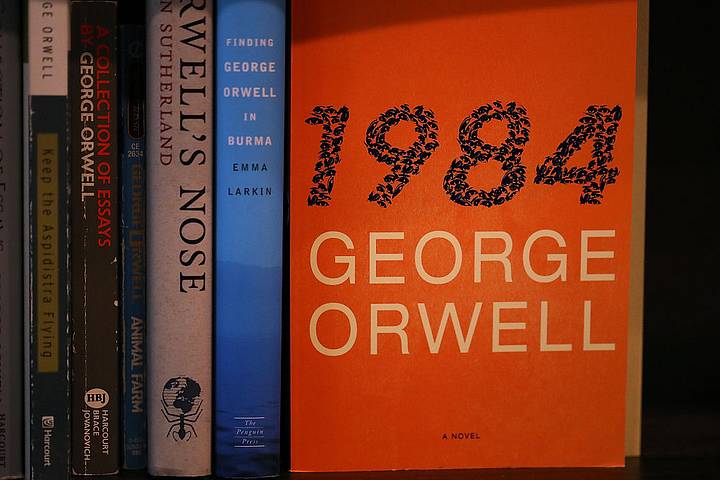
George Orwell’s publisher didn’t feel the title to the author’s novel, The Last Man in Europe, was terribly commercial. He recommended using the other title Orwell had been kicking around—1984.
3. Atlas Shrugged
Ayn Rand referred to her magnum opus as The Strike for quite some time. In 1956, a year before the book was released, she decided the title gave away too much plot detail. Her husband suggested Atlas Shrugged—then a chapter title—and it stuck.
4. Dracula
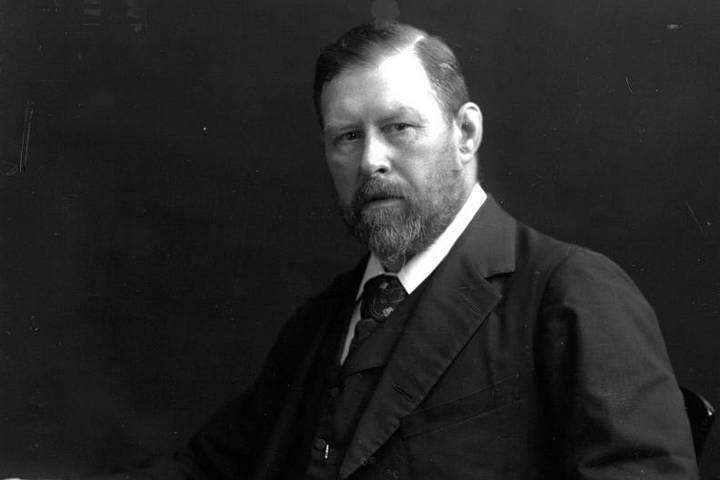
The working title of Bram Stoker’s famous Gothic novel sounded more like a spoof: He changed The Dead Un-Dead to The Undead before he landed on Dracula.
5. The Sun Also Rises
Ernest Hemingway’s original title for his 1926 novel—Fiesta—was used for foreign editions, but the American English version was called The Sun Also Rises. Another supposed candidate was “For in much wisdom is much grief and he that increases knowlege [sic] increaseth sorrow.”
6. Catch-22
Author Joseph Heller wanted to name his story Catch-18, but Leon Uris’s novel Mila 18—released the previous year—made editor Robert Gottlieb want to change the title. He and Heller looked into Catch-11, but because the original Ocean’s Eleven movie was newly in theaters, it was scrapped to avoid confusion. After toying with other numbers, his editor decided on 22.
7.To Kill a Mockingbird

To Kill a Mockingbird was titled Go Set a Watchman when Harper Lee first submitted it to her publishers. Next, she changed the title to Atticus before deciding that the title focused too narrowly on one character. The final novel was substantially different than her first draft; Go Set a Watchman was eventually published when Lee was 89 years old.
8. Pride and Prejudice
An apt precursor to the title Jane Austen finally decided on for her most beloved novel was First Impressions (it’s been proposed that a name change was needed because Margaret Holford published a novel called First Impressions; or the Portrait).
9. The Secret Garden
Mistress Mary (nowadays better known as Mary, Mary), “quite contrary, how does your garden grow?” Secretly, apparently. Mistress Mary, taken from the classic nursery rhyme, was the working title for Frances Hodgson Burnett’s The Secret Garden.
10. Of Mice and Men
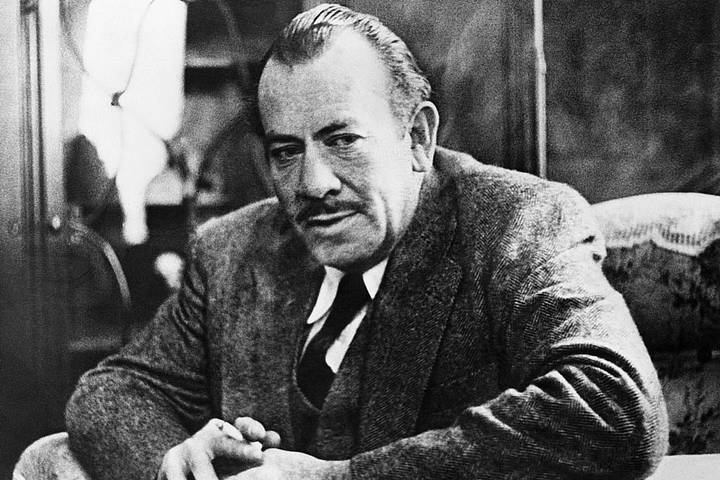
John Steinbeck originally called his novella—which was published in 1937—Something That Happened. A Robert Burns poem supplied the title Steinbeck eventually used.
A version of this story ran in 2010; it has been updated for 2023.
Related Tags
How a Ball of Thread Gave Us the Word “Clue”
Every mystery has its clues, but the word itself has a mystery to solve: how did a simple ball of thread become a symbol of discovery?
ByChris Wheatley|Jul 30, 2026, 12:00 PM EDT

Those who delight in language will find no greater joy than diving into the etymology of a word or saying to see what treasures might unravel. When it comes to the word “clue,” there’s a lot to discover. These days, of course, “clue” crops up everywhere, from the long-running and hugely popular board game of the same name to detective shows such as Sherlock and crime fiction, which remains one of the most successful genres of literature. But where does the word come from?
A Word With a Tangled History
Our first point of call is the Old English language. Clue derives from the word “clew” as used by Shakespeare in his play All’s Well That Ends Well, which was first published in 1623. Clew referred to a ball of string or thread.
So how do we get from a ball of string to a helpful piece of evidence? Well, we have to journey even further back in time to ancient Greece and the myth of King Minos and the Cretan Bull.
The Monster, the Maze, and the Minotaur
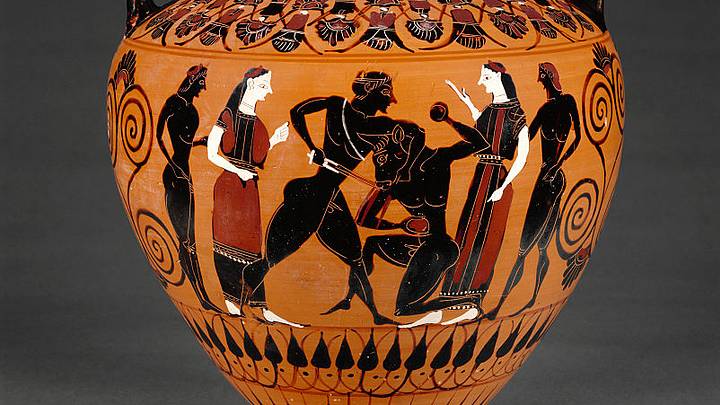
As the myth tells, Minos was King of Crete, but he was, apparently, a little insecure. He prayed to the god Poseidon to send him a sign that he was indeed fit to be king. In answer, Poseidon gifted Minos a magnificent white bull, on condition that said bull would be sacrificed in Poseidon’s honor. Minos, unwisely, decided he’d rather keep the bull, and sacrificed another in its place.
Understandably annoyed, Poseidon cursed Minos’ wife, Pasiphaë, to fall in love with the white bull. Pasiphaë and the bull produced a child, the half-man, half-bull Minotaur. The white Cretan bull subsequently went on a rampage throughout the land.
Enter Heracles (often referred to as Hercules) and his seven labors, as set by the gods. Heracles was given the task of capturing the Cretan bull, which he duly accomplished. The bull was sent to Eurystheus; however, it broke free and hot-footed (hooved?) it to Marathon near Athens.
Fast forward a little, and Androgeus, son of King Minos and Pasiphaë, enters the games held by the King of Athens. Androgeus wins all of the events, but the Cretan bull breaks free from its pen and tramples Androgeus to death.
In retribution, King Minos conquers Athens and commands the architect Daedalus to build an underground labyrinth, in which he houses the Minotaur. Minos then decrees that, every nine years, seven Athenian men and seven Athenian women must be sent to the labyrinth, where they will die at the hands of the beast.
The Thread That Solved a Mystery
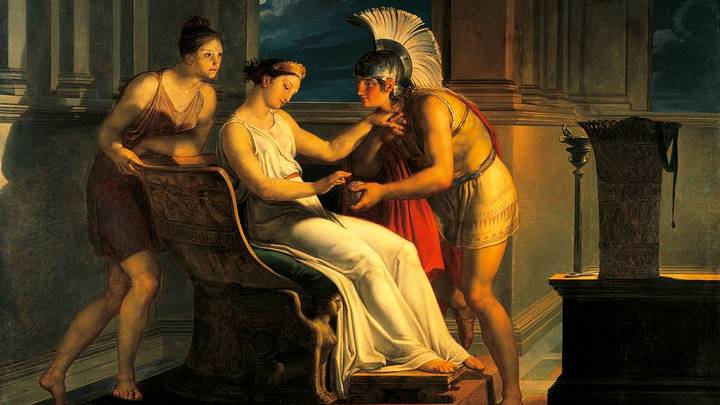
When the Athenian, Theseus, is chosen to be sacrificed, King Minos’ daughter, Ariadne, takes pity on him and offers him thread, which Theseus takes with him into the labyrinth. Theseus cleverly ties one end of the string to the door to the labyrinth. After killing the Minotaur, he successfully finds his way back out by following the thread.
Thread becomes clew which becomes clue. A satisfying linguistic tale from start to finish.
Next: Join Mental Floss’s Geography Quiz Competition
More Like This:
•
9 Slang Words From the 1980s We Still Use Today
•
75 Terribly Tricky Tongue Twisters to Test Your Talking
•
15 Slang Words From the 1970s We Still Use Today
•
8 Old West Slang Words That Deserve a Cowboy Comeback
•
8 Expressions Our Grandparents Used That Are Disappearing
9 of the Most Devastating Love Confessions in Literature
These timeless lines have captured the beauty, pain, and desperation of the human heart for centuries.
ByLogan DeLoye|Jul 24, 2026, 10:00 AM EDT

Love.
Synonymous with affection, devotion, and fulfillment, but also heartbreak and longing. These feelings, along with countless others attached to the abstract, have sparked some of the most intense and sincere lines in literature.
Capturing love within the pages of a novel or the lines of a poem is no modest undertaking. When done exceptionally well, it blurs time and continues to move readers centuries later, unveiling a force, of sorts, that knows no bounds, not even death.
Many of these lines were penned in eras when acts and terms of endearment differed extensively from our own. Yet they all speak to the universal truth that is love.
THE AUTHORS
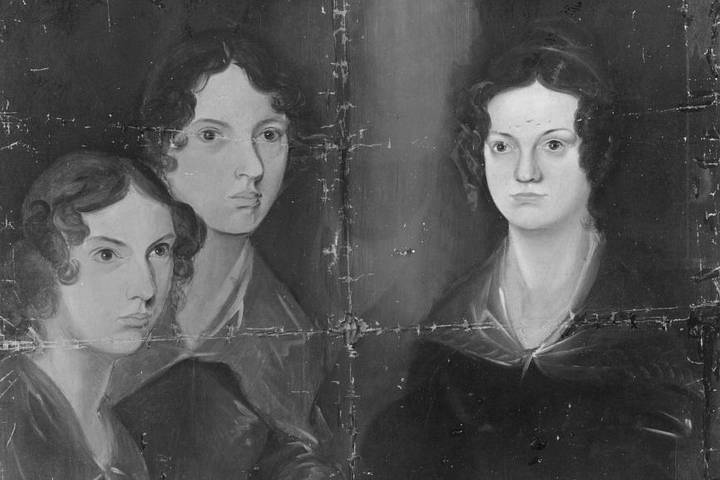
The Brontë sisters spared no detail in the depth of love’s pain, while Jane Austen poked fun at serious themes such as security and social standing.
John Keats endured family tragedy, financial hardship, and the muddled passion of an unfulfilled love that contributed to his understanding of romance. Franz Kafka, too, struggled with personal demons, wrote somber stories, and poured his heart into a love-letter affair with a married woman named Milena.
Edith Wharton, whose words often critiqued the restrictive nature of high society, entered into a tumultuous marriage that ended in divorce, and was also involved in a love affair with a journalist.
Madeline Miller, the most contemporary author featured among these confessions, writes fictional, fantasy tales about the consuming complexity of love and explores emotional connection through intimate narratives.
These personal experiences remind us that, while universally felt, love finds its way into each heart differently and is distinctively expressed. Though these expressions take new forms with each passing era, the feeling itself lives on, and so does the sorrow that occasionally accompanies it.
Here are nine of the most devastating love confessions in literature.
THE MOST DEVASTATING LOVE CONFESSIONS IN LITERATURE
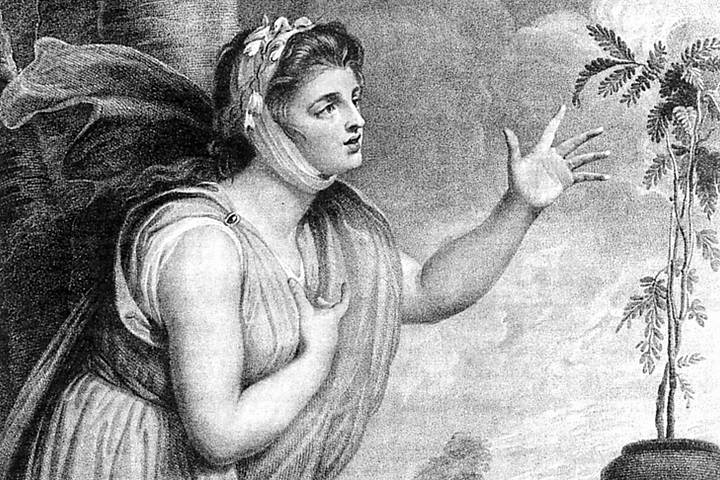
“If I loved you less, I might be able to talk about it more.” – Jane Austen, Emma
“I could recognize him by touch alone, by smell; I would know him blind, by the way his breaths came, and his feet struck the Earth. I would know him in death, at the end of the world.” -Madeline Miller, The Song of Achilles
“He is more myself than I am. Whatever our souls are made of, his and mine are the same.” Emily Brontë, Wuthering Heights
“My love has made me selfish. I cannot exist without you. You have absorbed me. I have a sensation at the present moment as though I was dissolving… Love is my religion; I could die for that. I could die for you.” John Keats, Bright Star: Love Letters and Poems of John Keats to Fanny Browne
“You pierce my soul. I am half agony, half hope. I have loved none but you,” -Jane Austen, Persuasion
“You are the knife I turn inside myself; this is love. This, my dear, is love.” -Franz Kafka, Letters to Milena
“Milena, if a million loved you, I am one of them, and if one loved you it was me, if no one loved you then know that I am dead.” -Franz Kafka, Letters to Milena
“Each time, you happen to me all over again.” -Edith Wharton, The Age of Innocence
“In vain I have struggled. It will not do. My feelings will not be repressed. You must allow me to tell you how ardently I admire and love you.” -Jane Austen, Pride and Prejudice
More About Love in Literature:
•
10 of the Greatest Love Stories in Novels
•
5 Iconic Romantic Tropes We Owe to Shakespeare
•
7 of the Most Scandalous Romantic Plot Twists in Classic Literature
Why Do We Use the Phrase “Elephant in the Room”?
Why elephants? The familiar idiom formed over more than a century, drawing on philosophy, literature, and a Russian fable.
ByPaul Anthony Jones|Jul 27, 2026, 2:00 PM EDT

If there’s an obvious problem or issue that no one is willing to acknowledge or discuss—especially although doing so would likely solve all other smaller or less serious issues—then there is a proverbial “elephant in the room.” But why do we call it that?
For such a quirky turn of phrase, perhaps it’s surprising that the original elephant in the room seems to have first emerged among some rather serious discussions of philosophy, metaphysics, and logical reasoning in the early 20th century—although back then, it wasn’t quite used in the same way as it is today.
The Philosophical Elephant
The Oxford English Dictionary has recently updated its earliest proverbially unacknowledged “elephant in the room” to 1935, when the American philosopher and psychologist Professor Harry Todd Costello (a one-time assistant of Bertrand Russell) published an essay entitled “A Philosopher Among the Metaphysicians.” In discussing the difference between how scientific and metaphysical minds deal with the observable and the unobservable (and therefore the knowable and the unknowable), Costello wrote that:
“If I say that there is something in my room which looks like a chair when I look at it, that is science; but if I assert it is still there when I look the other way, that is mere speculation. Let us remember, also, that it is going beyond observation to assert there is not an elephant in the room, for I cannot observe what is not.”
Tellingly, Costello’s phrasing here (“Let us remember…”) suggests that using a metaphysically invisible elephant in a room as an example of an unknowable truth must have already been an established metaphor in discussions like this in turn-of-the-last-century philosophy. Digging a little deeper, ultimately, we can take this rather peculiar expression even further back in time.
The Older Fables and Jokes
It’s certainly true, for instance, that elephants were being used as the punchline of jokes in the early 1900s that played on their obvious size and unavoidability. An 1882 short story by Mark Twain, entitled The Stolen White Elephant, might also be partly to blame for establishing an elephant as a metaphor for something so large that it should be impossible to ignore, lose, or go unseen.
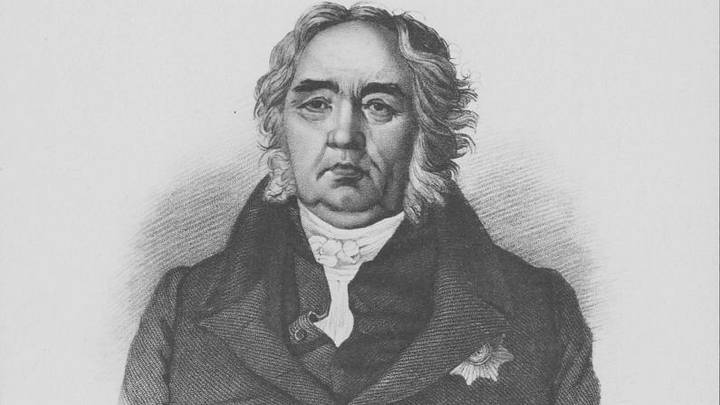
Earliest of all, though, is a fable titled The Inquisitive Man, written by the Russian author and fabulist Ivan Krylov way back in 1814. In the story, a man is heard commenting on all the wonderful things he has seen at a local museum, including “flies, butterflies, cockroaches, little bits of beetles” and all kinds of incredible things “smaller than a pin’s head.” When asked what he thought of the museum’s display of a gargantuan elephant, however, the man replies that he didn’t see it.
Clearly, long before Costello popularized the visible/invisible elephant in the room among the philosophical discussions of the early 1900s, jokes and tales like Krylov’s had already long established it as a metaphor for something so comically immense and unavoidable that failing or being unable to see it—and therefore, in Costello’s writing, to refuse to acknowledge its existence—was utterly ridiculous.
The Modern Shift
Throughout the later 20th century, though, it seems the proverbial elephant in the room remained largely confined to philosophical discussions like Costello’s—defined by the OED as “something obvious and incongruous … which may or may not correspond to observable facts”—until the 1980s, by which time the phrase seems to have become established enough in the language to finally pick up the looser, more general use it still has today.
In this context, referring to something glaringly obvious that is being intentionally ignored, it was memorably used in the title of a best-selling 1984 book, An Elephant in the Living Room, about children living with alcoholic parents, and it was likely this that helped to further popularize the expression as it is in our language today.
Next: Join Mental Floss’s Geography Quiz Competition
More Like This:
•
Why Is Guy Fawkes Associated With the Anonymous Mask?
•
Why Don’t All U.S. States Observe Daylight Saving Time?
•
•
Why Do We Put Up Halloween Decorations?
•
Why Do We Scream When We’re Scared?