ByJake Rossen|Nov 26, 2020, 5:00 AM EST
 Add us as a preferred source
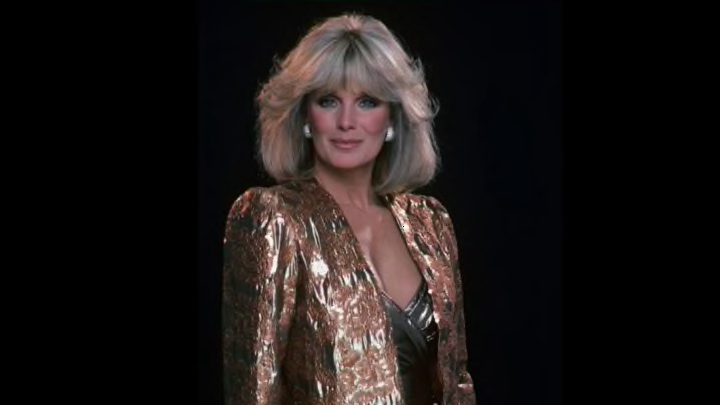
At some point in the 1980s, a mandate was handed down from CBS network executives concerned about the excesses of the costume designers on their hit primetime soap Dynasty. Specifically, they wanted stars Linda Evans and Joan Collins to stop wearing shoulder pads, the rigid foam accessory that gave their profiles a distinctive V-shaped appearance.
Word quickly came back to CBS: Defiantly, Evans and Collins would not be shedding their pads. According to Nolan Miller, the show’s costume designer, the stars “almost mutinied.” Their exaggerated shoulders were there to stay.
For most of that decade, shoulder pads were as ubiquitous a fashion statement as neon colors and Ray-Bans. Though American women might not have gone for as severe and steep a postural precipice as the Dynasty stars, the pads were nonetheless emblematic of the era. Pitted against chauvinistic attitudes about women in the workplace, feminine style took on a physically assertive stature. But that idea didn’t originate with television stars. It was rooted in a response to the domestic work crisis during World War II.
From protective gear to feminist wear

Before the war, shoulder pads were perceived as a glamorous but impractical clothing flourish or as part of protective football gear. In 1931, Italian designer Elsa Schiaparelli showcased high fashion styles with the look, the purported result of being influenced by surrealist artwork. So did fellow designer Marcel Rochas. But international evolution was slow to make it to the States.
It wasn’t until costume designer Adrian Adolph Greenburg dressed actress Joan Crawford in a stylish padded look for films like 1932’s Letty Lynton all the way through 1945’s Mildred Pierce that the wide-profile approach drew national attention. (It’s believed that Greenburg was struck with inspiration at the sight of Crawford’s large shoulders, and opted to accentuate rather than try to hide them.)
That admiration gave way to purpose when women began taking on new roles in the domestic labor scene. With men fighting overseas, women took to the pads as a way to better assimilate into a physical world. Their silhouettes became more angular, more defined, and broader—a subversive announcement that their role was professional and equitable. With shoulders raised to meet those in a padded men’s suit, the pads worked to establish conformity in the workplace.
With resources during wartime scarce, these pads were often made of wool, cotton, or even sawdust. But as the war wound down and men began returning to their old work roles, the pads lost much of their utilitarian purpose. Shoulders began to slope once more.
Shoulder heights rise again in the ’80s

Because fashion is often cyclical, it wouldn’t take another global conflict for shoulder pads to rise again. Designer Norma Kamali was reported to have reintroduced them into casual daywear in 1980. Coupled with the decade’s newfound edicts of material wealth and gender equality, the pads surged in popularity. Women’s attire was once again squared off. This time, it wasn’t just about office appearance. Designers saw potential in the ability of the pads to reform the female body, making the waist appear smaller and even helping to make up for bad posture. Some were even customizable. On Dynasty, Linda Evans and Joan Collins each had unique pads. Evans preferred a thicker foam, while Collins hated them touching her neck.
The pads were not without controversy. Some blouses were designed for pads and sold without them, necessitating an additional purchase in order to prevent the clothing from sagging. Unless they were sewn in, the pads could easily become dislodged, creating peculiar anomalies as they slid down the arms or torso. Purse straps could shift their position. And if a person wasn’t careful, they ran the risk of doubling or tripling up on the pads, with a layer each in a blouse, sweater, and jacket. The resulting puff threatened to brush their earlobes.
Thanks in part to the influence of celebrities and even Prime Minister Margaret Thatcher, who favored the look, the power pad trend endured for most of the ‘80s but disappeared along with much of that decade’s ostentatiousness by the 1990s. While they still make periodic comebacks on fashion runaways, foam shoulder enhancement is now considered poor form.
Quiz: Can You Name the Halloween Costume From These Three Clues?
See how many classic costumes you can construct before the clock runs out.
ByNitya Rao|Oct 28, 2026, 7:00 PM EDT
Anyone can copy a Halloween costume with the right reference photo, but can you assemble one in reverse from just a handful of random accessories? From wand-wielding wizards to iconic movie monsters, someone, somewhere, has worn it all. Now it’s your turn to put your costume designer hat on and see how quickly you can build a costume from three key components and sheer creativity. Put your pop culture memory and Halloween fashion sense to the test below.https://www.sporcle.com/framed/?v=10&pm&gid=41faab33X4&fid=6ae23fc6d6f32
More Halloween Quizzes:
•
Quiz: Is This a Lyric From “Monster Mash” or “Spooky, Scary Skeletons”?
•
Quiz: Can You Name the ’90s Horror Movie From Its Final Girl?
•
Quiz: Can You Match These TV Witches to Their Shows Without Getting Hexed?
•
Quiz: Can You Finish These Spine-Chilling Literary Titles?
How did your styling session go? Are you ready to open your Spirit Halloween franchise, or did some of those clues leave you (or at least your hypothetical Halloween Sim) naked and afraid? Whether you nailed every look on the first try or had to call it quits after the third ambiguous cape, challenge a fellow Halloween fanatic to see if they can beat your score!
The Most Popular Halloween Costumes Through the Decades
If piecing together costumes from random props made you realize just how deeply pop culture is embedded in our October traditions, take a look at how Halloween fashion has evolved over the last century (according to The Daily Meal):
1920s: Clowns, Witches & Farmers
As trick-or-treating started gaining traction, homemade costumes like witches, farmers, and the Pierrot clown—complete with iconic black-and-white face paint—became instant classics.
1930s: Mickey & Minnie Mouse
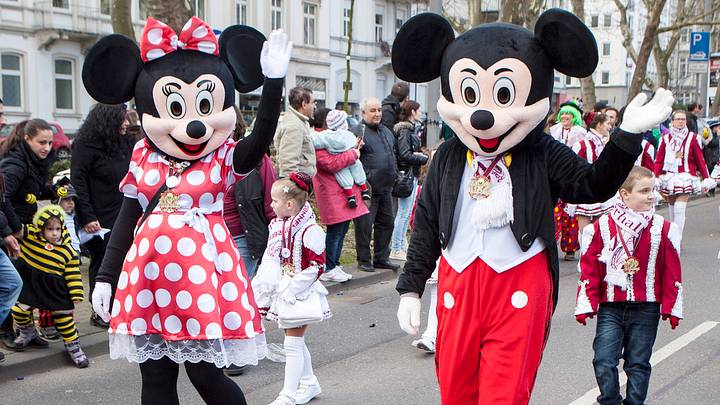
Mass-produced costumes hit the scene thanks to Ben Cooper after landing a major Disney license. Kids could easily transform into Mickey, Minnie, and Snow White in simple slip dresses and rubber masks right alongside traditional ghosts and goblins.
1940s: Witches & Cats
With the rise of pinup culture, classic costumes like witches and cats got a flirty makeover featuring things like fishnet stockings, dark makeup, and shorter hemlines.
1950s: Hula Dancers & Cowboys

Years before Hawaii officially became a U.S. state in 1959, a postwar hyperfixation on all things tiki and luau took over the country. Combined with the massive popularity of Western films, this inspired hibiscus prints, grass skirts, and cowboy hats to join the mix of spookier characters on Halloween night.
1960s: Superheroes
Comic book icons like Superman, Batman, and Catwoman surveyed the streets as rubber masks and capes made cosplaying your favorite crime-fighter easy.
1970s: Peanuts & Star Wars
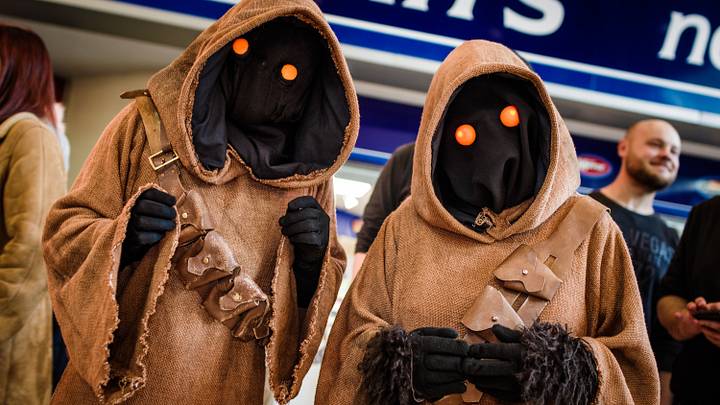
TV, cartoons, and pop culture ruled the decade, with trick-or-treaters sporting plastic masks and ’70s staples to emulate the Peanuts gang, Star Wars characters, and Charlie’s Angels.
1980s: Elvira & Hulk Hogan
Higher-budget costumes let fans lean hard into pop culture on Halloween, whether channeling vampy Elvira hairdos, Hulk Hogan onesies, or slasher villains like Freddy Krueger and Michael Myers.
1990s: Power Rangers & The Simpsons
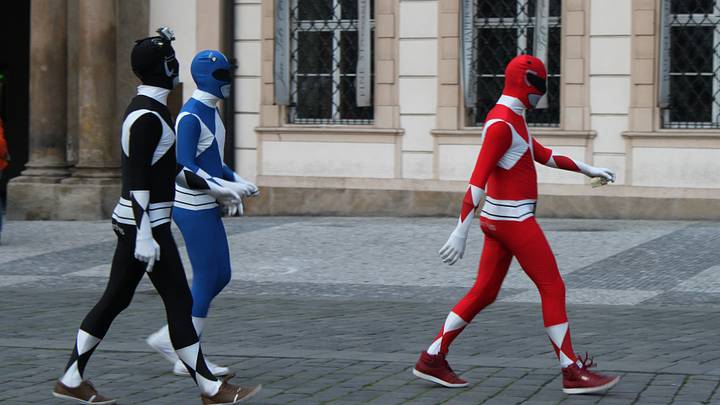
The Mighty Morphin Power Rangers, Teenage Mutant Ninja Turtles, and The Simpsons were the easy answers to the group costume dilemma. Think colorful nylon onesies, yellow face paint, and many, many masks.
2000s: Y2K Stars & Harry Potter
Halloween costume inspiration shifted toward real-life Y2K icons like Britney Spears and Michael Jackson, with just as many fantasy favorites like Harry Potter and SpongeBob SquarePants down the block.
2010s: Frozen & Pop Culture
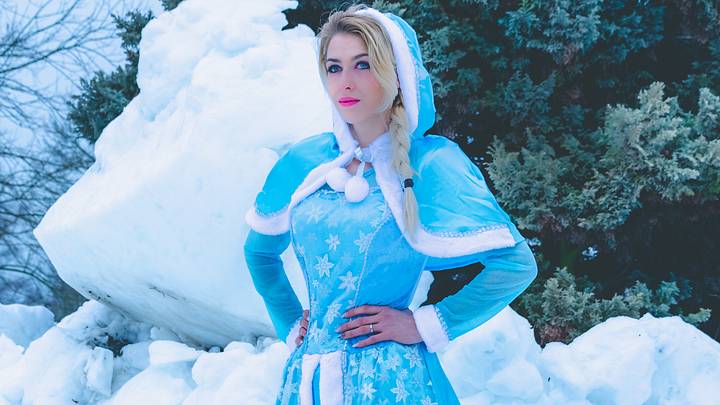
Elsa, Anna, and Marvel heroes reigned supreme amongst the new generation of trick-or-treaters. The digital era also saw the rise of meme costumes and political election outfits featuring even more uncanny valley face masks.
If you love testing your pop culture trivia and Halloween knowledge, check out the Mental Floss quiz page daily for more spooky challenges.
The countdown to Halloween is on, and we’re challenging our readers here at Mental Floss with our Trick or Trivia quiz giveaway. For 13 nights between October 19-31, we’re putting your knowledge of all things spooky to the test. Think you know Halloween? Take at least one quiz and enter to be in the running to win a $200 Barnes & Noble gift card.
More Halloween Reads:
•
•
What Was Trick-or-Treating Like in the 1950s?
•
What the Night Before Halloween Is Called Across America, Mapped
•
Why Do Werewolves Transform During a Full Moon?
•
Why Do Vampires Sleep in Coffins?
The Artist Who Taught Bob Ross His Famous Painting Technique
Before Bob Ross painted happy little trees, he learned his famous wet-on-wet technique from a German art master.
ByChris Wheatley|Oct 28, 2026, 2:00 PM EDT
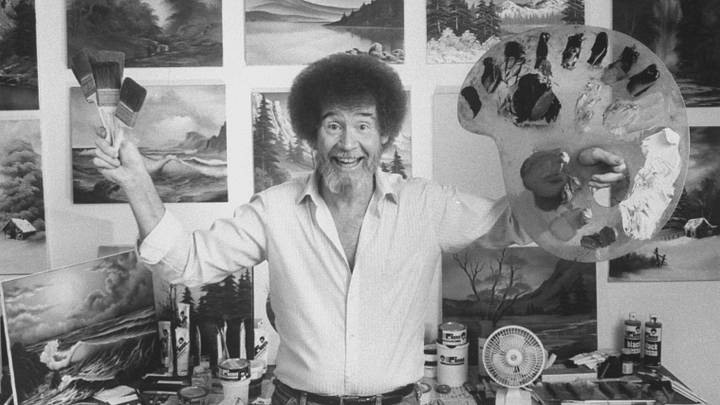
One of the undeniably positive effects of the TikTok era is that, through the vague mysteries of the “algorithm,” fresh generations have been introduced to the soothing talents of painter Bob Ross. Born in 1942 in Daytona Beach, Florida, Ross served as a master sergeant in the United States Air Force, but it was later, when he began working as an art tutor, that his passion for painting propelled him to modest fame.
Becoming Bob Ross
It was one of his pupils, a lady named Annette Kowalski, who first saw possibilities for Ross beyond the classroom. Together with her husband, Walt, Ross, and Ross’ wife, a new company, Bob Ross Inc., was created with Bob as the star. In 1982, Ross taped a pilot for a simple show—just him in front of the camera, painting a landscape whilst offering advice. Broadcast on the tiny station, WNVC, in Falls Church, Virginia, dozens of PBS stations were soon eager to sign him up.
Ross eventually went with WIPB in Muncie, Indiana, where his show, The Joy of Painting, ran from 1983 to 1994. With his distinctive permed hairstyle and soft, welcoming voice, Ross was able to create a warm, comforting atmosphere that appealed even to non-artists.
The Original Master
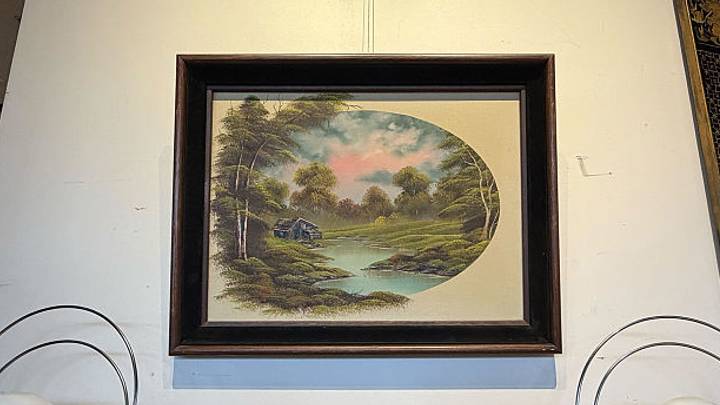
What many people don’t know is that Ross’ techniques and style were not wholly original. Ross had been working as a bartender when he happened upon a television show titled The Magic of Oil Painting, which was hosted by the German painter, William “Bill'” Alexander. Born in Berlin in 1915, Alexander later emigrated to America, where he began hosting shows and writing books on art. He specialized in the alla prima or wet-on-wet technique. Dating back to the 15th century, this approach allowed for a single canvas to be finished in less than half an hour.
Following his retirement from the Air Force, Ross sought out Alexander and studied under him. He even joined Alexander’s company—Alexander Magic Art Supplies—and was acting as a travelling instructor and salesman for this establishment when he first met Annette Kowalski.
A Bitter Rift
Although in the very first episode of The Joy of Painting, Ross fully acknowledged Alexander’s teaching, his rising fame evidently caused friction between the two men. Alexander felt that Ross had leaped to success on the back of his own career. In a 1991 interview, he said of Ross: “He betrayed me.”
Whilst the truth is that neither man can fairly lay claim to have invented the wet-on-wet technique, it’s sad to think that they ended up in animosity. Ross sadly passed in 1995, a year after the final episode of The Joy of Painting was aired.
Read More:
•
The Artist Who Taught Bob Ross His Famous Painting Technique
•
The 10 Most Expensive Picasso Paintings Ever Sold, Ranked
•
The Personal Tragedy Behind Picasso’s Blue Period
•
The Best Indigenous Peoples’ Day Trivia Questions to Reframe How You See American History
•
Why “Gothic” Was Originally an Insult
The Spookiest Star Signs, Ranked By Horror Movie Villains
It turns out some zodiac signs are far deadlier than others—at least on screen.
ByNitya Rao|Oct 27, 2026, 4:00 PM EDT
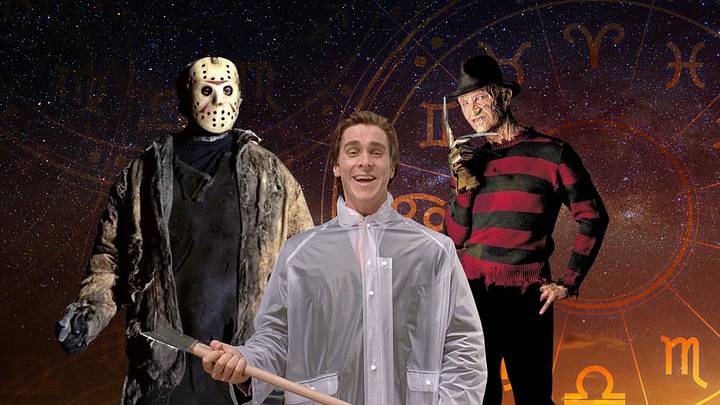
Have you ever watched a horror movie and realized its antagonist was suspiciously similar to the villain in your own story? Whether it’s the strategic Scorpio mind games or the infamous Gemini two-faced tendencies, some red flags feel like they were written in the stars. But can your birth chart actually predict your evil twin on the silver screen?
Doing the Monster Math
There are 12 zodiac signs: Aries (March 21 – April 19), Taurus (April 20 – May 20), Gemini (May 21 – June 20), Cancer (June 21 – July 22), Leo (July 23 – August 22), Virgo (August 23 – September 22), Libra (September 23 – October 22), Scorpio (October 23 – November 21), Sagittarius (November 22 – December 21), Capricorn (December 22 – January 19), Aquarius (January 20 – February 18), and Pisces (February 19 – March 20).
There are also countless horror characters who wear their signs on their sleeves—from the charmingly polite Libra facade of Norman Bates to the spotlight-stealing, Leo spectacles of Jack Torrance at the Overlook Hotel.
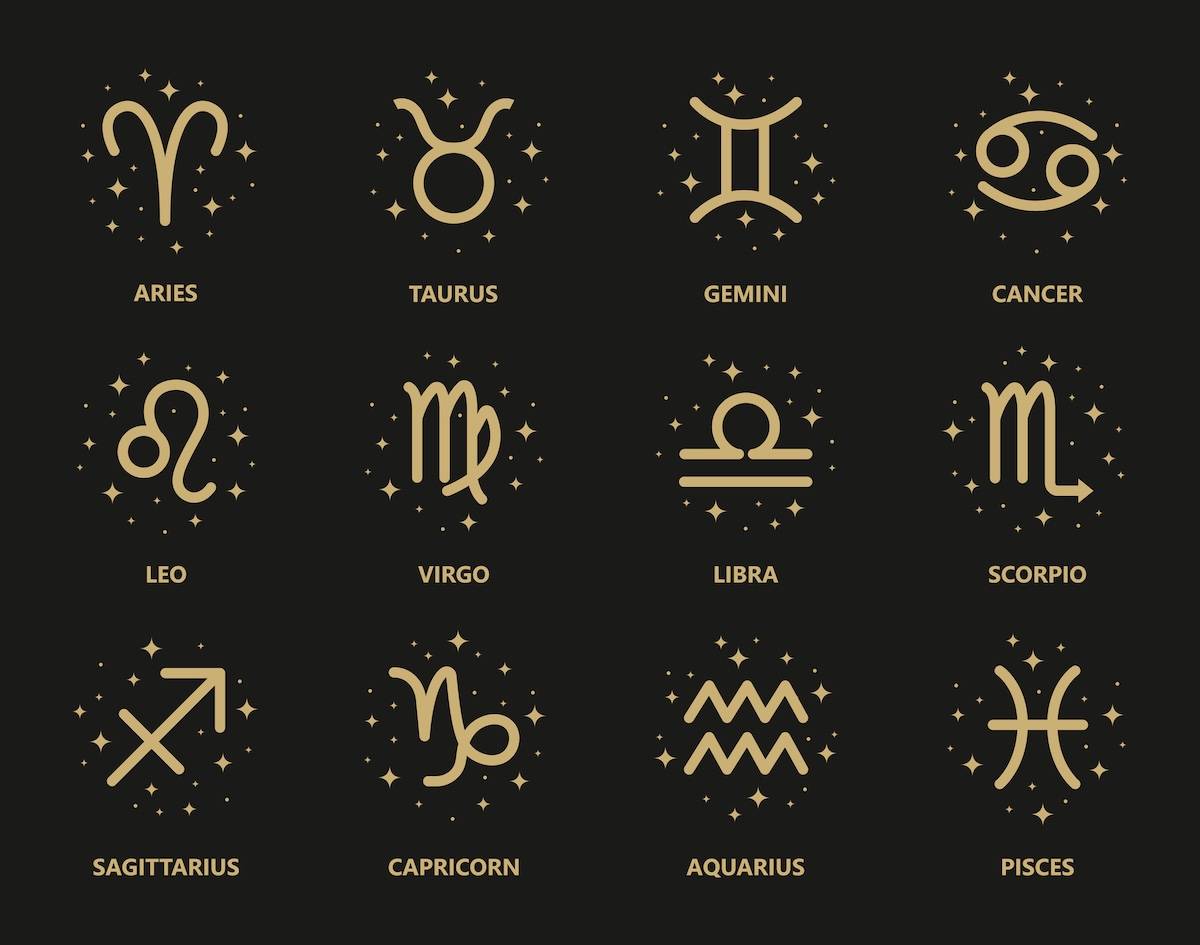
To find out which star signs shine brightest in the horror hall of fame, researchers at California Psychics analyzed 85 famous movie monsters to pinpoint their astrological alignments. Sourcing 23 canonical birthdays from official lore and 62 from fan wikis and Wikidata, the study also factored in character totals and movie appearances to produce a final spookiness score out of 100.
See the full list of the spookiest zodiac signs—from Gemini to Sagittarius—based on their overall score, villain count, and standout slasher icons below:
| Rank | Zodiac Sign | Spookiness Score | Villain Count | Notable Villains |
|---|---|---|---|---|
| 1 | Gemini | 100.0 | 11 | Jason Voorhees (Friday the 13th), Damien Thorn (The Omen) |
| 2 | Scorpio | 91.4 | 11 | Count Dracula (Dracula), Patrick Bateman (American Psycho) |
| 3 | Leo | 89.1 | 10 | Jack Torrance (The Shining), Leatherface (The Texas Chainsaw Massacre) |
| 4 | Aries | 79.6 | 9 | Kayako Saeki (The Grudge), Regan MacNeil (The Exorcist) |
| 5 | Libra | 71.5 | 8 | Michael Myers (Halloween), Norman Bates (Psycho) |
| 6 | Virgo | 61.7 | 7 | Carrie White (Carrie), Frankenstein’s Monster (Frankenstein) |
| 7 | Taurus | 54.5 | 6 | Chucky (Child’s Play), Pennywise (It), M3GAN (M3GAN) |
| 8 | Aquarius | 51.9 | 6 | Hannibal Lecter (The Silence of the Lambs), Samara Morgan (The Ring) |
| 9 | Cancer | 48.6 | 5 | Billy Lenz (Black Christmas) |
| 10 | Sagittarius | 42.1 | 5 | Freddy Krueger (A Nightmare on Elm Street), Jigsaw (Saw) |
| 11 | Pisces | 39.5 | 4 | Angela Baker (Sleepaway Camp) |
| 12 | Capricorn | 25.9 | 3 | Candyman (Candyman); Clarice Starling (The Silence of the Lambs) |
The Horror Horoscope
The stereotype of twin sign Geminis being two-faced might be an actual archetype, with the hockey-masked Jason Voorhees of Friday the 13th confirmed to be one. From The Omen‘s sinister antichrist Damien Thorn, born June 6, to Saw’s cold, calculating detective Mark Hoffman, Gemini tops the list with 11 horror villains, 35 movie appearances, and an eerily perfect spookiness score of 100.0.
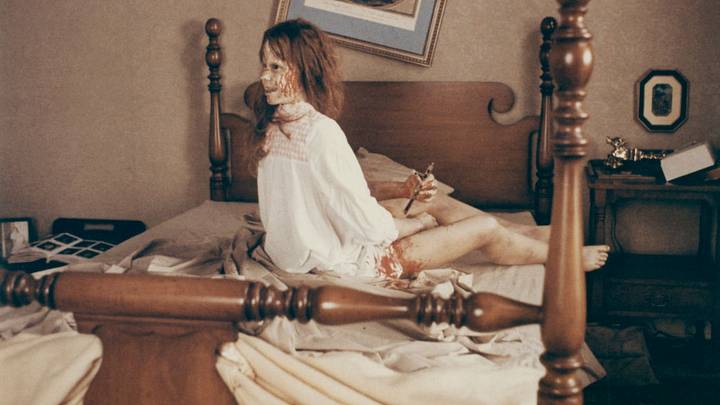
Also making up one in eight characters analyzed is the second-spookiest zodiac sign, Scorpio, with a 91.4 score. Scorpio’s ranks include American Psycho‘s Patrick Bateman and Halloween-born slashers Victor Crowley (Hatchet) and Ethan Landry (Scream VI). Fire signs Leo and Aries have 10 and nine characters respectively, with the latter including The Exorcist‘s Regan MacNeil, whose embodiment of an Aries sun shines through from her playful, energetic pre-possession self to her explosive emotionality when pushed to the brink.
On the less sinister side of the spectrum is Capricorn as the least spooky zodiac sign with a spookiness score of 25.9 out of 100, known for its logical, no-nonsense attitude. Capricorns, like the sharp, determined Clarice Starling of The Silence of the Lambs, prioritize practicality over paranormal activity, cementing the sign’s spot far from the superstitiousness of it all. Watery Pisces also lands near the bottom overall with just four characters, followed by Sagittarius, which Freddy Krueger and Jigsaw share as a sun sign.
Grounded earth signs like Virgo and Taurus sit near the middle of the rankings with around 7% to 8% of horror characters each. While they can produce tragic monsters like Carrie White as well as chaotic characters like Chucky and Pennywise, they leave the highest body counts to air and fire signs.
Who’s Your Spooky Star Sign Soulmate?
Do you share a birth chart with an iconic horror villain, or does your zodiac sign land among the least deadly?
Read More:
•
The Scariest Movie the Year You Were Born
•
Year of the Fire Horse: Meaning, History, and Why It Sparked Widespread Fear
•
The Spookiest City in Every U.S. State, Mapped
•