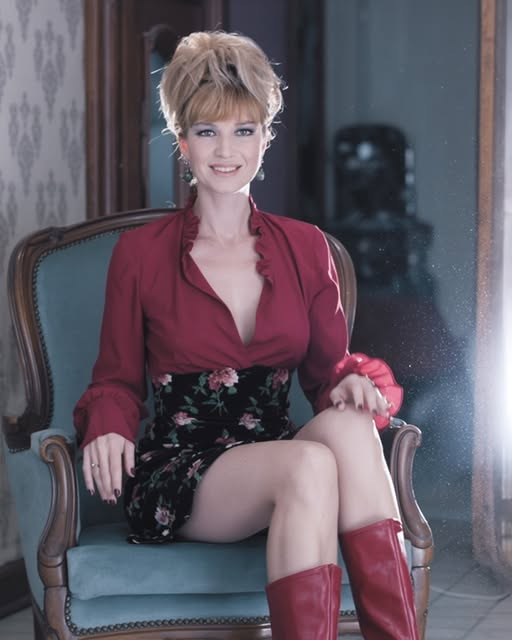
Born on November 3, 1931, in Rome, Italy, Monica Vitti remains one of the most celebrated and multifaceted actresses in Italian film history.
Elegant yet approachable, intellectual yet deeply emotional, Vitti was a rare talent who could shift effortlessly between the restrained melancholy of art-house cinema and the bright exuberance of popular comedy.
Her name is forever linked with the visionary director Michelangelo Antonioni, with whom she created some of the most defining films of 1960s European cinema — works that redefined the language of film itself. But her legacy stretches far beyond those moody masterpieces.
By the 1970s, Monica Vitti had reinvented herself as a beloved comedienne, earning the title “La Regina del Cinema Italiano” — The Queen of Italian Cinema.
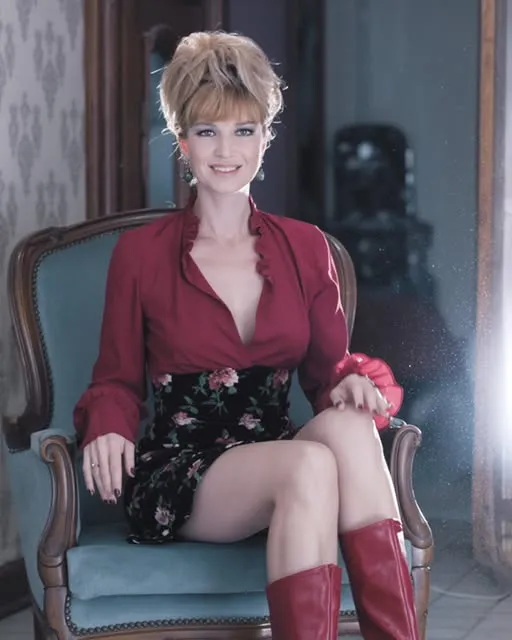
Monica Vitti was born Maria Luisa Ceciarelli, the youngest of three children in a middle-class Roman family. From an early age, she showed a gift for mimicry and storytelling, entertaining her family with improvised skits and impersonations.
During World War II, her family moved to Messina, Sicily, to escape the bombings in Rome. It was during those years of uncertainty that the young Monica found comfort in performing — acting out plays to distract her siblings from the fear surrounding them.
After the war, she returned to Rome and pursued her passion seriously.
She graduated from the National Academy of Dramatic Arts (Accademia Nazionale d’Arte Drammatica Silvio D’Amico) in 1953. Her early work was in the theater, where she gained experience performing both classical and contemporary roles. Yet, despite her talent, she was initially unsure of her future in film.
Her husky voice and unconventional beauty made her stand out in an era dominated by glamorous stars like Sophia Loren and Gina Lollobrigida. Ironically, these very qualities would later make her unforgettable.
Monica Vitti’s life changed forever in the late 1950s when she met Michelangelo Antonioni, the director who would become both her creative partner and romantic companion for a decade.
Antonioni was searching for an actress capable of expressing the subtle emotions of modern isolation — the feeling of being spiritually adrift in a rapidly changing world. In Vitti, he found that rare combination of sensitivity, strength, and mystery. Their first major collaboration, L’Avventura (1960), was a revelation.
Vitti played Claudia, a woman who becomes entangled in the disappearance of her friend during a yachting trip. The film was initially booed at its Cannes premiere but quickly came to be recognized as a cinematic milestone.
Vitti’s performance — introspective, poised, and enigmatic — captured the existential anxiety of a generation. She was not simply acting; she embodied the mood of an era.

Antonioni and Vitti continued to explore the theme of emotional disconnection in three more films: La Notte (1961), L’Eclisse (1962), and Red Desert (1964). Together, these works are often referred to as Antonioni’s “Tetralogy of Alienation.”
In Red Desert, Antonioni’s first color film, Vitti portrayed Giuliana, a woman struggling with psychological distress amid the industrial landscapes of modern Italy. The stark imagery and Vitti’s haunting performance won her international acclaim. Critics hailed her as the embodiment of Antonioni’s vision — his “cool muse.”
But Vitti was not merely a passive inspiration. She brought her own intelligence and instinct to the roles, often helping Antonioni shape the emotional tone of his characters. As she once said, “I never acted for Antonioni; I acted with him.”
By the late 1960s, Vitti sought new challenges.
Having become synonymous with serious art films, she longed to show another side of herself — her wit and spontaneity. In 1968, she began appearing in comedies, a bold shift that many doubted would succeed.
But once again, Monica Vitti defied expectations. Her turn in The Girl with a Pistol (La ragazza con la pistola, 1968), directed by Mario Monicelli, was a triumph. Playing an Italian woman who travels to England seeking revenge on a man who dishonored her, Vitti displayed impeccable comedic timing and emotional depth.
The film earned her critical praise and a David di Donatello Award (Italy’s equivalent of the Oscar) for Best Actress.
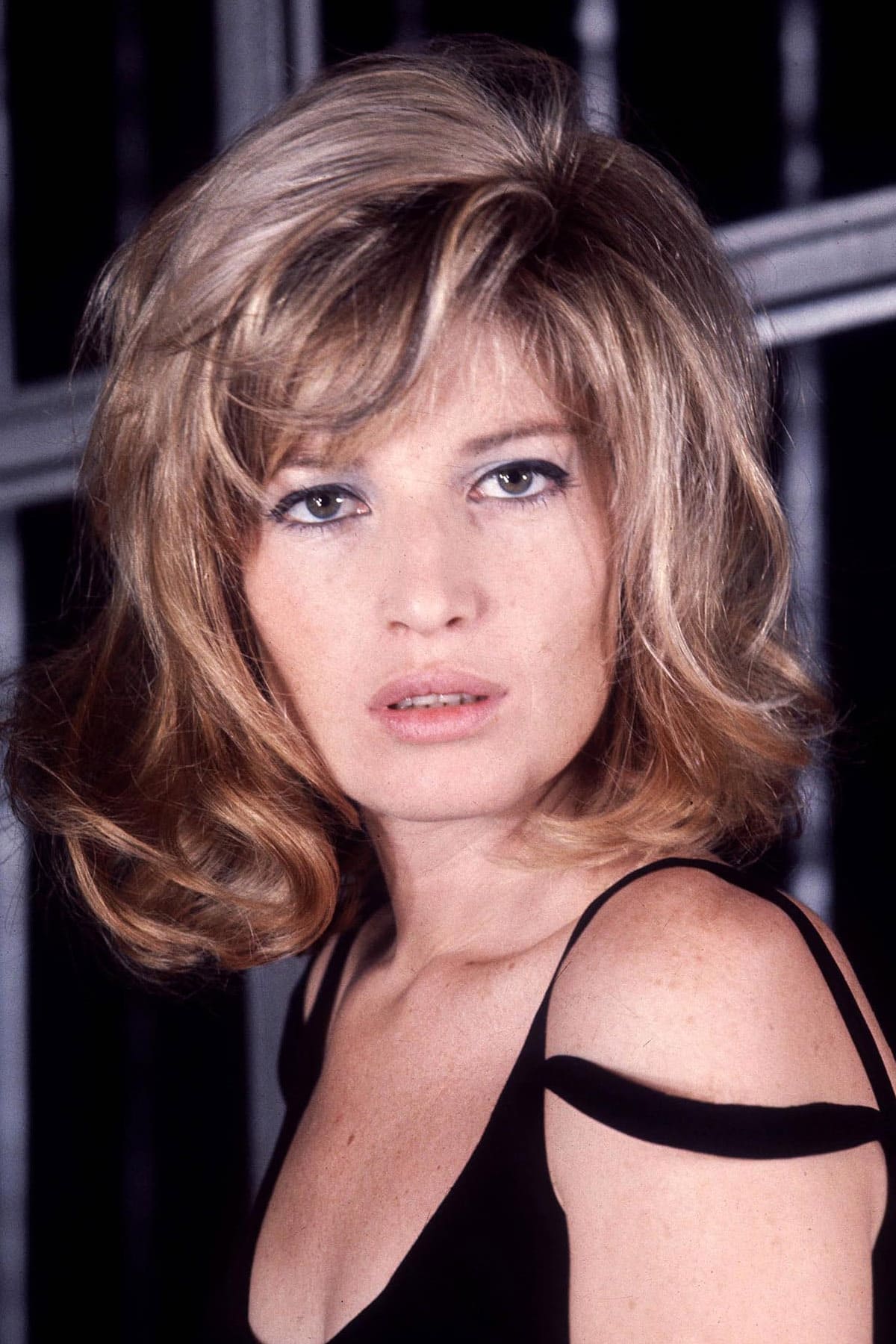
Vitti went on to star in a string of successful comedies throughout the 1970s, including Dramma della gelosia (with Marcello Mastroianni) and Polvere di stelle (with Alberto Sordi). Her ability to switch between deadpan humor and heartfelt vulnerability made her one of Italy’s most beloved comic performers.
Her success soon drew the attention of filmmakers beyond Italy. She made her English-language debut in the 1966 pop-art spy spoof Modesty Blaise, directed by Joseph Losey and co-starring Terence Stamp and Dirk Bogarde.
Though the film received mixed reviews, it became a cult favorite for its stylish production and playful tone — and Vitti’s charisma shone through even in English.
She later appeared in The Girl and the General (1967) with Rod Steiger, and in An Almost Perfect Affair (1979), a romantic comedy set at the Cannes Film Festival opposite Keith Carradine.
In between, she worked alongside major international stars such as Tony Curtis and Stanley Baker, proving her versatility and global appeal. Despite her ventures into Hollywood, Vitti always considered Italy her artistic home.
She once remarked, “My language is Italian — not just in words, but in the way I feel, in how I laugh, in how I live.”
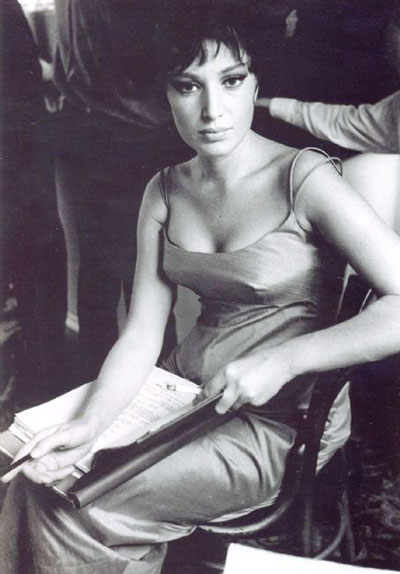
By the 1980s, Monica Vitti began to appear less frequently on screen, focusing instead on theater and television. In 1990, she made her directorial debut with Scandalo Segreto, which also became her final film. Sadly, in her later years, Vitti withdrew from public life due to a long battle with Alzheimer’s disease.
Her husband, Roberto Russo, remained devoted to her until her death in February 2022.
Yet her legacy remains undiminished. Over her five-decade career, Monica Vitti won numerous awards, including five David di Donatello Awards, three Silver Ribbons, and the Golden Lion for Lifetime Achievement at the Venice Film Festival in 1995.
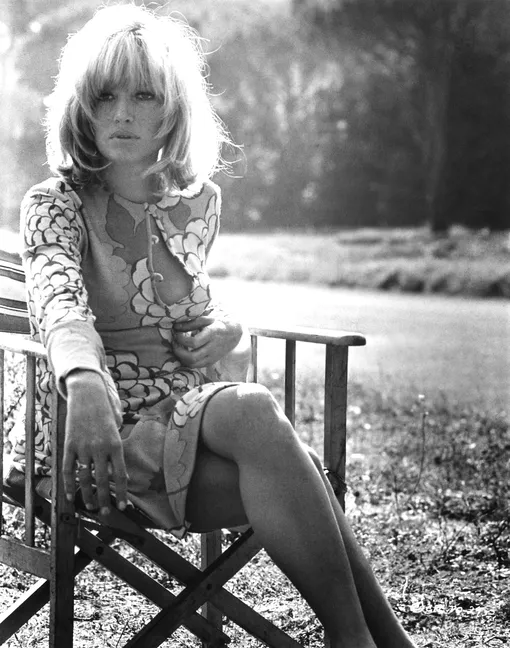
Monica Vitti was more than just a screen presence — she was a cultural symbol. In Antonioni’s films, she embodied the confusion and loneliness of modern existence. In her comedies, she reflected the warmth and irony of Italian life.
Her expressive eyes, rich voice, and intuitive acting made her one of cinema’s most distinctive artists. As director Ettore Scola once said, “Monica had the rare gift of making sadness beautiful and laughter profound.”
From the haunting silence of L’Avventura to the infectious humor of The Girl with a Pistol, Monica Vitti proved that true artistry lies in transformation. She was the face of Italian modernity — cool, complex, and endlessly fascinating — and her spirit continues to inspire filmmakers and actors around the world.